

 Jacques Lacasse

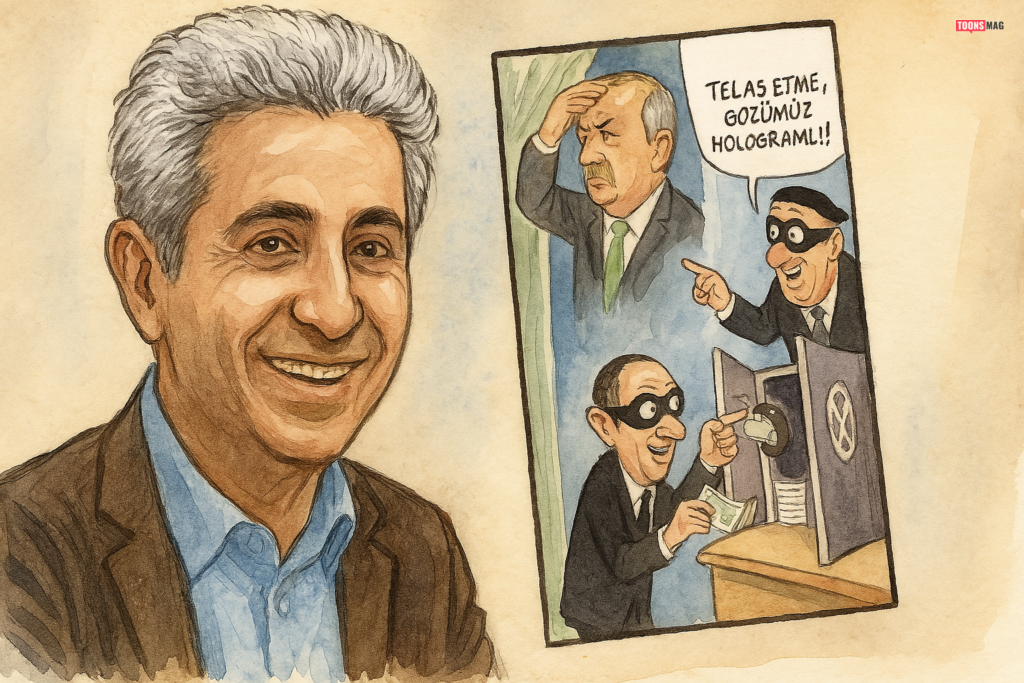
Musa Kart (born 1954 in Milas, Turkey) is a renowned Turkish political cartoonist, best known for his long association with the Cumhuriyet newspaper and his fearless commitment to freedom of expression. For decades, Kart’s sharp, witty, and provocative cartoons have criticized political corruption, authoritarianism, and threats to democracy in Turkey.
His humorous yet incisive drawings have made him a household name — and also a target of censorship, prosecution, and imprisonment. Despite these challenges, Kart has remained steadfast in his belief that cartoons are weapons of truth and humor against tyranny.
Musa Kart — Infobox
| Full Name | Musa Kart |
|---|---|
| Born | 1954 — Milas, Muğla Province, Turkey |
| Age | 71 (as of 2025) |
| Nationality | Turkish |
| Occupation | Political Cartoonist, Satirist, Illustrator |
| Years Active | 1970s – present |
| Education | Faculty of Fine Arts, Dokuz Eylül University, İzmir |
| Known For | Political satire, editorial cartoons for Cumhuriyet newspaper; advocacy for press freedom |
| Major Publications | Cumhuriyet (Turkey) |
| Famous Works / Cases | • “Cat Cartoon” (2004) depicting Recep Tayyip Erdoğan tangled in yarn • Cumhuriyet trial (2016–2019) — imprisoned for his journalism and cartoons |
| Artistic Themes | Press freedom, corruption, democracy, authoritarianism, human rights |
| Awards and Honors | • 2005 – Press Freedom Award, Reporters Without Borders (France) • 2006 – Courage in Editorial Cartooning Award, Cartoonists Rights Network International (CRNI) • 2014 – Cartoonist of the Year, Turkish Journalists Association • 2018 – Featured artist, Cartooning for Peace exhibition (Europe) |
| Legal Challenges | • 2004 – Fined for Erdoğan “Cat Cartoon” • 2016 – Arrested after Turkish coup attempt; sentenced to 3 years 9 months • 2019 – Released from prison after 18 months |
| Exhibitions | Istanbul Press Museum; Cartooning for Peace (France); CRNI Freedom Cartoonists Exhibition (Geneva) |
| Style / Medium | Political and editorial cartoons, pen-and-ink and digital illustration |
| Advocacy | Freedom of expression, democracy, and the role of satire in society |
| Residence | Istanbul, Turkey |
| Languages | Turkish (native), English |
Early Life and Education
Musa Kart was born in 1954 in the town of Milas, located in the Muğla Province of southwestern Turkey. From a young age, he displayed a keen interest in art and social issues, often sketching humorous portrayals of everyday life in his community.
Kart attended Dokuz Eylül University’s Fine Arts Faculty in İzmir, where he honed his skills in drawing and visual communication. His early influences included both Turkish and international satirists who used humor to critique political power and social injustice.
Career Beginnings
Musa Kart began his professional career in the 1970s, drawing cartoons for various Turkish magazines and newspapers. His talent for combining humor with political critique quickly gained recognition in the local press.
He joined Cumhuriyet, one of Turkey’s oldest and most respected secular newspapers, where he would spend the majority of his career. Kart’s daily cartoons became a defining feature of Cumhuriyet, offering sharp and often biting commentary on the nation’s political landscape.
His art stood out for its simplicity, symbolism, and moral clarity — a single image could convey complex political realities with striking precision.
Style and Themes
Musa Kart’s cartoons blend satirical humor with social consciousness. He is known for using anthropomorphism, caricature, and absurd situations to highlight contradictions in Turkish politics.
His recurring themes include:
- Freedom of the press and expression
- Political corruption and hypocrisy
- Government overreach and censorship
- Human rights and democracy
Kart’s drawings often feature animals, objects, or symbolic figures commenting on political developments — a style that makes his work accessible yet deeply critical.

International Recognition
Musa Kart’s cartoons have been published and exhibited internationally, earning him recognition as one of Europe’s leading editorial cartoonists. His works have appeared in numerous exhibitions in France, Germany, the United States, and across the Middle East.
He has won several international awards for his contributions to freedom of expression and editorial cartooning, including recognition from organizations such as Cartooning for Peace and the Cartoonists Rights Network International (CRNI).
In 2005, he won the Press Freedom Award from Reporters Without Borders (RSF) for his defense of free expression in Turkey.
Legal Battles and Imprisonment
Musa Kart’s outspoken criticism of political leaders has often landed him in legal trouble.
The 2004 “Cat Cartoon” Case
Kart first came to international attention in 2004 when he published a cartoon depicting then–Prime Minister Recep Tayyip Erdoğan as a cat tangled in a ball of yarn — a metaphor for political entanglement.
Erdoğan sued him for “insulting the prime minister”, and Kart was fined 5,000 Turkish lira. The case became symbolic of press censorship and shrinking artistic freedom in Turkey.
The 2016 Coup Attempt and Cumhuriyet Trial
After the failed coup attempt in July 2016, Turkish authorities cracked down on opposition voices, including journalists at Cumhuriyet.
Kart and several of his colleagues were arrested in November 2016 on charges of “aiding terrorist organizations”, despite widespread condemnation from human rights groups.
He was accused of “supporting terrorism” merely for drawing cartoons critical of the government — an allegation that drew outrage from the global artistic community.
In 2018, Musa Kart was sentenced to three years and nine months in prison, a verdict that many international organizations denounced as politically motivated.
After serving 18 months, Kart was released in September 2019, reaffirming his commitment to continue drawing and speaking truth through satire.
“They can imprison the cartoonist,” he said upon release, “but they can’t imprison humor.”

Impact and Symbolism
Musa Kart’s ordeal turned him into a global symbol of artistic resistance. His imprisonment galvanized international campaigns by journalists, artists, and free speech advocates who rallied under the slogan “Free Musa Kart.”
His courage in the face of censorship earned him comparisons to other legendary political cartoonists like Naji al-Ali, Zapiro, and Doaa El-Adl, who also used satire to confront power and injustice.
Kart’s story is now frequently cited in discussions about media freedom in Turkey, the role of satire in democracy, and the human cost of truth-telling in authoritarian contexts.
Exhibitions and Publications
Musa Kart’s work has been featured in several exhibitions both in Turkey and abroad. His cartoons have been showcased in:
- The Istanbul Press Museum
- The Cartooning for Peace exhibitions (Europe)
- The CRNI Freedom Cartoonists Exhibition (Geneva)
He has also published multiple collections of his political cartoons, which chronicle Turkey’s turbulent modern history through the eyes of satire.
Awards and Honors
- 2005 – Press Freedom Award (Reporters Without Borders, France)
- 2006 – Cartoonists Rights Network International (CRNI) Award for Courage in Editorial Cartooning
- 2014 – “Cartoonist of the Year” by the Turkish Journalists Association
- 2018 – Featured by Cartooning for Peace as one of the world’s most persecuted artists

Personal Life
Musa Kart lives in Istanbul, Turkey, where he continues to draw, exhibit, and advocate for press freedom and artistic independence.
He remains a beloved figure among Turkish readers and an inspiration to young artists across the world who believe in the transformative power of humor and truth.
“A cartoon,” he once said, “is a mirror — and power never likes to look in the mirror.”
Legacy
Today, Musa Kart stands as one of Turkey’s most important cultural figures — a man who turned satire into a form of civil courage. His pen continues to remind the world that art can resist oppression, and that laughter, even in the darkest times, is an act of defiance.