

 Anto Mario

Controversial Editorial Cartoons and Their Aftermath: Editorial cartoons sit at one of the most volatile intersections in public life: art, politics, morality, and emotion. They are small in scale yet enormous in consequence—often no larger than a newspaper column, yet capable of igniting protests, reshaping political reputations, and even altering the course of public discourse. When they provoke outrage, admiration, fear, or violence, editorial cartoons reveal not only the power of satire but also the fault lines of the societies in which they appear.
This article examines controversial editorial cartoons and their aftermath, focusing not just on the images themselves, but on what followed: public backlash, institutional responses, censorship, solidarity movements, and long-term cultural consequences. In doing so, it asks a difficult but essential question: Where does satire end and harm begin—and who gets to decide?
In an era of instantaneous global sharing, editorial cartoons no longer speak only to local audiences. A drawing published in one country can spark reactions across continents within minutes. The aftermath of controversy has become as important as the cartoon itself. Understanding that aftermath is essential to understanding modern freedom of expression.
Introduction: Why Editorial Cartoons Still Matter
Editorial cartoons are among the oldest forms of political communication. Long before radio, television, or social media, cartoons condensed complex ideas into symbolic shorthand—turning leaders into animals, policies into props, and ideologies into faces the public could recognize.
What distinguishes editorial cartoons from other opinion media is their emotional immediacy. A reader may disagree with an op-ed, but a cartoon can provoke an instinctive response—laughter, anger, shame, pride—before logic even engages. This immediacy is precisely what makes cartoons powerful, and precisely what makes them dangerous.
When a cartoon crosses perceived boundaries—religious, cultural, racial, or moral—the aftermath becomes a mirror reflecting how a society negotiates free expression, pluralism, and respect.
Understanding the Art of Editorial Cartoons
Before delving into the controversial aspects, let’s first understand what editorial cartoons are and what makes them unique:
1. Visual Satire: Editorial cartoons comment on current events, politics, and societal issues. They use humor, caricature, and symbolism to convey a message or viewpoint.
2. Simplified Messages: Cartoons distill complex issues into simple, digestible visuals, making them accessible to a broad audience.
3. Freedom of Expression: Editorial cartoonists enjoy a high degree of freedom of expression, as their work is often protected as a form of political speech.
4. Historical Significance: Throughout history, editorial cartoons have played a pivotal role in shaping public opinion and influencing political decisions.
The Power and Purpose of Controversy
While editorial cartoons are meant to entertain and provoke thought, it’s not uncommon for them to stir controversy. Here’s why controversy is often intertwined with this art form:
1. Challenging the Status Quo: Editorial cartoons thrive on challenging the established norms, ideologies, and political figures. This inherently challenges the status quo and may lead to backlash.
2. Exposing Injustices: Controversial cartoons can shed light on injustices, inequalities, and abuses of power that might otherwise go unnoticed.
3. Prompting Dialogue: Controversy can spark conversations about critical issues, encouraging society to confront uncomfortable truths.
4. Testing Boundaries: Cartoonists often push the boundaries of free speech to test the limits of society’s tolerance for dissenting opinions.
The Nature of Editorial Satire: Why It Provokes
Satire functions by exaggeration, distortion, and contrast. It simplifies reality to reveal underlying truths—or, at times, to expose hypocrisy. Editorial cartoonists rely on:
- Caricature (amplifying physical or behavioral traits)
- Symbolism (flags, animals, objects representing ideas)
- Irony (saying one thing to imply another)
- Compression (boiling complex debates into one image)
This compression is both satire’s strength and its weakness. Nuance can be lost. Context can be assumed rather than explained. And audiences—especially those outside the cartoonist’s cultural framework—may read intent very differently from how it was meant.
Controversy often emerges not from malice, but from misalignment between intention and reception.
A Brief Historical Context: Controversy Is Not New
Editorial cartoons have been controversial since their inception.
In 19th-century Europe, caricatures mocking monarchs were considered acts of sedition. In the United States, early political cartoons attacking slavery, corruption, or immigration frequently sparked outrage and even legal threats. Cartoonists have been fired, sued, imprisoned, and blacklisted throughout history.
What has changed is scale. In the digital age, the aftermath is global.
Notable Controversial Editorial Cartoons
To illustrate the impact of controversial editorial cartoons, let’s examine some historical examples:
“The Man Who Shot Liberty Valance” (1963)
This political cartoon by Herbert Block depicted Senator Strom Thurmond of South Carolina shooting a peace dove labeled “civil rights.” It highlighted Thurmond’s opposition to civil rights legislation and drew significant controversy for its stark symbolism.
Aftermath: The cartoon fueled debates on Thurmond’s stance on civil rights and highlighted the era’s racial tensions.
“The September 11 Cartoon” (2001)
After the tragic events of September 11, 2001, many editorial cartoons addressed the attacks and the ensuing war on terror. Some cartoons, like one by Ted Rall, portrayed firefighters searching for survivors in the rubble of the World Trade Center.
Aftermath: While Rall’s cartoon aimed to honor the heroes of 9/11, it also faced backlash for its timing and perceived insensitivity.
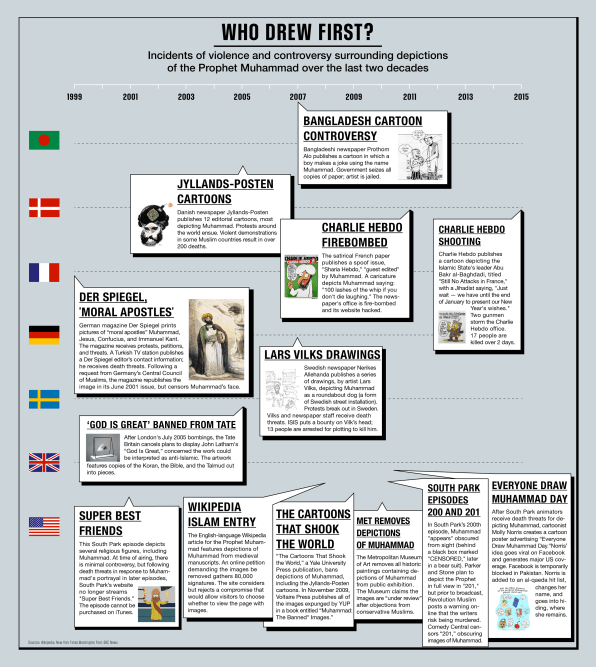
“The Danish Muhammad Cartoons” (2005)
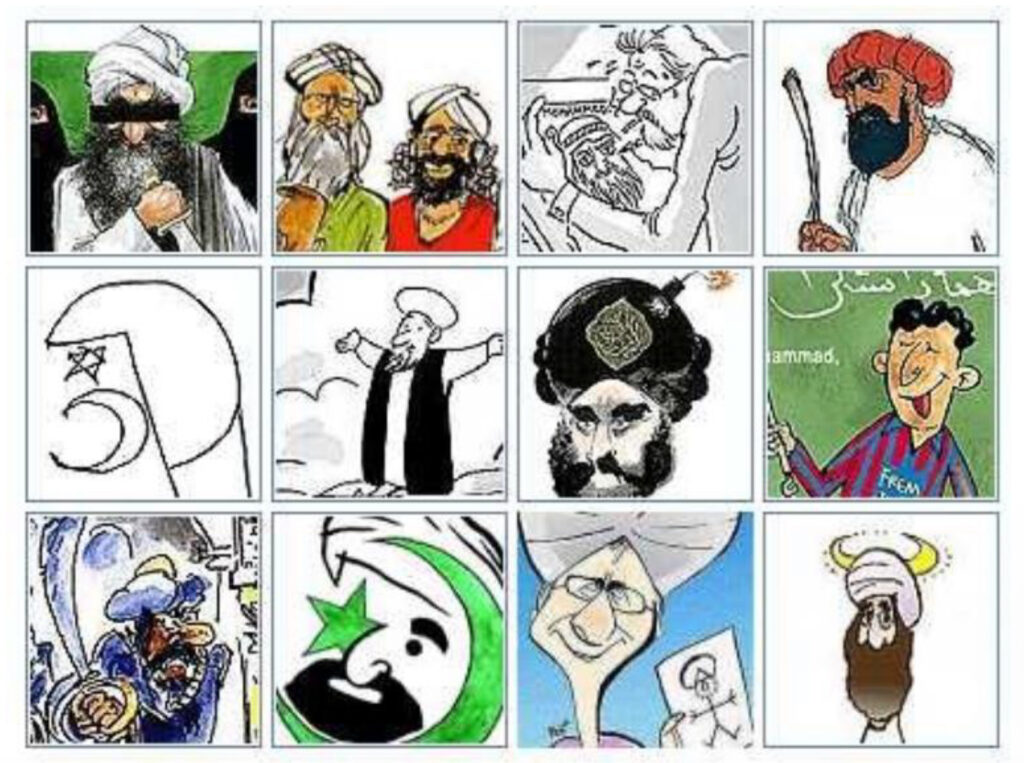
Published in the Danish newspaper Jyllands-Posten, these cartoons depicting the Prophet Muhammad ignited a global controversy. They were seen as a challenge to the principles of free speech and religious sensitivity.
Aftermath: The cartoons triggered protests, violence, and debates about balancing free speech and respect for religious beliefs.
“The Gorilla in the Room” (2009)
This cartoon by Sean Delonas, published in the New York Post, depicted a police officer shooting a chimpanzee. Some interpreted it as a reference to President Barack Obama, while others saw it as commentary on a local news story.
Aftermath: The cartoon faced accusations of racism and insensitivity, prompting the New York Post to apologize.
Case Study 1: “Join, or Die” and the Politics of Unity
One of the earliest controversial cartoons in American history, “Join, or Die”, published in 1754 by Benjamin Franklin, depicted a segmented snake representing the American colonies. While often celebrated today, it was controversial in its own time.
The Aftermath
- Sparked debate over colonial autonomy vs. unity
- Later repurposed during the American Revolution
- Became a foundational symbol of American political identity
The aftermath demonstrates an early truth: cartoons can outlive their original controversies and be reinterpreted across generations.
Case Study 2: Thomas Nast and the Weaponization of Moral Authority
In the late 19th century, Thomas Nast used cartoons to attack political corruption, particularly New York’s Tammany Hall and Boss Tweed.
The Aftermath
- Nast’s cartoons were widely credited with shaping public opinion
- Tweed reportedly complained that “my constituents don’t know how to read, but they can see pictures”
- Nast received death threats and faced political retaliation
Here, controversy worked in favor of reform—but at personal cost. Nast’s aftermath illustrates how editorial cartoons can function as informal law enforcement, mobilizing public morality when institutions fail.
Case Study 3: Herblock, McCarthyism, and Naming a Fear
In 1950, American cartoonist Herb Block coined the term McCarthyism in a cartoon criticizing Senator Joseph McCarthy’s anti-communist crusade.
The Aftermath
- The term entered mainstream political language
- Block faced political hostility but gained moral authority
- The cartoon helped reframe fear-driven politics as a social disease
This case demonstrates how the aftermath of a cartoon can be linguistic, permanently altering how society names and understands a phenomenon.
Case Study 4: The Danish Muhammad Cartoons (2005)
In 2005, the Danish newspaper Jyllands-Posten published cartoons depicting the Prophet Muhammad, igniting one of the most significant global controversies involving editorial cartoons.
Immediate Aftermath
- Protests across multiple countries
- Diplomatic crises
- Death threats against cartoonists
- Violent incidents linked to outrage
Long-Term Aftermath
- Global debate on freedom of expression vs. religious respect
- Heightened security for cartoonists and editors
- Self-censorship in many newsrooms
- Ongoing polarization around satire and Islam
This episode underscored a new reality: a local editorial decision can have international, even deadly, consequences.
Case Study 5: Charlie Hebdo and the Price of Provocation
The French satirical magazine Charlie Hebdo had long courted controversy with its aggressive, secular satire targeting religion and politics alike.
In January 2015, gunmen attacked the magazine’s Paris offices, killing 12 people.
The Aftermath
- Global “Je Suis Charlie” solidarity movement
- Renewed debates about limits of satire
- Increased fear among cartoonists worldwide
- Divisions even among free-speech advocates
The aftermath revealed a painful paradox: defending free expression does not require endorsing every expression—yet violence is never a legitimate response.
The Role of Media Institutions in the Aftermath
When controversy erupts, editorial cartoons are rarely judged alone. The response of publishers, editors, and governments often determines whether a situation escalates or stabilizes.
Institutional Responses Include
- Apologies or retractions
- Editorial defenses
- Firings or suspensions of cartoonists
- Public forums or debates
- Legal action or censorship
These responses send signals about whose feelings matter, whose safety is prioritized, and how power operates within media ecosystems.
The Ethical Dimensions: Punching Up vs. Punching Down
One of the most important frameworks in evaluating controversial cartoons is the distinction between:
- Punching up: Satirizing those in power
- Punching down: Mocking marginalized or vulnerable groups
Cartoons that punch up often provoke backlash from elites but gain moral legitimacy. Cartoons that punch down may claim free speech protections but risk reinforcing stereotypes and harm.
The aftermath frequently reflects this distinction. Public support tends to be stronger when cartoons challenge authority rather than identity.
The Cartoonist’s Dilemma: Courage, Responsibility, and Risk
Modern editorial cartoonists operate under unprecedented pressure:
- Online harassment and doxxing
- Physical security threats
- Economic precarity
- Algorithm-driven outrage
Yet many continue because cartooning remains one of the few art forms capable of visually confronting power.
The aftermath of controversy can define a cartoonist’s career—sometimes elevating them as defenders of free speech, sometimes isolating them professionally or socially.
Censorship, Self-Censorship, and the Chilling Effect
One of the most profound aftereffects of controversial cartoons is not visible protest—but silence.
Editors may quietly stop publishing certain topics. Cartoonists may avoid entire subjects. Newsrooms may choose “safer” commentary. This chilling effect reshapes public discourse long after headlines fade.
The question is not whether limits exist—they always have—but who sets them, and why.
Digital Media and the New Aftermath
In the social media era, the aftermath unfolds in real time:
- Screenshots circulate without context
- Outrage is amplified algorithmically
- Nuance is flattened into hashtags
- Cartoonists are judged globally by local standards
This environment increases both reach and risk, making editorial cartooning more consequential—and more precarious—than ever before.
Why Controversial Cartoons Still Shape History
Despite risks, controversial editorial cartoons remain essential because they:
- Force uncomfortable conversations
- Reveal societal fault lines
- Test the boundaries of pluralism
- Preserve dissent in visual form
The aftermath—whether backlash, debate, reform, or repression—becomes part of the historical record. In this sense, controversial cartoons do not merely comment on history; they participate in it.
The Controversy-Response Cycle
Controversial editorial cartoons often follow a predictable cycle:
1. Publication: The cartoon is published, often intending to make a bold statement or spark a reaction.
2. Immediate Reactions: The cartoon elicits immediate responses from the public, politicians, and advocacy groups. Social media amplifies these reactions.
3. Widespread Coverage: News outlets pick up the story, leading to widespread coverage and debates on television, radio, and online platforms.
4. Calls for Retraction: Critics call for the cartoon’s retraction or an apology from the publisher.
5. Support and Defense: Some defend the cartoon as an exercise of free speech and satire, emphasizing the importance of robust public discourse.
6. Dialogue and Reflection: The controversy prompts discussions on the underlying issues the cartoon addresses.
7. Impact: Depending on the cartoon’s message and reception, it may lead to real-world changes or remain a discussion point.
Balancing Free Speech and Responsibility
The controversy surrounding editorial cartoons raises complex questions about the balance between free speech and responsibility:
1. Free Speech: Cartoons are protected as free speech and expression, but does this protection extend to offensive or insensitive content?
2. Cultural Sensitivity: How should cartoonists navigate cultural and religious sensitivities, especially in a globalized world?
3. Responsibility: Do publishers and cartoonists have a responsibility to consider the potential harm their cartoons may cause?
4. Impact: Should the impact of a cartoon be a factor in assessing its acceptability, even if it adheres to the principles of free speech?
Lessons Learned and Moving Forward
Controversial editorial cartoons are a vital component of political and social discourse. They challenge us to reevaluate our perspectives, confront uncomfortable truths, and engage in meaningful conversations. As readers and consumers of these cartoons, we must recognize the power they hold and the responsibility that comes with that power.
In the ever-evolving landscape of journalism and media, editorial cartoons remain a dynamic force for change and progress. They remind us that while controversy may be uncomfortable, it is often a catalyst for growth, understanding, and positive societal transformation. As we navigate this intricate world of satire and sensitivity, let us remember that when used wisely, the pen can be a potent tool for shaping a better world.
Conclusion: Walking the Line, Drawing the Truth
Navigating the fine line between satire and sensitivity has never been simple—and it has never been static. What shocks one generation may seem tame to another. What one culture defends as satire, another may experience as insult.
Yet the enduring relevance of editorial cartoons lies precisely in this tension.
They remind us that freedom of expression is not abstract—it is lived, contested, and negotiated in real time, with real consequences. The aftermath of controversial cartoons teaches us as much about society as the drawings themselves.
In the end, the question is not whether editorial cartoons should provoke.
They always have.
The question is whether societies are willing to engage with provocation thoughtfully rather than violently, critically rather than reflexively, and courageously rather than silently.
As long as power exists, someone will draw it.
As long as people care, controversy will follow.
And as long as cartoons continue to spark debate, they will remain one of the most vital—and vulnerable—forms of democratic expression.
Read also: The Jyllands-Posten Muhammad Cartoons Controversy (2005): A Deep Dive into the Impact and Implications, and Name cartoon.
FAQs About Controversial Editorial Cartoons and Their Aftermath
1. What are editorial cartoons, and why are they controversial?
Editorial cartoons are visual commentaries on current events, politics, and societal issues. They use humor, caricature, and symbolism to convey a message or viewpoint. Controversy arises when they challenge established norms, ideologies, and political figures, pushing the boundaries of free speech.
2. Why do cartoonists create controversial cartoons?
Cartoonists often create controversial cartoons to provoke thought, challenge the status quo, expose injustices, and prompt dialogue. Controversy can spark conversations about critical issues.
3. Can controversial cartoons have a positive impact?
Yes, they can. Controversial cartoons can shed light on injustices, inequalities, and abuses of power. They encourage society to confront uncomfortable truths and engage in meaningful discussions.
4. Do cartoonists have freedom of expression?
Yes, cartoonists enjoy a high degree of freedom of expression, as their work is often protected as political speech. However, this freedom comes with responsibilities.
5. How do readers and the public react to controversial cartoons?
Readers and the public react to controversial cartoons with various responses. Some support them as free speech and satire exercises, while others call for retractions or apologies.
6. What is the typical aftermath of a controversial cartoon’s publication?
The aftermath often involves immediate reactions, widespread media coverage, calls for retractions or apologies, debates on the cartoon’s message, and discussions about underlying issues.
7. How do cartoonists balance free speech and responsibility?
Cartoonists navigate this balance by considering the potential impact of their cartoons, cultural sensitivities, and their responsibility as creators. It’s a complex challenge.
8. Are controversial cartoons protected by free speech laws?
Controversial cartoons are generally protected as forms of free speech and expression. However, specific legal interpretations may vary by jurisdiction.
9. Can controversial cartoons lead to real-world changes?
Controversial cartoons can lead to real-world changes or remain discussion points depending on the message and reception. They have the power to influence public opinion and political decisions.
10. What lessons can we learn from controversial editorial cartoons?
Controversial cartoons challenge us to reevaluate our perspectives, confront uncomfortable truths, and engage in meaningful conversations. They serve as catalysts for growth, understanding, and positive societal transformation.
This post was created with our nice and easy submission form. Create your post!






6 Comments