



 Anto Mario

The Impact of Stan Lee on the Comic Book Industry: Stan Lee is more than a name printed in bold at the top of a comic book page. He is a cultural force, a symbol of how popular art can evolve into global mythology, and one of the most influential figures in the history of modern storytelling. Best known as the public face of Marvel Comics, Stan Lee helped reshape not only the superhero genre but also the creative identity of comic books themselves—transforming them from disposable children’s entertainment into a medium capable of emotional depth, social commentary, and lasting cultural relevance.
Lee’s influence reaches far beyond the pages of comic books. It extends into film, television, animation, merchandising, fan culture, and even the way creators interact with audiences. His work helped lay the groundwork for the Marvel Cinematic Universe (MCU), one of the most successful entertainment franchises of all time, and redefined what it meant to be a comic book creator in the public eye.
This in-depth article examines Stan Lee’s life, creative philosophy, professional collaborations, controversies, and enduring legacy, placing his impact within historical context and addressing both praise and criticism to present a balanced, trustworthy account of his role in shaping the comic book industry.
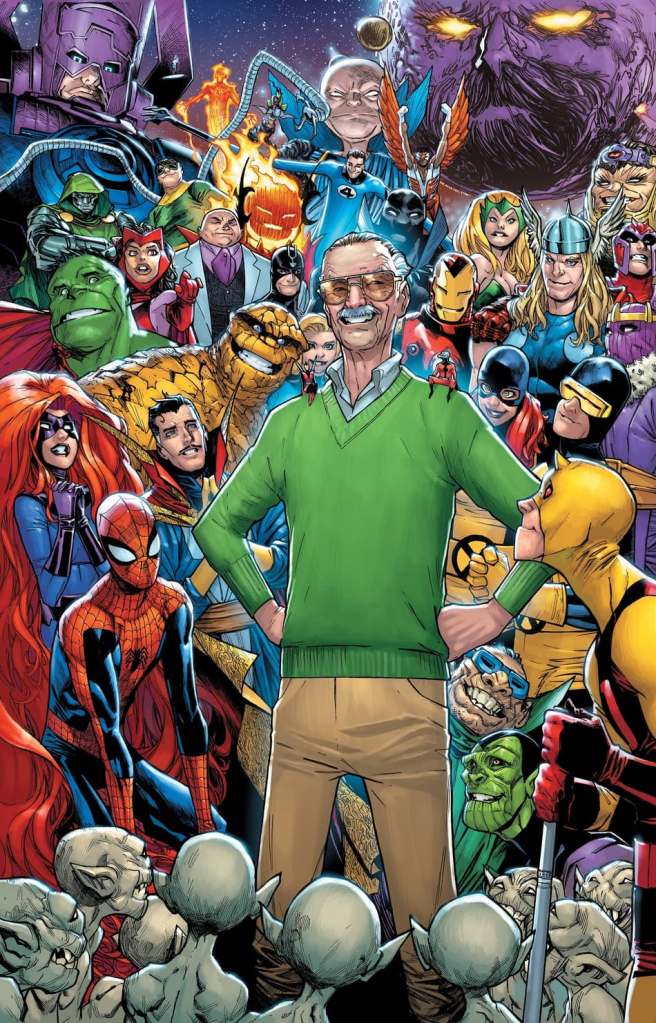
1. The Early Years of Stan Lee: From Immigrant Roots to Publishing Aspirations
Stan Lee was born Stanley Martin Lieber on December 28, 1922, in Manhattan, New York City, to Romanian-Jewish immigrant parents. His childhood unfolded during the Great Depression, a period that deeply influenced his worldview. Financial hardship was common in the Lieber household, and young Stanley often turned to books, films, and radio dramas as sources of escape and inspiration.
From an early age, Lee displayed a love for language. He admired authors like Arthur Conan Doyle, Jules Verne, and Mark Twain, and dreamed of becoming a novelist. Comics, at the time, were not his ambition—they were a stepping stone.
Entering the Comics Industry
In 1939, at just 17 years old, Lee secured a job as an office assistant at Timely Publications, the company that would eventually become Marvel Comics. Timely was run by publisher Martin Goodman, and its creative leaders included Joe Simon and Jack Kirby, who were then producing hit characters like Captain America.
Lee’s early duties were menial—refilling ink wells, proofreading, erasing pencil lines—but he was observant. He absorbed the rhythms of comic production, editorial decision-making, and the collaborative nature of the medium.
In 1941, Lee wrote his first published comic book text in Captain America Comics #3, using the pseudonym “Stan Lee” to reserve his real name for future literary ambitions. Ironically, that pen name would eventually eclipse his birth name entirely.

2. The Post-War Slump and Creative Frustration
After serving in the U.S. Army Signal Corps during World War II, where he wrote training manuals and propaganda material, Lee returned to Timely (by then known as Atlas Comics). The post-war years were challenging for the comic book industry. Superhero popularity declined, replaced by genres such as romance, westerns, horror, and humor.
Lee wrote prolifically during this period, producing thousands of pages across genres. Yet by the late 1950s, he felt creatively stifled. Comics were tightly constrained by editorial formulas and the newly established Comics Code Authority, which restricted content deemed controversial.
By his own later accounts, Lee considered leaving the industry altogether—until a pivotal moment that would change comic book history.
3. The Birth of the Marvel Universe and the Marvel Age of Comics
A Creative Gamble
In the early 1960s, publisher Martin Goodman noticed that DC Comics had found success with a revived superhero team, the Justice League of America. Goodman instructed Lee to create a similar team book.
Rather than imitate DC’s clean-cut, godlike heroes, Lee—encouraged by his wife, Joan—decided to write the kind of story he would want to read, even if it risked his career.
The result was Fantastic Four #1 (1961), illustrated by Jack Kirby.
What Made Marvel Different
The Fantastic Four were revolutionary because they:
- Argued with one another
- Struggled with fame, finances, and personal flaws
- Lived in a recognizable world (New York City)
- Had no secret identities
This approach became the foundation of the Marvel Universe, a shared world where characters aged, remembered past events, and dealt with consequences.
4. Iconic Characters and Their Cultural Significance
Spider-Man (1962)
Created with artist Steve Ditko, Spider-Man was a radical departure from superhero norms. Peter Parker was:
- A teenager
- Socially awkward
- Financially struggling
- Emotionally burdened by guilt
The famous lesson—“With great power comes great responsibility”—encapsulated Lee’s moral philosophy and became one of the most enduring lines in pop culture.
Spider-Man resonated deeply with young readers and helped redefine the superhero as an everyman rather than an idealized god.
The Fantastic Four (1961)
Often described as Marvel’s first family, the Fantastic Four explored themes of:
- Family dysfunction
- Scientific hubris
- Exploration and discovery
Their stories blended superhero action with science fiction and human drama, setting a template for future Marvel titles.
The X-Men (1963)
The X-Men, created by Lee and Kirby, were mutants born with extraordinary powers—and feared for it. While early issues struggled commercially, the concept later became one of Marvel’s most powerful metaphors for:
- Racism
- Discrimination
- Marginalization
Under later writers, the X-Men evolved into a cornerstone of social commentary in comics, but Lee’s original premise laid the groundwork.
Iron Man, Thor, and the Hulk
- Iron Man (1963) explored Cold War anxieties, capitalism, and mortality through billionaire weapons designer Tony Stark.
- Thor (1962) merged Norse mythology with superheroics, contrasting godhood with humility.
- The Hulk (1962) embodied inner rage, trauma, and the fear of one’s own power—often interpreted as a reflection of atomic-age anxieties.
These characters demonstrated that superheroes could embody psychological complexity.
Overview Summary
- Spider-Man: Spider-Man, created in 1962, was perhaps Lee’s most enduring creation. Peter Parker, a high school student, grappled with typical adolescent issues while also taking on the responsibilities of a superhero. Spider-Man’s popularity soared, and he became a symbol of youthful rebellion and heroism.
- The Fantastic Four: The Fantastic Four, introduced in 1961, marked Marvel’s first superhero team. Comprising Mr. Fantastic, the Invisible Woman, the Human Torch, and the Thing, they were a dysfunctional family of superheroes who fought supervillains and their personal conflicts.
- The X-Men: The X-Men, introduced in 1963, were mutants born with unique abilities, often seen as outcasts by society. Stan Lee used the X-Men to explore themes of prejudice and discrimination, making them socially relevant.
- Iron Man, Thor, and the Hulk: Characters like Iron Man, Thor, and the Hulk brought a new level of depth and complexity to superheroes. Tony Stark’s struggle with mortality, Thor’s mythological origins, and the Hulk’s inner turmoil added layers to their stories.

5. The Marvel Method: Innovation and Controversy
One of Stan Lee’s most significant contributions to the comic book industry was the development of the “Marvel Method” of storytelling. Instead of providing detailed scripts to artists, Lee would collaborate with them, providing a general plot outline and allowing artists to illustrate the story. This approach gave artists more creative freedom and led to a more visually dynamic and engaging storytelling style.
One of Stan Lee’s most influential—and controversial—contributions was the Marvel Method of storytelling.
How It Worked
- Lee provided artists with a plot outline rather than a full script.
- Artists paced the story visually, designing action and panel structure.
- Lee then added dialogue and captions after the art was complete.
Advantages
- Gave artists significant creative freedom
- Enabled rapid production
- Encouraged dynamic visual storytelling
Criticism
- Artists often felt under-credited
- Authorship disputes arose, especially regarding Jack Kirby and Steve Ditko
- The system blurred the line between “writer” and “co-creator”
Modern scholarship increasingly emphasizes collaborative creation at Marvel, recognizing Lee as a visionary editor and writer—but not the sole originator of ideas.
6. Stan Lee as Editor, Publisher, and Public Evangelist
In 1972, Lee became publisher and editorial director of Marvel Comics. While he wrote fewer comics, his influence expanded.
Championing Comics as Literature
Lee:
- Spoke at colleges and conventions
- Wrote editorials defending comics as art
- Engaged directly with fans through the famous “Stan’s Soapbox” columns
He helped cultivate a fan-first culture, treating readers as participants rather than passive consumers.
Stan Lee’s Editorial Leadership
In 1972, Stan Lee became Marvel’s publisher and editorial director, a position he held for decades. During this time, he oversaw the expansion of Marvel Comics into various media, including animation and television. Under his leadership, Marvel’s characters became cultural icons.
7. Breaking Cultural and Industry Barriers
Stan Lee played a pivotal role in breaking down barriers within the comic book industry. In an era when comic books were often dismissed as juvenile entertainment, he advocated for their artistic and literary value. He introduced thought bubbles and character-driven narratives that elevated comics to a legitimate form of storytelling.
Stan Lee pushed Marvel to:
- Address racism, war, and drug abuse
- Introduce more diverse characters
- Challenge censorship
A landmark moment came in 1971, when Marvel published an anti-drug story in The Amazing Spider-Man without Comics Code approval—forcing the Code to revise its rules.
8. Stan Lee and the Rise of the Marvel Cinematic Universe
Perhaps Stan Lee’s most significant impact on pop culture came through the Marvel Cinematic Universe (MCU). The success of films like “Iron Man” (2008), “The Avengers” (2012), and “Black Panther” (2018) can be attributed in part to Lee’s vision. He made cameo appearances in nearly every MCU film, endearing himself to a new generation of fans.
While Lee was not directly responsible for the MCU’s creative direction, his mythology and characters formed its backbone.
Beginning with Iron Man (2008), Marvel Studios adapted Lee-era concepts:
- Interconnected storytelling
- Flawed heroes
- Humor mixed with drama
Lee’s cameo appearances in nearly every Marvel film became a beloved tradition, turning him into a symbol of continuity across generations.
9. Criticism, Reassessment, and Legacy Debates
In later years, scholars and fans reassessed Lee’s role, particularly regarding:
- Credit allocation
- Power dynamics at Marvel
- Treatment of collaborators
This reassessment does not diminish Lee’s impact—it contextualizes it. He was:
- A master editor and promoter
- A gifted dialogue writer
- A cultural ambassador for comics
But Marvel’s success was the product of collective genius.

10. Stan Lee’s Enduring Legacy
Stan Lee died on November 12, 2018, at the age of 95. Tributes poured in from across the world—not just from comic fans, but from filmmakers, authors, educators, and activists.
His legacy includes:
- Redefining superheroes as human
- Elevating comics’ cultural status
- Building the template for shared universes
- Inspiring generations of creators
Most importantly, Lee taught audiences that stories matter—especially those that reflect our flaws, fears, and hopes.
Stan Lee: Stan Lee and the Power of Modern Myth
Stan Lee did not merely create characters; he helped construct a modern mythology—one that speaks to responsibility, identity, justice, and resilience. His influence on the comic book industry reshaped how stories are told, who they are for, and why they endure.
While debates over credit and collaboration continue—and should continue—the scale of Stan Lee’s impact is undeniable. He transformed comics from niche entertainment into a global narrative force, proving that superheroes could be mirrors of humanity rather than escapes from it.
In the end, Stan Lee’s greatest creation may not be Spider-Man or the Avengers—but the idea that popular stories can change how we see ourselves.
Excelsior.
Read also: Stan Lee: The Man behind Marvel! And Stan Lee Forever
FAQs about The Impact of Stan Lee on the Comic Book Industry and Beyond
Who is Stan Lee, and why is he significant in the comic book industry?
Stan Lee, born Stanley Martin Lieber, was a legendary comic book writer, editor, and publisher. He is known for co-creating iconic superheroes such as Spider-Man, the X-Men, Iron Man, Thor, the Hulk, and the Fantastic Four. His creative contributions revolutionized the comic book industry and made superheroes more relatable.
What are some of Stan Lee’s most famous co-creations?
Stan Lee co-created numerous beloved characters, including Spider-Man, the X-Men, Iron Man, Thor, the Hulk, Black Widow, Doctor Strange, Daredevil, and the Fantastic Four. These characters have become the cornerstone of Marvel Comics.
How did Stan Lee’s approach to storytelling differ from others in the industry?
Complex characters with human flaws and relatable problems marked Stan Lee’s storytelling. He brought a new level of depth to superheroes by focusing on their personal lives, making them more relatable to readers. His “Marvel Method” of collaboration with artists also set a new standard in the industry.
What impact did Stan Lee have on diversity and inclusion in comic books?
Stan Lee introduced diverse characters and themes into comic books. The X-Men, for example, served as a metaphor for civil rights and diversity struggles. Characters like Black Panther and the Falcon broke racial barriers while introducing Black Widow and other female heroes, adding diversity to the Marvel Universe.
Was Stan Lee only involved in comic books?
No, Stan Lee’s influence extended beyond comics. He was crucial in expanding Marvel into other media, including television and film. He made cameo appearances in numerous Marvel Cinematic Universe films, becoming a beloved figure in popular culture.
How did Stan Lee’s collaborations with artists impact the visual storytelling of comics?
Stan Lee’s collaborations with artists like Jack Kirby and Steve Ditko resulted in visually dynamic and innovative comics. His ability to convey ideas and emotions through visuals and words set a high standard for comic book storytelling.
What is Stan Lee’s legacy in the entertainment industry?
Stan Lee’s legacy includes transforming comic books into a mainstream art form, co-creating iconic characters, and inspiring generations of writers, artists, and fans. He is a symbol of creativity, imagination, and the enduring power of storytelling.
Are there any awards or honors that Stan Lee received during his career?
Stan Lee received numerous awards and honors, including the National Medal of Arts, the Will Eisner Award Hall of Fame, and a star on the Hollywood Walk of Fame. His impact on pop culture is immeasurable.
How can I learn more about Stan Lee’s life and contributions?
You can explore Stan Lee’s life and work through biographies, documentaries, and interviews. Many books and films celebrate his legacy, offering insights into his creative process and his impact on the comic book industry and beyond.
How can I honor Stan Lee’s memory and contributions to comics and entertainment?
You can honor Stan Lee by enjoying his creations, supporting comic book creators and artists, and promoting diversity and inclusion in all forms of storytelling. Remembering his commitment to creativity and storytelling is a fitting tribute to his enduring legacy.
This post was created with our nice and easy submission form. Create your post!







3 Comments