

 Anto Mario

Natural history exhibitions are some of the most captivating cultural experiences available to the public. They bring together science, storytelling, art, and education to ignite curiosity about the world’s past and present. From fossils and flora to wildlife dioramas and geological wonders, these exhibitions help audiences understand how life evolved, how ecosystems function, and how humanity fits into Earth’s grand timeline.
Whether you’re preparing an exhibition for a museum, school, community center, or independent art project, setting up a natural history exhibition requires thoughtful curation, artistic design, accurate research, and careful planning. Drawing on years of experience exploring interdisciplinary exhibitions—and seeing how illustrators, cartoonists, and educators bring life, humor, and clarity to complex scientific subjects—I’ve compiled a comprehensive guide to help you create a natural history exhibition that is not only visually compelling but also educational and memorable.
1. Define a Clear Theme and Purpose
Every successful exhibition begins with a clear conceptual foundation. Natural history is a massive field, so cohesion is essential.
Questions to guide your theme choice:
- Are you focusing on a specific era (e.g., Jurassic, Ice Age, Cambrian Explosion)?
- A particular ecosystem (rainforest, deep sea, savannah, coral reefs)?
- A scientific topic (evolution, biodiversity, extinction, climate change)?
- A species narrative (dinosaurs, insects, birds, human origins)?
A defined theme ensures unity across displays, educational materials, and visitor pathways. It also helps prevent scientific overload—visitors retain more when the message is focused.
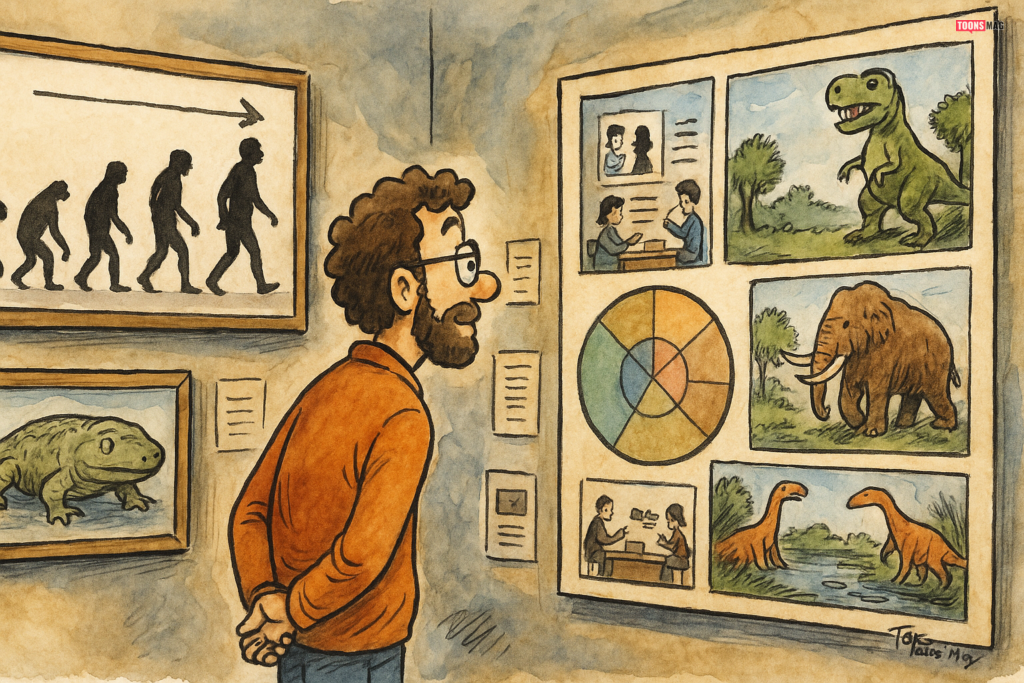
2. Conduct Meticulous Research and Ensure Scientific Accuracy
Natural history exhibitions carry a responsibility: presenting information truthfully and accessibly. Misrepresentation—whether in illustrations, labels, or models—can confuse or mislead audiences.
Key research considerations:
- Consult paleontologists, botanists, zoologists, and geologists when possible.
- Use peer-reviewed scientific sources and established museum references.
- Acknowledge scientific uncertainty (e.g., the color of certain extinct species).
- Update outdated interpretations—science evolves.
This is where collaboration with artists, illustrators, and cartoonists can be invaluable. Artists help visualize concepts, but curators must guide the scientific accuracy behind those visuals.
3. Design an Immersive, Story-Driven Layout
A natural history exhibition should feel like a journey, not a collection of static objects. Your layout shapes visitor engagement and emotional impact.
Tips for effective spatial storytelling:
- Start with a dramatic introduction—large models, lighting, or interactive elements.
- Arrange displays chronologically or thematically for natural flow.
- Mix visual elements: fossils, models, illustrations, dioramas, multimedia stations.
- Use color theory to subtly guide movement and mood.
- Allow spaces for “wonder breaks”—moments where visitors can pause and absorb.
Storytelling structure (beginning, development, climax, conclusion) transforms scientific information into an emotional narrative.
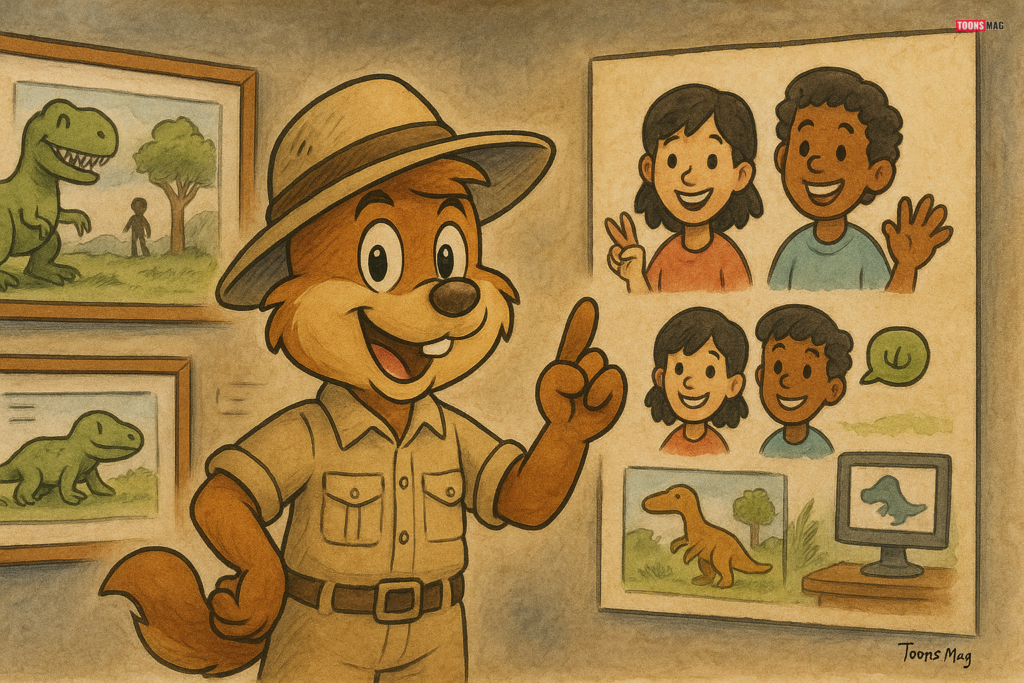
4. Use Illustrations and Visual Aids Thoughtfully
Natural history exhibitions rely heavily on visual communication. Scientific concepts such as evolution, geological time, and animal behavior are best explained with diagrams, lifelike illustrations, and engaging comic-style panels.
Visual tools that enhance understanding:
- Anatomical cross-sections
- Life reconstruction art of extinct species
- Behavioral sequences shown in cartoon panels
- Maps of migrations, habitats, and evolutionary branches
- Comparisons of size or diet through simplified drawings
- Cartoon characters acting as “guides” for younger visitors
Illustration is often more effective than photography because it can simplify, highlight, or re-imagine aspects of natural history that cannot be observed directly.
5. Balance Education with Interaction
Passive viewing can lead to fatigue. Effective exhibitions include hands-on and immersive components.
Ideas for interactive elements:
- Touch tables with casts of fossils or animal textures
- Microscopy stations
- Augmented reality (AR) that brings extinct animals to life
- Build-a-diorama corners
- “Dig pits” for children to uncover replica fossils
- Interactive timeline wheels or ecosystems puzzles
When designed well, interactive elements help create moments of wonder and foster retention of scientific concepts.
6. Craft Clear and Engaging Interpretive Texts
Writing for an exhibition is unlike writing for blogs or books. Labels must be concise, readable, and inviting.
Tips for strong interpretive writing:
- Use short paragraphs and accessible language.
- Offer compelling facts without overwhelming detail.
- Incorporate storytelling elements: “Did you know…?”, anecdotes, or mysteries.
- Provide context—why does this object matter?
- Use hierarchy: titles → subtitles → main text → fun facts.
You can also include humor or small cartoon illustrations to lighten complex topics—an approach that resonates particularly well with families.
7. Use Lighting and Sound to Shape Atmosphere
Atmosphere is a crucial but often overlooked dimension of natural history exhibitions.
Lighting strategies:
- Spotlight fossils and key objects.
- Use cool lighting for Ice Age exhibitions; warm tones for savannahs.
- Create shadows to mimic natural habitats.
Sound options:
- Environmental soundscapes (birds, water, wind).
- Subtle ambient music to reinforce immersion.
- Sound-triggered displays for interactivity.
Sensory elements help visitors feel emotionally connected to the content.
8. Consider Accessibility and Inclusivity at Every Step
An exhibition must work for everyone—not just those familiar with science.
Accessibility considerations:
- Clear signage for all ages and reading levels.
- Wheelchair-accessible pathways.
- Tactile elements for visually impaired visitors.
- Subtitles and transcripts for video content.
- Multilingual labels, especially in diverse communities.
Inclusivity improves both engagement and educational impact.
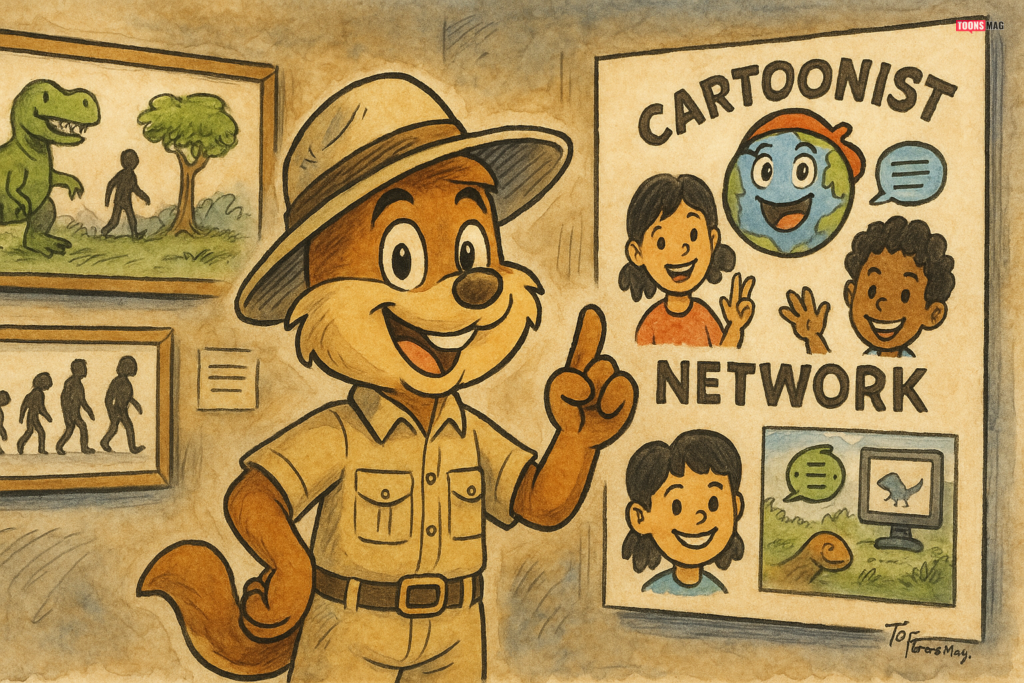
9. Build a Strong Identity Across Marketing and Branding
A natural history exhibition benefits from cohesive branding—posters, avatars, icons, and online content that match the tone of the exhibition.
Many organizations adopt cartoon mascots or illustrated characters to represent the exhibition, provide a sense of personality, and guide younger audiences. Communities like Cartoonist Network show how artists globally create strong identities through consistent visual storytelling, multilingual engagement, and user-centered design. This approach can inspire your exhibition’s branding strategy.
10. Test, Refine, and Learn From Visitor Feedback
Before opening day, conduct a soft launch or trial run.
Collect feedback on:
- Clarity of explanations
- Flow and navigation
- Time spent at each section
- Emotional engagement
- Visitor questions and confusions
After launch, continue observing visitor behavior. Which displays attract or confuse people? How long do they stay? Do they smile, linger, or rush? Refine accordingly.
Natural history is a field that evolves constantly—your exhibition should, too.
Bringing Natural History to Life Requires Art, Science, and Heart
A natural history exhibition is not a static display of scientific artifacts—it’s a living narrative about Earth’s past, present, and future. It blends:
- Scientific accuracy
- Artistic interpretation
- Immersive design
- Emotional storytelling
- Inclusive education
From the precision of fossils to the creativity of illustrations, from interactive experiences to atmospheric lighting, every detail works together to spark curiosity and inspire wonder.
Whether you’re curating a large museum exhibition or a small educational showcase, remember this guiding principle:
The goal is not just to display history, but to make visitors feel part of it.
This post was created with our nice and easy submission form. Create your post!