

 Sondre Borg

10 Essential Tools Every Cartoonist Needs: Cartooning is more than just putting pen to paper—it’s a form of storytelling that combines art, humor, and personality. Whether you’re dreaming of creating your own comic strip, animated series, or simply doodling for fun, having the right tools can make all the difference in your creative journey. In this guide, we’ll explore the ten essential tools every cartoonist should have, why they matter, and tips for getting started with each one.
Drawing on advice from experienced cartoonists and drawing instructors, this guide is designed to help you build your creative arsenal step by step. So grab your pencil, open your sketchbook, and let’s dive into the world of cartooning!
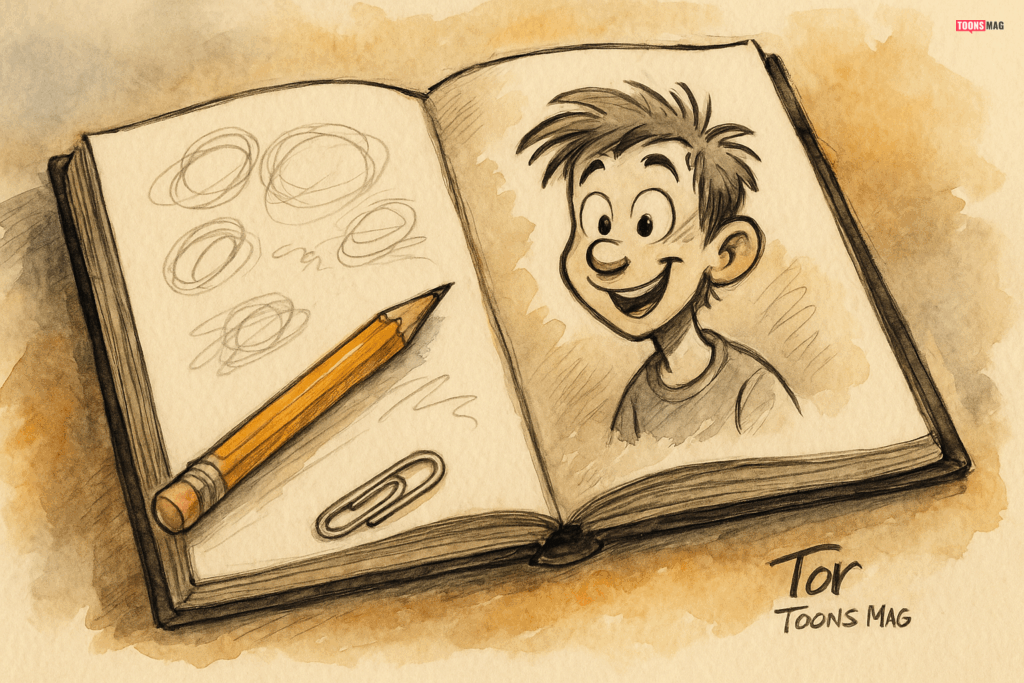
1. A Quality Sketchbook: Your Creative Playground
1.1 Why a Sketchbook Matters
A sketchbook is your visual diary—a place where ideas, doodles, and rough drafts come to life. It allows you to practice, experiment, and track your progress over time. For cartoonists, a good sketchbook is essential for:
- Daily Practice: Consistent drawing helps develop muscle memory and refine your style.
- Idea Generation: Jot down fleeting ideas and character concepts as they occur.
- Progress Tracking: Look back on your early sketches to appreciate how far you’ve come.
1.2 What to Look For
- Paper Quality: Choose a sketchbook with smooth, acid-free paper that can handle pencil, ink, and even light washes of watercolor.
- Size and Portability: Select a size that’s portable enough for on-the-go sketching but large enough to capture details.
- Binding: A spiral-bound sketchbook can lay flat, making it easier to work on your drawings.
Tip: Start with a basic, affordable sketchbook as you develop your style. You can upgrade later as your needs evolve.
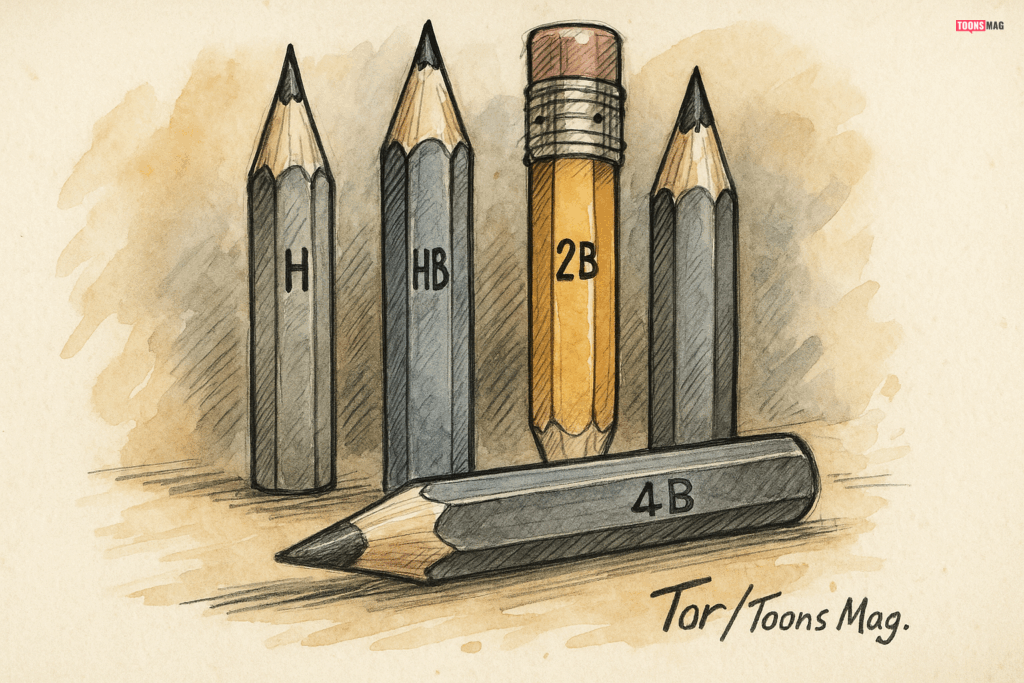
2. Graphite Pencils: The Foundation of Your Art
2.1 Mastering the Basics
Graphite pencils are the most fundamental drawing tool. They allow you to sketch freely, adjust your lines, and create everything from light guidelines to bold, confident strokes.
2.2 Essential Pencil Grades
- Hard Pencils (H, 2H): Ideal for fine, light lines and initial sketches.
- Medium Pencils (HB, F): Perfect for general use and adding more defined outlines.
- Soft Pencils (2B, 4B, 6B): Great for darker lines, shading, and adding depth.
Tip: A set of various grades will help you experiment with different textures and values in your cartoon sketches. Many cartoonists start by practicing simple shapes and figures with these pencils to build a strong foundation.
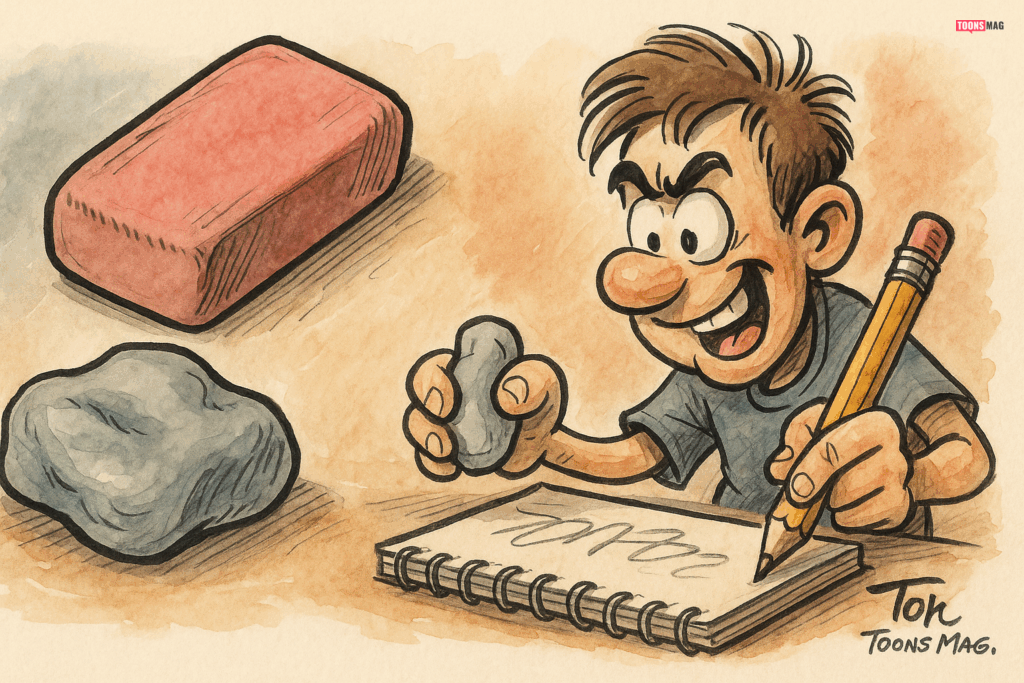
3. Erasers: Refining Your Work
3.1 Types of Erasers
Mistakes are a natural part of learning to draw. Having the right eraser can save your artwork and allow for experimentation:
- Kneaded Eraser: Perfect for gently lifting graphite without damaging the paper. It can be molded to erase small details.
- Rubber Eraser: Effective for more precise corrections and cleaning up lines.
- Electric Eraser: For those who want even more control over erasing tiny areas.
3.2 Best Practices
- Use a kneaded eraser to lighten or remove faint lines and to create highlights.
- Avoid over-erasing; leaving a bit of the sketch can add character and texture to your work.
Tip: Experiment with different eraser pressures to see how they affect your lines. This practice can help you control the final look of your sketches.
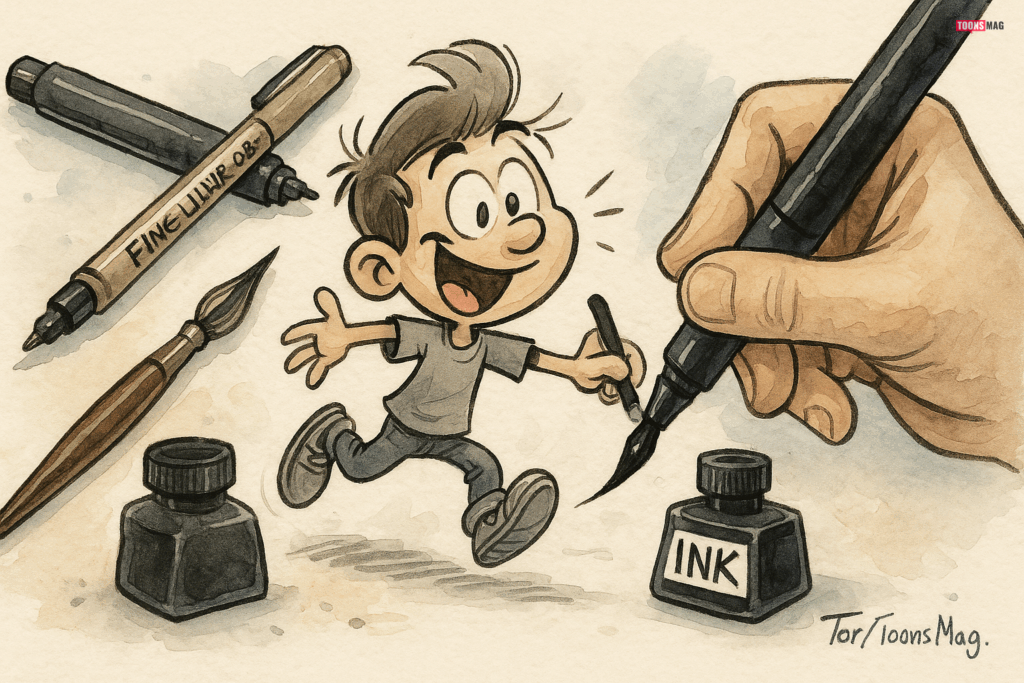
4. Inking Tools: Bringing Your Drawings to Life
4.1 Why Ink?
Inking is the process of going over your pencil sketches with a pen or marker to create clear, definitive lines. This step is essential for turning rough sketches into finished, polished cartoons.
4.2 Essential Inking Tools
- Fine-Liner Pens: Ideal for precise outlines and details. Brands like Micron and Sakura Pigma Micron are popular among cartoonists.
- Brush Pens: Provide a dynamic line that can vary in thickness, adding a sense of movement and expression.
- Dip Pens and India Ink: Traditional tools that offer a classic look and a range of line qualities.
4.3 Tips for Inking
- Always allow your pencil sketch to fully dry before inking to prevent smudging.
- Practice varying your line weight—thicker lines can emphasize shadows and outlines, while thinner lines add subtle detail.
- Consider using light pressure for underdrawings that can be erased later.
Tip: Experiment with different inking techniques on scrap paper to find the style that suits your cartooning vision best.
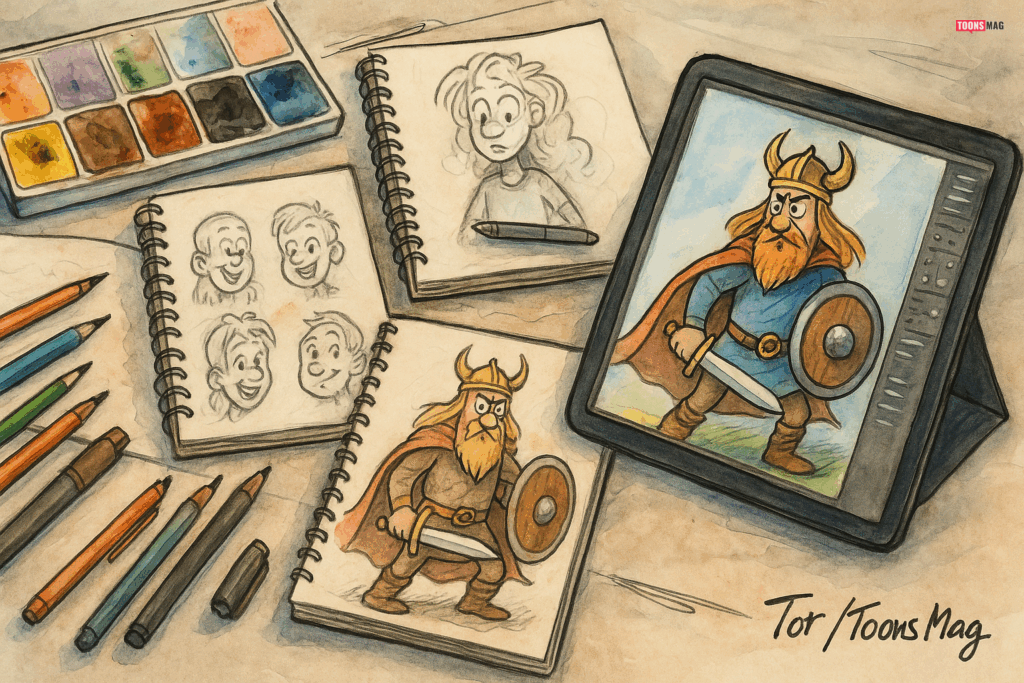
5. Coloring Tools: Adding Life and Emotion
5.1 Traditional vs. Digital Coloring
Color can transform your cartoons by adding mood and vibrancy. You can choose traditional coloring methods or embrace digital techniques.
5.2 Traditional Coloring Tools
- Colored Pencils: Offer control and are excellent for layering colors.
- Markers: Provide bold, saturated hues and are great for smooth color transitions.
- Watercolors: Ideal for creating soft backgrounds and adding subtle gradients.
5.3 Digital Coloring Options
- Markers and Brush Tools in Software: Programs like Adobe Photoshop, Clip Studio Paint, or Procreate offer digital brushes that mimic traditional media.
- Blending Modes and Layers: Digital tools allow you to experiment with color blending and layering without irreversible changes.
Tip: If you’re starting out, try both methods to see which one you prefer. Traditional coloring helps you understand color theory, while digital tools can offer quick adjustments and experimentation.
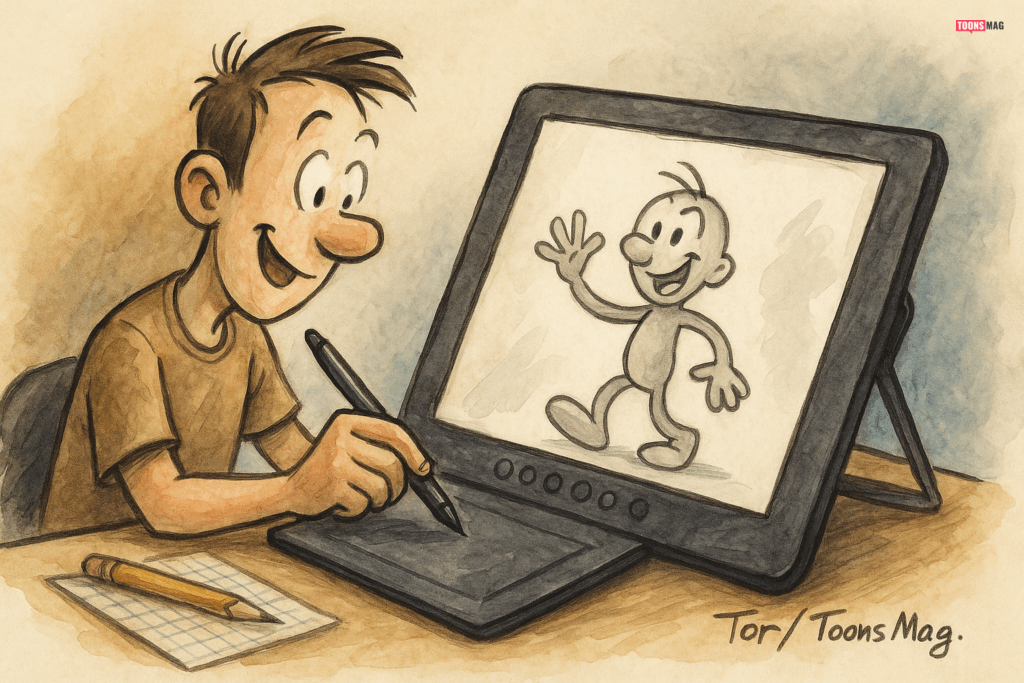
6. A Drawing Tablet: Transitioning to Digital Cartooning
6.1 Why Use a Drawing Tablet?
A drawing tablet is a game-changer for cartoonists, offering the flexibility and convenience of digital art while retaining the natural feel of drawing.
6.2 Choosing the Right Tablet
- Budget: Options range from affordable entry-level tablets (like Wacom Intuos) to professional-grade devices (like Wacom Cintiq or iPad Pro with Apple Pencil).
- Size and Resolution: Ensure the tablet is large enough for detailed work and has a high-resolution display.
- Pressure Sensitivity: Look for tablets with high levels of pressure sensitivity to capture the nuances of your drawing.
6.3 Getting Started with Digital Drawing
- Begin with basic exercises to get comfortable with the tablet’s surface and sensitivity.
- Explore digital drawing software that suits your workflow. Clip Studio Paint and Procreate are popular choices for cartoonists.
- Experiment with different brushes and textures to replicate traditional art techniques.
Tip: Watch tutorials on YouTube (e.g., channels like “Draw with Jazza”) to learn tips and tricks for using your tablet effectively.
7. Digital Art Software: The Backbone of Modern Cartooning
7.1 Key Software Programs
Digital art software is where your creative ideas take shape. Some popular programs include:
- Adobe Photoshop: A versatile tool with a wide range of brushes and effects.
- Clip Studio Paint: Designed specifically for comics and manga, it offers excellent panel layout tools and inking options.
- Procreate: A user-friendly app for the iPad that’s perfect for sketching and finishing artwork.
7.2 Features to Explore
- Layers: Use layers to separate different elements of your drawing, making it easier to edit without affecting the whole piece.
- Custom Brushes: Create or download brushes that replicate the look of traditional tools.
- Undo and Redo: Digital software allows for non-destructive editing, so you can experiment without fear of making permanent mistakes.
Tip: Many software options offer free trials—take advantage of these to see which interface you find most intuitive before committing.
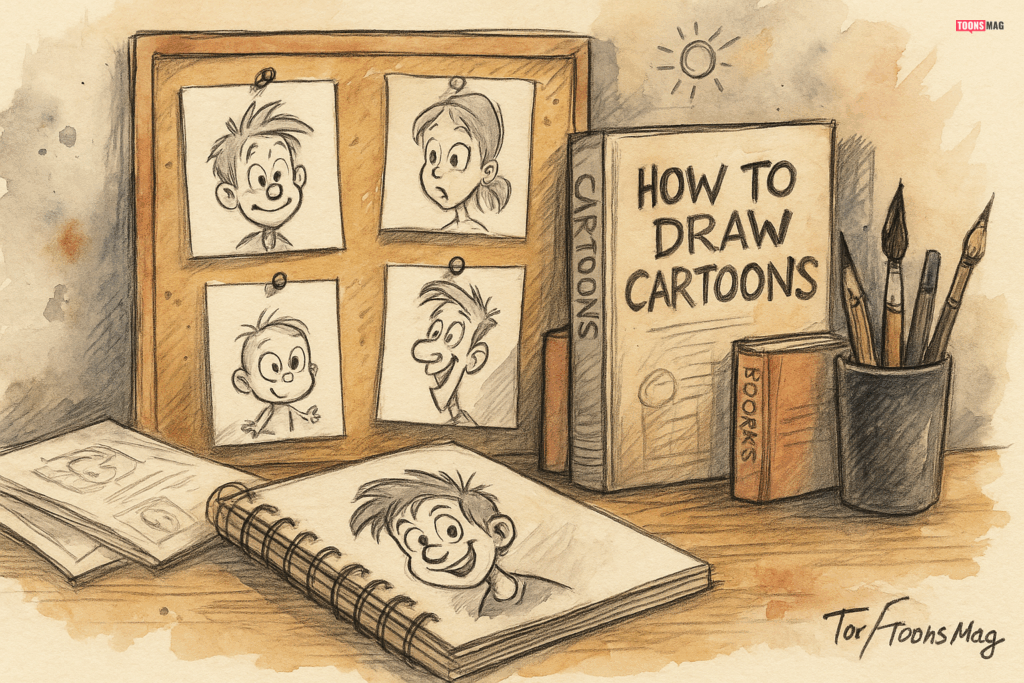
8. Reference Materials and Inspirational Resources
8.1 Learning from the Masters
Study the work of experienced cartoonists to understand their techniques. Resources like:
- Books: How-To-Draw guides (e.g., “Cartooning for the Beginner” by Christopher Hart) offer structured lessons.
- Online Tutorials: Platforms like YouTube, Skillshare, and Udemy provide video tutorials that can help you learn step by step.
8.2 Keeping a Visual Library
Collect images, sketches, and inspirational pieces that spark your creativity. Consider:
- Art Books and Magazines: They offer insights into different styles and techniques.
- Online Communities: Websites like Reddit’s r/learnart or DeviantArt are great for feedback and inspiration.
- Reference Photos: Create a digital folder or physical board with images that illustrate poses, expressions, and character designs.
Tip: Regularly revisit your reference materials to spark new ideas and refine your understanding of different styles.
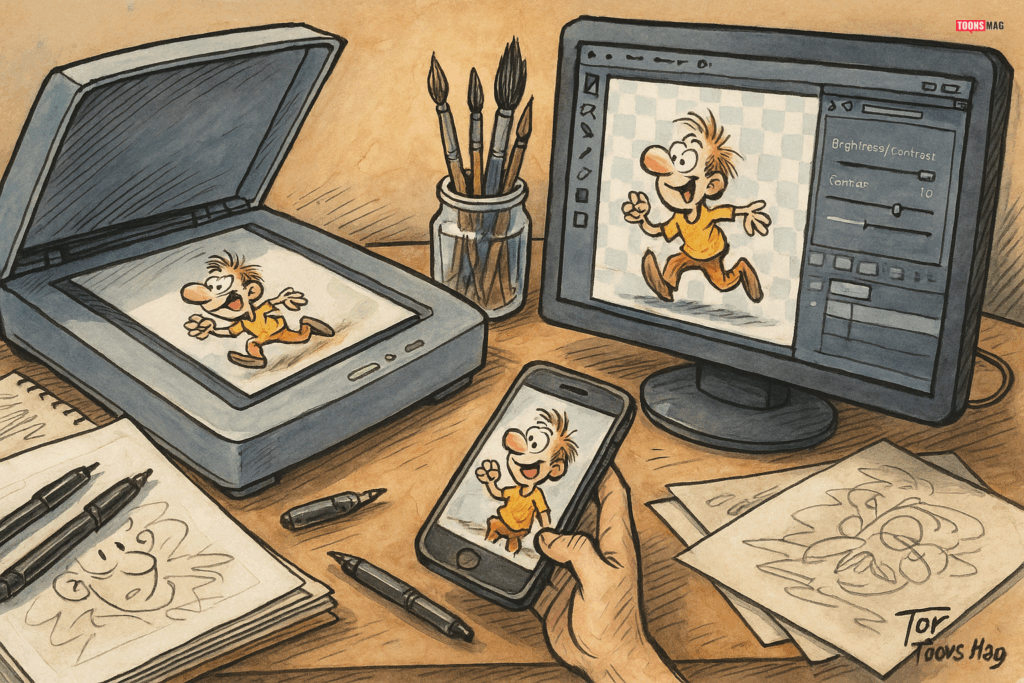
9. Scanning and Photography Equipment: Digitizing Your Art
9.1 Why Digitize Your Work?
Digitizing your traditional drawings allows you to:
- Edit and Enhance: Use digital software to refine your sketches.
- Share Online: Build an online portfolio or share your art on social media.
- Preserve Your Work: Create backups to ensure your art is never lost.
9.2 Essential Tools
- Scanner: A flatbed scanner is ideal for capturing high-quality images of your artwork. Look for one with a high resolution (at least 600 dpi).
- Digital Camera or Smartphone: Modern smartphones have excellent cameras that can capture your art if a scanner isn’t available.
- Photo Editing Software: Programs like Adobe Lightroom or Photoshop can help adjust brightness, contrast, and color balance.
Tip: Ensure your workspace is well-lit and that your artwork is flat when scanning or photographing, to maintain the quality and details.
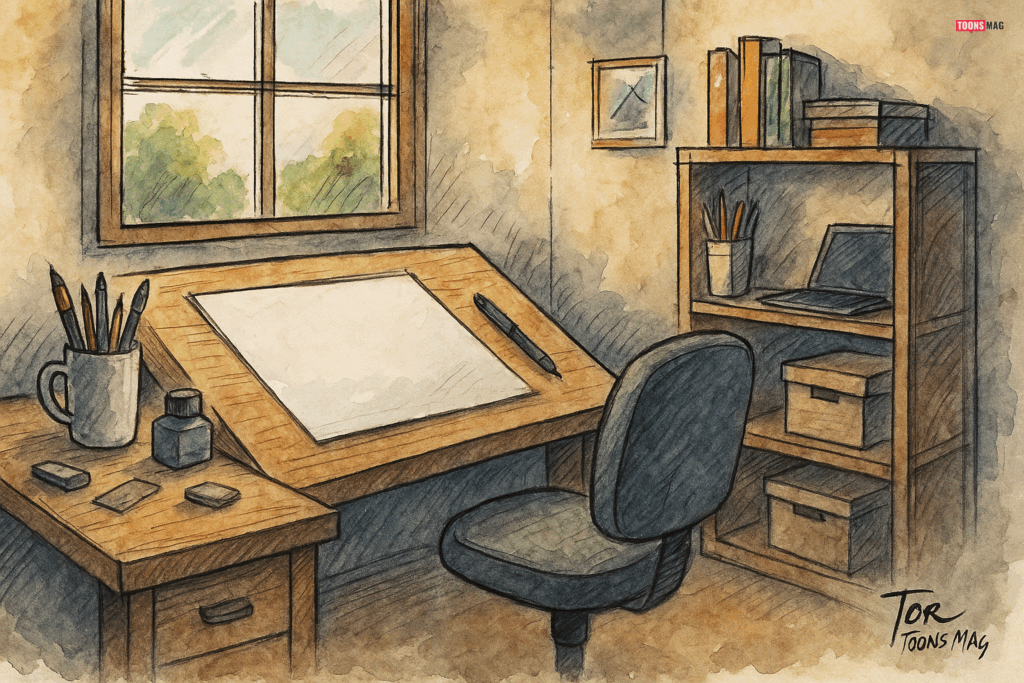
10. A Dedicated Workspace: Organizing Your Creative Life
10.1 Setting Up Your Studio
A well-organized workspace can significantly enhance your productivity:
- Desk and Chair: Invest in a comfortable, ergonomic chair and a spacious desk where you can spread out your materials.
- Storage Solutions: Use shelves, drawers, or organizers to keep your tools, sketchbooks, and reference materials in order.
- Lighting: Good lighting is essential—natural light is best, but adjustable desk lamps can also do the job.
10.2 Creating a Creative Atmosphere
- Inspirational Decor: Surround yourself with art that inspires you—posters, prints, or even a vision board.
- Minimize Distractions: Set up a quiet, dedicated area where you can focus on your art without interruptions.
- Technology Setup: If you work digitally, ensure your computer or tablet is set up with all the necessary software and has a comfortable workspace.
Tip: Personalize your workspace with items that make you feel creative and motivated—every artist’s ideal studio is unique!
11. Staying Inspired: Tools Beyond the Drawing Board
11.1 Creative Journals and Sketchbooks
Keeping a creative journal helps you capture ideas on the fly:
- Idea Log: Write down new concepts, doodles, and character ideas as they come.
- Progress Tracking: Review your earlier sketches to see your evolution as an artist.
- Experimentation: Use the journal to try out new techniques without the pressure of producing finished work.
11.2 Online Communities and Social Media
Engage with other artists for feedback and inspiration:
- Art Forums and Subreddits: Platforms like r/learnart and r/Cartoonists offer support and critique.
- Social Media Groups: Join Facebook groups or follow Instagram accounts dedicated to cartooning.
- Art Challenges: Participate in weekly or monthly art challenges to push your creative boundaries.
Tip: Sharing your work and receiving constructive feedback can be incredibly motivating. Don’t be afraid to show your progress!
12. Educational Resources: Learning and Growing as a Cartoonist
12.1 Books and Guides
Instructional books can provide a structured learning path:
- How-To-Draw Books: Titles like “Cartooning for the Beginner” offer step-by-step lessons.
- Art Technique Books: Books on anatomy, perspective, and composition are invaluable.
- Online Courses: Platforms like Skillshare and Udemy offer courses specifically focused on cartooning and character design.
12.2 Workshops and Classes
Consider joining a local art class or workshop:
- Community Centers: Many offer drawing classes for beginners.
- College Courses: Some community colleges or art schools have courses in cartooning or illustration.
- Online Workshops: Virtual classes can provide guidance without geographic limitations.
Tip: Combining self-study with formal instruction can accelerate your progress and expose you to different techniques and perspectives.
13. Practice Exercises and Creative Challenges
13.1 Daily Sketching Routine
Commit to drawing every day, even if it’s just a quick doodle:
- Set a Timer: Draw for 10–15 minutes daily to build consistency.
- Doodle Challenges: Try drawing objects around you or inventing a character based on random words.
13.2 Copying the Masters
Learn by imitating your favorite cartoonists:
- Study Their Work: Analyze how established artists simplify shapes and exaggerate features.
- Recreate Panels: Copy sections of comic strips to understand composition and style.
- Mix and Match: Combine elements from different artists to inspire your unique creations.
Tip: Don’t worry if your reproductions aren’t perfect—this practice is about learning the techniques and principles that make cartoons engaging.
14. Overcoming Creative Blocks and Staying Motivated
14.1 Embracing Imperfection
Every artist encounters frustration and self-doubt:
- Learn from Mistakes: Use errors as opportunities to refine your skills.
- Keep a Progress Log: Regularly review your work to see improvement over time.
- Stay Positive: Remember that every professional cartoonist started as a beginner.
14.2 Finding New Inspiration
When you’re stuck, try new approaches:
- Change Your Medium: Experiment with different tools or digital techniques.
- Collaborate with Others: Join art communities or work with friends to spark new ideas.
- Explore Other Art Forms: Look at animation, graphic novels, and even music videos for creative ideas.
Tip: Sometimes taking a break and coming back with fresh eyes can make all the difference.
15. Expanding Your Skill Set: Beyond Cartooning
15.1 Exploring Animation Principles
Understanding animation can enhance your cartooning:
- Basic Animation Techniques: Study the twelve basic principles of animation to learn about timing, exaggeration, and fluid movement.
- Storyboarding: Practice creating simple storyboards to visualize movement and narrative flow.
- Digital Animation Tools: Even if your primary focus is static cartoons, learning about animation software can add a new dimension to your work.
15.2 Experimenting with Different Styles
Don’t be afraid to try various cartoon styles:
- Traditional vs. Digital: Experiment with hand-drawn and digital techniques to discover what feels right for you.
- Manga and Anime: Explore different cultural styles, such as manga, to broaden your artistic vocabulary.
- Personal Fusion: Mix elements from multiple styles to develop a signature look that’s uniquely yours.
Tip: The more styles you experiment with, the easier it becomes to identify what resonates with you and your creative voice.
16. Networking and Sharing Your Work
16.1 Building an Online Presence
In today’s digital world, sharing your art online is crucial:
- Social Media Platforms: Instagram, Twitter, and Facebook are great for showcasing your cartoons.
- Online Portfolios: Create a website or use platforms like ArtStation to display your work professionally.
- Community Engagement: Participate in forums like r/learnart on Reddit for constructive feedback and networking.
16.2 Participating in Competitions and Exhibitions
Competitions and art shows can provide exposure and boost your confidence:
- Local Art Competitions: Look for community events or local galleries hosting art contests.
- Online Challenges: Join online art challenges to push your creative boundaries and gain feedback.
- Collaborative Projects: Work on group projects with other aspiring cartoonists to learn from each other.
Tip: Networking not only helps you improve but can also open doors to potential commissions or collaborative opportunities.
17. Time Management and Building a Routine
17.1 Creating a Consistent Schedule
Success in cartooning, like any creative field, requires dedication:
- Set Specific Goals: Whether it’s completing a comic strip or improving your character design, set clear, achievable targets.
- Establish a Daily Routine: Even 15–30 minutes of focused drawing each day can lead to substantial improvements over time.
- Track Your Progress: Keep a calendar or journal to mark milestones and reflect on your growth.
17.2 Balancing Practice with Learning
It’s important to balance free drawing with structured lessons:
- Mix Practice and Tutorials: Alternate between following step-by-step tutorials and sketching freely.
- Evaluate and Adjust: Periodically assess your routine and make adjustments to keep your practice fresh and engaging.
- Stay Flexible: Allow yourself time off when needed—creative breaks can recharge your imagination.
Tip: Consistency is key. Over time, even small daily efforts add up to significant improvement.
18. Essential Online Resources and Communities
18.1 Free Tutorials and Guides
There are plenty of online resources to help you get started:
- YouTube Channels: Channels like “Draw with Jazza” and “How to Draw Cartoons” offer step-by-step lessons.
- Art Websites: Websites like DrawingNow and CartoonStudies provide free tutorials and tips.
- Blogs and Forums: Join communities on Reddit (such as r/learnart) for advice, feedback, and inspiration.
18.2 Online Courses and eBooks
For a more structured approach, consider online courses:
- Skillshare and Udemy: Both platforms offer courses tailored to cartooning and character design.
- EBooks: Guides like “The Practical Step-by-Step Guide to Drawing Cartoons, Manga and Anime” offer comprehensive lessons.
Tip: Experiment with different resources until you find the ones that best match your learning style.
19. Investing in Your Development: Workshops and Mentorships
19.1 Local Classes and Workshops
Check out local community centers, colleges, or art schools that offer drawing or cartooning classes. These settings provide:
- Hands-On Learning: Direct interaction with instructors.
- Peer Feedback: Opportunities to share your work with fellow learners.
- Structured Curriculum: A systematic approach to building your skills.
19.2 Finding a Mentor
A mentor can provide invaluable guidance:
- Local Artists: Reach out to local cartoonists or illustrators who may offer mentoring sessions.
- Online Communities: Platforms like DeviantArt or Reddit can connect you with experienced artists willing to share their knowledge.
- Art Critique Groups: Join groups where feedback is encouraged and constructive criticism is part of the learning process.
Tip: Mentorship can fast-track your development, providing personalized advice and inspiration that’s tailored to your work.
20. 10 Essential Tools Every Cartoonist Needs: Your Journey as a Cartoonist Begins Today
Embarking on your cartooning journey is both exciting and challenging. With the right tools, consistent practice, and a willingness to learn from both mistakes and masters, you can develop your own unique style and voice. Here’s a quick recap of the ten essential tools every cartoonist needs:
- Quality Sketchbook: Your canvas for daily practice and creative exploration.
- Graphite Pencils: Essential for sketching, shading, and creating detailed drawings.
- Erasers: Tools like kneaded and rubber erasers to refine and correct your work.
- Inking Tools: Fine-liner pens, brush pens, or dip pens to transform your sketches into bold, definitive art.
- Coloring Tools: Whether traditional markers and colored pencils or digital tools, color adds life and mood to your cartoons.
- Drawing Tablet: A digital alternative that offers versatility and precision, perfect for modern cartooning.
- Digital Art Software: Programs such as Adobe Photoshop, Clip Studio Paint, or Procreate to polish and enhance your work.
- Reference Materials: Books, tutorials, and online communities that provide inspiration and instruction.
- Scanning/Photography Tools: To digitize your traditional art for editing, sharing, or archiving.
- Dedicated Workspace: A well-organized, inspiring studio that nurtures your creativity and keeps your tools at hand.
Remember, the journey of cartooning is about enjoying the process as much as the final result. Every sketch, every line, and every corrected mistake brings you closer to mastering your craft. Embrace the learning process, seek inspiration from other artists, and most importantly—keep drawing!
Starting your cartooning adventure may seem daunting at first, but with these essential tools and a commitment to practice, you’ll find yourself evolving as an artist. Your creative journey is uniquely yours—so take these tips, experiment with different techniques, and most importantly, have fun with your art. Happy drawing!
This post was created with our nice and easy submission form. Create your post!



One Comment