



 Sondre Borg

Imagine a world where images tell stories with as much depth as words—where intricate drawings burst with emotion, humor, and action, and where fantastical heroes and everyday characters coexist on the same page. That’s the world of manga and anime. Over the decades, this vibrant art form has transformed from early woodblock prints into a global entertainment powerhouse, captivating millions around the world. In this article, we’ll explore the origins of manga and anime, tracing their roots from ancient Japanese art to the modern digital era, and reveal how they came to shape a cultural phenomenon that transcends borders.
1. Introduction: A Gateway to Imagination
Manga and anime are more than just comics and cartoons—they are a window into Japanese culture, reflecting a unique blend of tradition and innovation. For many, these art forms evoke memories of long, lazy afternoons spent reading manga or watching anime series, and they continue to inspire new generations with their rich narratives and expressive visuals. But how did this phenomenon begin? Let’s dive into the history and evolution of manga and anime and discover how they became such a powerful cultural force.
2. Early Inspirations: The Roots in Traditional Japanese Art
2.1 Ukiyo-e and Woodblock Prints
Before manga and anime became synonymous with modern Japan, the country had a long history of visual storytelling through ukiyo-e—woodblock prints that flourished from the 17th to the 19th centuries. These prints often depicted everyday life, nature, and scenes from famous stories, using bold lines and striking compositions that continue to influence Japanese aesthetics today.
Ukiyo-e artists like Hokusai and Hiroshige created images that were not just decorative but also narrative in nature. Their work captured the spirit of an era and laid the visual groundwork for later sequential art forms. Imagine the sweeping landscapes, dynamic figures, and dramatic use of perspective—qualities that can still be seen in modern manga and anime.
2.2 Emaki: Scrolls that Told Tales
Another major influence was the emaki, or illustrated handscrolls, from Japan’s medieval period. These scrolls combined text and images to tell stories, much like a visual novel. They allowed viewers to slowly unroll a tale filled with intricate details and emotional depth. Emaki can be seen as early ancestors of modern manga, where the narrative unfolds panel by panel as you read along.
3. The Birth of Modern Manga
3.1 The Pioneering Work of Rakuten Kitazawa
In the early 20th century, manga began to take on a form closer to what we recognize today. Rakuten Kitazawa is often credited as one of the first modern manga artists. His work, characterized by playful characters and humorous storylines, helped set the stage for a new style of comic art that was uniquely Japanese.
Kitazawa’s cartoons were published in popular magazines, reaching a wide audience and establishing manga as a mainstream medium. His style—simple yet expressive—combined traditional Japanese influences with Western cartoon techniques, creating a hybrid that resonated with the public.
3.2 Post-War Innovations and the Manga Boom
After World War II, Japan experienced a cultural and economic renaissance that spurred the rapid development of manga. Artists such as Osamu Tezuka revolutionized the medium by introducing cinematic techniques and more complex narratives. Tezuka’s work, especially the epic series Astro Boy, brought manga into a new era of storytelling and set standards for character design, pacing, and emotional depth.
Tezuka’s approach was transformative. He once said he wanted to create “a new kind of comic that would change the world.” His influence can be seen in nearly every modern manga series, and his innovations laid the foundation for the diverse and rich manga industry we see today.

4. The Emergence of Anime: From Manga to Moving Pictures
4.1 Early Experimental Animations
As manga grew in popularity, Japanese filmmakers began experimenting with ways to bring these static images to life. Early animations in the 1910s and 1920s were short, experimental films that tried to capture movement through hand-drawn sequences. Although primitive, these experiments laid the groundwork for what would eventually become anime.
Innovators in early Japanese animation used techniques such as cel animation, which involved drawing characters on transparent sheets and layering them over fixed backgrounds. This process was labor-intensive but allowed for smoother motion and greater detail—paving the way for more sophisticated productions.
4.2 The Influence of Osamu Tezuka on Anime
No discussion of anime’s origins would be complete without mentioning Osamu Tezuka. Often referred to as the “god of manga,” Tezuka’s storytelling techniques were easily adapted into the animated form. His work in the 1960s, particularly the TV series Astro Boy, set a high standard for anime with its dynamic action, engaging characters, and emotionally resonant plots.
Tezuka’s innovations included the use of cinematic storytelling techniques—such as dramatic close-ups, varied panel compositions, and carefully timed sequences—that translated beautifully into animation. His vision for anime as a medium capable of telling deep, multifaceted stories forever changed the landscape of Japanese animation.
5. The Golden Age of Anime: 1960s to 1980s
5.1 The Rise of Iconic Series
The period from the 1960s to the 1980s is often considered the golden age of anime. During this time, anime evolved into a distinct art form with a diverse range of genres and themes. Classic series such as Speed Racer, Mazinger Z, and Mobile Suit Gundam captured the imaginations of viewers with their groundbreaking visuals and epic storytelling.
These series not only entertained but also reflected the hopes and dreams of a rapidly modernizing Japan. They addressed themes of technology, human conflict, and social change, resonating with both domestic audiences and international viewers. The characters from these shows became cultural icons, and their influence is still felt in contemporary anime.
5.2 Technological Advances and Artistic Flourishing
Technological improvements played a major role during this golden era. Better animation techniques, enhanced color palettes, and more efficient production methods allowed for richer visuals and more intricate storytelling. Anime studios like Toei Animation, Sunrise, and Studio Ghibli began to emerge as powerhouses, each contributing unique styles and narratives to the medium.
The artistic diversity during this period was astounding. Some series focused on high-octane action and futuristic battles, while others explored heartwarming stories and fantasy worlds. This period set the stage for anime’s expansion into global markets, establishing its reputation for creativity and innovation.
6. The Impact of Manga and Anime on Global Culture
6.1 Crossing Borders: The International Appeal
What started as a distinctly Japanese art form has grown into a global phenomenon. Today, manga and anime have legions of fans around the world, influencing art, fashion, music, and even literature. The universal themes of love, loss, adventure, and triumph resonate with people of all ages and backgrounds.
Global conventions, online fan communities, and international streaming platforms have helped spread the reach of manga and anime far beyond Japan’s borders. Shows like Naruto, Dragon Ball Z, and One Piece have become household names, sparking merchandise, adaptations, and even academic studies. The cross-cultural appeal of these media demonstrates their power to bridge cultural divides and bring people together through shared stories and characters.
6.2 Cultural Exchange and Creative Collaboration
The international popularity of manga and anime has led to exciting cross-cultural collaborations. Japanese creators frequently collaborate with artists and writers from other countries, infusing their work with diverse perspectives and ideas. This creative exchange has enriched both the manga and anime industries, fostering an environment where innovation is constantly nurtured.
Moreover, Western artists have drawn inspiration from Japanese art styles, integrating elements of manga aesthetics into their own work. This blending of artistic traditions has contributed to a more globalized and dynamic visual culture, where ideas and techniques are freely shared and celebrated.

7. Genres and Themes: A Rich Tapestry of Stories
7.1 Shonen and Shojo: Catering to Different Audiences
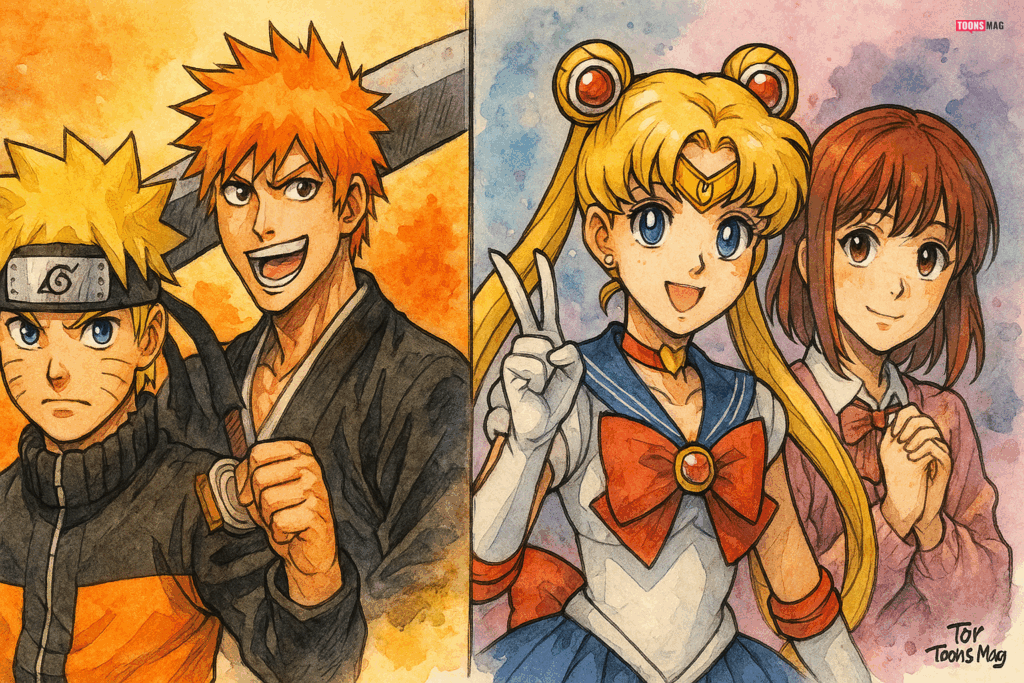
Manga and anime are celebrated for their incredible range of genres. Two of the most popular categories are shonen (targeted at young boys) and shojo (aimed at young girls). Shonen series, like Naruto and Bleach, typically feature action-packed adventures, camaraderie, and the pursuit of personal growth. In contrast, shojo series, such as Sailor Moon and Fruits Basket, often focus on romance, personal relationships, and emotional journeys.
Each genre offers unique storytelling techniques and character dynamics, ensuring that there’s something for everyone. This diversity is one of the key reasons behind manga and anime’s widespread appeal and lasting popularity.
7.2 Seinen and Josei: Exploring Mature Themes
Beyond shonen and shojo, the manga and anime industries also produce seinen (aimed at adult men) and josei (targeted at adult women) works. These categories delve into more sophisticated and realistic themes, such as existential angst, societal pressures, and complex interpersonal relationships. Series like Monster and Ghost in the Shell challenge audiences with thought-provoking narratives and nuanced character studies.
These mature works demonstrate that manga and anime are not confined to simple entertainment—they are capable of exploring intricate topics and evoking deep emotional responses, making them a powerful medium for storytelling across all age groups.
7.3 Niche Genres and Experimental Narratives
One of the most exciting aspects of manga and anime is the sheer variety of genres available. From horror and science fiction to slice-of-life and sports, the possibilities are nearly endless. This willingness to experiment has led to the creation of niche genres and avant-garde narratives that push the boundaries of traditional storytelling. These experimental works attract dedicated fan bases and contribute to the overall richness of the medium.
8. The Role of Technology: From Hand-Drawn to Digital Mastery
8.1 Traditional Techniques: The Art of Hand-Drawn Animation
For many decades, manga and anime were created entirely by hand. Talented artists painstakingly drew each frame, imbuing their work with a personal touch that digital techniques sometimes struggle to replicate. Hand-drawn animation brought a unique warmth and fluidity to early works, making each panel and frame a testament to the artist’s skill.
8.2 The Digital Revolution: Enhancing Creativity
As technology advanced, digital tools began to revolutionize the production of manga and anime. Computers allowed artists to work faster and with greater precision, enabling the creation of more complex visual effects and vibrant color schemes. The integration of digital techniques did not replace traditional artistry; rather, it enhanced it. Today’s creators often blend hand-drawn elements with digital effects to produce works that are both innovative and true to the spirit of their origins.
8.3 Impact on Global Distribution and Fan Engagement
Digital technology has also transformed how manga and anime reach audiences. Online platforms, streaming services, and digital publishing have made it easier than ever for fans around the world to access their favorite series. Social media, in particular, has fostered vibrant communities where fans can share their passion, discuss theories, and even influence future productions. This digital shift has helped maintain the global popularity of manga and anime, ensuring that they remain at the forefront of popular culture.

9. The Business of Manga and Anime: From Niche Markets to Global Empires
9.1 The Rise of Manga Magazines and Serialization
One of the keys to manga’s success was its serialization in magazines. Weekly and monthly manga magazines became a staple in Japan, where fans eagerly awaited the latest chapters of their favorite series. This format not only kept readers engaged but also allowed creators to develop their narratives over time. The serialized approach enabled manga to become a daily part of people’s lives, cementing its role as a cultural cornerstone.
9.2 Licensing, Merchandising, and Multimedia Franchises
The explosive popularity of manga and anime led to the creation of vast merchandising empires. Iconic series spawned toys, clothing, video games, and even theme parks. Licensing deals and multimedia franchises turned manga and anime into global business powerhouses. The success of franchises like Naruto, One Piece, and Dragon Ball Z is a testament to the commercial potential of these art forms, as well as their ability to capture the imagination of audiences worldwide.
9.3 Global Expansion and Cultural Exchange
As manga and anime crossed borders, they encountered diverse cultures and markets. This global expansion was facilitated by translation, international licensing, and the rise of digital distribution platforms. Today, manga and anime are celebrated worldwide, influencing artistic trends, fashion, and even language. This cultural exchange has not only enriched the medium but also created a global community of fans and creators who continue to drive its evolution.
10. The Impact on Society and Pop Culture
10.1 Shaping Modern Visual Storytelling
Manga and anime have had a profound influence on modern visual storytelling. Their unique blend of narrative, character design, and visual symbolism has inspired countless artists and filmmakers. The techniques honed in manga panels—dynamic compositions, emotional character expressions, and imaginative world-building—can be seen in Western comics, films, and even video games.
10.2 Influencing Fashion, Music, and Lifestyle
Beyond the pages of comic books and television screens, manga and anime have seeped into everyday culture. Japanese street fashion, music genres like J-pop, and even the design of everyday products have been influenced by the aesthetics and themes found in manga and anime. This cultural permeation demonstrates that these art forms are more than just entertainment—they are integral to contemporary cultural identity.
10.3 Building Communities and Inspiring Innovation
One of the most remarkable aspects of manga and anime is their ability to build passionate, global communities. Fans gather at conventions, online forums, and social media groups to celebrate their favorite series and share fan art, cosplay, and theories. This vibrant community not only supports creators but also drives innovation in the medium, as feedback and collaboration spark new ideas and projects.
11. The Role of Festivals, Conventions, and Awards
11.1 Celebrating the Art of Manga and Anime
Festivals and conventions dedicated to manga and anime have become significant cultural events. These gatherings provide fans with opportunities to meet creators, attend panels, and celebrate the artistry of their favorite series. Events like Anime Expo, Comic Market (Comiket), and Tokyo International Anime Fair highlight the importance of manga and anime as cultural phenomena.
11.2 Recognizing Creative Excellence
Awards and honors for manga and anime help recognize the talent and innovation of creators. Prestigious awards such as the Tezuka Osamu Cultural Prize and the Shogakukan Manga Award celebrate excellence in storytelling, art, and impact. These accolades not only honor the achievements of individual creators but also elevate the status of manga and anime within the broader artistic community.

12. Challenges and Criticisms: Reflecting on the Evolution
12.1 Debates Over Artistic Authenticity
As manga and anime have grown into global industries, debates have arisen over issues of authenticity and cultural appropriation. Some critics argue that as the medium expands internationally, the unique characteristics of traditional manga risk being diluted. Others contend that cross-cultural exchange enriches the art form, leading to fresh perspectives and innovative storytelling.
12.2 The Impact of Commercialization
The commercialization of manga and anime has brought both opportunities and challenges. While licensing deals, merchandise, and global franchises have fueled growth, they have also led to concerns about over-saturation and the prioritization of profit over artistic integrity. Balancing commercial success with creative expression remains an ongoing challenge for many creators in the industry.
The digital revolution has transformed the way manga and anime are produced, distributed, and consumed. While digital platforms have expanded reach, they have also introduced new challenges, such as piracy and the pressure to constantly update content. These factors have forced creators and publishers to continually adapt, ensuring that the medium remains vibrant and relevant in a rapidly changing technological landscape.
13. The Future of Manga and Anime: Trends and Possibilities
13.1 Embracing Technological Innovations
Looking ahead, technology will continue to reshape manga and anime. Virtual reality (VR), augmented reality (AR), and interactive storytelling offer exciting new ways to experience these art forms. Imagine stepping into your favorite anime world through VR or engaging with manga panels in an interactive digital format—these innovations promise to deepen the connection between creators and audiences.
13.2 Broadening Horizons Through Global Collaboration
The future of manga and anime is inherently global. As creators from different cultures collaborate and share ideas, the art form will continue to evolve in unexpected and exciting ways. This global dialogue not only enriches the narratives but also ensures that manga and anime remain inclusive and reflective of diverse perspectives.
13.3 Sustaining a Legacy of Creativity
Despite the challenges posed by digital disruption and commercialization, the core of manga and anime—its storytelling and artistic innovation—remains as strong as ever. As long as creators continue to pour their passion into their work, these art forms will thrive. The legacy of manga and anime is a testament to the enduring power of visual storytelling, and the future looks bright as new talent and technology come together to push the boundaries even further.
14. Educational and Cultural Impact: More Than Just Entertainment
14.1 Fostering Creativity and Critical Thinking
Manga and anime have long served as gateways to creative expression for fans and aspiring artists. By exploring complex narratives, rich character development, and innovative visual styles, these art forms inspire critical thinking and artistic exploration. In classrooms around the world, educators use manga and anime to teach storytelling techniques, cultural history, and even social studies, proving that these mediums offer more than mere entertainment.
14.2 Bridging Cultural Divides
One of the most powerful aspects of manga and anime is their ability to bridge cultural gaps. Their global popularity has fostered a community where fans from different backgrounds can connect, share ideas, and celebrate creativity. This cultural exchange not only enriches the fan experience but also promotes understanding and appreciation of diverse cultural narratives.
14.3 Influencing Language, Fashion, and Lifestyle
The impact of manga and anime extends into everyday life. Terms coined by popular series enter everyday language, while fashion trends and lifestyle choices are often influenced by iconic characters and stories. This deep integration into cultural identity highlights the transformative power of manga and anime as both art forms and social phenomena.
15. Celebrating a Dynamic Cultural Legacy
From ancient woodblock prints and handscrolls to modern digital masterpieces, the evolution of manga and anime is a story of relentless creativity, innovation, and cultural exchange. What began as traditional Japanese art has blossomed into a global phenomenon that continues to influence and inspire millions of fans worldwide.
As we look back on the rich history of manga and anime, we see a tapestry woven with tradition, imagination, and a fearless embrace of new ideas. These art forms have transcended their origins, shaping the way we tell stories, express emotions, and connect with one another. Whether you’re a lifelong fan or a newcomer discovering these vibrant narratives for the first time, the legacy of manga and anime is a testament to the enduring power of creativity.
In celebrating this dynamic cultural legacy, we honor the artists, writers, and visionaries who have pushed the boundaries of what’s possible. Their work continues to open up new horizons, reminding us that art can be a powerful force for understanding, empathy, and connection in our constantly shifting world.
Final Thoughts
The origins of manga and anime reveal a remarkable journey from traditional art forms to cutting-edge digital storytelling. As you reflect on how these media have evolved, consider the intricate interplay between history, culture, and innovation that has shaped them. The global influence of manga and anime underscores the idea that great art transcends borders, connecting people through shared stories and universal emotions.
Whether it’s through the nostalgia of classic manga panels or the excitement of modern anime series streaming on your device, the magic of these art forms continues to captivate and inspire. As technology and culture evolve, one thing remains constant: the power of a well-told story to bring people together, spark the imagination, and enrich our understanding of the world.
By exploring the fascinating evolution of manga and anime—from their roots in traditional Japanese art to their status as global cultural icons—we not only gain insight into their artistic and historical significance but also appreciate the enduring power of visual storytelling. These creative forms remind us that art is a living, breathing conversation that continues to evolve, inviting us to partake in its magic and share in its endless possibilities.
This post was created with our nice and easy submission form. Create your post!