
 Simon Alexander

5 Copywriting Tips: Comic book artists are master communicators. With a few lines, both written and drawn, they build worlds, reveal character, and deliver punchlines that linger long after the page turns. While most people separate visual art from writing, any seasoned comic book creator will tell you: every image is a sentence, and every sentence has to earn its place.
As both a cartoonist and storyteller, I’ve discovered that the craft of comics shares surprising synergy with copywriting. Whether you’re writing a social media caption, an email campaign, or a brand manifesto, the principles that guide compelling comic storytelling can elevate your copy from bland to unforgettable.
Here are five powerful copywriting tips from the world of comic books that every marketer, entrepreneur, and creative professional should know.
1. Start With the Hook—Just Like a Splash Page
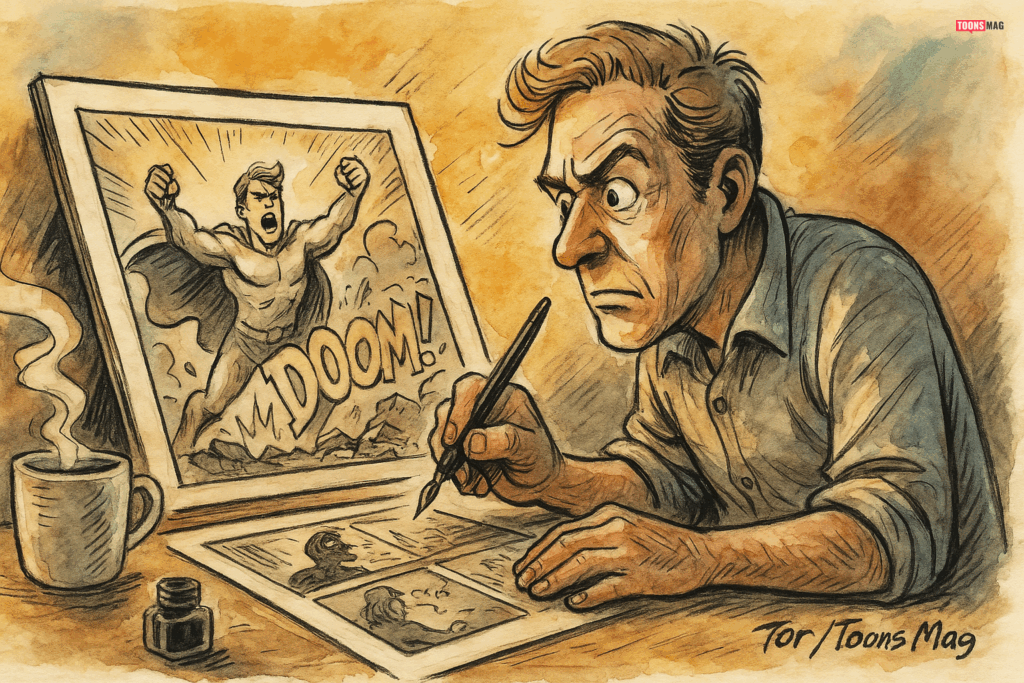
In comics, the first panel or splash page grabs the reader. It might show a dramatic scene, pose a question, or hint at conflict. Copywriting is no different. If your first line doesn’t hook the reader, they won’t stick around for the payoff.
Comic Example:
“With great power comes great responsibility.”
This line doesn’t just summarize Spider-Man’s moral compass—it sets the emotional tone of the story.
Copywriting Takeaway:
Start with a powerful statement, question, or visual metaphor that jolts the reader’s attention.
Instead of:
“Welcome to our email newsletter.”
Try:
“You’re about to meet the tool your competitors don’t want you to use.”
Your opening should function like a comic’s first frame: punchy, urgent, and emotionally resonant.
2. Show, Don’t Tell—Even in Text
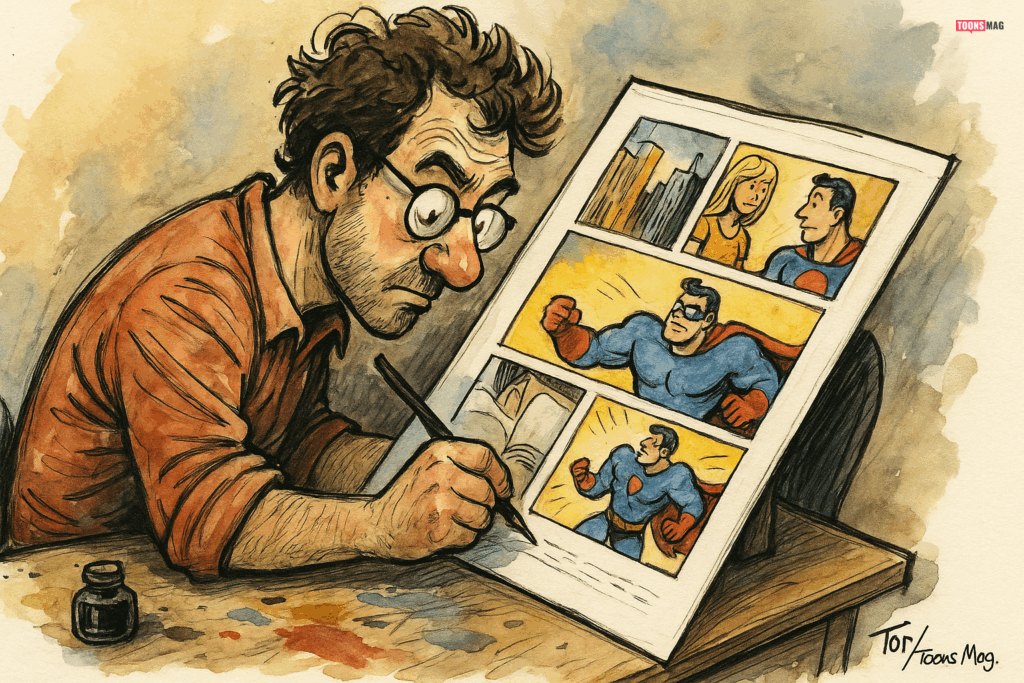
One of the oldest rules in both comics and writing is: show, don’t tell. A comic panel doesn’t write “He’s angry”—it draws clenched fists, furrowed brows, and red explosions. The emotion is experienced, not explained.
Comic Tip:
In comics, we use visual shorthand to convey tone and mood: motion lines for speed, jagged speech bubbles for shouting, or muted palettes for sadness.
Copywriting Tip:
Use specific language, vivid verbs, and real-world examples to let the reader see what you mean.
Instead of saying:
“Our product is user-friendly.”
Say:
“Get from ‘install’ to ‘aha!’ in under 90 seconds—no manual needed.”
Words should paint pictures, just like panels. Use detail to create mental visuals that stick.
3. Every Word Must Earn Its Panel Space
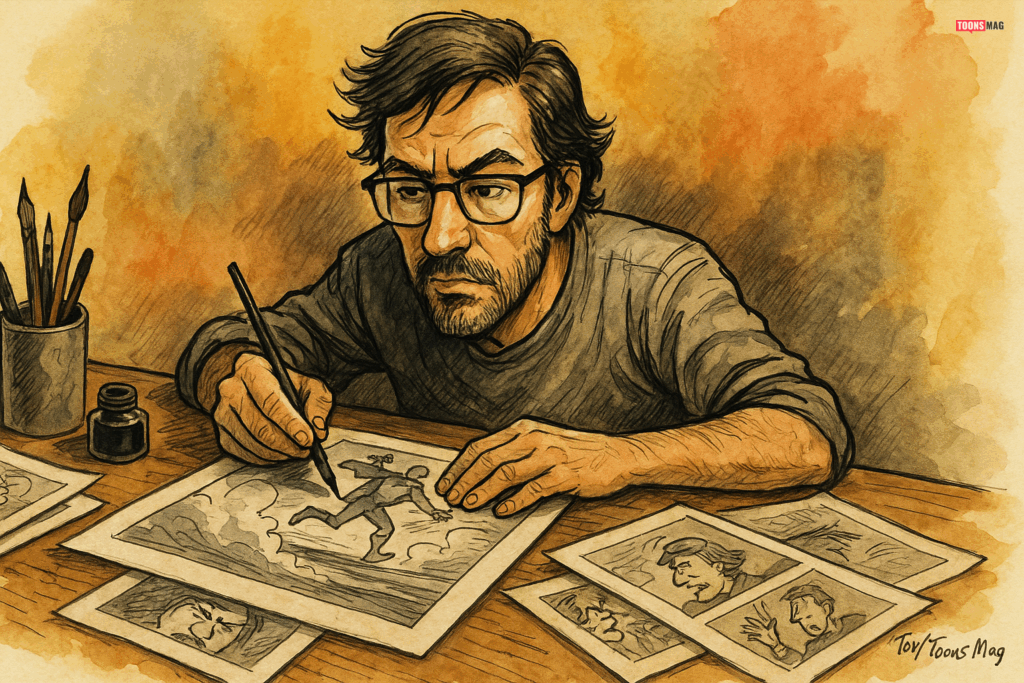
In comics, space is precious. You can’t fill a speech bubble with walls of text—it breaks the flow and loses the reader. This constraint makes comic artists ruthless editors. Good comic dialogue is concise, rhythmic, and punchy.
Comic Principle:
Panels are limited, so each line of dialogue must move the story forward or deepen character.
Copywriting Insight:
Whether it’s a headline, a call-to-action, or a landing page, brevity is your ally.
Instead of this CTA:
“Click here to find out more information about our exclusive online training.”
Try this:
“Unlock Your Free Training Now.”
Edit like a cartoonist: trim the fat, tighten the punchlines, and speak with rhythm.
4. Create Voice Through Characterization
In comic books, every character has a distinct voice. Batman broods. Deadpool jokes. Wonder Woman inspires. A character’s voice isn’t just what they say—it’s how they say it. That same attention to voice is critical in copywriting.
Comic Writing Trick:
We study how each character would phrase things differently. Even if two characters describe the same event, they’ll use unique words and tone.
Copywriting Superpower:
Your brand is a character, and your copy must reflect its personality.
- Is your brand witty or wise?
- Bold or comforting?
- Rebellious or refined?
Once you know your voice, every piece of copy should sound consistently “in-character.”
Example:
A youthful brand might say:
“Got a sec? We’ve got news worth pausing your playlist for.”
Whereas a formal brand would say:
“We’re excited to share our latest update with you.”
Just like comic dialogue, tone builds trust.
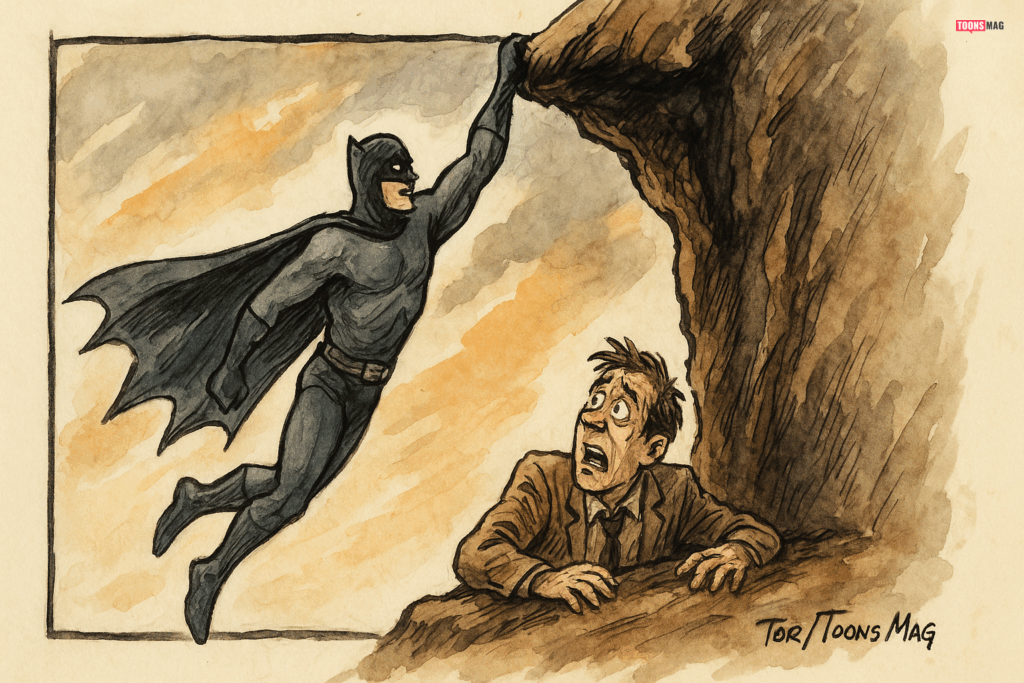
5. End With Impact—The Cliffhanger Technique
Comics are masters of the cliffhanger—the final panel on a page that makes you need to turn to the next. Great copywriting does the same: it ends not with a period, but with momentum.
Comic Use Case:
A character opens a mysterious door. The next page? Surprise attack. The reader is pulled forward by tension and curiosity.
Copywriting Application:
End your copy with a reason to keep going. This can be a question, teaser, or irresistible CTA.
Instead of:
“Thanks for reading our blog.”
Try:
“Ready to write your own story? Let’s begin.”
Or
“Still using yesterday’s copy? Here’s what tomorrow sounds like.”
Leave your reader leaning forward, like a comic fan dying to see what’s on the next page.
Bonus: The Power of Layout and Flow
In comics, layout matters. Panels guide the eye. The visual flow controls pace and emotion. Copywriters can learn from this by using:
- Short paragraphs (visual breaks)
- Bullet points (like action panels)
- Headers/subheaders (scene changes)
- Whitespace (pause for impact)
You don’t need to draw to design good copy. But you should think like a comic artist: how does your reader’s eye move? Where do they pause? Where do they smile?
5 Copywriting Tips From: Copywriting Is Visual Writing
Comics teach us to balance text with rhythm, to say more with less, and to infuse even the simplest line with personality. As a comic book artist and storyteller, I’ve learned that great copy isn’t about cleverness—it’s about clarity, character, and connection.
So the next time you sit down to write a product description, email, or headline, imagine it as a comic panel. What would your brand say? How would it sound? Would the reader want to flip the page?
Because whether you’re drawing a hero or crafting a hook, one thing holds true:
Every word should move the story forward.
This post was created with our nice and easy submission form. Create your post!






7 Comments