

 Elvis Hernandez

Editorial Cartoons and International Relations: Editorial cartoons have long been a powerful tool for communication, using satire, humor, and exaggeration to make complex political and social issues more accessible. Their ability to encapsulate multifaceted issues into a single, impactful image has made them an essential element in political discourse. When it comes to international relations, the role of editorial cartoons becomes even more significant, as they can serve as a form of “visual diplomacy”—conveying national stances, critiquing foreign policies, and promoting dialogue or, at times, confrontation between nations.
In this article, we explore the role of editorial cartoons in international relations, examining how they function as a form of visual diplomacy. We will analyze the ways cartoons are used in diplomatic contexts, how they reflect the political and cultural dynamics between countries, and how they contribute to shaping the global conversation on issues such as war, peace, trade, and human rights. From the cold war cartoons that mocked ideological battles to the political cartoons of today that address climate change or migration, editorial cartoons continue to be a vibrant part of the international dialogue.
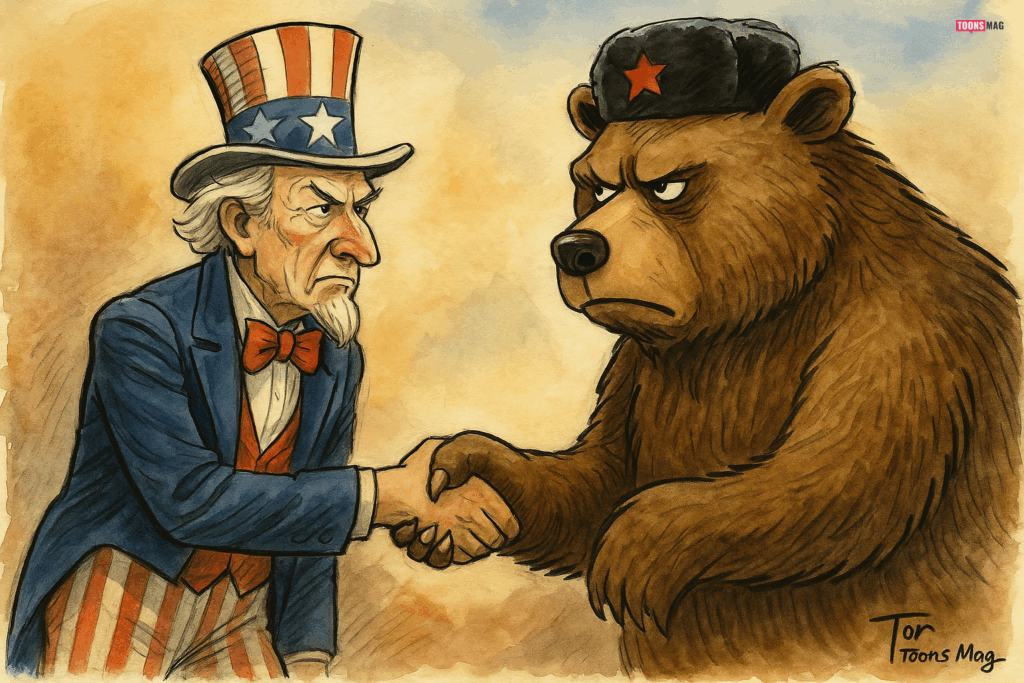
The Power of Cartoons in Diplomacy and International Relations
Editorial cartoons are much more than just humorous illustrations; they are complex works of art that can convey sharp critiques, offer commentary on important issues, and challenge societal norms—all in the span of a few lines and a single image. Given their visual nature, cartoons transcend language barriers, making them accessible to diverse audiences across the world. This universality gives cartoons a unique power in the realm of international relations, as they can encapsulate a nation’s view on foreign affairs, provoke international debate, or offer pointed critiques of foreign leaders or governments.
The Role of Humor and Satire in Diplomacy
Humor and satire have always played an essential role in diplomacy. In diplomatic terms, satire can be both a method of subtle critique and a tool for easing tensions. While diplomatic negotiations often involve carefully crafted speeches and formal agreements, cartoons provide an opportunity for more candid expression. They offer an accessible avenue for states to engage in critique and resistance without resorting to overt confrontation or inflammatory language.
For example, during the Cold War, cartoons became a crucial vehicle for Western and Eastern blocs to express their ideological divides. The Soviet Union and the United States used editorial cartoons to critique each other’s policies, mock national leaders, and propagate their respective ideologies. This form of “soft power” helped shape public opinion on both sides, influencing perceptions and actions. Cartoons presented a way to address serious issues, such as arms races or political oppression, with humor and exaggeration, softening the seriousness of the conversation while simultaneously driving home a pointed message.
Cartoons as a Reflection of National Identity
Editorial cartoons often reflect a nation’s identity, values, and political stance, especially in the context of international relations. Whether criticizing a foreign policy decision or highlighting national pride, cartoons serve as a means of national self-expression and can help shape perceptions of a nation’s character on the world stage.
For example, national cartoons in the U.S. often reflect themes of democracy, freedom, and individual rights—values central to American identity. On the other hand, cartoons from countries with different historical experiences may highlight themes of authority, hierarchy, or collectivism. These subtle reflections of national identity can influence how other countries interpret political cartoons and, in turn, how they view a nation’s position in global affairs.
Editorial Cartoons in International Diplomacy: A Historical Perspective
To understand how editorial cartoons have played a role in shaping international relations, it’s useful to look at some of the key historical moments where cartoons significantly impacted diplomacy.
The Cold War: Caricatures of Ideological Battles
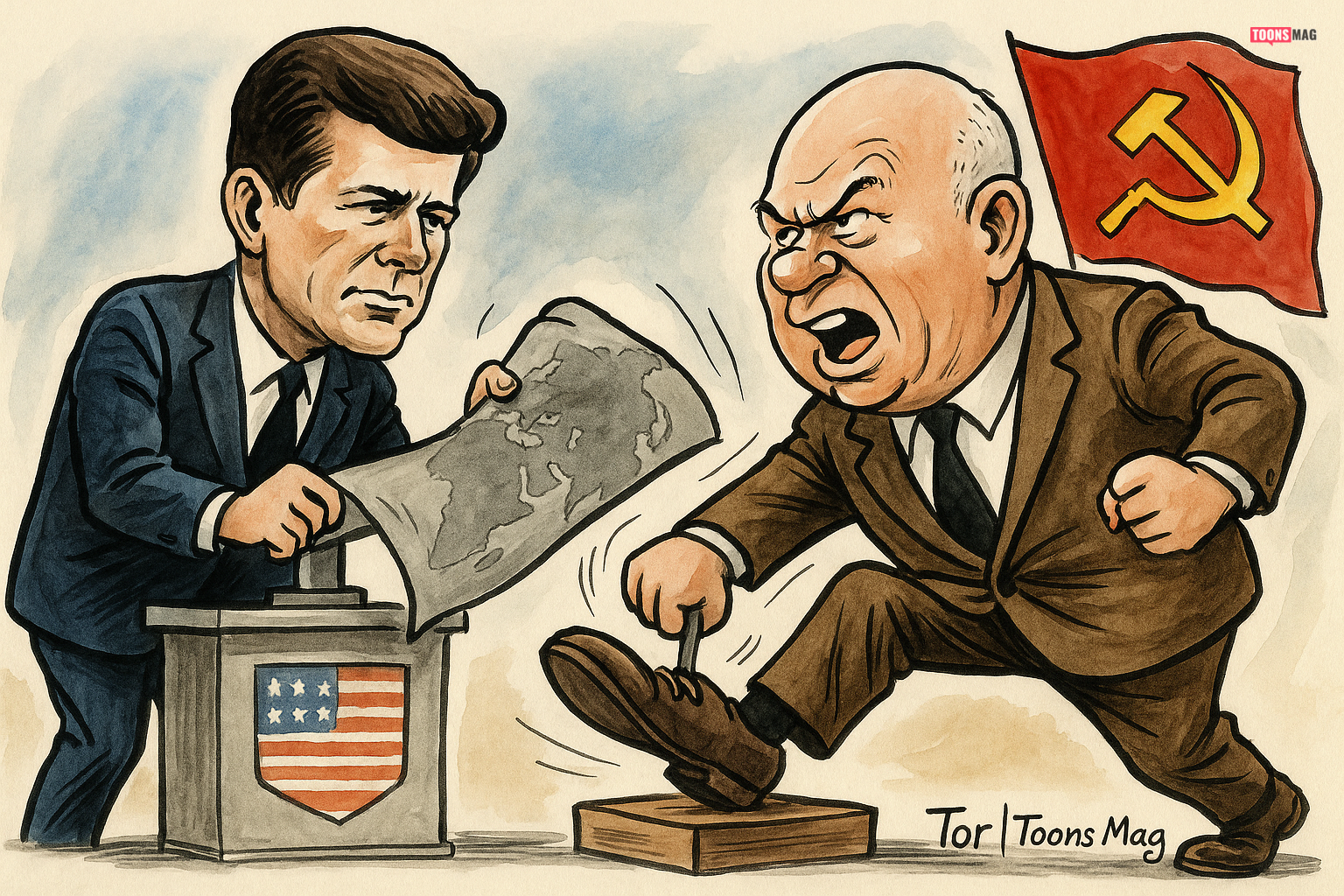
One of the most influential periods for editorial cartoons in international diplomacy was the Cold War. During this time, the ideological divide between the communist East, led by the Soviet Union, and the capitalist West, led by the United States, was central to global politics. Editorial cartoons became an essential form of commentary, offering scathing critiques, sharp satire, and visual metaphors for the conflict.
Cartoons often depicted the leaders of the two superpowers, such as Soviet Premier Nikita Khrushchev and U.S. President John F. Kennedy, as larger-than-life figures, embodying their respective countries’ values. These leaders were frequently portrayed in exaggerated, sometimes absurd ways, emphasizing the ideological battles between democracy and communism. The use of humor, while lighthearted on the surface, often carried serious political commentary that shaped public opinion in both the East and the West.
One iconic cartoon from the Cold War era is the famous depiction of Khrushchev pounding his shoe on the podium during a speech at the United Nations in 1960. While the event itself was serious, cartoons that followed turned it into a symbol of Soviet aggression and bluster, highlighting the tensions of the time. Cartoons like these played a significant role in shaping the public’s perception of the Cold War and the political maneuvering of both powers.
The Vietnam War: Cartoons as Protest
The Vietnam War, a conflict that deeply divided public opinion in the U.S. and around the world, also saw a rise in the use of editorial cartoons as a tool for protest. While political cartoons supporting the war often emphasized themes of patriotism, democracy, and the fight against communism, those critical of the war used cartoons to decry the human cost, the deceit of government policies, and the morality of the U.S. involvement.
Editorial cartoons from this period were often stark and graphic, showing the horrors of war and the disillusionment felt by many Americans. These cartoons played a role in shaping anti-war sentiment, particularly in the late 1960s and early 1970s. The power of visual art in conveying the brutalities of war helped shift public opinion, contributing to the growing movement for peace.
The Post-Cold War Era: Cartoons in a New World Order
The end of the Cold War in the late 1980s and early 1990s marked a shift in the global political landscape. The dissolution of the Soviet Union and the rise of the U.S. as the sole superpower led to a new phase of international diplomacy, and editorial cartoons adapted accordingly. With the ideological divide between the U.S. and the Soviet Union gone, cartoons began to address new global challenges, including the rise of globalization, the conflicts in the Middle East, and issues related to economic inequality.
In the 1990s, cartoons started to shift focus from Cold War ideologies to more complex global dynamics. Cartoons addressing the Gulf War, for example, depicted leaders such as Saddam Hussein and George H.W. Bush in exaggerated caricatures, reflecting the high-stakes nature of the conflict. The role of cartoons in covering military actions, international diplomacy, and social issues expanded, influencing how the global public understood these events.
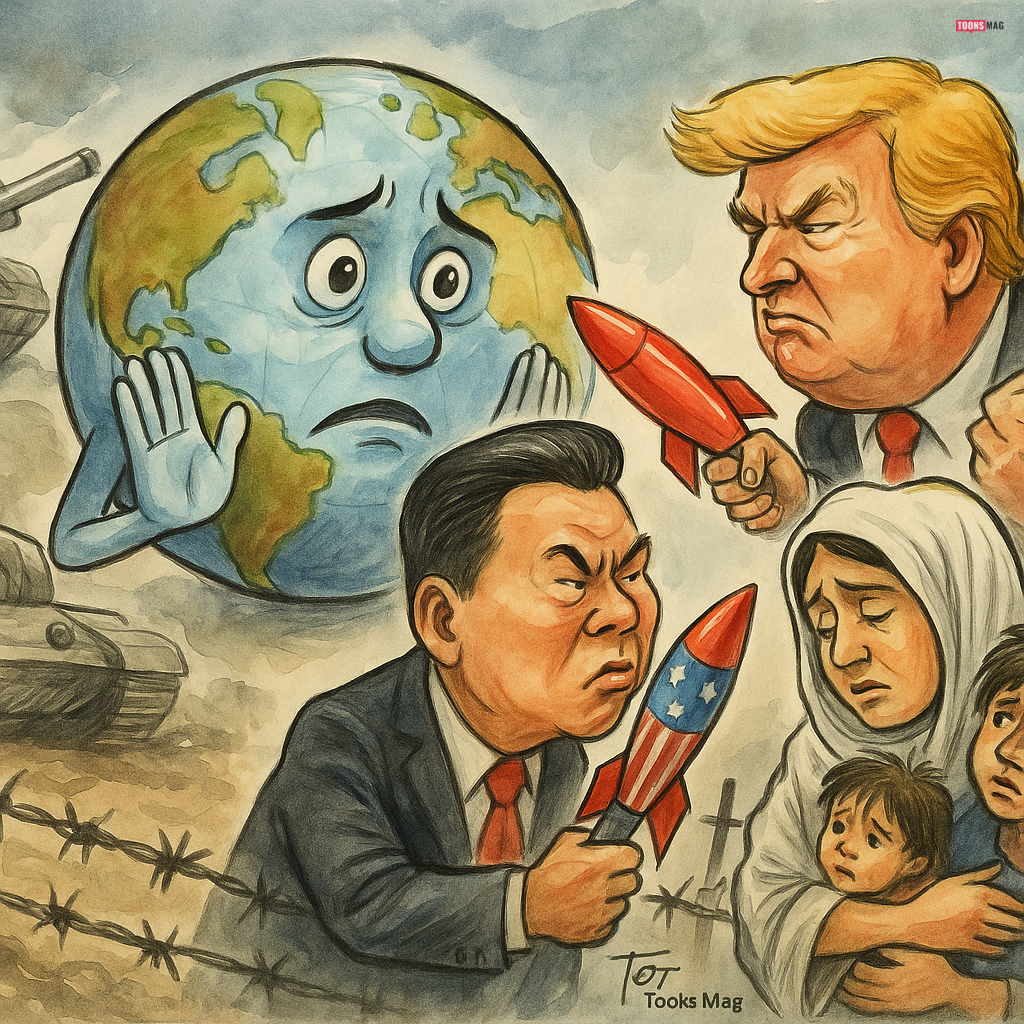
Editorial Cartoons and Modern-Day International Relations
Globalization and Cartoons: A New Age of Visual Diplomacy
In the 21st century, editorial cartoons continue to play a significant role in international relations. The process of globalization, which has led to greater interconnectedness between countries, has transformed how cartoons are created, disseminated, and interpreted. Cartoonists now have access to a global audience through digital platforms, enabling them to engage with international political issues in real time.
For example, cartoons about the Syrian Civil War, the rise of China as a global power, or the refugee crisis in Europe often make their way across international borders, sparking global debates. Digital platforms like social media have democratized the ability to share political cartoons, making them a form of visual diplomacy that extends beyond the traditional confines of national borders.
However, this global reach also means that cartoons are increasingly subject to different cultural interpretations. What might be a humorous critique of a political leader in one country may be seen as offensive or disrespectful in another. This cultural sensitivity is a key consideration in the impact of editorial cartoons on international diplomacy, as they have the power to influence perceptions of foreign nations and global events.
Cartoons and International Conflicts: The Role of Humor in Tensions
In times of international conflict, editorial cartoons continue to serve as a unique form of expression. Whether it’s the political crisis in Venezuela, tensions between the U.S. and Iran, or ongoing disputes between India and Pakistan, cartoons provide a platform for commentary and critique. Political cartoons often exaggerate the figures involved in conflicts, turning national leaders into symbolic representations of the issues at hand.
During the Israeli-Palestinian conflict, for example, cartoons have been used by both sides to critique the actions and policies of the other. Israeli cartoons often depict Palestinian leaders in a negative light, while Palestinian cartoons take aim at Israeli political figures and policies. These cartoons can serve as a form of propaganda, shaping how the global audience perceives the conflict and the parties involved.
While cartoons often serve as a means of resistance or protest, they can also act as a form of healing and dialogue. By depicting conflict through humor or exaggeration, cartoons can provide a means of addressing sensitive issues in a way that encourages conversation and reflection. However, when misused, they can exacerbate tensions and further polarize public opinion.
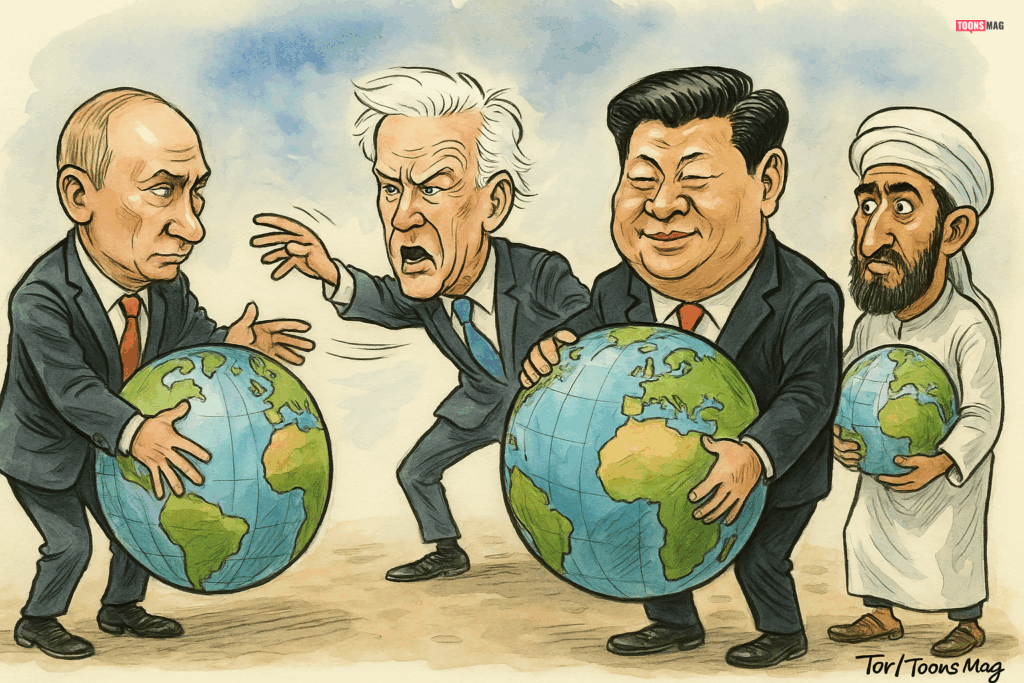
Cartoons in Global Diplomacy: Shaping Public Opinion and International Relations
Editorial cartoons also play a significant role in shaping public opinion about international diplomacy. For example, cartoons that address trade agreements, environmental issues, or humanitarian crises can influence how a country’s policies are viewed by the global community. These cartoons often reflect a nation’s stance on global issues, making them a subtle yet powerful form of soft power.
For instance, cartoons about climate change often feature world leaders in exaggerated or comical ways to highlight their inaction on environmental issues. These cartoons can help rally global support for environmental causes, pressuring governments to take stronger action on climate change. Similarly, cartoons addressing global health crises, such as the Ebola outbreak or the COVID-19 pandemic, can shape public perceptions of how governments are handling these challenges.
The Ethical Considerations of Editorial Cartoons in International Relations
While editorial cartoons are a potent tool for communication, they also raise important ethical considerations, particularly in the context of international relations. The use of satire and caricature can lead to misrepresentation, perpetuate harmful stereotypes, or insult foreign cultures. As such, cartoonists must navigate the delicate balance between free expression, political commentary, and cultural sensitivity.
The Risk of Perpetuating Stereotypes
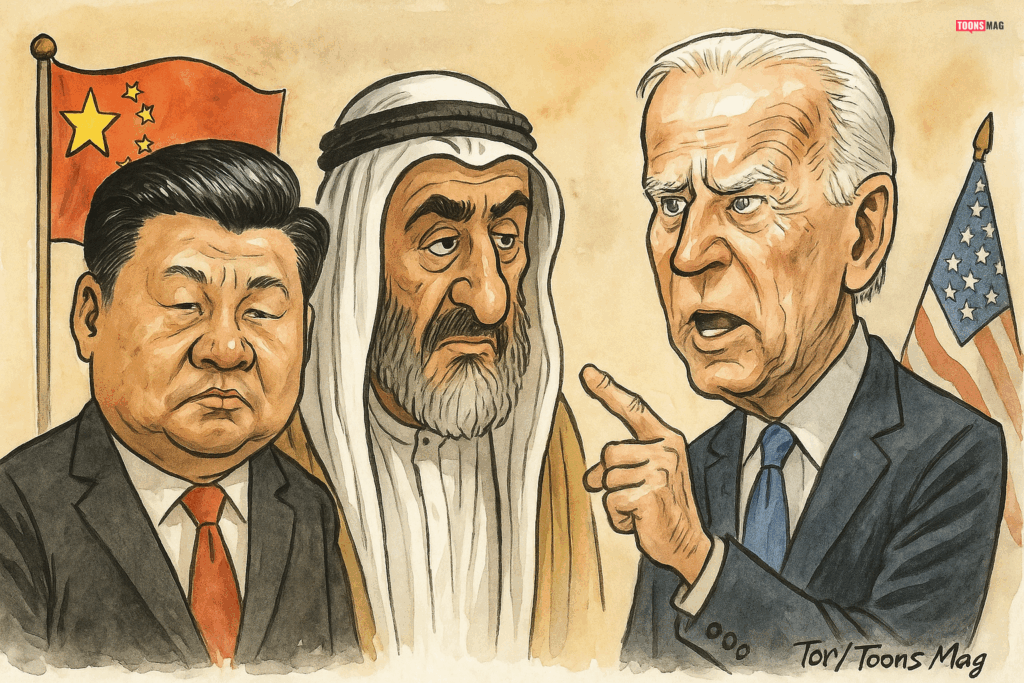
One of the challenges of editorial cartoons in international diplomacy is the risk of reinforcing harmful stereotypes. When caricatures exaggerate the features or behaviors of a foreign leader, they can perpetuate negative, one-dimensional views of entire cultures or nations. For example, cartoons that caricature leaders from the Middle East or Africa often reduce them to offensive or reductive tropes, overlooking the complexity of their societies.
Cartoonists must be mindful of the messages they convey, ensuring that their work does not perpetuate harmful or divisive stereotypes. While humor can be an effective tool for political critique, it can also fuel animosity and misunderstanding between nations if it crosses into disrespect or insult.
The Fine Line Between Free Speech and Diplomatic Sensitivity
Another ethical challenge in the use of cartoons for visual diplomacy is the fine line between free speech and diplomatic sensitivity. While cartoons often offer a platform for free expression, they can also have serious diplomatic consequences. Cartoons that mock foreign leaders, governments, or cultures may provoke diplomatic protests, strain international relations, or even lead to retaliatory actions.
For instance, the 2005 controversy surrounding the publication of cartoons depicting the Prophet Muhammad in Jyllands-Posten, a Danish newspaper, led to widespread protests and diplomatic tensions between Denmark and Muslim-majority countries. This incident illustrates how a political cartoon can quickly escalate into a diplomatic crisis, forcing governments to navigate the delicate balance between freedom of expression and respect for religious or cultural sensitivities.
Editorial Cartoons and International Relations
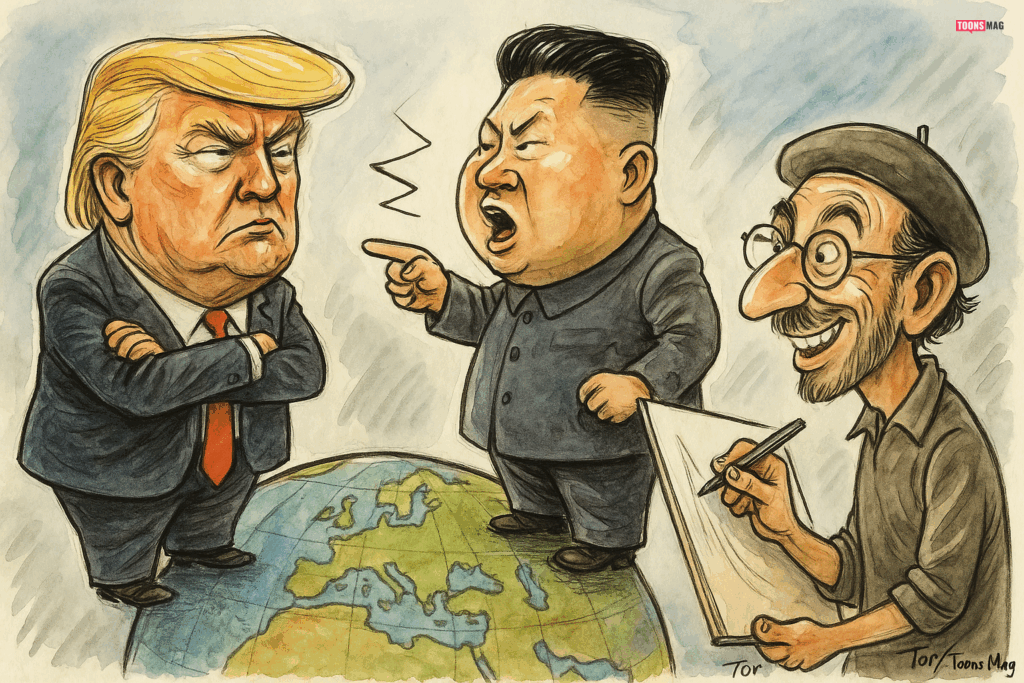
Editorial cartoons have long served as an essential tool in international relations, offering a unique means of communication that blends humor, satire, and visual commentary. Cartoons have the ability to transcend language and cultural barriers, engaging audiences around the world while critiquing political systems, mocking foreign leaders, and addressing global issues. Through their use of visual diplomacy, cartoons continue to shape public opinion, influence diplomatic discourse, and offer a powerful form of commentary on international relations.
However, the global nature of modern cartooning also raises important ethical considerations, particularly in terms of cultural sensitivity and diplomatic responsibility. As the art of cartooning continues to evolve in the digital age, its role in shaping international relations will remain significant, acting as both a mirror and a magnifier of the issues that define global politics.
In the world of visual diplomacy, cartoons are more than just drawings; they are tools of communication, persuasion, and reflection. By using humor and exaggeration, editorial cartoons will continue to be a vital part of the global conversation on politics, culture, and international relations.
This post was created with our nice and easy submission form. Create your post!