

 Della Holman

A jungle girl (often an adult woman despite the label) is a recurring adventure archetype in popular fiction—sometimes a heroine or jungle queen, sometimes a damsel in distress—who operates in rainforest or wilderness settings. Originating in late‑19th/early‑20th century adventure literature and exploding in mid‑20th‑century comics, pulps, and serials, the trope reflects both the era’s appetite for exotic escapism and its cultural blind spots. This guide explains the visual template and narrative tropes, traces the history from Ayesha and Rima to Sheena, and compiles a comprehensive index of jungle girls across literature, comics, live‑action, animation, and games.
Quick Facts (Infobox): Jungle Girl
| Also called | Jungle woman, jungle queen, cave girl (prehistoric variant) |
|---|---|
| Core settings | Jungle, rainforest, wilderness, lost worlds |
| Common roles | Adventurer/heroine, protector/queen, outsider/feral child, or damsel in distress |
| Visual shorthand | Leopard‑print bikini or hide dress; fur/leather/leaf garments; often barefoot (sometimes sandals/primitive shoes) |
| Companions/foes | Jungle lords (Tarzanesque figures), wild animals, poachers, slavers, mad scientists, colonizers |
| Earliest roots | Ayesha (She, 1886), Rima (Green Mansions, 1904) |
| Breakout icon | Sheena, Queen of the Jungle (debut 1937) |
Description (Visuals & Variants)
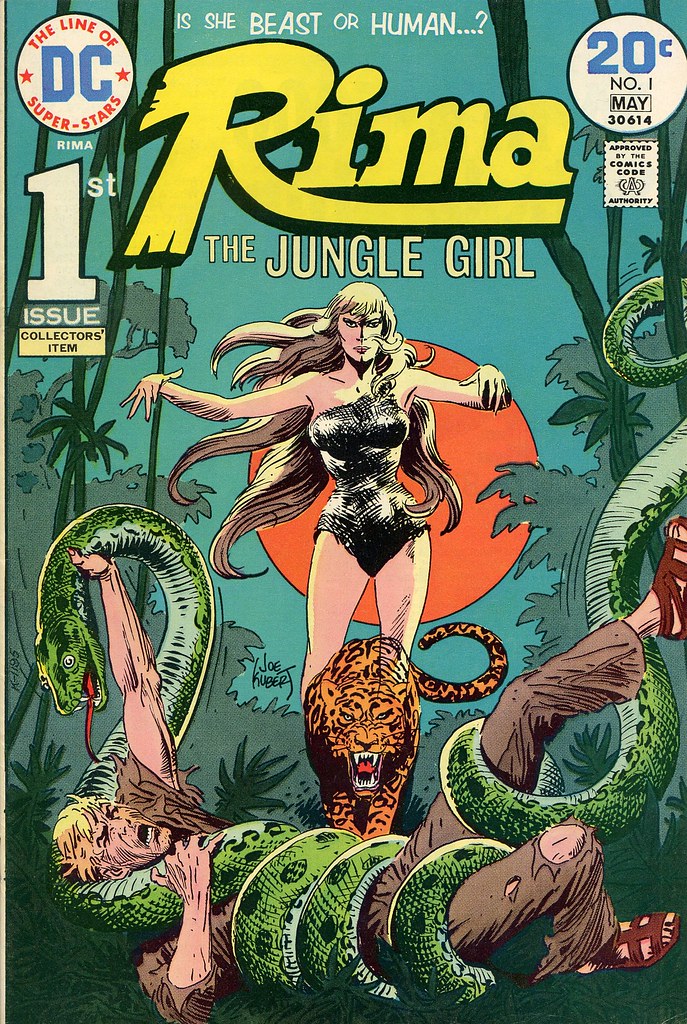
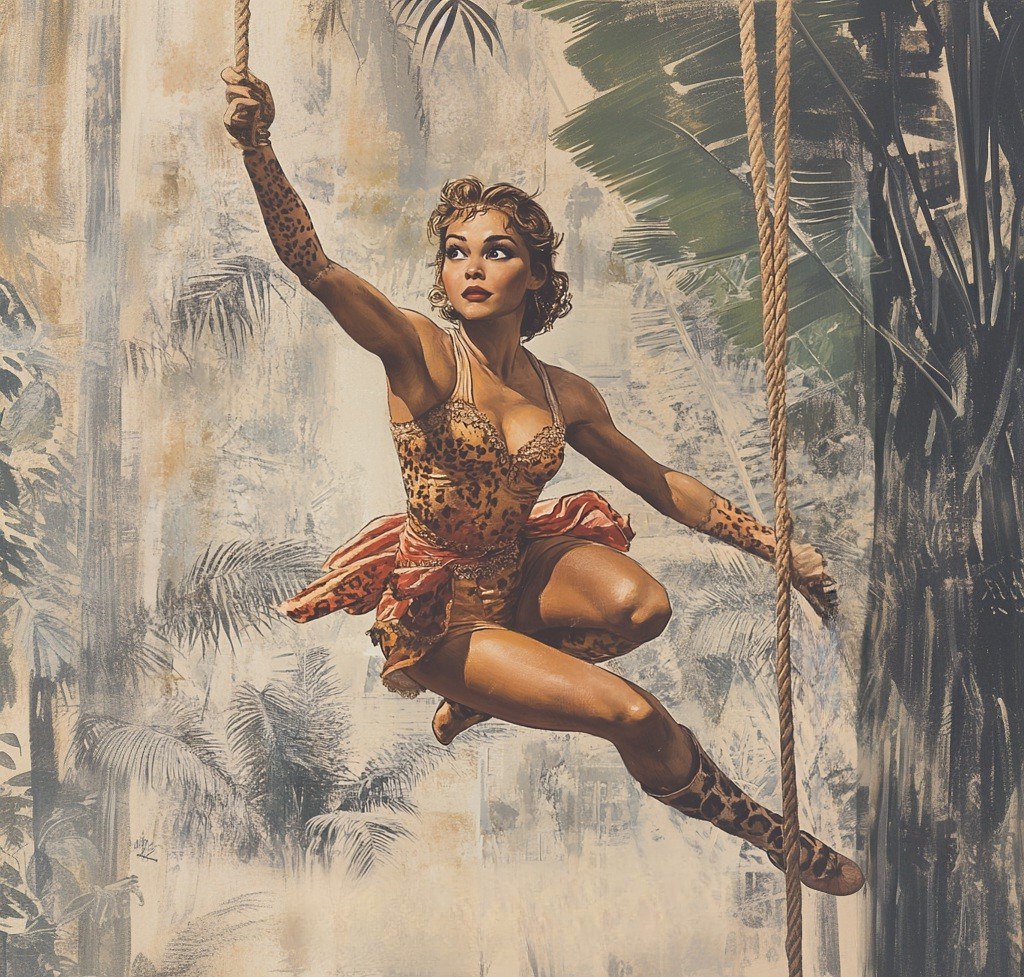
Jungle girls are typically depicted in scanty animal‑print (often leopard) bikinis or hide/leaf dresses. Most are barefoot; some wear rudimentary footwear. Origin stories vary:
- Feral child/outcast: Raised in the wild, bonded with animals, speaks in simple or formalized cadence.
- Outsider turned protector: A visitor—by crash, quest, or design—who chooses to remain and defend the land/tribe.
- Well‑born exile: A wealthy/educated woman stranded in the jungle who adapts and thrives.
They function either as capable heroines/jungle queens or as peril magnets who are bound, captured, and rescued—mirroring pulp and serial melodrama. Historically, portrayals skewed toward white, non‑native outsiders set in “exotic” locales; contemporary takes increasingly diversify origin, agency, and setting.
History
- Proto‑archetypes (1880s–1910s): H. Rider Haggard’s Ayesha in She: A History of Adventure (1886) embodies the powerful, ageless sorceress in a remote wilderness. Rima, from W. H. Hudson’s Green Mansions (1904), is a forest‑dwelling figure at one with nature.
- Pulp to comics (1920s–1940s): The popularization of Tarzan and lost‑world fiction seeded the jungle girl’s rise. The definitive breakout, Sheena, Queen of the Jungle, created by Will Eisner & Jerry Iger, debuted in Wags #46 (1937) and leapt to the U.S. in Jumbo Comics (1938), sparking dozens of analogues across publishers.
- Golden Age boom (1940s–1950s): U.S. comic racks filled with jungle anthologies and heroines (Fiction House, Fox, Avon, Magazine Enterprises, Atlas). Film serials and B‑movies amplified the trope.
- Post‑Code shifts (mid‑1950s–1970s): With the Comics Code curbing salacious imagery, portrayals softened, then re‑emerged in paperbacks, adventure films, and television. International cinema (Italian, German, Mexican, Hong Kong) produced exploitation and adventure spins.
- Modern revisions (1980s–present): Indie comics, manga, and television re‑framed the archetype with self‑aware or pulp‑neo angles, from satirical takes to empowered leads; contemporary works interrogate colonial and gender tropes while keeping the kinetic, nature‑bound appeal.
Core Tropes & Themes
- The outsider queen: An off‑worlder/outsider becomes guardian of the jungle and its people.
- Animal kinship: Communes with or commands animals; often rides big cats or elephants.
- Peril & bondage imagery: Cliffhangers with ropes, nets, and cages—holdovers from pulp serial sensationalism.
- Nature vs. modernity: Jungle purity contrasted with poachers, corporations, or invaders.
- Costume as code: Leopard print, bare feet, and primitive tools signal wilderness competence and pin‑up allure.
Cultural Context & Critique
Early jungle‑girl stories reflect colonial‑era fantasies—exoticism, white‑savior dynamics, and simplified portrayals of Indigenous cultures. Modern creators increasingly recenter agency, portray local protagonists, and complicate or subvert the trope. When covering or reviving these characters today, creators frequently address representation, cultural specificity, and gendered gaze, while keeping the adventurous spirit intact.
Character Index by Medium
The lists below compile prominent jungle‑girl figures across media. (Names and notes retained from historical and fan documentation.)
Literature
- Rima (Green Mansions, W. H. Hudson, 1904)
- Meriem (The Son of Tarzan, Edgar Rice Burroughs, 1917)
- Fou‑tan (Jungle Girl, Edgar Rice Burroughs, 1932)
- Balza (Tarzan and the Lion Man, Edgar Rice Burroughs, 1933)
Comics
- Akili (Gimm’s Fairy Tales’ Jungle Book)
- Ann Mason (Jungle Comics; later with Kaänga, Jungle Lord, 1949–1954) — partner of Kaänga; leopard‑skin dress
- Camilla, Wild Girl of the Congo (Jungle Comics, 1940s)
- Cave Girl (Africa, Thun’da, and Cave Girl, Magazine Enterprises, 1950s)
- Cavewoman Meriem Cooper (Basement Comics, 1993–2006)
- Dhalua Strong (America’s Best Comics) and her daughter Tesla (satirical tone)
- Fana the Jungle Girl (Incarna Comics, 1989)
- Fantomah, Mystery Woman of the Jungle (Jungle Comics, 1940s)
- Gwenna (webcomic Kaza’s Mate Gwenna; parody of Ka‑Zar & Shanna; often nude)
- Irish of the Jungle (1990s comic based on Irish McCalla, TV’s Sheena)
- Jann of the Jungle (Marvel Comics, 1950s)
- Jano (companion to Voodah, Crown Comics, 1947; revived by AC Comics)
- Jessie (Jungle Comics, 1940s) — partner of Kaänga
- Judy of the Jungle (Exciting Comics, Better/Nedor, 1940s)
- Jun‑Gal (1940s)
- Jungle Girl / Jana Sky‑Born (Dynamite Entertainment, 2007)
- Jungle Lil (1950s)
- Jungle Queen / Julie Winters (The Maxx, comic/TV)
- Kara, Jungle Princess (Exciting Comics #44, Feb 1946)
- Kazanda (1940s)
- Kyra (1985–1988, by Robin Ator)
- Kyrra – Alien Jungle Girl (2013)
- Leopard Girl (Jungle Action, Atlas Comics, 1950s)
- Lorna, the Jungle Queen / Lorna, the Jungle Girl (Atlas Comics, 1953)
- Makyou no Shanana (2009 Japanese manga)
- Marga the Panther Woman (1940s)
- Mowgli (Grimm’s Fairy Tales’ Jungle Book)
- Nyoka (Jungle Girl / Nyoka the Jungle Girl; Master Comics), also star of the 1941 serial Jungle Girl and 1942 Perils of Nyoka
- Nula (webcomic Kaza’s Mate Gwenna—claims to precede Gwenna; becomes a nudist after a joint adventure)
- Pamela of the Jungle (Italian, 2007)
- Pantera Bionda (Italian, 1948–1950)
- Princess Pantha (Thrilling Comics, Better/Nedor, 1940s)
- Princess Taj (Jungle Comics, 1940s) — rides an elephant
- Princess Vishnu (Fight Comics, Fiction House, 1940s)
- Prymal: The Jungle Warrior (Maelstrom Comics, 2014– )
- Ranee, Princess of the Jungle (1950s)
- Rarotonga (Mexican series, Lágrimas, Risas y Amor)
- Rima the Jungle Girl (DC Comics, 1970s)
- Rulah, Jungle Goddess (Zoot Comics / Rulah, Jungle Goddess, Fox)
- Saari, the Jungle Goddess (1950s)
- Safari Cary (1940s)
- Shanna the She‑Devil (Marvel Comics, 1972)
- Sheena, Queen of the Jungle (1937 debut)
- Shirl, The Jungle Girl (1950s parody)
- Taanda / White Princess of the Jungle (Avon Periodicals, 1951–1952)
- Tanee (formerly Gwenna) in Jo‑Jo, Congo King (1940s)
- Tangi (1940s)
- Tara Fremont (AC Comics’ Femforce)
- Taranga (1950s)
- Tiger Girl (Fight Comics; another in Kaänga, Jungle Lord (1940s–50s); another at Gold Key in the 1960s)
- Tygra of the Flame People (Startling Comics, Better/Nedor, 1940s; unrelated to the ThunderCats character)
- Vooda, Jungle Princess (originally El’nee, Ajax‑Farrell #20–22, 1955)
- Wana (Zago, Jungle Prince, Fox, 1948–1949)
- Zara of the Jungle (1940s)
- Zegra, Jungle Empress (originally Tegra, Fox, 1940s)
Live‑Action Film & Television
- Algona — Trader Hornee (1970); Deborah “Deek” Sills; adult sex comedy
- Aloa — Golden Goddess of Rio Beni (1964, Germany); Gillian Hills
- Anatta — Jungle Gents (1954); Laurette Luez
- Cavegirl — UK/South African TV series (2002–2003)
- Christa — Land of the Lost (1990s TV); Shannon Day
- Diana — Diamonds of Kilimandjaro (1983, France); Katja Bienert
- Doreen Stockwell — Nabonga (1944); Julie London
- Eba — Cavegirl (1985); Cynthia Thompson
- Eva — Kong Island (1968, Italy)
- Eva — King of the Gorillas (1977, Mexico)
- Eve — The Face of Eve (1968, UK); Celeste Yarnall
- Girl — The Man from U.N.C.L.E. episode “My Friend the Gorilla Affair” (1966); Vitina Marcus; Tarzan parody
- Gungala — Gungala, the Virgin of the Jungle (1967) & Gungala, the Black Panther Girl (1968); Kitty Swan
- Inara — Inara, the Jungle Girl (2012)
- Inyaah, Jungle Goddess — (1934 film)
- Jane Porter — Tarzan (various)
- Jean Evans — Panther Girl of the Kongo (1955); Republic serial linked to Jungle Girl
- Jelita — Jungle Virgin Force / Perawan Rimba (1983, Indonesia); Lydia Kandou
- Jennifer of the Jungle — The Electric Company (TV)
- “The Jungle Goddess” — Rochelle Hudson in The Savage Girl (1932)
- Kilma / Laura von Marnix — Kilma, Queen of the Jungle (1975, Spain)
- Kuhlaya — Jungle Siren (1942); Ann Corio
- Lana — Queen of the Amazons (1964, Germany); Catherine Schell
- Veronica Layton — Sir Arthur Conan Doyle’s The Lost World (TV, 1999–2002); Jennifer O’Dell
- Leda — Carry On Up the Jungle (1970, UK); Valerie Leon
- Leela — Doctor Who (1977–1978); Louise Jameson (jungle‑raised companion)
- Liane — Liane, Jungle Goddess (1956, Germany)
- Lothel — Jungle Queen (1945 serial); Ruth Roman
- Luana — Luana, the Girl Tarzan (1968, Italy‑Germany); Mei Chen
- Luana / Susan Wilson — Daughter of the Jungle (1982, Italy); Sabrina Siani
- Lureen — Congo Bill (1948 serial); Cleo Moore
- Maya — Power Rangers Lost Galaxy (1999); Cerina Vincent (tribesgirl from planet Mirinoi)
- Meelah — Blonde Savage (1947); Gale Sherwood
- Rima — Green Mansions (1959 film); Audrey Hepburn
- Miss Robin Crusoe — (1954 film); Amanda Blake
- Samantha — The Mighty Peking Man (1977, Hong Kong)
- Sarima — (original YouTube character by Bridazzel)
- Shandra the Jungle Girl — (1999 direct‑to‑video)
- Sheela / Africadalli Sheela — (1986, India)
- Sheena — TV (1955–56; Irish McCalla); film (1984; Tanya Roberts); TV (2000–2002; Gena Lee Nolin)
- Tarzana / Elizabeth — Tarzana, the Wild Girl (1969, Italy); Femi Benussi
- Tarzeena — Queen of Kong Island (2008); erotic parody by Fred Olen Ray
- Ticoora — Daughter of the Jungle (1949); Lois Hall
- The Tiger Woman — (1944 serial); Linda Stirling
- Nina Trent, the White Goddess — Trader Horn (1931); Edwina Booth
- Ulah — The Jungle Princess (1936); Dorothy Lamour
- Greta Vanderhorn — Jungle Goddess (1948); Wanda McKay
Animation
- Ainbo — Ainbo: Spirit of the Amazon (feature)
- Dualot — Working with Words/Journey Through the Jungle of Words (Golden Step‑Ahead Video)
- Jana of the Jungle — Hanna‑Barbera series (1978)
- June — Tarzoon: Shame of the Jungle (French/Belgian animated feature; X‑rated)
- Jungle Janet — The Tick (1990s animated series)
- Lua — Kong: The Animated Series (2000–2001); shaman from Kong Island
- Magnolia — George of the Jungle (2007 TV)
- Princess Rosella — Barbie as the Island Princess (2007)
- Shaka — Chainmail Bikini Squad (web animation, 2012)
- Sticks the Badger — Sonic Boom (Sonic franchise)
- Ursula — George of the Jungle (1967, Jay Ward)
- Willa & Nyda — ThunderCats (1985–1989); Warrior Maidens
Video Games
- Ayla — Chrono Trigger (1995)
- Jill of the Jungle — (1992)
- Vixen — (1988)
Sports
- Jungle Grrrl (Erica Porter) — Wrestler persona (Women of Wrestling, from 2000)
Music (Costume/Theme Usage)
- Katy Perry — “Roar” (2014) music video features a jungle‑girl aesthetic
- Backup dancers — “Walk the Dinosaur” by Was (Not Was) (1987) use themed costuming
Legacy & Influence
The jungle‑girl archetype fused action‑adventure and pin‑up iconography, leaving a durable imprint on comics design, serial storytelling, and screen spectacle. Modern revivals range from earnest homages to meta‑commentary that interrogates colonial and gendered assumptions, often expanding representation and cultural specificity while retaining the kinetic pleasures—wild settings, animal allies, and high‑stakes peril.