


 Sharmin haque prima

Karl Meersman (born 14 September 1961) is a renowned Belgian editorial cartoonist, illustrator, and caricaturist whose compelling visual style and sharp socio-political commentary have captivated audiences in Belgium and beyond. Known for his weekly caricatures in Trends and KnackFocus, Meersman merges classical draftsmanship with biting satire to create artwork that is both timeless and provocatively relevant. His influence extends across the editorial world, fine art galleries, international festivals, and even the philatelic and literary arenas. His art is a mirror held up to power, culture, and the human condition.
Infobox: Karl Meersman
| Name | Karl Meersman |
|---|---|
| Born | 14 September 1961, Temse, Belgium |
| Nationality | Belgian |
| Residence | Sint-Niklaas, Belgium |
| Occupation | Editorial cartoonist, caricaturist, illustrator |
| Spouse | Lies Martens (former VRT journalist) |
| Known For | Caricatures in Trends, KnackFocus |
| Education | Art history, graphic design, publicity, figure drawing |
| Awards | Grote gouden regeringsmedaille (1983), Press Cartoon Belgium (2020), and others |
| Artistic Influences | Egon Schiele, Félicien Rops, Toulouse-Lautrec, Honoré Daumier |
Early Life and Artistic Roots
Born in the town of Temse, Belgium, on 14 September 1961, Karl Meersman was steeped in artistic tradition from birth. His grandfather was a landscape painter, and both of his parents were professional artists and art instructors at a local art academy. Young Karl grew up surrounded by easels, sketchbooks, and pigments. The home environment was one of constant artistic dialogue and visual experimentation. Meersman often accompanied his parents to exhibitions and art classes, absorbing both technique and theory from an early age.
By the age of thirteen, Meersman’s natural ability had already outpaced his peers. A drawing he submitted to a national contest was so advanced in its execution that judges accused him of cheating, disqualifying him under the assumption that an adult had completed the work. This early controversy only solidified his resolve to pursue a life in art. He began creating elaborate drawings and experimenting with visual storytelling that reflected not just likeness but mood and narrative.
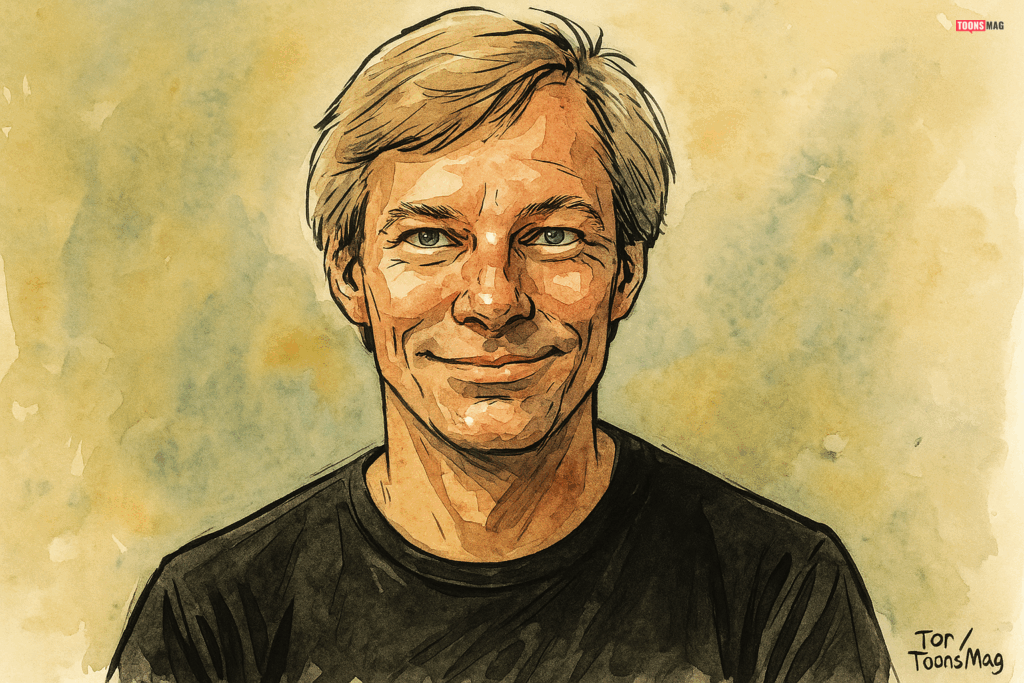
Disenchanted with conventional high school education, Meersman dropped out and immersed himself in evening art courses, attending multiple academies that offered practical training in visual arts. He specialized in disciplines such as figure drawing, printmaking, publicity design, and the study of classical and contemporary art history. His instructors quickly recognized his potential and encouraged him to explore illustration and visual satire as professional pathways.
During the day, he took a job at a photogravure company to gain commercial experience in reproduction and printing. This allowed him to understand the production side of illustration and gave him exposure to print media techniques. The job also honed his discipline and time management, balancing the technical demands of commercial work with the creativity of his evening studies.
Eventually, he joined his father’s thriving art studio, initially taking on technical responsibilities and background illustrations. As his skill and confidence grew, so did his involvement in conceptual work. When the family business—Meersman I.D.—became too large for one person to manage, Karl, along with two of his siblings, officially took the reins in 1991, transforming the studio into a creative hub for graphic design, illustration, and commissioned art. Under their leadership, the studio expanded its portfolio to include corporate identity design, book illustrations, and cultural event posters, with Karl often spearheading the more conceptual and artistic projects.
Career Highlights
Rise in Editorial Cartooning
Karl Meersman’s journey into editorial cartooning began serendipitously in 1987. While sketching portraits of passersby in a furniture showroom, a member of the editorial staff from Trends, a prominent financial magazine, was struck by his keen eye for detail and satirical flair. Soon after, Meersman was offered a position as the magazine’s resident caricaturist—a role he has held ever since. His first published work for Trends quickly gained popularity, offering a humorous yet sharp visual commentary on political and financial events.
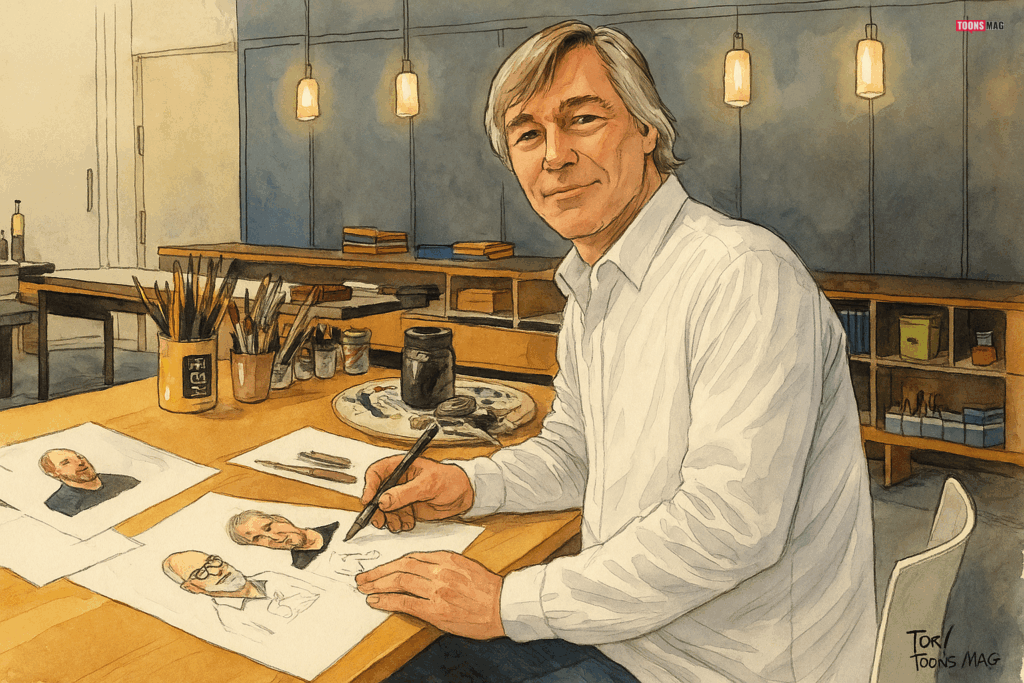
Over the years, his satirical portrayals of public figures like business magnates, government officials, and global economic influencers became an eagerly anticipated feature, adding visual wit to complex policy and fiscal analyses. His drawings resonated deeply during major events like the euro crisis, political elections, and corporate scandals, where his work offered a sense of catharsis and critique for the general public.
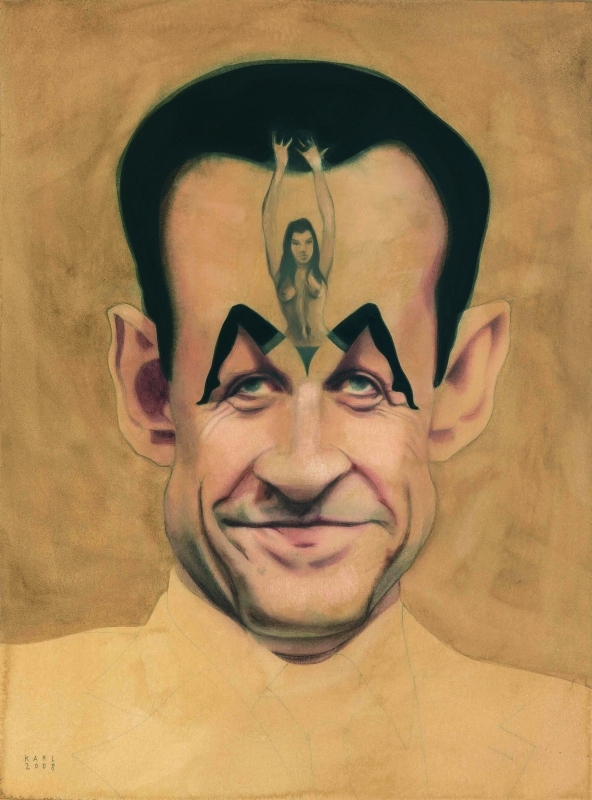
Referred to as “the jester of the socio-economic society,” Meersman crafts weekly portraits of politicians, business tycoons, economists, and social figures, often juxtaposing them with mythological, historical, or pop culture references. His pieces are not merely lampoons—they are layered social critiques that reflect Belgium’s shifting political landscape. His visual metaphors—such as portraying political leaders as chess pieces, puppets, or circus performers—have become emblematic of the nation’s collective psyche. His work has been discussed not only in the arts sections of newspapers but also in academic settings, where scholars analyze his illustrations for their political symbolism and sociocultural insights.
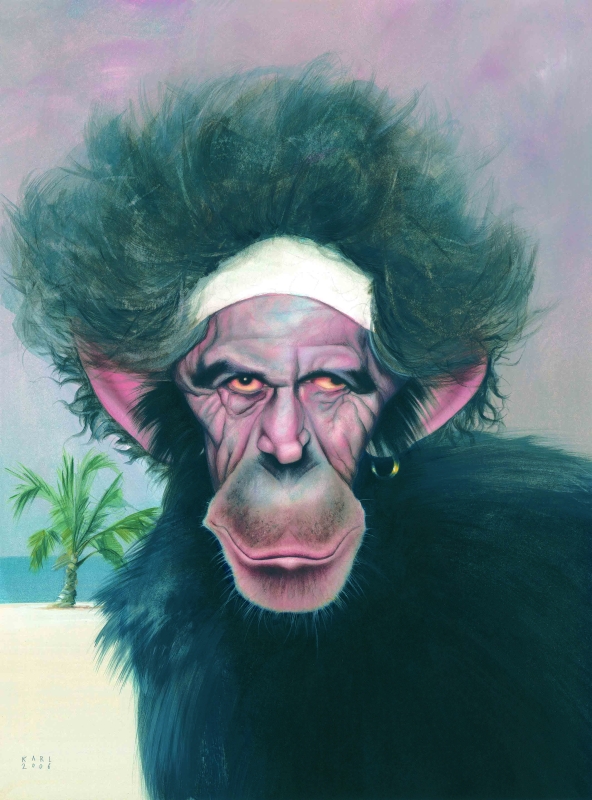
In 2002, he expanded his portfolio to include regular caricatures for KnackFocus, a magazine focused on arts and entertainment. Here, he turned his satirical eye toward actors, musicians, and media personalities, portraying them with both wit and affection. His depictions of cultural icons such as David Bowie, Madonna, and local Flemish celebrities were both artistically bold and thematically rich. Over time, his drawings have become a cornerstone of Belgian cultural journalism. His art is now archived and cited as a visual chronicle of Belgium’s pop-cultural evolution at the turn of the 21st century, often featured in retrospectives and scholarly exhibitions exploring the intersection of caricature and contemporary culture.
Style and Technique
Meersman’s artistic technique is rooted in classical training but executed with a contemporary edge, allowing him to bridge the gap between timeless craftsmanship and present-day relevance. He prefers traditional tools: graphite pencils and watercolors on paper, and often spends hours—sometimes days—on each illustration to achieve the perfect balance of detail, texture, and expression. His commitment to hand-drawing each caricature not only preserves the tactile richness of the medium but also imbues each piece with an unmistakable personal touch.
His work displays an extraordinary degree of realism and anatomical accuracy, often likened to portraiture, yet it’s simultaneously infused with theatrical exaggeration and biting humor. Facial expressions, gestures, and symbolic props are carefully constructed to underscore deeper meanings behind each subject’s public persona. Meersman’s ability to capture both physical likeness and psychological nuance makes his caricatures resonate beyond surface-level parody.
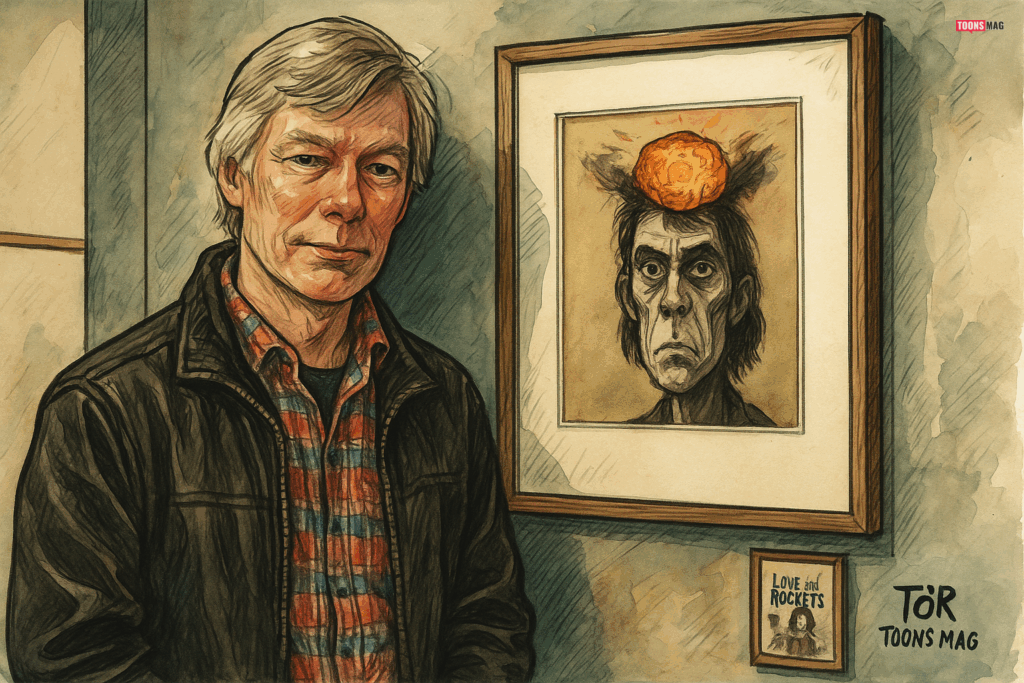
He cites as influences Félicien Rops, Egon Schiele, Henri de Toulouse-Lautrec, and Honoré Daumier—artists known for their ability to marry beauty and grotesque, social critique and elegance. From Rops, he inherited a sense of decadent irony; from Schiele, the sharp angularity and intense emotionality; from Lautrec, a fascination with performance and urban life; and from Daumier, the moral weight of satire as civic engagement. His illustrations channel these traditions while adding a modern sensibility rooted in today’s news cycles, digital media saturation, celebrity culture, and political theater.
In recent years, Meersman has also experimented with larger formats, mixed media, and thematic series. These works often explore philosophical questions or social phenomena such as the rise of populism, digital alienation, and environmental decay, adding further depth to his artistic range. Despite his traditional materials, his visual language speaks powerfully to 21st-century audiences, offering not only artistic pleasure but also critical reflection.
Exhibitions and International Recognition
Meersman’s art has been displayed in numerous galleries and museums, both nationally and internationally. Some of the most significant exhibitions include:
- 1995: PMMK, Provincial Museum of Modern Art, Ostend – solo show featuring political portraits
- 1996: De Brakke Grond, Amsterdam – first major exhibition in the Netherlands
- 1997: Itabashi Art Museum (Japan) and Komatsu Art Museum (Taiwan) – international group shows
- 2000: S.M.A.K. in Ghent and the Eugeen Van Mieghem Museum in Antwerp – exhibitions focusing on cultural satire
- 2006–07: Belgian Consulate in New York City – solo show introducing his work to an American audience
- 2015: “Portraits on Paper” – a retrospective hosted by the Stedelijk Museum in Sint-Niklaas
- 2021–2022: “TILTING TIME” – multimedia exhibit at CC Scharpoord in Knokke-Heist
Through these exhibitions, Meersman has garnered praise from critics, curators, and fellow artists alike, further establishing his reputation as one of Europe’s foremost satirical illustrators.
Awards and Honors
Meersman’s contributions have earned him accolades from a wide array of institutions. His honors include:
- UNESCO Unispace Poster Competition Winner (1982)
- Grote Gouden Regeringsmedaille – Belgian Government Gold Medal for artistic excellence (1983)
- First Prize, International Cartoon Festival, Knokke-Heist (1986)
- Karikaturale Hoeilaart Winner (1987 & 1989)
- Bologna Children’s Book Fair, Selected Artist (1997)
- White Ravens List, International Youth Library, Munich (1997)
- Best Foreign Stamp, People’s Republic of China, Philatelic Poll (2006)
- Press Cartoon Europe, Best Editorial Cartoon (2011)
- Nominee, International Best Brochure Design (USA) for “AVE EVA” (2012)
- Press Cartoon Belgium, First Prize (2020)
Artistic Legacy and Personal Life
Karl Meersman is much more than a cartoonist—he is a chronicler of our time, a visual philosopher whose work captures the pulse of contemporary life. His illustrations do not merely entertain; they provoke, question, and illuminate. They challenge viewers to consider the hidden dynamics behind public figures and societal issues, offering an unflinching yet humanistic lens on the world. In a media environment increasingly saturated with digital graphics and algorithmically generated visuals, Meersman remains committed to the analog tradition. He uses paper, pigment, and pencil to produce original artworks that carry a tactile, emotional resonance often missing in digital formats.
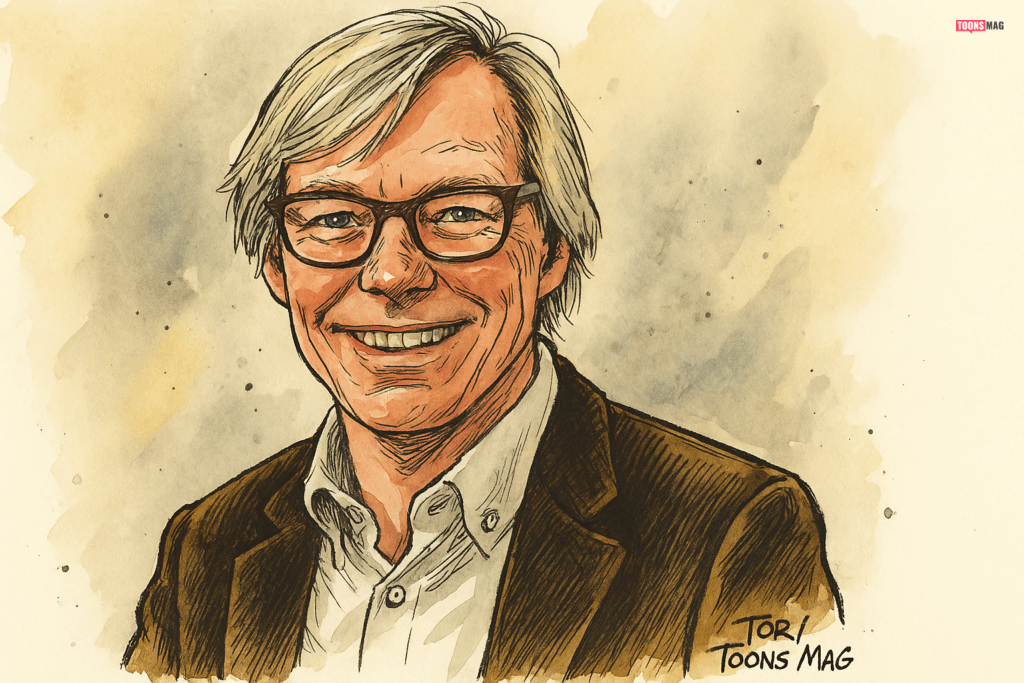
He is married to Lies Martens, a well-known former journalist and presenter with the Flemish public broadcaster VRT. The couple resides in Sint-Niklaas, where Meersman maintains a studio that serves as both a workspace and a creative sanctuary. The studio is more than a place of production—it is a personal archive, a gallery of works-in-progress, and a setting for deep reflection and experimentation. He continues to work on editorial commissions for Trends and KnackFocus, but also devotes significant time to developing independent art projects that explore broader philosophical themes and socio-political concepts.
In addition to his artistic output, Meersman is deeply committed to the mentorship and cultivation of young talent. He frequently collaborates with art academies and cultural institutions, offering workshops and critiques to aspiring illustrators and cartoonists. His mentorship emphasizes the importance of critical thinking, historical awareness, and artistic integrity—values that are at the core of his own practice.
Beyond editorial cartoons, Meersman has applied his artistry to a wide array of formats and disciplines, including:
- Posters and visual identity campaigns for cultural events, including theater festivals and art biennales
- Interior murals and public space designs commissioned by municipalities and institutions
- Children’s literature, both as an illustrator and conceptual designer, with a focus on emotionally resonant and educational narratives
- Philately, having created commemorative stamps for the Belgian Post and other international clients, some of which have been awarded and displayed in philatelic exhibitions
His ability to move fluidly between commercial and conceptual spaces has made him a versatile and enduring presence in Belgian and European art.
Bibliography
Editorial Cartoon Collections
- VIPS TOO: Very Important Paintings Too (2010)
- VIPS: Very Important Paintings (2007)
- België: tekenend en getekend 1990–2000 (2000)
- Wat baten kaars en bril (2007)
- De nieuwe collaboratie (1997)
- België in 30 hoofdstukken (1993)
- Wat een jaar, beste spotliefhebber! (1988)
Children’s and Young Adult Books (Illustrator)
- Een melkje wolk (2002)
- Wisselkind (2000)
- De derde kans (1999)
- De koningste koning (1998)
- Onder de zwarte heuvel (1997)
- Complot tegen Jesse (1997)
- Ach (1996)
- Het geheim van de Zwarte Dame (1996)
Legacy
Karl Meersman continues to redefine the boundaries of modern caricature and political art with a body of work that is as diverse in technique as it is deep in social relevance. His ability to blend artistic finesse with incisive satire positions him not only as a chronicler of the contemporary moment but also as a guardian of the historical legacy of visual commentary. One editor aptly described him as “a clever clown who unmasks and disarms our cultural, political, and economic leaders with ghastly precision.”
Meersman’s artwork stands out for its rare balance between critique and empathy. His caricatures, while often humorous and exaggerated, never stray into cruelty for its own sake. Instead, they strive to reveal the deeper contradictions, flaws, and humanity of his subjects—be they politicians, celebrities, or cultural archetypes. His compositions are laden with allegorical references and visual symbolism that reward close viewing and invite interpretation.
Over the years, Meersman has gained a reputation not only for his weekly editorial contributions but also for his long-term cultural impact. Academics have studied his cartoons in university courses on political communication and media literacy. His illustrations have been featured in textbooks, documentaries, and exhibitions exploring the intersection of journalism and visual art. Museums and collectors have acquired his original works, which are now part of permanent collections in several institutions.
In a world where the lines between politics, media, and entertainment are increasingly blurred, Karl Meersman’s art functions as a necessary counterbalance—an independent voice that cuts through spin and spectacle. Bold, intelligent, and beautifully drawn, his work continues to provoke thought, foster dialogue, and elevate the role of caricature as a serious artistic and social tool.
FAQ about Karl Meersman
Who is Karl Meersman?
Karl Meersman is a prominent Belgian editorial cartoonist known for his weekly caricatures featured in popular magazines like Trends and Knack.
What is Karl Meersman’s artistic background?
Coming from an artistic family, Karl Meersman was exposed to art from a young age. He pursued art education, eventually specializing in publicity, printmaking, and figure drawing.
What are some notable works by Karl Meersman?
Karl Meersman gained international attention for his artwork displayed in the Belgian consulate in New York City during 2006-2007. He is acclaimed for his caricatures and editorial cartoons, often portraying contemporary political figures and showbiz personalities.
What is Karl Meersman’s artistic style?
Karl Meersman’s artistic style is realism with a strong eye for detail. He primarily utilizes traditional techniques like watercolor and pencil on paper for his artwork.
Has Karl Meersman contributed to any publications?
Yes, Karl Meersman has been involved in various publications, including editorial cartoons and children’s books. His notable works include “VIPS TOO: Very Important Paintings Too” and “VIPS: Very Important Paintings.”
Who are Karl Meersman’s influences?
Karl Meersman draws inspiration from artists like Egon Schiele and the satirical prints of Félicien Rops, Toulouse-Lautrec, and Honoré Daumier.
What other forms of art does Karl Meersman engage in?
In addition to editorial cartoons and caricatures, Karl Meersman creates posters, stamps, paintings, and interior designs. He has also contributed to book illustrations and authored children’s books.
This post was created with our nice and easy submission form. Create your post!






One Comment