

 Chris Krol

Kudzu was far more than a daily newspaper comic strip. It was a cultural chronicle, a satirical Southern epic disguised as four-panel humor, and one of the most thoughtful comic strips produced in late-20th-century American journalism. Created by Doug Marlette, a Pulitzer Prize–winning editorial cartoonist, Kudzu ran from June 15, 1981, to August 26, 2007, distributed by Universal Press Syndicate, and at its height appeared in over 300 newspapers across the United States.
Set in the fictional town of Bypass, North Carolina, Kudzu explored life in the rural and small-town South with affection, irony, skepticism, and deep human insight. While it made readers laugh, it also asked serious questions about religion, class, race, politics, generational conflict, and cultural change—often more directly than many opinion columns.
This in-depth article examines Kudzu as a work of art, journalism, and cultural history: its origins, characters, themes, evolution, media adaptations, and enduring legacy.
Kudzu (Comic Strip)
Kudzu was a daily comic strip by Pulitzer Prize-winning editorial cartoonist Doug Marlette about rural Southerners. Distributed by Universal Press Syndicate, the strip ran from June 15, 1981, to August 26, 2007.
Publication History
- Launch Date: June 15, 1981
- End Date: August 26, 2007
- Syndicate(s): Universal Press Syndicate
Characters and Story
The strip’s characters include Kudzu Dubose, Nasal T. Lardbottom, Rev. Will B. Dunn, Ida Mae Wombat, Veranda Tadsworth, and NASCAR Dad. Rev. Will B. Dunn, modeled after civil rights activist Will D. Campbell, became a beloved character in the strip.
Current Status/Schedule
Concluded daily & Sunday strip
Genre
Humor, the South
Origins and Title
The title Kudzu was derived from the notorious kudzu vine, introduced to the Southern United States as a solution for soil erosion. However, the vine soon spiraled out of control, becoming invasive. This aptly named strip mirrored the unstoppable growth and unpredictability of its namesake.
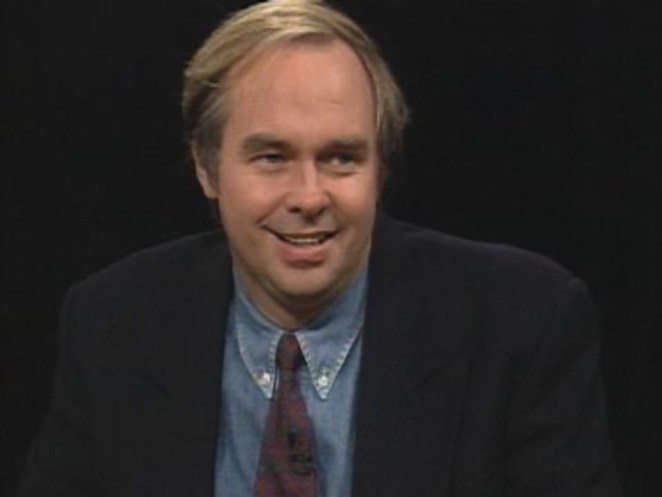
Why “Kudzu”? The Meaning Behind the Title
The title Kudzu is itself a metaphor—one of the most intelligent naming choices in comic strip history.
Kudzu is a vine introduced to the American South in the early 20th century to control soil erosion. Promoted as a miracle solution, it instead spread uncontrollably, covering trees, buildings, and landscapes. It became a symbol of unintended consequences, stubborn persistence, and Southern folklore.
Doug Marlette understood that Southern culture—its traditions, faith, contradictions, and myths—worked much the same way. Customs intended to stabilize communities often grew invasive. Beliefs meant to unite people sometimes smothered dissent. Like the vine, Southern identity was beautiful, overwhelming, and impossible to ignore.
Kudzu, the comic strip, grew the same way: quietly, steadily, and everywhere.
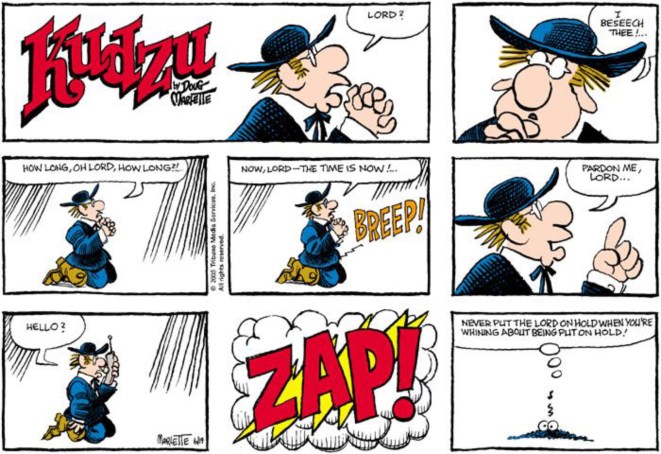
Doug Marlette: Editorial Cartoonist Turned Comic Strip Chronicler
Before Kudzu, Doug Marlette was already a respected editorial cartoonist, drawing political satire for newspapers such as The Charlotte Observer and The Atlanta Journal-Constitution. His editorial work was sharp, confrontational, and unapologetically political—work that would later earn him the 1988 Pulitzer Prize for Editorial Cartooning.
Kudzu allowed Marlette to explore many of the same themes—power, hypocrisy, belief, and human frailty—but through character-driven humor rather than direct political attack. The strip became a parallel track to his editorial career: gentler on the surface, but often just as incisive.
Publication History
Debuting on June 15, 1981, Kudzu quickly gained popularity and was syndicated in over 300 newspapers at its peak. Tragically, creator Doug Marlette’s life was cut short in a car accident on July 10, 2007. Consequently, Kudzu ceased syndication, with the last daily strip published on August 4, 2007, followed by the final Sunday strip on August 26, 2007.
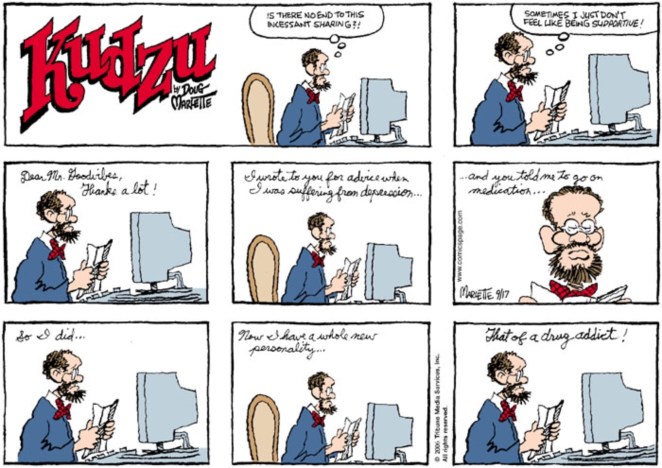
Setting: Bypass, North Carolina — A Small Town That Contained a Nation
Bypass, North Carolina, is fictional, but it feels unmistakably real. It is not a caricatured “hillbilly” South nor a romanticized pastoral fantasy. Instead, it is:
- A town struggling between tradition and modernity
- A place where religion is omnipresent but unevenly practiced
- A community bound by gossip, loyalty, resentment, and humor
Bypass functions as a microcosm of American life, with Southern specificity acting as a lens rather than a limitation. Readers outside the South often recognized their own towns in Bypass—proof that Marlette’s satire was universal, not regional.
Characters and Storyline
Cast of Characters
- Kudzu Dubose: The nominal star is a 16-year-old resident of Bypass, NC.
- Rev. Will B. Dunn: A charismatic Southern preacher with a unique perspective on life.
- Ida Mae Wombat: Kudzu’s mom is portrayed as pushy yet loving.
- Uncle Dub is Kudzu’s leading male role model.
- Veranda Tadsworth: Kudzu’s love interest is portrayed as less interested in him than in her.
- Maurice Jackson: Kudzu’s pal, adding depth to the small Southern town of Bypass.
- Will B. Dunn: The true star of Kudzu is Rev. Will B. Dunn, a minister who defies stereotypes with his sarcasm and eccentric worldview. Modeled after civil rights activist Will D. Campbell, Rev. Dunn’s character resonated deeply with readers, earning him a place in the hearts of fans.
The Characters of Kudzu: A Living Social Ecosystem
Kudzu Dubose
- Role: Nominal protagonist
- Age: 16
- Function: Observer, narrator, reluctant participant
Kudzu Dubose is not a traditional comic strip hero. Awkward, introspective, and restless, he longs to escape Bypass while simultaneously being shaped by it. He serves as a semi-autobiographical stand-in for Marlette himself—a young Southerner both fascinated and frustrated by his surroundings.
Kudzu’s voice gives the strip its emotional grounding. Through him, readers experience adolescence, generational tension, and the desire to outgrow one’s hometown without fully rejecting it.
Ida Mae Wombat (Kudzu’s Mother)
- Pushy, dramatic, loving, and deeply invested in appearances
- Represents maternal authority and Southern social pressure
Ida Mae embodies the social glue of the town—church, reputation, family standing. She is both comic and sympathetic, illustrating how love and control often blur.
Uncle Dub
- Kudzu’s primary male role model
- Cynical, humorous, quietly observant
Uncle Dub provides commentary from the sidelines. He is less idealistic than Kudzu, less performative than other adults, and often the strip’s closest thing to wisdom.
Maurice Jackson
- Kudzu’s close friend
- Offers perspective beyond white Southern norms
Maurice’s presence adds subtle depth to Kudzu’s treatment of race and friendship. The strip never preaches on racial issues, but Maurice’s role ensures they are never absent.
Veranda Tadsworth
- Kudzu’s romantic interest
- Socially ambitious, often dismissive
Veranda represents aspiration, class consciousness, and adolescent longing. Her emotional distance from Kudzu underscores his sense of alienation.
Nasal T. Lardbottom
- A grotesque, exaggerated character
- Used for broad satire and physical humor
While some characters provide subtlety, Lardbottom offers absurdity—a reminder that Marlette was still writing a daily strip meant to make people laugh.
The Soul of Kudzu: Reverend Will B. Dunn
If Kudzu has a true star, it is Reverend Will B. Dunn.
Who Is Reverend Will B. Dunn?
- A Southern preacher
- Sardonic, compassionate, unpredictable
- Deeply skeptical of organized religion while remaining deeply faithful
Reverend Dunn is modeled after Will D. Campbell, a real-life civil rights activist, Baptist minister, and moral icon of the American South. Like Campbell, Dunn defies stereotypes: he is profane, funny, and spiritually serious.
Why Reverend Dunn Matters
Reverend Dunn allows Kudzu to tackle religion honestly—without reverence or contempt. He exposes hypocrisy, mocks shallow piety, and defends human dignity. In an era when comic strips rarely addressed theology, Kudzu did so weekly.
For many readers, Dunn was the strip’s moral center: a reminder that faith could be radical, humble, and deeply human.
Themes: What Kudzu Was Really About
1. Southern Identity Without Stereotypes
Marlette rejected both romantic nostalgia and cheap mockery. His South was complicated, funny, cruel, generous, and contradictory—like any real place.
2. Religion as Culture and Conflict
Church life in Kudzu is omnipresent. The strip examines:
- Televangelism
- Hypocrisy
- Genuine faith vs. performance
3. Class and Aspiration
Characters constantly negotiate status, respectability, and escape. Kudzu wants out; others cling to place.
4. Generational Tension
Parents and children talk past one another, bound by love but divided by worldview.
5. The Humor of Discomfort
Kudzu thrives on awkward silences, moral unease, and social embarrassment—humor rooted in recognition rather than punchlines.
Art Style and Storytelling Technique
Doug Marlette’s drawing style was economical but expressive. He favored:
- Strong facial expressions
- Clear body language
- Dialogue-driven panels
Unlike gag-a-day strips, Kudzu often unfolded in long story arcs, giving it the feel of a serialized novel. This narrative ambition set it apart from many contemporaries.
Reception and Popularity
At its peak, Kudzu appeared in hundreds of newspapers, with particularly strong followings in the South but loyal readers nationwide.
Readers praised:
- Its intelligence
- Its refusal to condescend
- Its emotional honesty
Critics often compared Kudzu to:
- Doonesbury (for social commentary)
- Bloom County (for satire)
Yet Kudzu remained distinct—less national, more intimate.
Beyond the Strip: Kudzu in Other Media
CBS Sitcom Pilot (1983)
Kudzu was adapted into a television pilot that aired as a special on August 13, 1983. Though it did not become a series, the attempt demonstrated the strip’s narrative richness.
Kudzu: A Southern Musical (1998)
Doug Marlette co-created a stage adaptation with Jack Herrick and Bland Simpson (of the Red Clay Ramblers). The musical premiered in Washington, D.C. and later appeared in academic and regional theaters.
The musical leaned into Kudzu’s strengths:
- Community storytelling
- Music rooted in Southern tradition
- Humor blended with moral inquiry
Tragically, Marlette was traveling to assist a student production of the musical when he died in 2007.
The End of Kudzu: A Strip That Chose Dignity Over Continuation
Doug Marlette died in a car accident on July 10, 2007. Rather than continue Kudzu with guest artists or replacements, the strip ended with him.
This decision preserved the integrity of the work. Kudzu was inseparable from Marlette’s voice, worldview, and lived experience.
The final Sunday strip, published August 26, 2007, was widely regarded as a graceful farewell.
Legacy: Why Kudzu Still Matters
1. A Rarely Honest Portrait of the South
Few comics have captured Southern life with such balance—loving without nostalgia, critical without cruelty.
2. A Model for Character-Driven Satire
Kudzu proved that satire doesn’t require slogans. It requires people.
3. Influence on Southern Storytelling
Writers, cartoonists, and playwrights continue to cite Kudzu as a touchstone for regional storytelling done right.
4. A Reminder That Humor Can Be Humane
In an era of outrage-driven media, Kudzu stands as evidence that humor can challenge without dehumanizing.
Kudzu: Kudzu as Cultural Literature
Kudzu was not merely a comic strip—it was Southern literature in cartoon form. Doug Marlette used ink and dialogue to explore belief, belonging, contradiction, and grace. He trusted readers to sit with discomfort, to laugh thoughtfully, and to recognize themselves in a fictional town overtaken—slowly, inevitably—by human complexity.
Like the vine it was named after, Kudzu spread quietly and left its mark everywhere it touched.
More than a decade after its final strip, Kudzu remains alive—not on newsprint, but in memory, scholarship, and the enduring need for stories that tell the truth with humor and heart.
Read also
- Berke Breathed (1957-): A Creative Journey through Comic Strips and Children’s Books
- The Top 10 Most Beloved Cartoon Characters in Comic Strip History
- King Aroo: A Surreal Journey in Comic Strips
- Professor Otto and His Auto (1902): A Pioneering Journey through the World of Early Comic Strips
- Musical Mose: An Early 1902 Comic Strip Adventure
FAQs about Kudzu (comic strip):
1. What is Kudzu?
Kudzu was a daily comic strip created by Pulitzer Prize-winning editorial cartoonist Doug Marlette. It centered around the lives of rural Southerners and their humorous escapades.
2. When did Kudzu run?
Kudzu ran from June 15, 1981, to August 26, 2007, making it a beloved staple in the world of comics for over two decades.
3. What inspired the title of the comic strip?
The title Kudzu was inspired by the kudzu vine, initially introduced to the Southern United States as a soil erosion control plant but quickly became an invasive species, much like the characters and stories depicted in the strip.
4. Who were the main characters in Kudzu?
The cast of Kudzu included memorable characters such as Kudzu Dubose, Rev. Will B. Dunn, Nasal T. Lardbottom, Ida Mae Wombat, Veranda Tadsworth, and NASCAR Dad, each adding their unique flavor to the comic’s Southern charm.
5. What was the setting of the comic strip?
Kudzu was set in the fictional town of Bypass, North Carolina, a small Southern hamlet brimming with quirky and endearing personalities.
6. What was the significance of Rev. Will B. Dunn in the comic?
Rev. Will B. Dunn, a minister in Kudzu, emerged as a standout character with his unconventional yet relatable personality. Modeled after real-life figure Will D. Campbell, Rev. Dunn added depth and humor to the strip, captivating readers with his wit and eccentricity.
7. How did the comic strip Kudzu end?
Sadly, the comic strip came to an end following the untimely death of creator Doug Marlette in a car accident on July 10, 2007. The last daily strip was published on August 4, 2007, while the Sunday strips concluded on August 26, 2007.
8. Did Kudzu extend into other forms of media?
Yes, Kudzu ventured into other media formats, including a CBS sitcom pilot aired on August 13, 1983, and a musical comedy adaptation titled Kudzu, A Southern Musical, produced in Washington, D.C., in 1998.
9. What was Kudzu’s reception during its publication?
Kudzu garnered widespread acclaim during its publication, syndicated in over 300 newspapers at its peak. Its humorous portrayal of Southern life resonated with readers, earning it a dedicated fanbase.
Unfortunately, Kudzu is no longer in syndication. However, collections of the comic strips may still be available for purchase, allowing fans to reminisce about the charm and wit of this beloved Southern comic.
This post was created with our nice and easy submission form. Create your post!






4 Comments