


 Anto Mario

The Iconic Work of Jim Davis: Few cartoonists have built a character as instantly recognizable—and as quietly durable—as Jim Davis, the American creator of Garfield. In an art form where even beloved strips can fade as tastes change and newspaper space shrinks, Garfield has remained a global fixture for decades, translated across cultures and rebuilt for new platforms without losing its core identity: a cat who loves comfort, hates Mondays, and says what many people only think.
But calling Garfield “a popular comic strip” undersells what Jim Davis actually made. Davis built a long-running storytelling product, a licensing juggernaut, and a daily humor machine engineered for broad relatability—one that could live in newspapers, books, animation, merchandise, and now digital feeds. According to Guinness World Records, Garfield has been the world’s most syndicated comic strip, appearing in thousands of journals worldwide (with figures shifting over time as newspapers declined). Encyclopaedia Britannica also notes Garfield’s debut in 41 newspapers and its rapid rise into television specials and a long-running animated series.
In this deep dive, we’ll explore Jim Davis’s background, the real origins of Garfield, how the strip’s humor is constructed, how Davis turned a comic into a brand through Paws, Inc., and why Garfield remains relevant in a world that no longer revolves around the morning newspaper.
Jim Davis: The Farm Kid Who Learned to Draw for the Masses
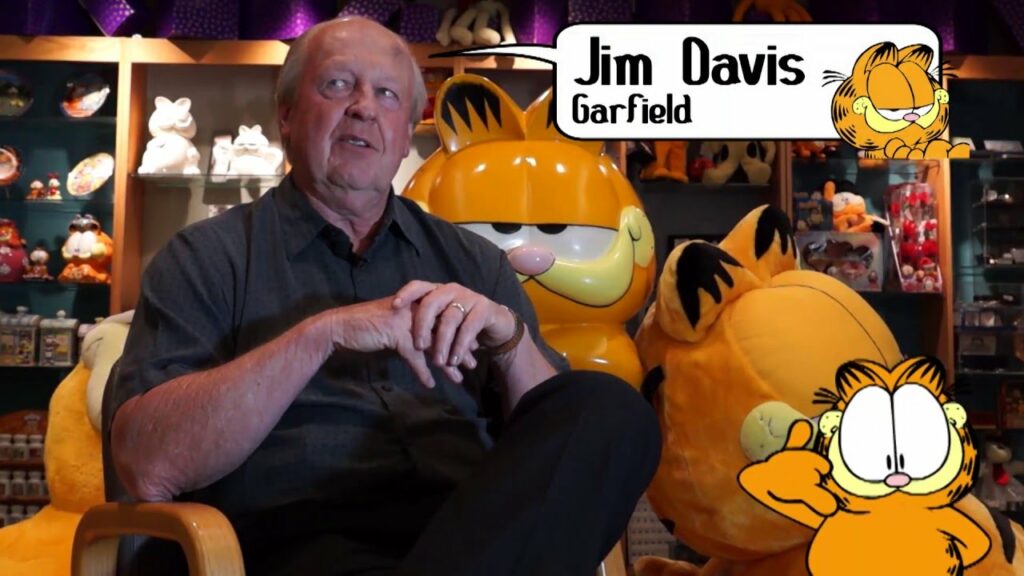
Jim Davis was born July 28, 1945, in Marion, Indiana, and grew up in rural Indiana—an upbringing frequently credited with shaping his instinct for animals, everyday humor, and approachable Americana. That early environment matters because Davis’s comedy has always leaned toward the familiar: family life, small irritations, comfort foods, minor frustrations, and the quiet drama of routine.
Even if you’ve never stepped foot on an Indiana farm, you recognize the emotional landscape of Davis’s comedy: the desire to relax, to snack, to be left alone, to feel understood. Those impulses are Garfield’s fuel.
Davis attended Ball State University, studying art and business—a pairing that, in hindsight, reads like destiny. Many cartoonists are excellent artists. Far fewer are equally interested in the business architecture that sustains a strip for generations. Davis’s career suggests he didn’t treat “art vs. commerce” as enemies. He treated them as systems that had to work together.

Early comic work before Garfield
Before Garfield, Davis worked on other strips and projects, including Gnorm Gnat and work connected to Tumbleweeds (among other cartooning contributions), building professional experience and learning the realities of syndicated humor. These early years were an apprenticeship not only in drawing, but in deadline discipline—the unromantic backbone of every successful daily strip.
The Birth of Garfield: A Calculated Risk That Looked Like a Lazy Cat
Garfield debuted in 41 newspapers in 1978
Garfield debuted nationally on June 19, 1978, in 41 newspapers. That number is often cited because it reveals the strip’s modest beginnings before it became a global institution.
A detail that makes the origin story even more interesting: before Garfield became Garfield, there was an earlier strip featuring Jon Arbuckle. Wikipedia’s overview of Garfield explains that characters appeared in a strip called Jon, later retitled Garfield, before United Feature Syndicate accepted it for national distribution.
That evolution matters. It suggests Davis wasn’t simply struck by lightning with “perfect Garfield.” He iterated. He tested. He refined. And when he found the version that clicked, he scaled it.
Why the name “Garfield” fits the character
Garfield’s name is often linked to Jim Davis’s grandfather, James A. Garfield Davis—a family reference that Davis has discussed in multiple sources and fan documentation. Whether you treat that anecdote as sentimental or strategic, the effect is clear: the name “Garfield” sounds both old-fashioned and specific—like a person, not a generic pet—helping the character feel oddly “real.”

Why Garfield Worked: The Genius of Low-Stakes Comedy
When people describe Garfield, they often list traits: lazy, hungry, cynical, sarcastic. Those are accurate—but they aren’t the real explanation of the strip’s longevity. The deeper reason is structural:
Garfield specializes in conflict that doesn’t exhaust you.
The strip is built around pressures that are familiar but not traumatic:
- the dread of Mondays
- diet vs. appetite
- boredom vs. comfort
- social awkwardness (Jon)
- minor annoyances (Odie, alarms, exercise, chores)
This is “everyday stress” humor—small enough to laugh at, recognizable enough to feel seen. And because the stakes are low, Garfield can be re-read endlessly. That re-readability is one reason Garfield thrives in books, calendars, and social media reposts.
The triangle: Garfield, Jon, and Odie
At its core, Garfield operates like a comedic triangle:
- Garfield = desire + commentary + sabotage
- Jon Arbuckle = insecurity + good intentions + social discomfort
- Odie = innocence + chaos + physical comedy target
You can generate thousands of strips from that triangle because it covers multiple kinds of humor: verbal irony, situational embarrassment, and slapstick. It also ensures the strip works for different ages—kids laugh at Odie getting kicked off the table; adults laugh at Jon’s despair and Garfield’s ruthless honesty.
“I hate Mondays” is a modern proverb
Garfield’s Monday hatred is more than a punchline. It’s a slogan that transcended comics to become a cultural shorthand for burnout, routine, and the dread of obligation. This is where Davis’s “mass relatability” talent shows: he found a simple emotional truth and made it portable.
The Drawing Style: Simple Lines, Maximum Readability
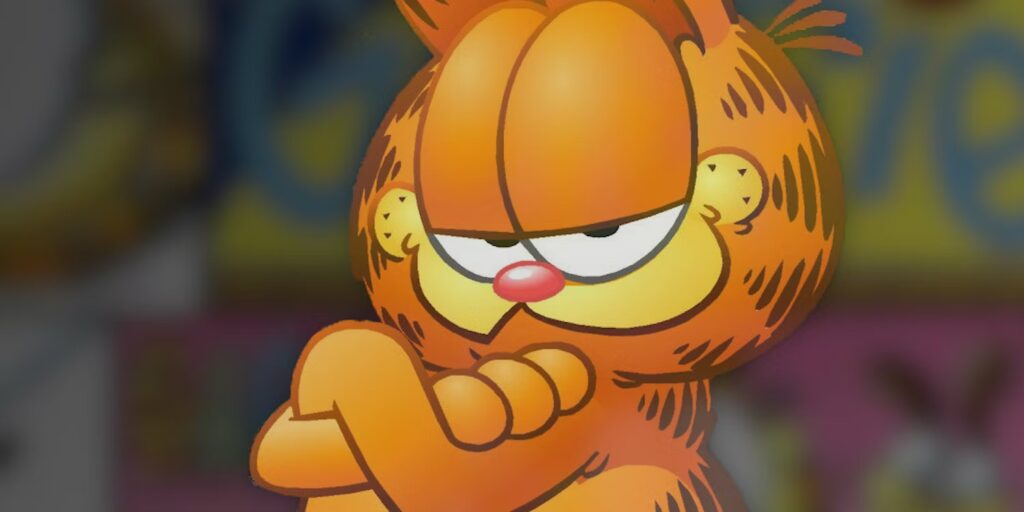
Garfield’s visual design is built for immediate recognition. The cat’s silhouette—round belly, heavy-lidded eyes, striped back—reads at a glance. That clarity is essential for syndication and merchandising, where a character must remain recognizable on everything from a newspaper panel to a mug to a plush toy.
Over time, Garfield’s look has been refined—cleaner lines, smoother curves, more “brand-consistent” proportions. That evolution is typical of long-running strips: as characters become icons, the artwork often shifts toward clarity and reproducibility.
This isn’t “selling out.” It’s part of how a comic becomes a global visual language.
Garfield as a Global Brand: The Licensing Machine Jim Davis Built
One reason Jim Davis stands apart from many cartoonists is that he helped build the business infrastructure to support Garfield at scale.
Paws, Inc.: the engine behind Garfield’s expansion
Davis founded Paws, Inc. in 1981 to support the Garfield strip and its licensing operations. Paws functioned as more than an office—it became a production and brand-management hub for Garfield across media.
Paws, Inc. later became part of a larger corporate ecosystem, with reporting noting its acquisition and current corporate parent context. The exact corporate details matter less than the broader point: Davis didn’t just create a strip—he created an organization capable of maintaining and monetizing it.
Why licensing mattered to Garfield’s cultural dominance
Licensing can sound like a cold word, but it’s a major reason Garfield became intergenerational. When a character exists only in newspapers, it depends on newspaper readership. When a character exists on:
- books and compilations
- TV specials and series
- toys and apparel
- school supplies and calendars
- digital stickers and memes
…it becomes part of daily life.
Guinness World Records identifies Garfield as the world’s most syndicated comic strip and describes its enormous global footprint over time. That kind of presence doesn’t happen by accident—it requires business architecture.
The Rise to Popularity
In just a few short years, Garfield was syndicated in hundreds of newspapers across the United States, and its popularity began to spread globally. The strip’s universal themes, including the challenges of daily life and the humor in the quirks of pets, resonated with readers of all ages.
Jim Davis’s ability to capture the essence of the human-animal bond played a significant role in the strip’s appeal. While Jon Arbuckle was portrayed as the well-meaning but often hapless owner, Garfield was the embodiment of a typical cat, with all his quirks and idiosyncrasies. This relatability endeared him to cat owners worldwide.
In 1982, Garfield made its way to the small screen with the animated television special “Here Comes Garfield.” The success of the special led to the creation of more TV specials and, eventually, the long-running animated series “Garfield and Friends,” which aired from 1988 to 1994.
Garfield on Television: From Special Events to Saturday Morning Staples
Garfield’s move to television wasn’t just an adaptation—it was a confirmation that the strip had become a mainstream American phenomenon.
Here Comes Garfield (1982)
The first half-hour Garfield TV special, Here Comes Garfield, premiered on CBS on October 25, 1982. That date matters historically: it marks Garfield’s transition from “popular strip” into a TV character with voice acting, music, and narrative pacing.
Emmy-winning specials
Britannica notes that Garfield television specials spun off from the strip, and that several—including Garfield on the Town and later programs—won Emmy awards. This is part of Garfield’s credibility story: the character wasn’t only commercially successful; it also achieved mainstream TV recognition.
Garfield and Friends (1988–1994)
The Saturday morning series Garfield and Friends aired on CBS from September 17, 1988, to December 10, 1994. It wasn’t just Garfield—it also incorporated segments from Davis’s other strip U.S. Acres (also known in some markets as Orson’s Farm).
The show became part of the broader Saturday-morning-cartoon era that defined how many Millennials remember childhood television. Entertainment Weekly’s retrospective ranking even highlights how “inconceivable” it now feels that a newspaper strip could spawn that kind of TV dominance—underscoring how massive Garfield was in that era.
Beyond Garfield: Jim Davis’s Broader Creative Output
It’s easy to treat Davis as a “one-character creator,” but his career includes other strips and related creative work.
U.S. Acres: the underappreciated sibling
Davis created U.S. Acres (1986–1989), a farm-animal strip that gained additional visibility through Garfield and Friends. While it never eclipsed Garfield, its existence reveals something important about Davis: he understood ensemble comedy and character variety, not just one cat’s voice.
Writing and producing
Davis’s credits extend into television writing and production connected to Garfield media. This isn’t trivial: comics and animation demand different pacing instincts. The ability to work across both suggests Davis’s humor is adaptable, not fragile.
The Garfield Formula: How the Strip Balances Bitter and Cute
A major reason Garfield works internationally is that it’s a careful balance of “mean” and “soft.”
Garfield can be selfish, manipulative, even cruel (especially to Odie). But the strip avoids becoming unpleasant because:
- Garfield’s targets are usually safe (annoying routines, Jon’s awkwardness, abstract “Monday”).
- Garfield’s meanness is often framed as comic exaggeration.
- Garfield has moments of warmth—rare, but strategically placed.
- The strip frequently uses Garfield’s perspective as “honest truth,” even when it’s petty.
That balance is key. Too sweet, and Garfield becomes bland. Too nasty, and readers stop inviting him into their mornings.
Criticism, Craft, and the Reality of Long-Running Strips
No strip runs for decades without criticism. Some readers feel Garfield became more formulaic over time; others argue the strip’s simplicity is precisely the point. The truth is that daily newspaper cartooning—especially at Garfield’s scale—is less like writing a novel and more like running a daily comedy service.
The craft challenge isn’t “write the best joke ever.” It’s:
- deliver a readable gag every day
- keep characters consistent
- avoid alienating broad audiences
- stay flexible enough for changing eras
- maintain brand clarity across platforms
That’s industrial-level creativity. And whether you personally prefer early Garfield or later Garfield, the operational accomplishment is difficult to overstate.
Garfield in the Digital Era: Memes, Reposts, and a New Kind of Syndication
Newspapers no longer dominate the way they did in the 1980s. Yet Garfield remains present—partly because digital culture rewards exactly what Garfield excels at:
- quick, readable emotion
- universal complaints
- short-form humor that works out of context
In a sense, memes are the new “single-panel newspaper moment”—and Garfield’s personality is built for that.
This is where Davis’s legacy becomes more than nostalgia. Garfield isn’t only surviving because older readers remember him. He’s surviving because the character’s emotional shorthand works on modern platforms.
Why Jim Davis Matters in Comics History
Jim Davis matters because he represents a rare intersection:
- a cartoonist with mass appeal
- a disciplined builder of long-running humor
- a creator who understood licensing and media expansion
- a craftsman of simple, repeatable, readable comedy
Garfield’s global footprint—recognized even by Guinness for its syndication scale—reflects not just popularity, but systems thinking: character design that reproduces cleanly, humor that translates, and business structures (like Paws, Inc.) built to maintain a franchise.
And perhaps most importantly, Davis created a character who became a mirror. Garfield isn’t a heroic figure. He’s a comfort creature—an avatar of appetite, laziness, frustration, and the desire to opt out. In a world that constantly demands productivity, Garfield’s appeal is almost philosophical:
Sometimes the funniest truth is that we’re tired—and we want lasagna.

The Enduring Appeal
What about “Garfield” has allowed it to remain relevant and beloved for over four decades? Several factors contribute to its enduring appeal:
- Universal Themes: “Garfield” tackles everyday situations and human quirks, making it relatable to people of all ages and backgrounds.
- Timeless Humor: The humor in “Garfield” is timeless and can be appreciated by children and adults. Garfield’s witty one-liners and sardonic commentary continue to make readers laugh.
- Character Depth: Despite his laziness and love of food, Garfield is a character with depth. His complexity and occasional moments of vulnerability make him endearing.
- Consistency: Jim Davis has maintained the quality and consistency of the strip over the years. Readers know they can count on “Garfield” for daily humor.
- Relatability: Garfield’s antics, whether his hatred of Mondays or his obsession with lasagna, reflect human behavior that many can identify with.
- Nostalgia: For adults who grew up reading “Garfield,” the strip offers a sense of nostalgia, reminding them of simpler times.
- Positive Messages: Amid the humor, “Garfield” often conveys positive messages about friendship, family, and kindness.
The Legacy of Jim Davis and Garfield
Jim Davis’s contributions to the world of comics and entertainment are immeasurable. His creation, Garfield, has become a cultural icon with a fan base that spans generations. The character’s enduring appeal continues to bring joy and laughter to readers worldwide.
In addition to his work on Garfield, Jim Davis has been involved in philanthropic efforts, including supporting literacy programs and animal welfare initiatives. His dedication to making the world a better place extends beyond the pages of his comic strip.
Final Thoughts: The Enduring Orange Cat (and the Quiet Mastermind Behind Him)
Garfield debuted in 41 newspapers in 1978. He moved into prime-time TV specials starting in 1982. He became a Saturday morning staple from 1988 to 1994. He expanded through licensing via Paws, Inc., founded by Davis in 1981. And decades later, the strip remains one of the most widely syndicated on the planet.
That arc—art → habit → brand → cultural shorthand—doesn’t happen often in comics.
Jim Davis didn’t just draw a cat. He built a global humor product with a human core: the daily comedy of wanting comfort in an exhausting world.
Read also: How to Draw Garfield by Jim Davis, Easy Tutorial, Garfield: The World’s Most Beloved Fat Cat and 10 Famous Cartoon Cats That Captured Our Hearts
Frequently Asked Questions (FAQ) about the Iconic Work of Jim Davis
1. Who is Jim Davis, and what is his iconic work?
Jim Davis is a renowned American cartoonist best known for creating the iconic comic strip “Garfield.” “Garfield” features the adventures and humorous antics of a lazy, lasagna-loving cat named Garfield, his owner Jon Arbuckle, and Odie, a bumbling dog.
2. When was the “Garfield” comic strip first published?
The “Garfield” comic strip debuted on June 19, 1978, and quickly gained popularity for its humor and relatable characters.
3. How did Jim Davis develop the idea for “Garfield”?
Jim Davis was inspired to create “Garfield” by his childhood experiences growing up on a farm with numerous animals. He wanted to capture the humorous interactions and quirks of pets and their owners.
4. What makes “Garfield” iconic and beloved by readers worldwide?
“Garfield” is beloved for its witty humor, relatable themes, and memorable characters. Garfield’s sarcastic humor, love of food, and disdain for Mondays have resonated with readers of all ages for decades.
5. Has “Garfield” been adapted into other media?
Yes, “Garfield” has been adapted into various forms of media, including animated TV series, feature films, video games, and merchandise. The most famous adaptation is the animated TV series “Garfield and Friends.”
6. How many “Garfield” comic strips have been published?
More than 14,000 “Garfield” comic strips have been published.
7. Is Jim Davis still actively creating “Garfield” comics?
Yes, Jim Davis remains actively involved in creating “Garfield” comics, ensuring the beloved character continues entertaining readers worldwide.
8. Are there any famous catchphrases or recurring themes in “Garfield”?
Yes, “Garfield” is known for its recurring themes, including Garfield’s love of lasagna, his hatred of Mondays, and his obsession with sleeping. Catchphrases like “I hate Mondays” have become widely recognized.
9. Can I find “Garfield” comic strip collections in print or online?
Yes, “Garfield” comic strip collections are available in print and digital formats. You can find books, e-books, and online archives of “Garfield” comics.
10. How has Jim Davis and “Garfield” impacted comics and pop culture?
Jim Davis and “Garfield” have significantly impacted the world of comics, popularizing the comic strip medium and introducing millions of readers to the joys of humorous storytelling through cartoon characters. Garfield has become an iconic figure in pop culture, recognized globally and loved by generations of fans.
This post was created with our nice and easy submission form. Create your post!







4 Comments