

 Joe Rogan

The Tribe (Portuguese: Papa‑Capim) is a long‑running Brazilian comic strip from Mauricio de Sousa’s Monica’s Gang (Turma da Mônica) universe. Debuting in 1963, the feature follows Tom‑Tom (Papa‑Capim) and his friends in an Amazonian Indigenous community once nicknamed “Tribo do Rio” (River’s Tribe). Stories balance humor with environmental stewardship, cultural identity, and the friction—and occasional friendship—between forest peoples and outsiders (called “caras‑pálidas” or “caraíbas”). Deities and natural forces—such as Tupã and Jaci (the Moon)—are sometimes invoked, underscoring the series’ spiritual tone.
Quick Facts (Infobox): The Tribe / Papa‑Capim
| Series | The Tribe (Portuguese: Papa‑Capim) — within Monica’s Gang |
| Creator/Author | Mauricio de Sousa |
| Country / Language | Brazil / Portuguese (localized into multiple languages; Tom‑Tom used in English) |
| Debut | 1963 |
| Status | Running (recurring feature within Monica’s Gang publications) |
| Genres | Humor, Jungle/Adventure, Slice of life, Environmental satire |
| Core cast | Tom‑Tom (Papa‑Capim), Tamoyo (Cafuné), Papaya (Jurema), Pajé, Kava |
| Setting | Unnamed Amazon rainforest territory; tribe historically called Tribo do Rio |
| Key themes | Ecology, cultural respect, coming‑of‑age, friendship, clash with caras‑pálidas / caraíbas |
| Notable graphic novel | Papa‑Capim: Noite Branca (2016), Graphic MSP imprint; by Marcela Godoy & Renato Guedes |
Overview
The Tribe places young Indigenous protagonists at the center of lighthearted yet purposeful adventures. Everyday activities—fishing, foraging, tracking, storytelling by the Pajé—become the frame for topical plots: defending nesting grounds from poachers, halting a careless burn, or negotiating with a befuddled caraíba who misunderstands tradition. Episodes range from quiet, observational comedy to fable‑like encounters with the forest’s spirits, always filtered through the kids’ curiosity and a respectful, community‑minded worldview.
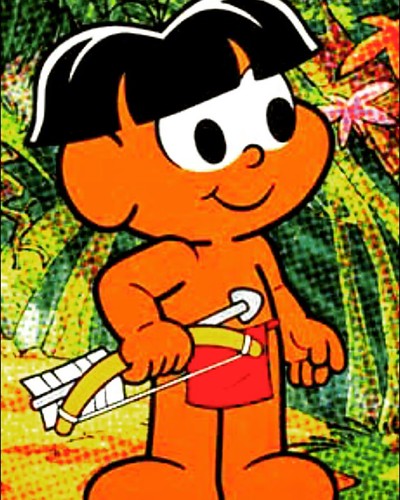
Setting & Terminology
- Amazon homeland: The stories occur in a rainforest community that values harmony with the river, animals, and seasonal cycles. Specific geographic coordinates are intentionally non‑explicit to keep the setting universal.
- “Tribo do Rio”: An earlier nickname—River’s Tribe—reflects the group’s deep connection to waterways for food, travel, and ceremony.
- Caras‑pálidas / Caraíbas: Outsiders from beyond the forest; interactions swing from amicable (scientists, tourists) to adversarial (illegal hunting, logging, arson). Tom‑Tom and friends often act as mediators or protectors.
- Tupã & Jaci: Occasional references to Tupã (creator‑divinity in Guarani cosmology) and Jaci (the Moon) add a spiritual layer to problem‑solving and moral lessons.
Main Characters
- Tom‑Tom (Papa‑Capim) — A brave, inquisitive curumim (child in Tupi‑Guarani languages). Skilled at tracking, hunting/fishing, and—above all—protecting the forest. The Portuguese name “Papa‑Capim” nods to the yellow‑bellied seedeater bird.
- Tamoyo (Cafuné) — Tom‑Tom’s best friend and frequent partner in river and jungle escapades. Loyal, upbeat, and quick to improvise.
- Papaya (Jurema) — Tom‑Tom’s love interest (sometimes teasingly aloof). Grounded and sharp‑tongued; she often challenges Tom‑Tom to improve himself and mind community values.
- Pajé — The tribe’s shaman: counselor, herbalist, and storyteller. The Pajé’s wisdom guides the children, providing healing knowledge, warnings, and myths that mirror each episode’s lesson.
- Kava — Tom‑Tom’s younger cousin; adventurous and easily distracted. His name means “wasp,” hinting at his stinging curiosity. Often the catalyst for gentle teachable moments.
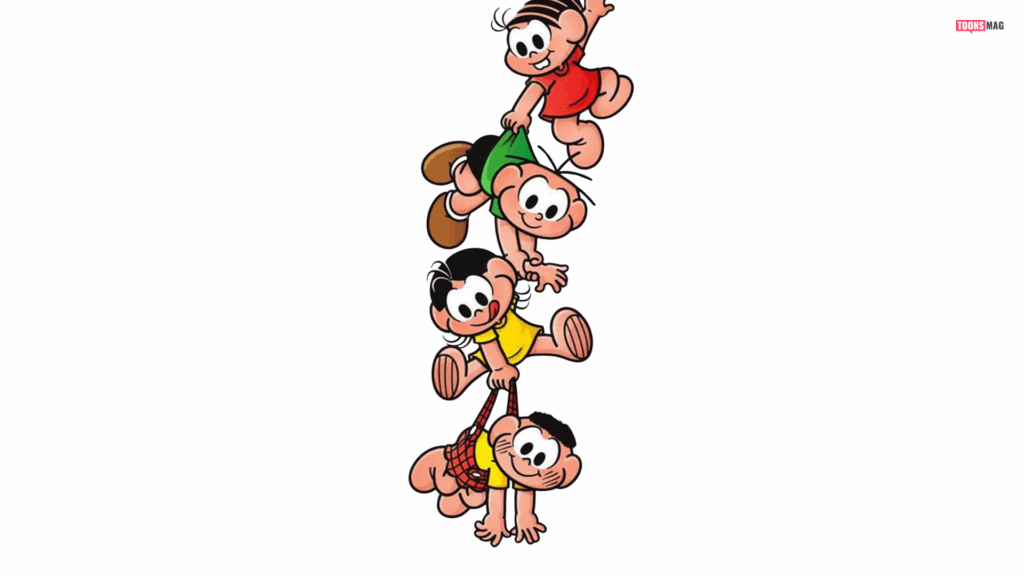
Supporting roles—parents, elders, craftspeople, and visiting caraíbas—rotate into stories as conflict, comedy, or mentorship require.
Themes & Topics
- Environmental stewardship: Poaching, deforestation, river pollution, careless fires, and habitat disruption are recurring antagonists. Solutions emphasize community action, cleverness, and non‑violent de‑escalation.
- Cultural identity & respect: Stories celebrate language, ritual, craft, oral history, and intergenerational bonds, while modeling consent and boundaries when outsiders arrive.
- Humor with heart: Slapstick, wordplay, and fish‑out‑of‑water gags soften serious topics, making them accessible to younger readers without trivializing the issues.
- Coming‑of‑age: Tom‑Tom and friends test bravery, fairness, and responsibility, learning when to ask elders for help—and when to trust their instincts.
Story Types (Typical Plots)
- Forest in peril: Smoke on the horizon, a broken bird nest, or a muddy river sparks an investigation that reveals a reckless or exploitative outside action.
- Cross‑cultural misunderstandings: A well‑meaning caraíba fails to grasp local customs; the kids translate—literally and culturally—to avert harm.
- Pajé’s parables: Myths about Tupã, Jaci, or forest guardians echo the episode’s conflict and hint at solutions.
- Rites of skill: Friendly competitions—fishing, canoeing, tracking—double as lessons in patience, respect, and teamwork.
Publication History & Creative Context
- Launch & placement (1963): Introduced as a recurring strip within the broader Monica’s Gang line, The Tribe diversified the universe beyond suburban neighborhoods, bringing rainforest life into the franchise’s rotating cast of features. Early appearances ran alongside other Monica’s Gang back‑ups, then cycled through monthly magazines, seasonal almanaques (specials), and later best‑of digests, keeping the feature in steady circulation.
- Publishing formats & frequency: Stories typically appeared as short gag pages and 5–8 page adventures, with occasional longer arcs in specials. Material has been regularly reprinted in Brazil and selected international editions of Monica’s Gang, ensuring evergreen availability.
- Voice & tone: While aligned with Monica’s Gang’s kid‑friendly humor, The Tribe is distinctive for its ecological and cultural focus, often told through quiet observation as much as punchlines. Narratives balance slice‑of‑life moments (fishing, festivals, craftwork) with issue‑driven conflicts (poaching, fires, river pollution) resolved through community action and clever non‑violence.
- Editorial & studio process: Produced at Mauricio de Sousa Produções, the strip has been scripted and illustrated by the studio’s team using consistent model sheets, field reference on Amazon fauna/flora, and a consultative approach to keep terminology and cultural signifiers respectful and age‑appropriate.
- Decade‑by‑decade emphasis (high level):
- 1960s–70s: Establishing cast and light gag‑adventure rhythm; framing outsiders (caraíbas) as both comedic foils and teachable moments.
- 1980s–90s: Stronger environmental stewardship plots; more parable‑style guidance via the Pajé; emphasis on riverine life and seasonal cycles.
- 2000s–2010s: Broader cultural‑respect themes (language, ritual, craft); selective long‑form specials culminating in Graphic MSP treatments.
- 2020s–present: Continued rotation in magazines/collections, with evergreen reprints and new short stories reinforcing ecology and community.
- Names & localization: Character names appear in Portuguese (e.g., Papa‑Capim, Jurema, Cafuné, Pajé) and localized equivalents (e.g., Tom‑Tom, Papaya) depending on edition and market. International Monica’s Gang releases have translated dialogue while often retaining key Indigenous terms (e.g., curumim, Pajé) in context with glosses.
- Collected editions & study use: Popular stories recur in almanaques and bookstore collections; educators often cite The Tribe for entry‑level discussions on biodiversity, Indigenous knowledge, and civics in classroom settings.
- Graphic MSP expansion: The line’s 2016 volume Papa‑Capim: Noite Branca re‑imagines the cast in a tenser, atmospheric mode, showcasing the property’s capacity for long‑form storytelling and cinematic art direction while preserving core values.
Notable Graphic Novel
- Papa‑Capim: Noite Branca (2016) — A Graphic MSP title (curated line of creator‑driven graphic novels reimagining Monica’s Gang characters). Written by Marcela Godoy with art by Renato Guedes, the book explores tense, atmospheric stakes for Tom‑Tom and friends, amplifying the core series’ mystery and environmental undertones with cinematic visuals.

Cultural & Educational Relevance
- Classroom‑friendly: The strip’s emphasis on biodiversity, community care, and respect for Indigenous knowledge supports discussions in science, geography, and civics.
- Representation: The Tribe offers positive Indigenous leads whose ingenuity and values guide the narrative, countering stereotypes through normalization of everyday life in the rainforest.
Where to Start (Reading Path)
- Classic strips in Monica’s Gang magazines featuring Tom‑Tom/Papa‑Capim for the core tone (comedy + conservation).
- Graphic MSP – Papa‑Capim: Noite Branca (2016) for a modern, self‑contained story with elevated stakes and lush artwork.
FAQs about The Tribe / Papa‑Capim
Is The Tribe part of Monica’s Gang canon?
Yes—The Tribe is a recurring feature inside the Monica’s Gang publishing ecosystem and shares that broader universe.
What does “caras‑pálidas” / “caraíbas” mean?
They’re in‑story terms for outsiders (literally “pale‑faces”) who come from beyond the forest; the tone varies with each visitor’s intent.
Is the tribe modeled on a specific nation?
The strip keeps tribal identifiers non‑specific, embracing a universalized Amazon setting while referencing regional language and cosmology.
Who created The Tribe?
Mauricio de Sousaousa, the creator of Monica’s Gang.
What’s the best long‑form entry point?
The Graphic MSP volume Papa‑Capim: Noite Branca (2016).






One Comment