


 Simon Alexander

Tips for Drawing Yourself As a Cartoon Character: Drawing yourself as a cartoon character is more than a fun artistic exercise—it is a doorway into discovering your visual identity, refining your style, and strengthening your storytelling voice. Whether you’re an aspiring comic artist, animator, caricaturist, or simply someone who wants to explore your creative side, crafting a cartoon version of yourself can serve as a foundation for future artistic growth.
Having drawn hundreds of characters over the years—many of them playful, exaggerated versions of myself—I’ve learned that self-cartooning is one of the most accessible yet profound exercises for building artistic confidence. It teaches observation, expression, stylization, and emotional clarity. In this article, I’ll walk you through practical, beginner-friendly techniques and more advanced insights that artists can use to craft a memorable self-caricature.
Before we get started, it’s worth noting that places like Cartoonist Network provide a vibrant space where both amateurs and professionals can share their illustrations, get feedback, and exchange creative insights. It is a global platform built for cartoonists and illustrators to showcase work, connect, and learn—perfect for artists developing cartoon versions of themselves.
Meanwhile, Toons Mag, a leading hub for editorial cartoons, caricatures, comics, and artistic articles since 2009, encourages freedom of expression and provides resources for cartoonists worldwide.
Let’s dive into the craft of transforming you into a cartoon.
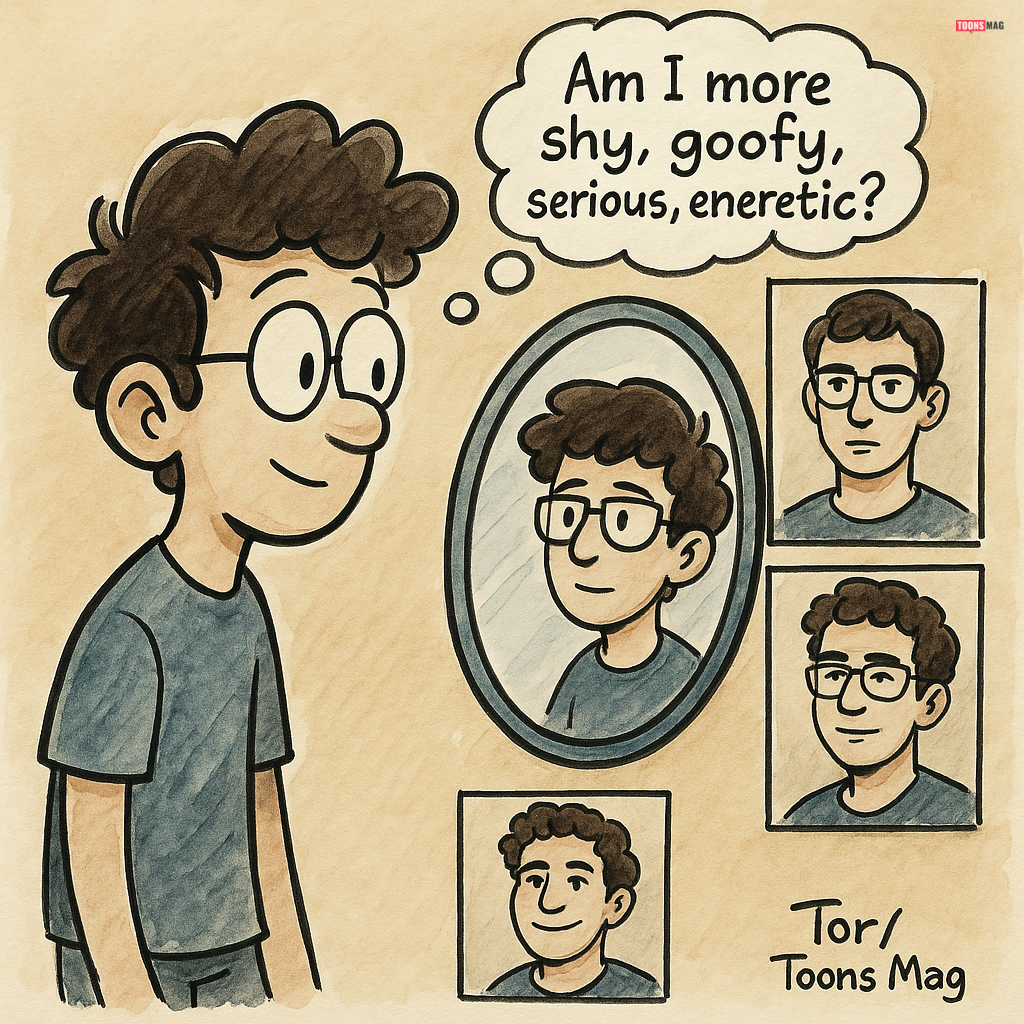
1. Why Draw Yourself as a Cartoon Character?
Cartoonists don’t draw themselves just for fun (although that is certainly part of it!). There are deep artistic and practical benefits:
✓ You learn stylization
Creating a cartoon of yourself helps you find the balance between realism and exaggeration—an essential skill for cartooning.
✓ You discover your signature style
Style is not something you “find” but something you develop deliberately. Your own likeness becomes your testing ground.
✓ You become comfortable expressing emotion visually
Cartoons rely heavily on expressive faces. Using your own features is the best way to practice.
✓ You create a recognizable personal brand
A self-cartoon can serve as your avatar, logo, or introduction in artist communities like Cartoonist Network.
✓ You practice observation and interpretation
You see what makes your face uniquely yours—and learn to translate it into simple, communicative shapes.
I often tell my students: The moment you can cartoon yourself confidently, you’re ready to cartoon anyone.
2. Gather Your Reference Material
Before drawing, you need reference images. Here’s what I recommend:
Use multiple angles
- Front view
- ¾ view
- Profile
- A candid photo with a natural smile or expression
Having these helps you see shape relationships more clearly.
Identify your most distinctive features
Ask yourself:
- What makes my face instantly recognizable?
- Is it my hair? Eyebrows? Smile? Nose? Glasses?
- What expression do I make often?
Cartooning works best when it exaggerates what is already uniquely yours.
3. Choose Your Cartoon Style
There is no single “correct” style. Explore several options:
A. Classic Cartoon Style (Disney/Looney Tunes inspired)
Rounded features, expressive eyes, dynamic lines.
B. Caricatured Cartoon Style
Strong exaggeration—big noses, sharp jawlines, tiny bodies.
Great for comedic self-portraits.
C. Minimalist Style (Webcomic simplicity)
Clean lines, simple shapes.
Often used by modern webcartoonists for relatable diaries.
D. Anime/Chibi Fusion
Large eyes, smaller facial features, dramatic expressions.
Perfect for playful avatars.
E. Editorial Cartooning Style
More grounded in realism with selective exaggeration—ideal for political or social commentary.
Experiment until something feels natural. Your personal cartoon style lives at the intersection of your influences, your hand’s tendencies, and your personality.
4. Break Down Your Facial Features Into Simple Shapes
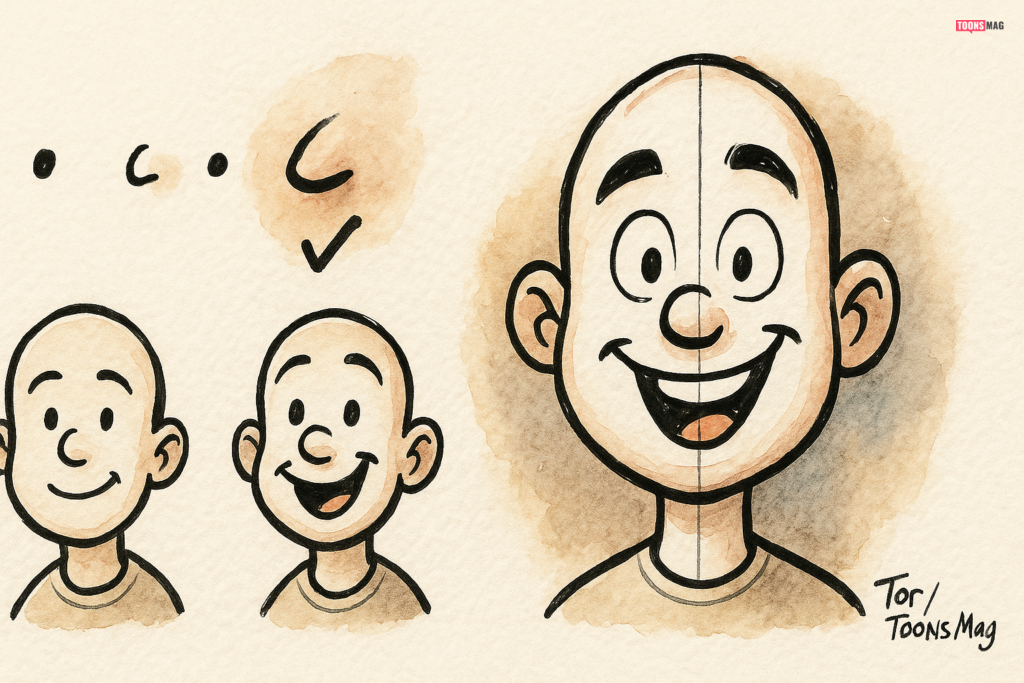
Cartooning is shape design. Start by simplifying your features:
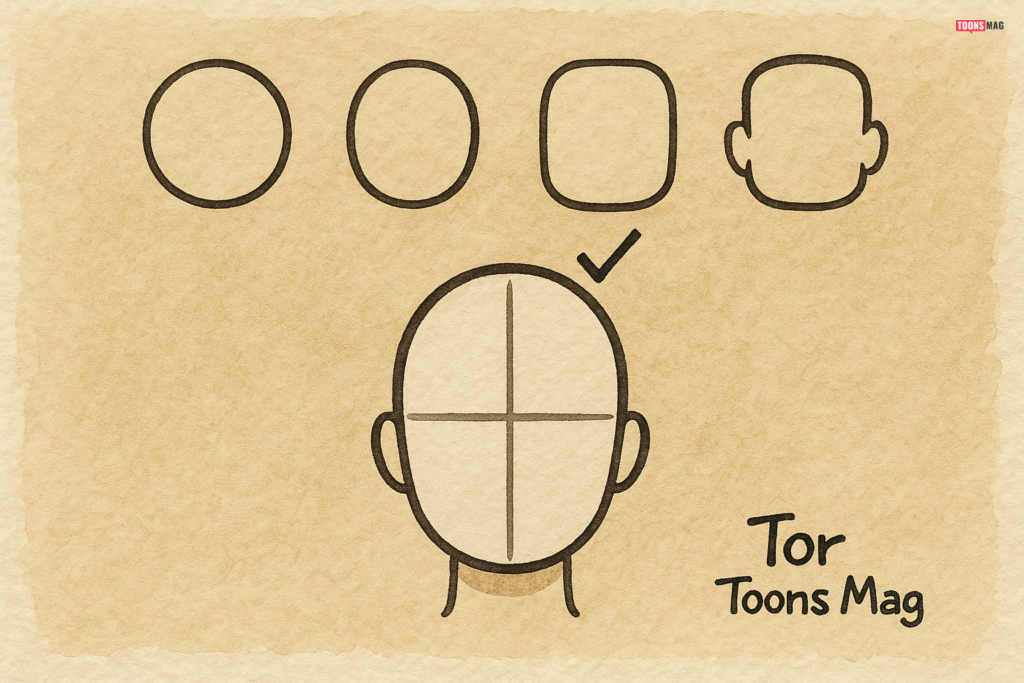
Head Shape
- Oval?
- Square?
- Heart-shaped?
- Long or short?
Draw this as a simple silhouette first.
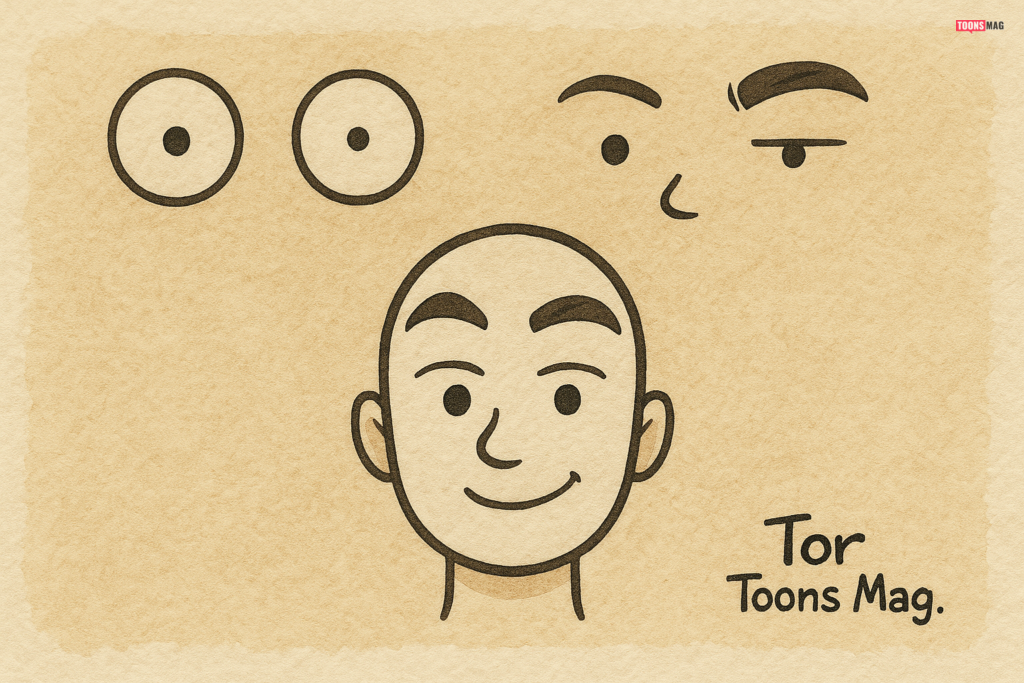
Eyes
Eyes carry emotion more than any other feature. Try:
- Circles
- Almond shapes
- Rectangles
- Dots with expressive eyebrows
Nose
Cartoon noses range from tiny dots to dramatic caricatured shapes.
Choose something that matches your natural profile.
Mouth
Smile lines, lip shapes, and expressive geometry all matter.
A cartoon mouth should exaggerate your natural smile or resting expression.
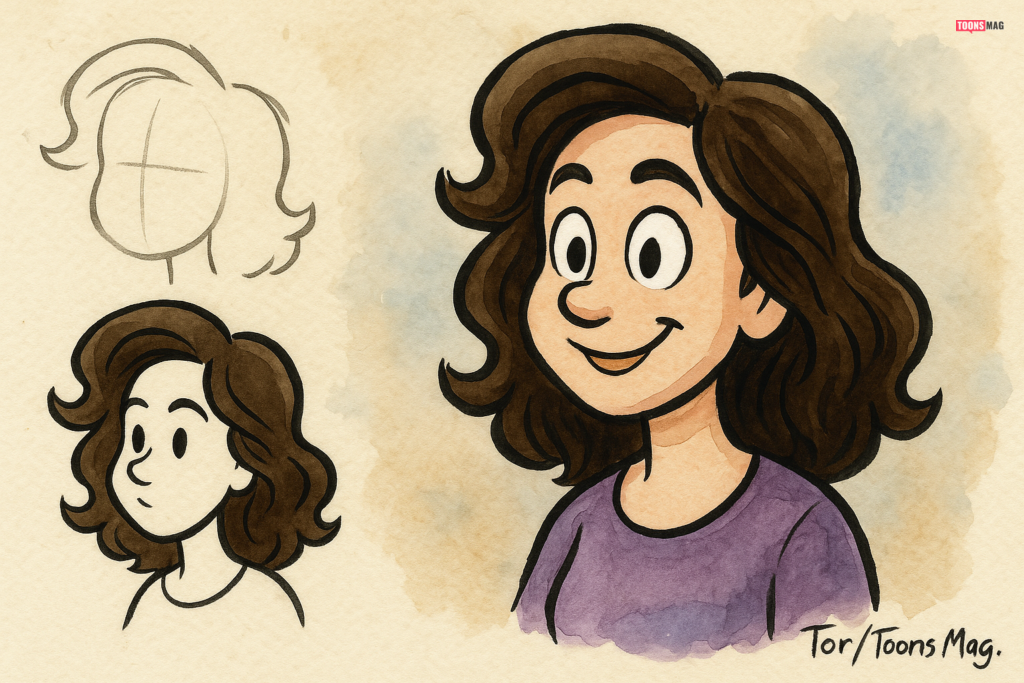
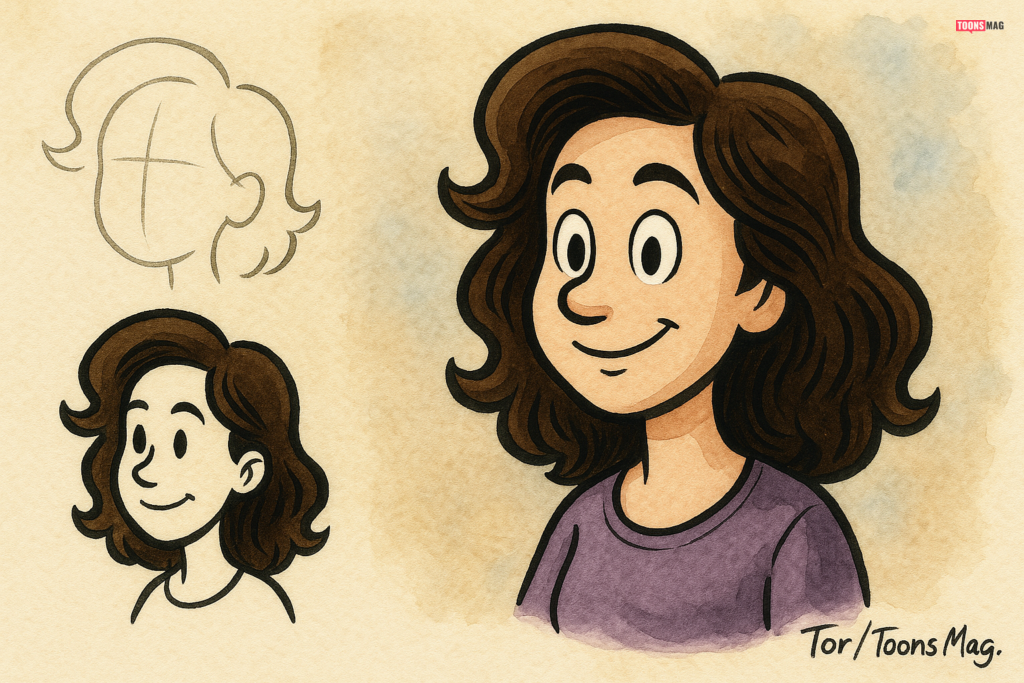
Hair
Treat hair as flowing masses, not individual strands.
Identify:
- Direction
- Volume
- Shape blocks
Accessories and defining elements
These instantly strengthen likeness:
- Glasses
- Beard
- Earrings
- Clothing style
- Hat or scarf
- Signature color palette
These small things often complete the character.
5. Exaggeration: The Secret Ingredient
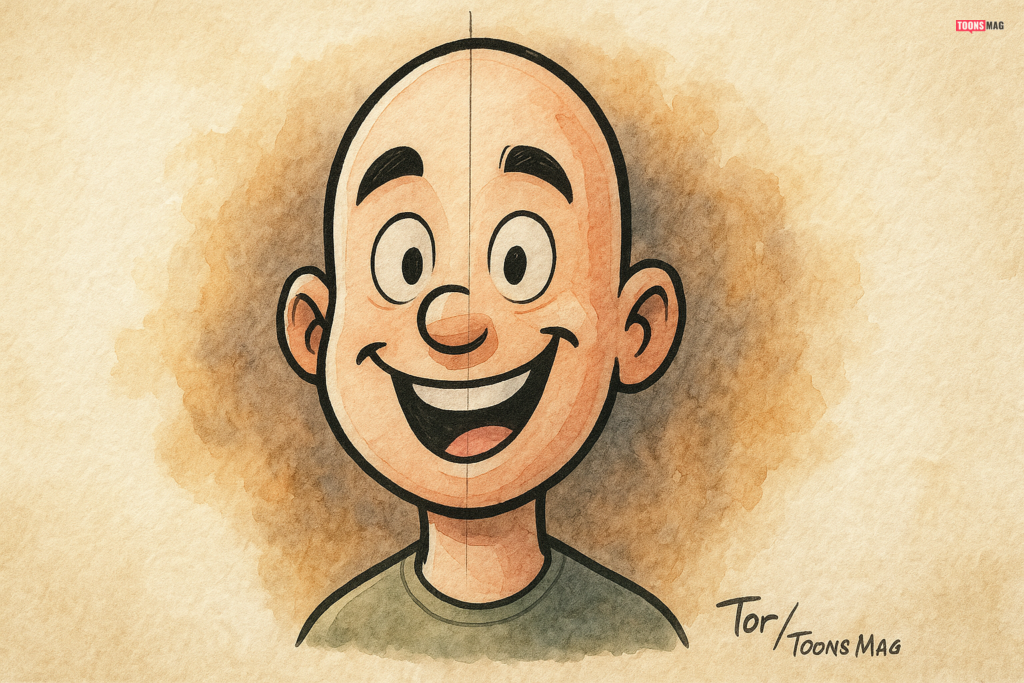
A good cartoon is not copied—it is interpreted.
Here’s how to exaggerate effectively:
✓ Choose one or two main features to emphasize
If you exaggerate everything, nothing stands out.
For example:
- A big smile becomes even bigger.
- Thick eyebrows become thicker and more expressive.
- Curly hair becomes more voluminous.
- A long neck becomes elongated elegantly.
✓ Balance exaggeration with simplicity
You want the character to be fun, not distorted to the point of losing likeness.
✓ Keep proportions intentionally playful
Try:
- Big head + small body
- Oversized eyes for expressiveness
- Long limbs for a dynamic feel
This creates instant cartoon appeal.
6. Capture Your Personality Through Expression
Your expression defines your character more than your features.
Ask yourself:
What expression represents me?
- Friendly smile
- Curious raised eyebrow
- Mischievous grin
- Calm confidence
- Determination
Try sketching multiple expressions:
✔ smiling
✔ surprised
✔ annoyed
✔ thinking
✔ laughing
✔ shocked
✔ confused
This helps you understand your face and enrich your cartoon emotional range.
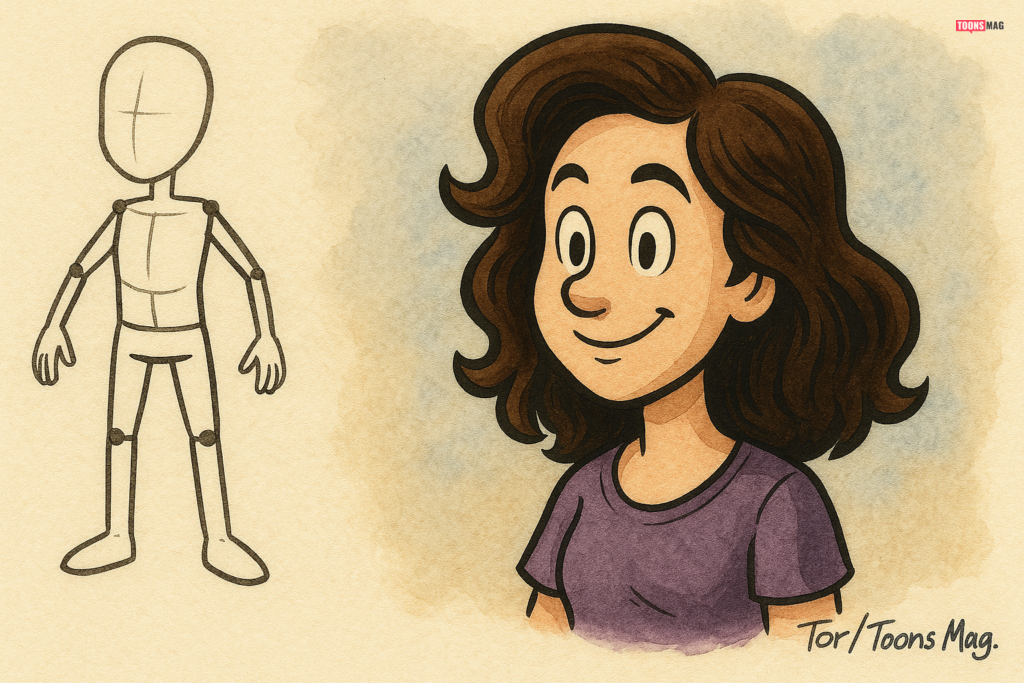
7. Craft Your Cartoon Body
Most artists start with a chibi-like proportion:
- Head: 1/2 of the body height
- Torso: simple shapes
- Hands: expressive but simplified
- Feet: minimal detail
You can adjust based on your desired style:
- Editorial cartoonists often use more natural proportions.
- Comic strip artists prefer expressive, slightly exaggerated bodies.
- Webcartoonists favor stick-like or geometric bodies.
Include signature poses
Think about how you move or stand.
Are you…
- Animated and energetic? Draw a leaning-forward pose.
- Reserved? Use a calmer, grounded stance.
- Humorous? Add a quirky gesture.
Your posture completes your character’s personality.
8. Add Clothing, Props, and Personal Symbols
Cartoon characters are defined by their silhouettes and iconic elements.
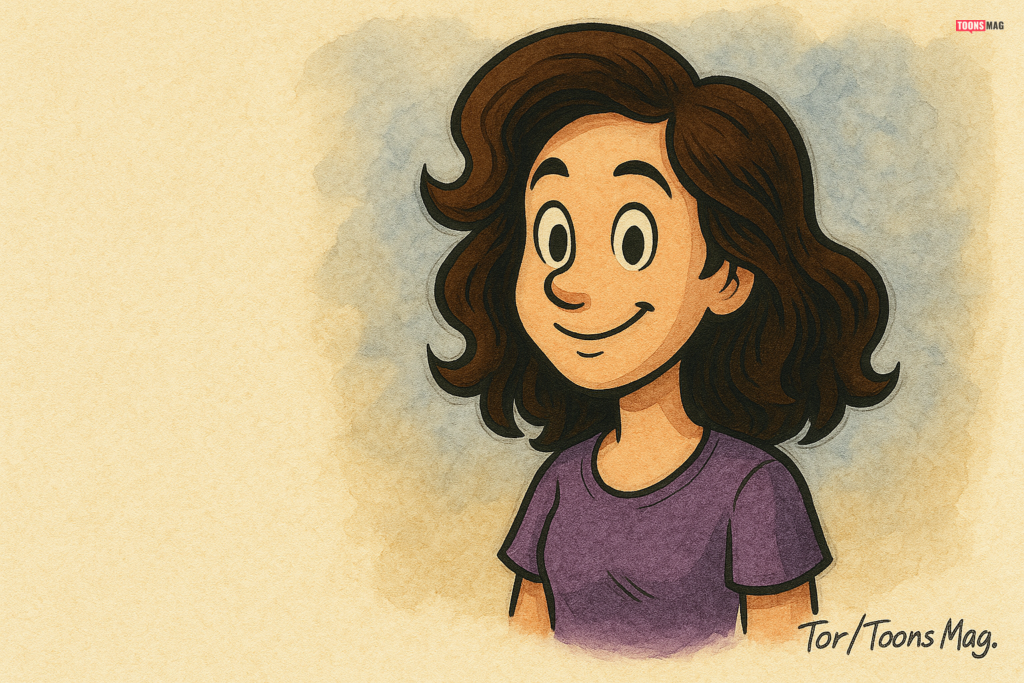
Clothing
Choose outfits that represent your real-life style:
- Hoodies
- Blazers
- Sarees
- Jackets
- Graphic tees
- Cartoonist aprons
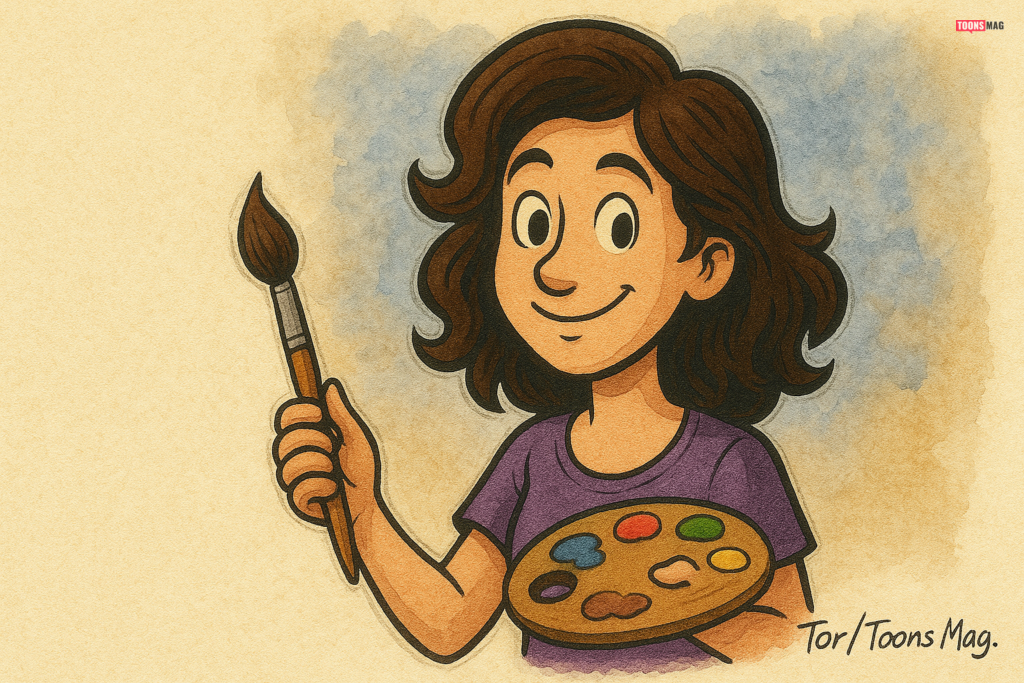
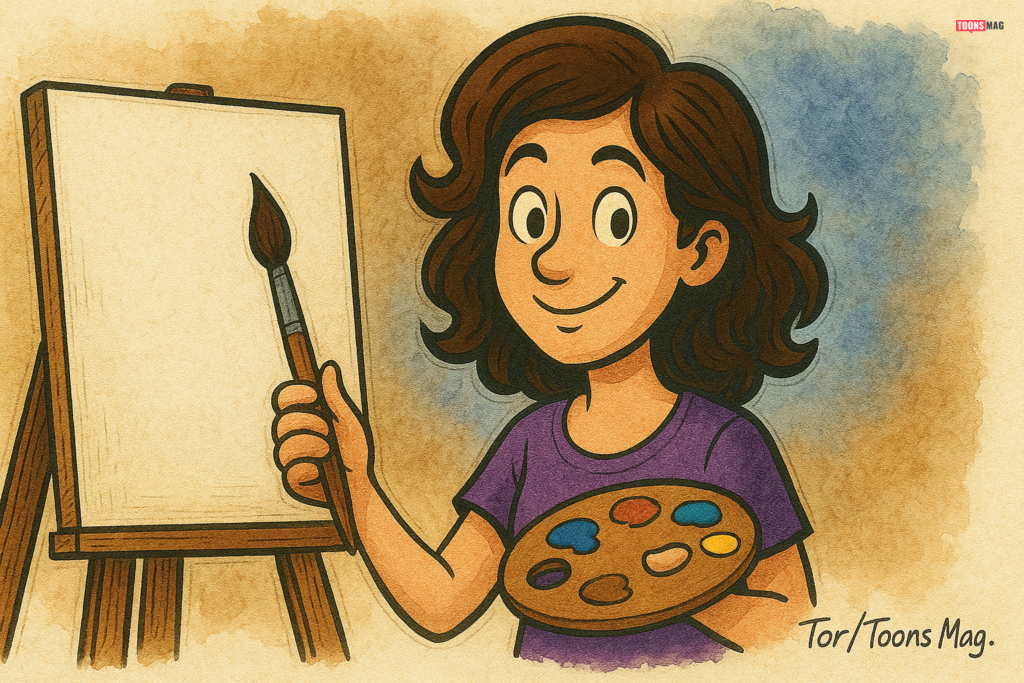
Props
Add items connected to your identity:
- A sketchbook
- A pen or digital stylus
- Coffee mug
- Laptop
- Favorite musical instrument
- Tools that symbolize your profession
Color Palette
Use colors that feel authentic to you.
A unified palette creates professional appeal and brand identity.
9. Make Multiple Versions of Yourself (Optional but Fun!)
Professional cartoonists often create multiple versions of their self-character for different uses.
Try creating:
A. A mascot version
Simplified, cute, used for avatars and bios.
B. A caricature version
For humorous blog posts or editorial work.
C. A full-body character
For comics, animations, or Cartoonist Network profile banners.
D. An expressive emoji set
Useful for social media, branding, and communication.
This not only strengthens your visual identity but makes your art more versatile.
10. Common Mistakes Beginners Make (And How to Avoid Them)
❌ Over-complicating the features
→ Stick to simple shapes.
❌ Trying to look “perfect” instead of “expressive”
→ Imperfections make cartoons charming.
❌ Copying another artist’s style entirely
→ Be inspired, not imitative.
❌ Ignoring silhouette clarity
→ Make sure your character’s outline is readable.
❌ Forgetting consistency
→ Once you choose a design language (line style, proportions, color palette), keep it consistent.
11. Practice Exercises for Beginners
Here are practice drills I give to students:
Exercise 1: One-Minute Face Sketches
Draw your face from various angles using only:
- Circles
- Triangles
- Squares
This builds shape fluency.
Exercise 2: Emotional Grid
Draw yourself 9 times:
happy, sad, angry, confused, excited, annoyed, sleepy, proud, shocked.
Exercise 3: The Exaggeration Challenge
Pick one feature to exaggerate—eyes, smile, hair—and make ten variations.
Exercise 4: Silhouette Test
Fill in your character’s silhouette with black.
If someone can still recognize “you,” the design is working.
12. Sharing Your Cartoon Self Online
After drawing yourself, consider sharing your character with other artists. Platforms like Cartoonist Network allow artists to upload images, get feedback, and participate in global discussions and collaborations. It is a community built specifically for cartoonists and illustrators of all levels and becomes a great place to evolve your self-cartoon identity.
Meanwhile, publishing illustrations and tutorials on Toons Mag exposes your work to a global audience that celebrates freedom of expression, creativity, and artistic individuality.
Both platforms are supportive spaces where artists grow together.
13. Final Thoughts: Your Cartoon Self Is Your Artistic Signature
Drawing yourself as a cartoon is not about achieving perfect likeness. It’s about expressing your story in lines, shapes, and colors.
Your cartoon self can serve as:
- Your artistic identity
- Your mascot
- Your branding
- Your emotional mirror
- Your creative playground
The simplicity of cartooning opens a powerful window into your imagination. Every line you draw teaches you something about who you are—and who you can become as an artist.
So grab a pencil or your drawing tablet, sit in front of a mirror or your favorite selfie, and start sketching. Have fun, make mistakes, exaggerate boldly, and above all—keep drawing.
If you ever want feedback, inspiration, or a place to share your creations, communities like Cartoonist Network and publishing spaces like Toons Mag are here to welcome you on your artistic journey.
Tips for Drawing Yourself As a Cartoon Character
This post was created with our nice and easy submission form. Create your post!




2 Comments