

 Lily Chen

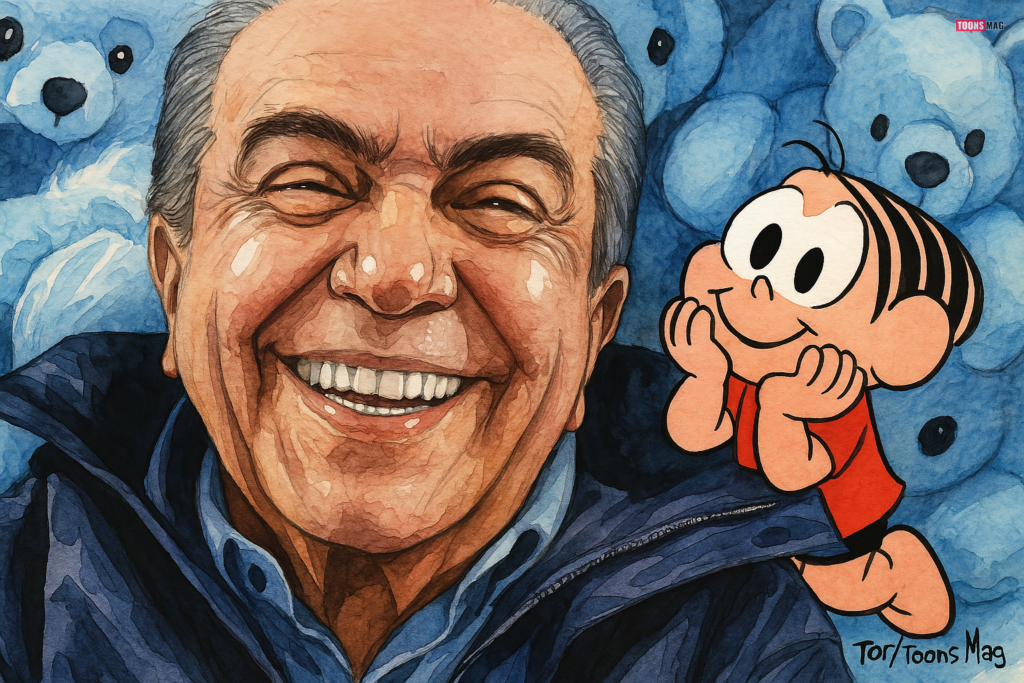
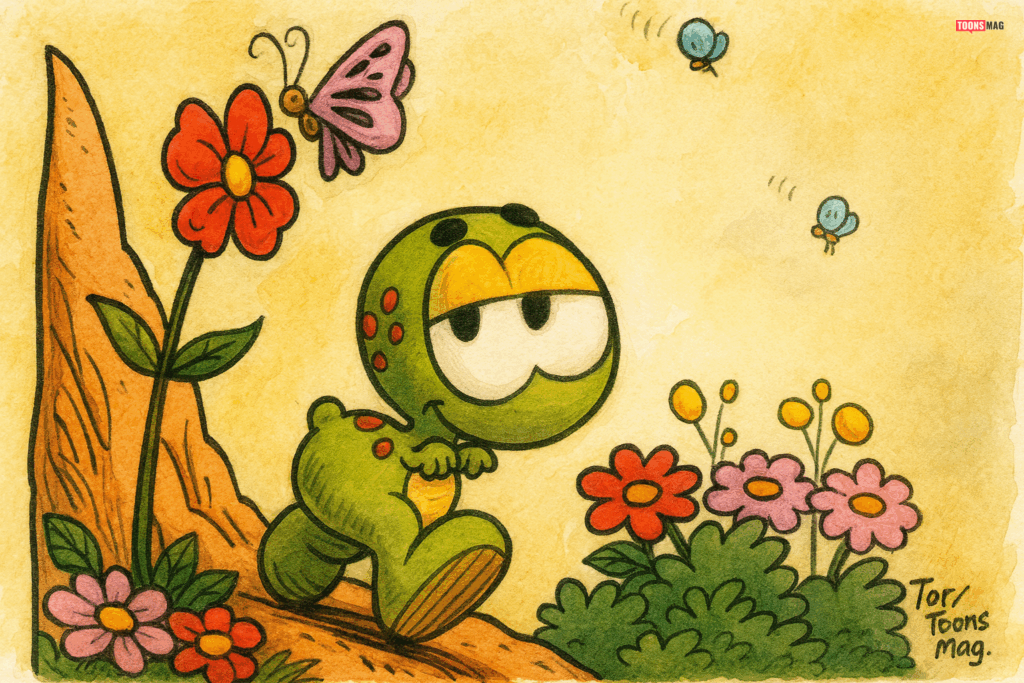
Horacio’s World (Portuguese: O Mundo do Horácio) is a Brazilian comic strip within the Monica and Friends universe, created by Mauricio de Sousa in 1961. Centered on Horácio, a baby Tyrannosaurus rex, the feature blends gentle humor with introspective monologues—often wordless, sometimes entirely pantomimic—giving the character a reflective voice widely regarded as Mauricio’s alter ego. Although Horácio debuted as a supporting player in Pitheco’s prehistoric series The Cavern Clan, his solo strips began in 1963 and have remained uniquely authored and scripted exclusively by Mauricio ever since.
Quick Facts: Horacio’s World (Horácio)
| Series | Horacio’s World (O Mundo do Horácio) |
|---|---|
| Creator / Writer | Mauricio de Sousa (all stories written by him) |
| Illustrator | Mauricio de Sousa (origins); MSP team assists on broader universe art |
| Franchise | Monica and Friends (Turma da Mônica) |
| First appearance | 1961 (supporting role in The Cavern Clan / Pitheco) |
| Solo debut | 1963 |
| Primary format | Newspaper-style comic strip; short-form stories; occasional pantomime |
| Tone / Genre | Children’s comedy; slice of life; philosophical fable; adventure |
| Main character | Horácio, a baby T. rex with a kind heart and vegetarian ideals |
| Notable traits | Introspective monologues; optimism; ethical dilemmas; search for his mother |
| Setting | A stylized prehistoric world adjoining the Cavern Clan milieu (valleys, caves, forests) |
| International editions | Japan (selected strips 1975–1982; later in Sanrio’s Ichigo Shinbun) |
| Related graphic novel | Horácio: Mãe (Graphic MSP, 2018) by Fábio Coala |
Origins and Publication History
- 1961 — While expanding the prehistoric corner of the Monica and Friends universe, Mauricio introduces Horácio alongside Pitheco in The Cavern Clan. Early continuity sometimes places Horácio near human settlements; in first appearances he even interacts with cave-dwellers.
- 1963 — Positive reader response prompts solo strips for Horácio. These short episodes favor introspective narration and character-driven humor over plot-heavy action, foregrounding Horácio’s empathy and curiosity.
- 1970s–1980s (Japan) — A curated selection of Horácio comics runs in Japan (1975–1982), helping establish his reputation as a contemplative, all-ages character. In recent years, the strips return to Japanese readers via **Sanrio’s magazine **Ichigo Shinbun, introducing Horácio to new audiences.
- Graphic MSP (2018) — The prestige graphic novel Horácio: Mãe by Fábio Coala explores Horácio’s deepest longing—his quest to find his mother—within the Graphic MSP imprint of creator‑authorized reinterpretations.
Format, Style, and Themes
Horacio’s World distinguishes itself through:
- Monologues & Pantomime — Many strips are inner monologues; others are fully wordless, using body language, timing, and visual metaphor. The quiet tone creates an accessible entry point for young readers while rewarding adults with philosophical subtext.
- Ethical Comedy — Stories often revolve around kindness, responsibility, and choices. Horácio’s gentle nature recasts the stereotypically fearsome T. rex as an ethical protagonist.
- Alter-Ego Lens — Mauricio has described Horácio as embodying his own outlook: optimism, a desire to help friends (and sometimes adversaries), and a calm, reflective temperament.
- Vegetarian T. rex — A recurring gag and moral stance. Although a carnivore by species, Horácio refuses to eat meat, tending his own lettuce patch (“alfacinhas”) near his cave.
- The Great Quest — A persistent narrative thread is Horácio’s search for his mother, who abandoned him in the egg. The theme introduces resilience, identity, and belonging without losing the strip’s light touch.
Setting
Set in a storybook prehistory, Horácio’s world ranges across limestone caves, fern‑shadowed forests, braided rivers, tar pits, and hidden valleys dotted with cycads and conifers. It remains contiguous with The Cavern Clan—close enough for occasional crossings—yet the “map” is deliberately elastic: distances stretch or shrink to fit the rhythm of a gag or a reflective pause, and side paths let Horácio slip away for solitary walks.
Readers return to a handful of recurring landmarks: Horácio’s hillside cave with its neat lettuce patch; the Blue River shallows where he skips stones; the Whispering Forest whose wind seems to “talk”; the Cliff of Echoes; and the Napãos’ hidden valley ruled by their queen. Travel is both practical and whimsical—on foot along dusty trails, by raft over calm reaches, astride Bronto’s broad back, or aloft on Terry Pterodactyl’s unhurried glides.
Perils exist but stay soft‑edged and kid‑friendly: mild rockslides, splashy storms, comically inept predators, and sticky tar pits used more for slapstick than fear. Seasons and day‑night cycles give visual rhythm—sunrises for contemplative starts, starry nights for philosophical monologues—reinforcing the strip’s gentle mood and its quiet ecological respect for the world Horácio calls home.
Main and Supporting Characters
Horácio (Horacio)
A baby Tyrannosaurus rex with a golden heart—cheerful, wise, and resolutely vegetarian. He prefers mediation to conflict and often helps others even when they annoy him. He dreams of reuniting with his mother, a quest that frames many reflective episodes. Despite his species’ reputation, Horácio is gentle and friendly. In many strips he tends his little lettuce patch, skips stones at the Blue River, or confides in the moon—quiet rituals that underscore his reflective nature. When danger appears, his first impulse is to reason, redirect, or sacrifice his own comfort rather than fight, reinforcing his role as the series’ ethical compass.
Lucinda
A romantic dreamer who relentlessly tries to date Horácio. Her pursuits spark chases and misunderstandings; while Horácio is not interested in romance, he values Lucinda as a friend. Lucinda writes names inside hearts in the sand, plans “perfect picnics,” and often misreads Horácio’s polite boundaries as invitations—fueling comedic set‑pieces. Despite her persistence, she also shows loyalty: when Horácio needs help, she drops the chase to back him up, revealing a generous streak beneath the theatrics.
Simone
Lucinda’s best friend and rival—also enamored with Horácio, though usually with less persistence. Their friendly competition underscores the strip’s light romantic tension. Simone is the more pragmatic of the two: she teases Lucinda for over‑planning and sometimes calls a truce to support Horácio’s projects (like protecting his lettuce patch from mischievous critters). Her dry asides puncture melodrama, giving the triangle a playful, self‑aware tone.
Theco (Tecodonte)
Horácio’s best friend, a baby thecodont (an archosaur). Theco’s good nature and curiosity mirror Horácio’s own, providing a loyal companion for quiet adventures. He is the “why?” machine of the strip—peppering Horácio with questions that prompt philosophical mini‑lessons. Physically smaller and a bit clumsy, he’s often the one who stumbles into a predicament that Horácio then solves through empathy rather than force.
Mack Mammoth (Antão)
A baby mammoth who brings slapstick warmth to the prehistoric ensemble. Mack uses his trunk like a multipurpose tool—trumpeting alarms, lifting friends onto rocks, or (accidentally) spraying everyone during rain clean‑ups. He is fearless until startled; then he barrels forward like a fuzzy avalanche, turning peril into farce.
Terry Pterodactyl (Alfredo)
A paternal‑turned‑peer figure: Terry looked after Horácio when he was very small; today they relate as friends. Terry often provides aerial lifts when stories call for sky‑high vistas, and he offers calm, almost mentor‑like counsel without stealing Horácio’s agency. Their flights serve as visual metaphors—when Horácio needs perspective, Terry takes him literally above the problem.
Brontson (Brontossauro / “Bronto”)
A large, strong brontosaurus whose size contrasts with a soft disposition. Bronto functions as the group’s gentle giant—bridge, ferry, and shade tree in one. He prefers leafy snacks and afternoon naps; when roused, he’s cautious, moving deliberately to avoid harming smaller friends. Horácio often enlists Bronto for slow, steady tasks that require patience and care.
The Napãos
A hidden valley folk—humanoid, orange‑skinned beings with large noses, ruled by a queen. They are allies to Horácio and represent community beyond the dinosaur cast. Their culture prizes hospitality and craft: reed rafts, carved masks, and moonlight festivals with echo‑songs from the Cliff. Stories with the Napãos often spotlight cooperative problem‑solving—Horácio mediates misunderstandings between species, reinforcing the strip’s themes of empathy and belonging.
Continuity Notes
- Early Human Coexistence — In the earliest tales, Horácio lived near human villagers from The Cavern Clan; after he was blamed for eating the village’s food stores, he was banished, which catalyzed his solitary wanderings and the search for his mother.
- Tone Over Canon — The strip privileges theme and tone (ethics, empathy, wonder) over rigid continuity. Episodes are often standalone, designed for universal readability and classroom‑friendly settings.
Media and Spin‑offs
- Graphic MSP — Horácio: Mãe (2018): A modern graphic novel rendition by Fábio Coala, officially sanctioned under the Graphic MSP label, deepening lore around Horácio’s origins and emotional journey.
- Appearances Across MSP: Horácio occasionally crosses paths with other Monica and Friends lines in specials and collections, while remaining philosophically distinct—more fable than farce.
Readership and Legacy
Horacio’s World is cherished by generations of Brazilian readers for coupling child‑friendly comedy with philosophical reflection. In classrooms, educators use the strip’s short, self‑contained episodes to practice sequencing, inference, point of view, and values‑based dialogue, while the frequent wordless (pantomime) pages support early literacy, multilingual learners, and inclusive lessons built around visual storytelling. Librarians and parents also highlight its gentle humor and predictable structure as helpful for building reading stamina and confidence.
Internationally, curated Japan runs (1975–1982) and renewed publication in Ichigo Shinbun have introduced Horácio to new audiences; the clean cartooning, universal emotions, and low‑text format travel well across languages and age groups. In the digital era, single‑strip excerpts circulate easily on social platforms, keeping the character visible to younger readers and inviting intergenerational nostalgia, while prestige projects like Graphic MSP reintroduce Horácio to adult readers without losing the series’ core warmth.
FAQ about Horacio’s World (Horácio)
Is every Horácio story by Mauricio de Sousa?
Yes. Horácio is the one Monica and Friends character whose strips are exclusively written by Mauricio.
Why is Horácio a vegetarian T. rex?
It’s a character-defining ethical choice and a recurring comic motif—he grows and eats “alfacinhas.”
What is Horácio: Mãe?
A Graphic MSP graphic novel (2018) by Fábio Coala that explores Horácio’s longing to meet his mother.
Where has Horácio been published outside Brazil?
Selected strips appeared in Japan (1975–1982) and more recently in Sanrio’s Ichigo Shinbun magazine.
How does Horácio differ from Monica and Friends’ main tone?
He’s more contemplative and philosophical, often speaking directly to readers—or saying nothing at all in pantomime stories.