

 Matt Young

John Burton “Jack” Davis Jr. (December 2, 1924 – July 27, 2016) was an American cartoonist and illustrator whose exuberant line, elastic caricatures, and kinetic staging made him a giant across comics, magazines, advertising, film posters, record sleeves, and television. A founding cartoonist of MAD (1952), Davis also became a go‑to illustrator for TV Guide covers, major studio movie campaigns, and a broad spectrum of pop‑culture ephemera. His figures—big heads, skinny legs, huge feet—and virtuoso brushwork became instantly recognizable.
Davis’s pages feel alive: crammed with motion, textured with scratchy blacks, and timed like a perfect spit‑take.
Infobox: Jack Davis
| Born | December 2, 1924 — Atlanta, Georgia, U.S. |
| Died | July 27, 2016 (aged 91) — St. Simons Island, Georgia, U.S. |
| Also known as | John Burton Davis Jr. |
| Occupation | Cartoonist, illustrator |
| Years active | 1950–2014 |
| Known for | MAD founding artist; EC horror & war comics; advertising; film posters; record & magazine covers |
| Spouse | Dena Roquemore (m. 1950) |
| Children | 2 |
| Hall of Fame | Will Eisner Hall of Fame (2003) |
Overview
Davis helped define American humor art in the second half of the 20th century. From EC Comics shockers to MAD’s anarchic parodies, from The Bad News Bears poster to TV Guide’s marquee covers, his work set the pace for gag‑packed, crowd‑pleasing illustration that also delivered impeccable drawing.
Early Life
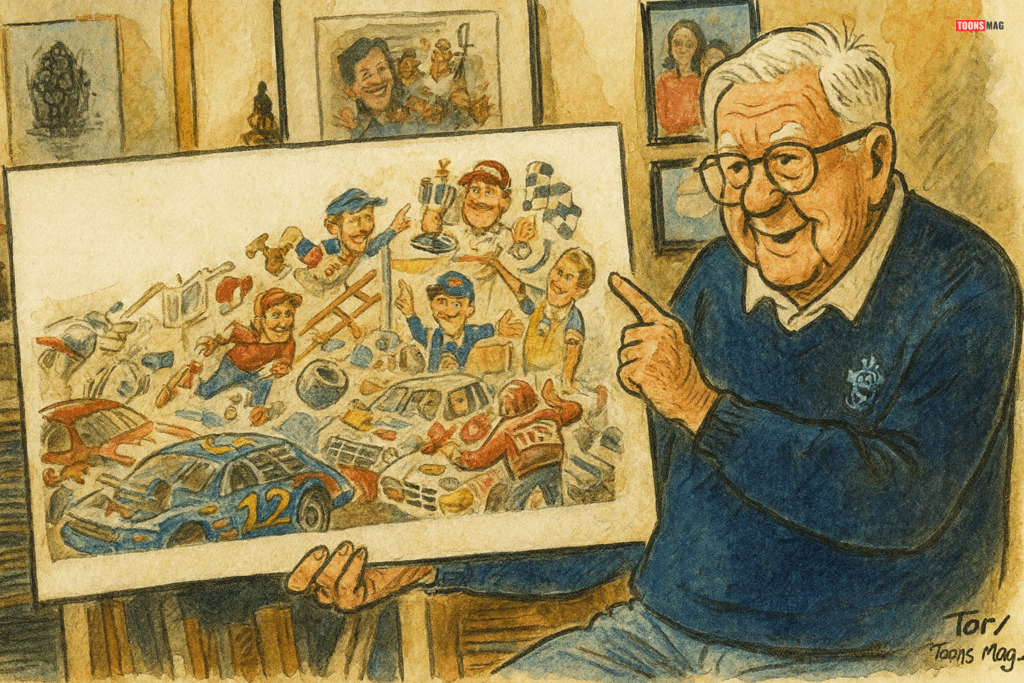
Raised in Atlanta, Davis grew up immersed in the golden age of radio comedy—especially Bob Hope—and began training his ear and hand to caricature celebrities whose faces he had never seen, relying entirely on their voices and mannerisms. This self‑driven practice sharpened his knack for capturing personality in exaggerated form. At 12, he achieved his first national exposure when a single‑panel cartoon was printed in Tip Top Comics #9 (Dec. 1936), an early thrill that fueled his ambition.
Throughout high school, he drew prolifically for his school newspaper, yearbook, and community events, cementing a reputation as the local “kid cartoonist.” He then served three years in the U.S. Navy during WWII, where his duties included contributing cartoons, gag strips, and caricatures to the Navy News, boosting morale among sailors.
On the G.I. Bill, Davis attended the University of Georgia, where he was a campus fixture—illustrating for the student newspaper, producing sports cartoons, and co‑founding the off‑campus humor magazine Bullsheet, known for its risqué jokes and sharp visual wit. His college years also included producing promotional art for student events and posters for campus organizations. After graduation, he briefly interned as a cartoonist at The Atlanta Journal, where he learned the pace and polish of professional newsroom illustration. That summer, he worked inking Ed Dodd’s nationally syndicated outdoor strip Mark Trail, absorbing Dodd’s clean‑line approach to nature art—a strip he would famously lampoon years later in MAD as “Mark Trade.”
Breaking In: Strips, EC Comics & Style (late 1940s–1950s)
- 1949: Illustrates a Coca‑Cola training manual—a project that introduced him to corporate art direction—then drives to New York to pursue his career more seriously, studies at the Art Students League under instructors who emphasized dynamic figure drawing, and inks The Saint newspaper strip for the Herald Tribune Syndicate, gaining valuable experience in adventure strip pacing and inking.
- Launches his own Civil War gag strip Beauregard (briefly syndicated), showcasing his ability to merge historical settings with slapstick humor, and begins freelancing for EC Comics in 1950, initially contributing fill‑in art before quickly becoming indispensable.
- For EC he becomes a star on marquee titles including Tales from the Crypt, The Vault of Horror, The Haunt of Fear, Crime/ Shock SuspenStories, Frontline Combat, Two‑Fisted Tales, Piracy, and Incredible Science Fiction.
- He reimagines the Crypt‑Keeper with a craggier, more grotesque design; paints every cover of Crypt from #29–46, each a densely composed, color‑saturated tableau that heightened the book’s lurid appeal.
- In Harvey Kurtzman’s war books, he delivers grim, cinematic battle sequences—especially American Civil War pieces—marked by meticulous costume detail, authentic weaponry, and unmatched speed (often 3+ finished pages a day without sacrificing quality).
- Brush & black‑spotting: Davis’s “scratchy blacks” and wrinkled fabrics add depth, mood, and motion; his inking style became so popular that rivals imitated it across other publishers’ horror titles, often unsuccessfully.
- Late ’50s: Draws Westerns for Atlas, bringing an energetic, almost slapstick sense of motion to the genre; his Rawhide Kid (#33–35, 1963) is among his last sustained non‑humor comic‑book runs and demonstrated his adaptability across subject matter.
MAD: Founding Years, Exit with Kurtzman, Triumphant Return
- 1952: Joins Harvey Kurtzman on the first 30 issues of MAD (comic‑book era), where his elastic crowd scenes and deft caricatures quickly became a cornerstone of the magazine’s irreverent visual style. Alongside MAD, he contributes to sister mags Panic, Trump, Humbug, and Help!, each allowing him to experiment with satire in different editorial tones.
- Leaves MAD with Kurtzman during the 1956–57 editorial split to pursue a range of freelance projects, including humor magazines, advertising illustration, and experimental layouts, but maintains ties to the MAD staff. Returns in 1965 and remains a mainstay for 30+ years, producing some of the magazine’s most beloved TV and movie parodies.
- MAD output: Appears in 29 of the first 31 issues (66 features, covers, and house ads), then—after his return—contributes to 211 of the next 255 issues, including 14 covers and countless splash pages packed with layered background gags that became a reader favorite.
- 1970s: Runs the Superfan strip in Pro Quarterback (written by MAD’s Nick Meglin), lampooning sports culture with the same visual energy and satirical bite he brought to pop‑culture send‑ups.
Signature MAD traits:
- Wild, free‑flowing crowd scenes with readable staging.
- Razor‑sharp caricature that nails likeness with a few lines.
- Parodies that feel “on model” yet topple the original through comic escalation.
Advertising, Magazines & TV Guide
- TV Guide (1965–81): Delivers 23 covers and an eight‑page NBC lineup supplement, often working under tight deadlines and navigating the magazine’s strict editorial standards. His iconic treatments include Rowan & Martin’s Laugh‑In, Bob Hope’s Oscars, and Bonanza, each capturing not only celebrity likeness but also the energy and cultural mood of the shows. Davis later spotted his Bob Hope cover framed in Hope’s personal office—one of his proudest moments, as it signaled appreciation from the very subject he had caricatured.
- Creates the Bee‑Line bus system’s cartoon bee for Westchester County, NY—spotted daily from his own window along the route—designed to be instantly recognizable even at a distance and to appeal to both children and adults, becoming a friendly local mascot.
- Beyond TV Guide: Regular advertising and editorial illustration for Time, Esquire, Sports Illustrated, and other national publications, as well as multiple humor card sets for Topps (Wacky Plaks, You’ll Die Laughing, Funny Valentines, Nutty Awards), where he packed miniature scenes with sight gags and wordplay that rewarded close inspection.
Film Posters, Records & Rankin/Bass
- Film posters:
- It’s a Mad, Mad, Mad, Mad World (1963) — the definitive “everyone’s in it” cast montage; he later parodied his own art for a MAD paperback cover.
- Viva Max! (1969), Kelly’s Heroes (1970), The Long Goodbye (1973) — comedic and genre‑bending campaigns that showcased his blend of caricature and design.
- Album art: Covers for Johnny Cash’s Everybody Loves a Nut (1966), The New Christy Minstrels, The Guess Who, Tito Puente, The Cowsills, Homer & Jethro, Sheb Wooley/Ben Colder, and more; print ads for Genesis — The Lamb Lies Down on Broadway (1974).
- Rankin/Bass & commercials: Character designs for Mad Monster Party?, The King Kong Show, The Jackson 5ive, The Osmonds, and Coneheads; created the animated RAID bug mascot (via Phil Kimmelman Associates) for the long‑running insecticide ads.
Mascots & Local Icons
While living on St. Simons Island, Georgia, Davis drew Captain Jack, the Mariner mascot for the College of Coastal Georgia. This jovial, sea‑faring character—rendered in Davis’s signature big‑footed, expressive style—was inspired by the region’s maritime heritage and the college’s coastal identity. The design was selected by students and staff as the official school symbol, and it has since been used extensively in campus branding, athletic uniforms, promotional materials, and local community events, making Captain Jack a recognizable emblem across Glynn County and beyond.
Style & Technique
- Anatomy as comedy: Big heads, skinny legs, outsized shoes—an instantly readable, humorous silhouette.
- Speed: Among EC’s fastest—tight pencils straight to brush, confident blacks, and economy of line.
- Crowd control: Layered gags without losing clarity; every background character performs.
Personal Life & Passing
Davis married Dena Roquemore in 1950, and together they raised two children — daughter Katie Davis Lloyd and son Jack Davis III. The family enjoyed a long residence in the New York area during his peak professional years, but in the 1990s Jack and Dena relocated to the quieter coastal community of St. Simons Island, Georgia, where Davis continued occasional freelance work, participated in local art events, and enjoyed fishing and golf. Known for his warm humor and generosity toward fans, he remained active in the community until his health declined. Davis died on July 27, 2016, aged 91, from complications of a stroke, surrounded by family.
Honors, Exhibitions & Stamp Design
- Inkpot Award (1985)
- Milton Caniff Lifetime Achievement Award — National Cartoonists Society (1996)
- Reuben Award — Cartoonist of the Year (2000)
- Will Eisner Hall of Fame (2003)
- Society of Illustrators Hall of Fame (2005)
- Inkwell Awards — Stacey Aragon Special Recognition Award (2019, posthumous)
- USPS 25¢ Letter Carriers stamp (1989): Davis designed the stamp (one carrier is a cheeky self‑portrait). Initially controversial for its informality, it became widely admired after union approval.
- Retrospectives: Major Society of Illustrators show (2002) and additional museum displays; Criterion commissioned new Davis art for the 2014 restoration of It’s a Mad, Mad, Mad, Mad World.
Selected Career Timeline
- 1924 — Born, Atlanta, GA
- 1936 — First published cartoon (Tip Top Comics #9)
- WWII — U.S. Navy; draws for Navy News
- Late 1940s — University of Georgia; Art Students League; inks The Saint
- 1950 — Joins EC Comics
- 1952 — Founding artist, MAD
- 1957–65 — MAD hiatus with Kurtzman projects; heavy freelance
- 1965 — Returns to MAD (remains for 30+ years)
- 1965–81 — 23 TV Guide covers
- 1963–76 — Landmark film posters (from Mad World to Bad News Bears)
- 1989 — USPS Letter Carriers stamp
- 2003 — Eisner Hall of Fame
- 2016 — Dies, St. Simons Island, GA
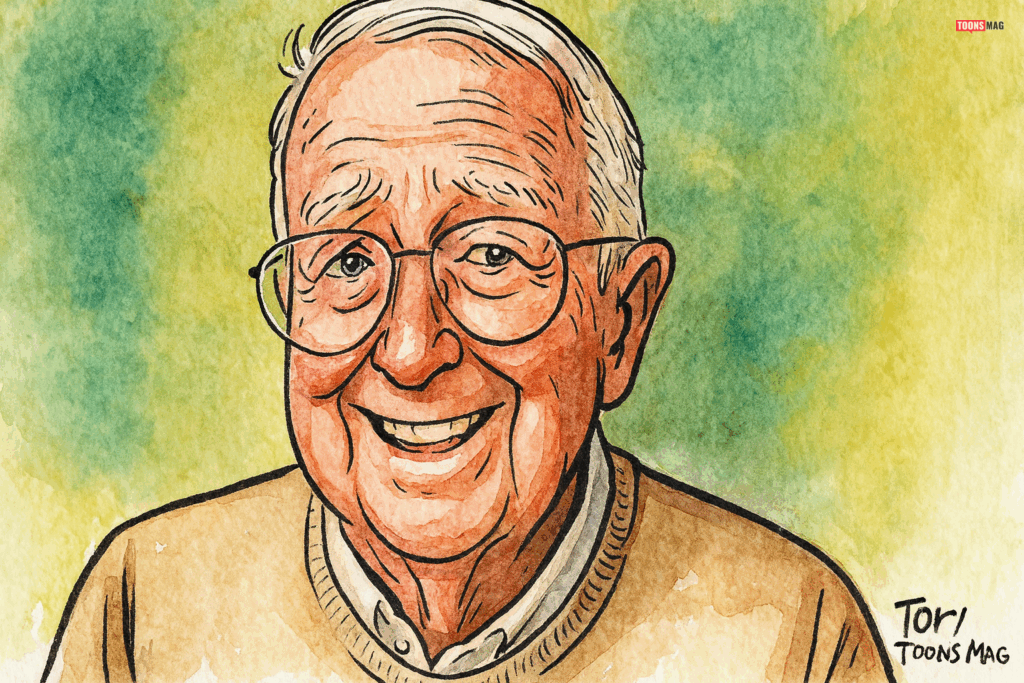
Selected Works (Sampling)
- Comics: Tales from the Crypt; The Haunt of Fear; The Vault of Horror; Frontline Combat; Two‑Fisted Tales; Incredible Science Fiction; MAD (211+ issues post‑1965); Panic; Trump; Humbug.
- Film Posters: It’s a Mad, Mad, Mad, Mad World (1963); Viva Max! (1969); Kelly’s Heroes (1970); The Long Goodbye (1973); The Bad News Bears (1976).
- Albums (select): Johnny Cash — Everybody Loves a Nut (1966); The New Christy Minstrels — Advance to the Rear songs; various for The Guess Who, Tito Puente, The Cowsills, Homer & Jethro, Bob & Ray, Don Imus.
- TV/Animation: Rankin/Bass — Mad Monster Party?, The King Kong Show, The Jackson 5ive, The Osmonds; RAID commercials bug mascot.
- Magazines: TV Guide (23 covers); features for Time, Esquire; Topps humor card sets.
Legacy
Jack Davis bridged EC intensity, MAD mischief, and mainstream illustration, shaping how American humor looks at a glance: elastic, fast, and joyfully over‑the‑top. His design sense made chaos legible; his caricature made stars iconic across print, screen, and merchandise. He combined razor‑sharp likenesses with gag‑packed layouts that rewarded repeated viewing, and his ability to balance motion, personality, and visual clarity became a gold standard for humorous art. For generations of artists—from comic book newcomers to advertising veterans—Davis proved that draftsmanship + comedy is an unbeatable, career‑defining combination.
FAQs about Jack Davis
Q1: When and where was Jack Davis born?
A: Jack Davis was born on December 2, 1924, in Atlanta, Georgia, USA.
Q2: What was Jack Davis best known for?
A: Davis was best known as a founding cartoonist of MAD magazine, a prolific EC Comics horror and war artist, a leading film‑poster illustrator, and the creator of numerous TV Guide covers.
Q3: What made Jack Davis’s art style unique?
A: His work featured big heads, skinny legs, outsized feet, kinetic motion, razor‑sharp caricatures, and densely packed scenes full of background gags that remained readable.
Q4: Which famous movie posters did he create?
A: He illustrated posters for It’s a Mad, Mad, Mad, Mad World (1963), Kelly’s Heroes (1970), The Bad News Bears (1976), and others.
Q5: Did Jack Davis work outside comics?
A: Yes, he created advertising art, record album covers for artists like Johnny Cash, designed Rankin/Bass characters, and even made mascots like the Bee‑Line bus bee.
Q6: What awards did he win?
A: His honors include the Inkpot Award, Reuben Award, Milton Caniff Lifetime Achievement Award, Will Eisner Hall of Fame induction, and the Society of Illustrators Hall of Fame.
Q7: When did Jack Davis pass away?
A: He died on July 27, 2016, at the age of 91, in St. Simons Island, Georgia.