

 Jacob Martinez

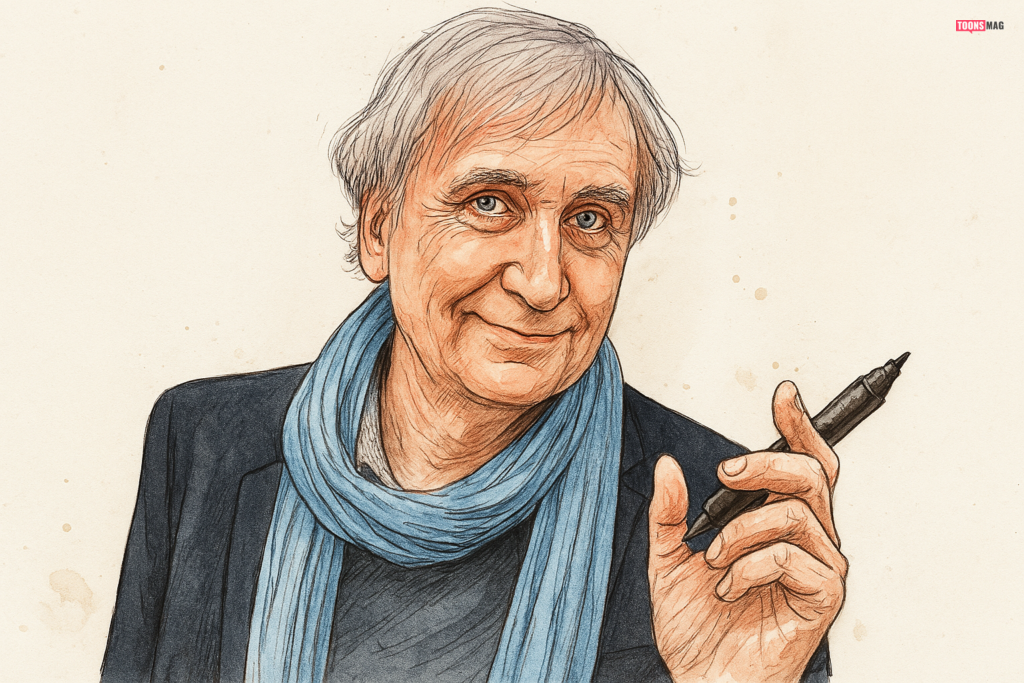
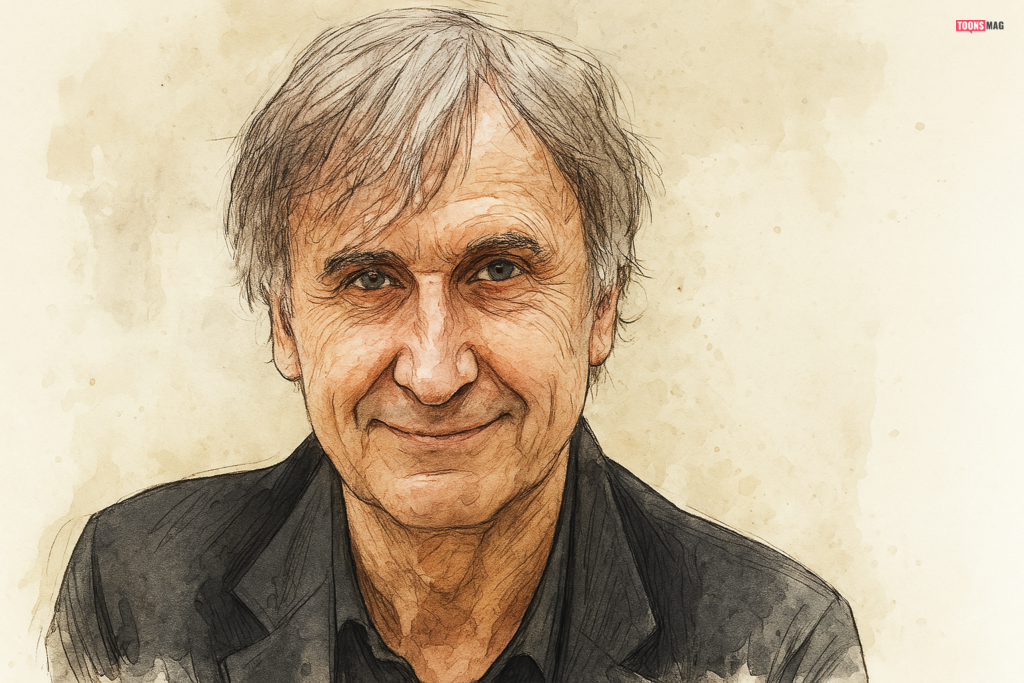
Jean Plantureux (born 1951, Paris), known professionally as Plantu, is a French political cartoonist, journalist, caricaturist, and artist. For five decades, his drawings—most famously on the front page of Le Monde—have shaped public debate in France and beyond. A tireless defender of freedom of expression and intercultural dialogue, he co-founded Cartooning for Peace, a global network that champions press freedom and human rights through editorial cartoons.
Jean Plantureux (Plantu) — Infobox
| Full Name | Jean Plantureux |
|---|---|
| Pen Name | Plantu |
| Born | 1951 — Paris, France |
| Age | 73–74 (as of 2025) |
| Nationality | French |
| Occupation | Political Cartoonist, Caricaturist, Journalist, Activist |
| Years Active | 1971 – present |
| Education | – Lycée Henri-IV, Paris (Baccalauréat, 1969) – Saint-Luc School of Arts, Liège (Drawing and Illustration, 1971) |
| Known For | • Le Monde’s principal political cartoonist (1972–2021) • Founder of Cartooning for Peace with UN Secretary-General Kofi Annan (2006) • Advocate for international press freedom and intercultural dialogue |
| Major Publications | Le Monde, Le Monde Diplomatique, L’Express |
| Organizations | • Cartooning for Peace (Co-Founder & President) • Royal Academy of Belgium (Member) • Russian Academy of Arts (Honorary Member) |
| Artistic Style / Themes | Political satire, human rights, social justice, democracy, climate, intercultural dialogue |
| Awards and Honors | • 1988 – Mumm Design Award • 1989 – Prix de l’Humour Noir • 1996 – Gat Perich International Prize for Caricature (Spain) • 2010 – Doha Prize for Arab Cultural Capital (Cartooning for Peace) • 2013 – Markiezen Lifetime Achievement Award (FECO Holland) • 2013 – Honorary Doctorate, University of Liège (Belgium) • 2016 – Honorary Member, Russian Academy of Arts • 2017 – Prix Coup de cœur, Positive Planet Foundation |
| Notable Works | Ça manque de femmes !, C’est la lutte finale, Je ne dois pas dessiner…, Plantu, 50 ans de dessin de presse, L’Année de Plantu series |
| Controversies | – 2006: Response to Jyllands-Posten Muhammad cartoons – 2009: “Jesus distributing condoms” cartoon criticism – 2015: Accusations of anti-Israel imagery |
| Spouse | Married |
| Children | 4 |
| Languages | French (native), English |
| Residence | Paris, France |
Early Life and Education
- Family and childhood. Plantu is the son of an industrial draughtsman for the French national rail company (SNCF). He attended the Patay primary school in Paris’s 13ᵉ arrondissement and was frequently recognized for academic excellence and camaraderie by classmates and teachers.
- Formative schooling. He studied at the prestigious Lycée Henri-IV, earning in 1969 a Série D baccalauréat (science/technical focus).
- Turning toward art. Although he initially entered medical school at his parents’ insistence, he pivoted in 1971 to study drawing at Saint-Luc School of Arts (Liège) in Brussels. Cartoonist Eddy Paape, one of his instructors, remembered him as “kind, calm, and very diligent.”
First Steps in the Press (1971–1981)
To finance his studies in Brussels, Plantu contributed illustrations to the student newspaper Panurge and the magazine Bonne Soirée (which ran a three-page interview with him). Financial pressures forced a temporary return to Paris, where he briefly sold furniture at Galeries Lafayette—while persistently pitching drawings to newspapers.
- Le Monde debut (1972). On October 1, 1972, Le Monde’s editor-in-chief Bernard Lauzanne published Plantu’s first drawing—a dove clutching a question mark—on the Vietnam War.
- Le Monde Diplomatique (1974). Invited by Claude Julien, he drew on Third-World issues for Le Monde Diplomatique.
- Youth press. From 1980–1986 he contributed to Le Journal Phosphore, and also to youth magazines 20 ans and Union.
- Front-page presence. Though his first Le Monde front page appeared January 14, 1978, a key shift came in 1982, when André Laurens and Claude Lamotte asked him for a weekly Saturday cartoon—soon a fixture on page one.
Front-Page Cartoonist of Le Monde (1985–2021)
In 1985, publishing director André Fontaine moved Plantu’s cartoons to the daily front page “to restore France’s long tradition of political caricature.” From then on, his single-panel commentaries—concise, symbolic, and often mordant—became part of the French news ritual.
- Television. Until September 1987, Plantu appeared on TF1’s talk show Droit de réponse.
- Gordji affair (1987). His front-page cartoon about the Gordji case resonated nationally and underscored the influence of his work on public discourse.
- L’Express columnist. Since 1991, Plantu has been a weekly contributor to L’Express (the magazine regularly devoted a prominent page to his work).
- Retirement from Le Monde. On March 31, 2021, after 50 years and 19,000+ drawings, Plantu retired from Le Monde, handing the torch to members of the Cartooning for Peace collective.
International Recognition and Bridge-Building
Plantu’s career is marked by a consistent effort to foster dialogue across divides:
- Arafat & Peres (1990–1992). During a Tunis exhibition, Yasser Arafat reacted to Plantu’s cartoons; later, in Jerusalem, Shimon Peres signed a drawing already signed by Arafat—an image that won the Rare Document Prize at the Angers Scoop Festival, symbolizing the possibility of dialogue a year before the Oslo Accords.
- Heads of State. He secured reactions from figures including President François Mitterrand and King Hussein of Jordan during a visit to Amman.
Cartooning for Peace (since 2006)
In 2006, alongside UN Secretary-General Kofi Annan (Nobel Peace Prize, 2001), Plantu co-organized a New York symposium that led to Cartooning for Peace, now a network of 200+ cartoonists worldwide. The association curates exhibitions, educational programs, and conferences, engages young artists, and regularly publishes collective albums and teaching resources defending press freedom and human rights.
- Honors for the initiative.
- 2010 Doha Prize for Arab Cultural Capital (awarded to Cartooning for Peace).
- 2017 Prix Coup de cœur, Positive Planet Foundation, for international education work.
Major Exhibitions, Public Projects, and Cultural Footprint
Plantu’s drawings have been exhibited in France and internationally across museums, cultural centers, and public spaces. Highlights include:
- Cour de cassation (French Supreme Court of Civil Liberties, 1996) exhibition on justice.
- International presence (1996–2008): shows in Khartoum, Budapest, Buenos Aires, Mexico City, Tehran, Singapore, Port-au-Prince, and more; Carnavalet Museum (France, 2003); Bibliotheca Alexandrina (Egypt, 2003); Les Baux-de-Provence (Daumier/Plantu, 2008).
- Postal stamps.
- 1998: A Médecins Sans Frontières stamp (8 million copies).
- 2005: French Post special issue marking 60 years since the liberation of concentration camps.
- COVID-era hospital tour (2020–2022). A traveling exhibition in 30+ French hospitals, collaborations with photographer Reza, and a Gallimard art book.
Awards and Honors (Selected)
- Mumm Design Award (1988) – for “Gordji with the Judge.”
- Prix de l’Humour Noir (1989).
- Gat Perich International Prize for Caricature (Spain, 1996).
- Saint-Luc (Liège) Honorary Degree / University of Liège (Honorary, 2013).
- Member/Honors: Royal Academy of Belgium; Honorary Member, Russian Academy of Arts (2016).
- Press Freedom & Festival Prizes (2010s): Canadian Committee for Press Freedom (1st prize, 2010); Porto Cartoon awards (2011, 2016); Markiezen Award (FECO Holland & Dutch Cartoon Festival, 2013).
Style, Subjects, and Methods
Plantu’s visual language is economical and symbolic—deft linework, a few charged props, and crisp captions. Thematically, he explores:
- Politics and public life (French and international)
- Human rights & migration
- Religion, laïcité, and identity
- Europe, climate, and globalization
His front-page format favors a single-frame editorial punchline: instantly legible, then layered with nuance on reflection.
Public Controversies (Selected)
- Editorial approval (1995). A Le Monde redesign stirred debate over whether the editor-in-chief should approve front-page cartoons in advance.
- Republican symbols (2000). A cartoon with Marianne and President Jacques Chirac sparked critique over judicial immunity and republican iconography.
- Muhammad cartoons response (2006). Plantu’s front-page cartoon repeated the phrase “Je ne dois pas dessiner Mahomet” (“I must not draw Muhammad”) to comment on self-censorship and press freedom.
- Religion and public health (2009). An image of Jesus distributing condoms (rather than bread) provoked a mass email protest by America Needs Fatima.
- French politics (2011). A cartoon equating slogans of Jean-Luc Mélenchon and Marine Le Pen drew strong objections from Mélenchon.
- Middle East (2015). A drawing featuring an IDF soldier and a stereotyped religious Jew sparked allegations of perpetuating harmful tropes. Plantu defended the work as political critique; critics saw it as crossing into offense.
Books and Collective Works (Highlights)
Plantu has authored or illustrated dozens of albums and thematic collections, among them:
- Ça manque de femmes ! (1986); C’est la lutte finale (1990);
- Le petit communiste illustré (1995); Ils pourraient dire merci ! (2004);
- Je ne dois pas dessiner… (2006); La présidentielle 2007 vue par Plantu (2007);
- Plantu, 50 ans de dessin de presse (BnF/Calmann-Lévy, 2018);
- 10 bonnes raisons de ne pas se faire sauter (2018); Drôle de climat (2019);
- Annuals: L’Année de Plantu (2020–2024).
He has also co-edited and contributed to Cartooning for Peace anthologies with Gallimard and Reporters Without Borders, and appeared in documentaries such as Caricaturistes, fantassins de la démocratie (2014).
Roles and Memberships
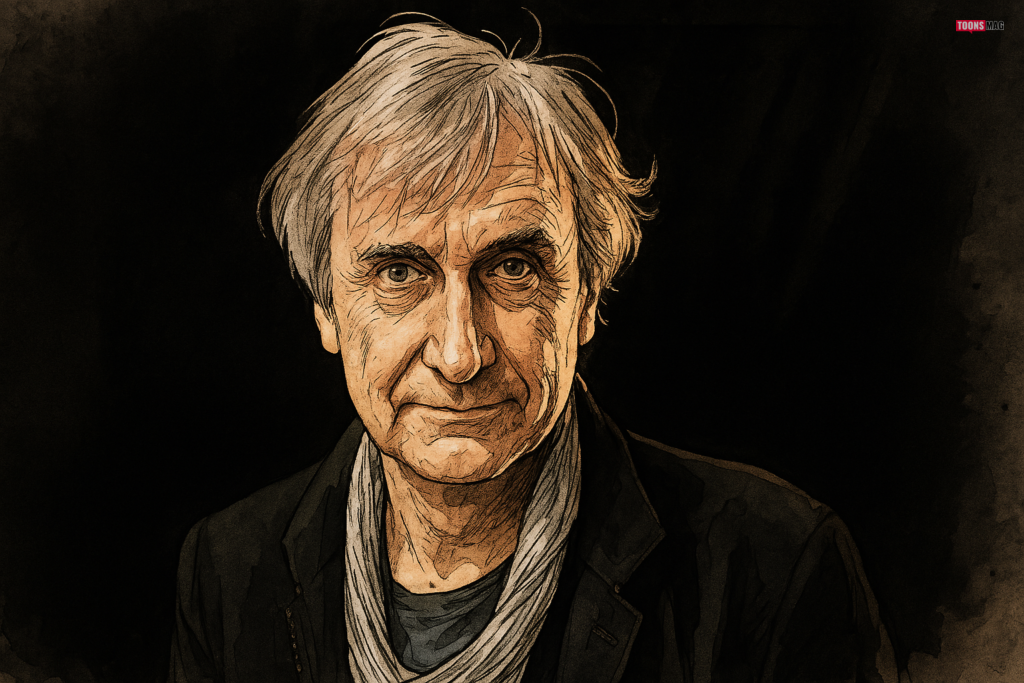
- Cartooning for Peace – Co-founder; ongoing international advocacy and education.
- Royal Academy of Belgium – Member.
- Russian Academy of Arts – Honorary member.
Personal Life
Plantu is married and has four children. Though officially retired from Le Monde, he continues to lecture, publish, curate exhibitions, and mentor young cartoonists, serving as a cultural ambassador for dialogue and press freedom.
Legacy
From a first dove with a question mark in 1972 to thousands of front-page jolts of perspective, Plantu helped define how modern France “reads” its news—with an image that asks a hard question. Through Cartooning for Peace, he transformed individual practice into a global civic project, proving editorial cartooning can be a tool for education, mediation, and democratic resilience.