

 Anto Mario

The Legacy of Bugs Bunny: Bugs Bunny is not merely a cartoon character. He is a cultural artifact, a mirror of American humor, confidence, rebellion, and adaptability across nearly a century of change. Since his official debut in 1940, Bugs Bunny has survived wars, social revolutions, technological transformations, and shifting entertainment landscapes—without ever losing his essential personality.
With his relaxed posture, carrot in hand, and unmistakable Brooklyn-inflected drawl, Bugs Bunny embodies a uniquely American archetype: the underdog who never appears stressed, the outsider who always wins through wit rather than force, and the trickster who exposes authority figures as foolish through intelligence and charm.
This article explores Bugs Bunny not simply as an animated rabbit, but as:
- A product of Hollywood’s Golden Age
- A reflection of American wartime and postwar identity
- A pioneer of animation performance and voice acting
- A vehicle for satire, parody, and social commentary
- A global pop-culture symbol whose influence extends far beyond cartoons
1. The Birth of Bugs Bunny: From Prototype to Personality (1938–1940)

Early Experiments at Warner Bros.
Bugs Bunny did not appear fully formed. His creation was the result of experimentation, rivalry, and creative chaos inside Warner Bros.’ animation studio during the late 1930s.
The earliest ancestor of Bugs Bunny appeared in Porky’s Hare Hunt (1938), directed by Ben “Bugs” Hardaway. This rabbit was hyperactive, aggressive, and manic—very different from the cool, controlled Bugs we know today. However, he established the essential idea: a rabbit who could outsmart hunters.
The name “Bugs” likely originated as shorthand for “Bugs’ bunny,” referring to Hardaway’s rabbit character during production notes. The nickname stuck.
“A Wild Hare” (1940): The Moment of Arrival
Everything changed with A Wild Hare (1940), directed by Tex Avery and animated by Bob Clampett.
This cartoon introduced:
- The carrot-chewing habit
- The relaxed stance under threat
- The iconic line: “What’s up, Doc?”
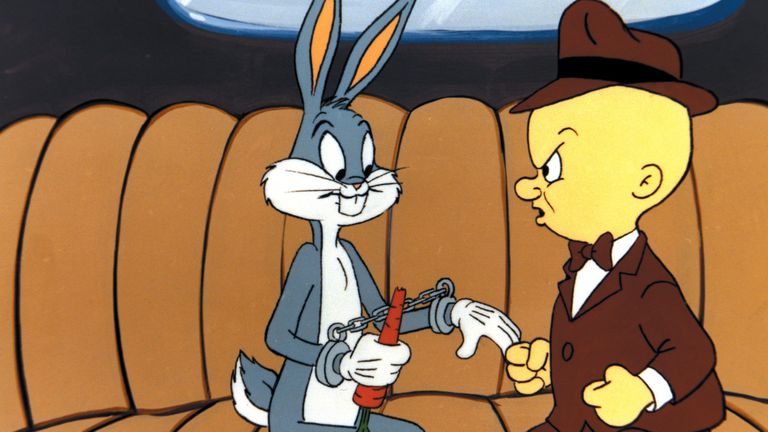
- The dynamic rivalry with Elmer Fudd
Crucially, Bugs Bunny did not panic when faced with danger. Instead, he controlled the situation psychologically. This inversion of power—where the prey calmly dominates the predator—became Bugs Bunny’s defining trait.
Audiences immediately recognized something new: a cartoon character who behaved like a confident adult, not a frantic clown.
2. The Bugs Bunny Persona: Coolness as Power
The Trickster Archetype
Bugs Bunny belongs to an ancient tradition: the trickster.
Like:
- Br’er Rabbit (African-American folklore)
- Anansi the Spider (West African folklore)
- Loki (Norse mythology)
Bugs survives not through strength, but through intelligence, performance, and deception.
However, Bugs introduced something new: coolness.
He never rushes.
He never begs.
He rarely loses composure.
In American culture, this calm under pressure became deeply aspirational—especially during the anxiety-filled decades of the 1940s and 1950s.
Brooklyn Confidence and American Individualism
Bugs Bunny’s accent—crafted by Mel Blanc—blended Bronx, Brooklyn, and vaudeville influences. It sounded urban, confident, and self-aware.
This voice mattered.
Bugs did not speak like authority.
He spoke like the clever outsider who knows authority is ridiculous.
In this sense, Bugs Bunny became a democratic hero, mocking kings, hunters, generals, monsters, and opera divas with equal delight.
3. Mel Blanc: The Voice That Made Bugs Immortal
No discussion of Bugs Bunny is complete without Mel Blanc, often called “The Man of a Thousand Voices.”
Performance, Not Just Voice Acting
Blanc did not simply read lines—he performed Bugs Bunny.
He gave Bugs:
- Timing rooted in vaudeville comedy
- Musical rhythm in speech
- Emotional nuance that made him feel alive
Blanc once said Bugs Bunny was 70% himself. The casual sarcasm, the quick improvisational tone, and the musical phrasing all came directly from Blanc’s instincts as a performer.
When Blanc briefly lost his voice in the late 1980s, the idea of Bugs Bunny continuing without him felt unimaginable. His passing in 1989 marked the end of an era.
4. Bugs Bunny During World War II: Patriotism with Attitude
Wartime Propaganda and Morale
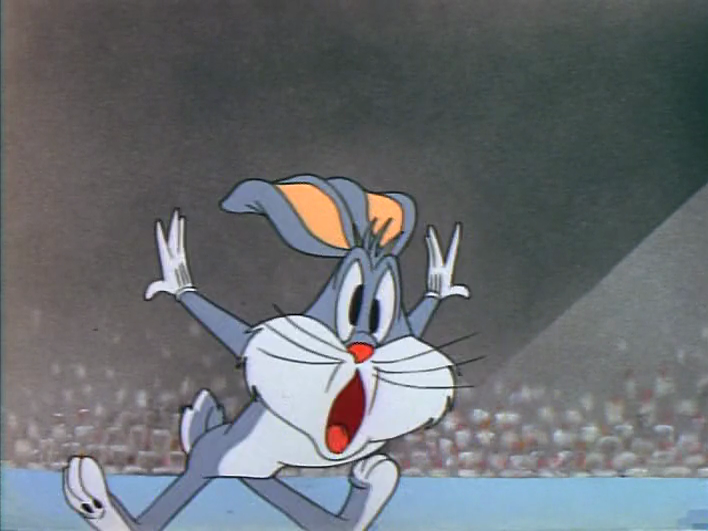
During World War II, Bugs Bunny became a symbol of American resilience.
He appeared in:
- Military insignia
- War bond posters
- Cartoons mocking Axis leaders
Unlike traditional patriotic figures, Bugs Bunny did not shout slogans. He outsmarted the enemy.
This was propaganda with personality—boosting morale by suggesting intelligence and humor could defeat tyranny.
“Any Bonds Today?”
In cartoons like Any Bonds Today? (1942), Bugs directly addressed audiences, breaking the fourth wall to encourage war bond purchases—blending entertainment and civic duty seamlessly.
5. The Golden Age of Bugs Bunny Cartoons (1940s–1950s)
This era produced some of the greatest animated films ever made.
Artistic Innovation
Under directors like:
- Chuck Jones
- Tex Avery
- Friz Freleng
- Bob Clampett
Bugs Bunny cartoons pushed animation forward in:
- Timing and pacing
- Facial expression
- Musical synchronization
Masterpieces of Parody
Bugs Bunny thrived on parody:
- “What’s Opera, Doc?” (1957): Wagnerian opera
- “Rabbit of Seville” (1950): Rossini
- “Long-Haired Hare” (1949): High culture vs. pop culture
These cartoons introduced millions of children to classical music—not through education, but through laughter.
6. Bugs Bunny as Social Satirist
Authority Figures as Fools
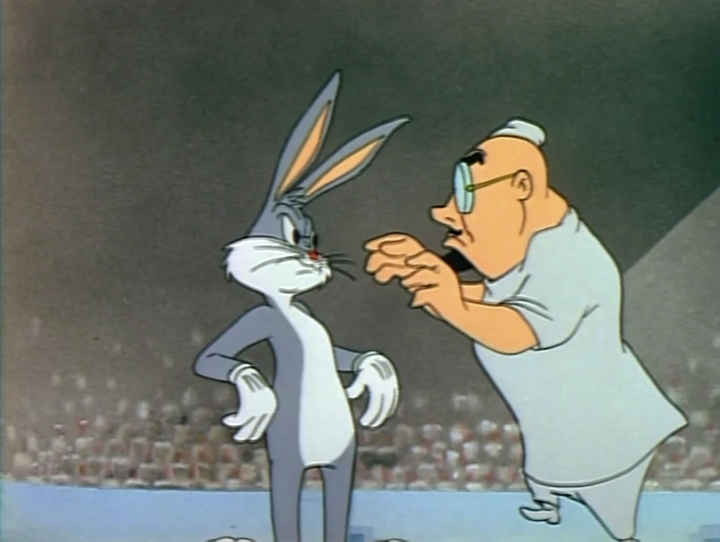
Bugs Bunny’s enemies were rarely villains in the traditional sense. They were authority figures:
- Hunters
- Generals
- Kings
- Opera conductors
Bugs exposed their arrogance and incompetence.
This reflected a broader American skepticism toward unchecked authority, especially after the Depression and WWII.
Gender Performance and Disguise
Bugs Bunny famously cross-dressed—frequently and confidently.
He used femininity as a tool of deception, not ridicule. In doing so, Bugs challenged rigid gender norms decades before mainstream conversations about gender fluidity.
7. Bugs Bunny and His Rivals: Defining Relationships
Elmer Fudd: The Eternal Hunter
Elmer Fudd represents:
- Obsession
- Authority without intelligence
- The futility of brute force
Their dynamic is almost philosophical: Elmer needs Bugs to exist.
Yosemite Sam: Anger Without Strategy
Sam is rage personified. Bugs defeats him by simply letting Sam self-destruct.
Daffy Duck: Ego vs. Confidence
Daffy wants attention.
Bugs already has it.
Their rivalry reflects the difference between desperation and self-assurance.
8. Decline, Revival, and Reinvention (1960s–1990s)
The End of the Theatrical Shorts Era
By the early 1960s, the industrial conditions that had made Bugs Bunny and the Looney Tunes golden age possible began to collapse. Several converging factors reshaped the animation landscape:
- The decline of theatrical shorts as cinemas abandoned cartoon programming
- Television’s dominance, favoring cheaper, faster-produced animation
- Budget cuts and studio restructuring at Warner Bros.
- The departure or retirement of the original creative giants—Chuck Jones, Friz Freleng, Bob Clampett, and others
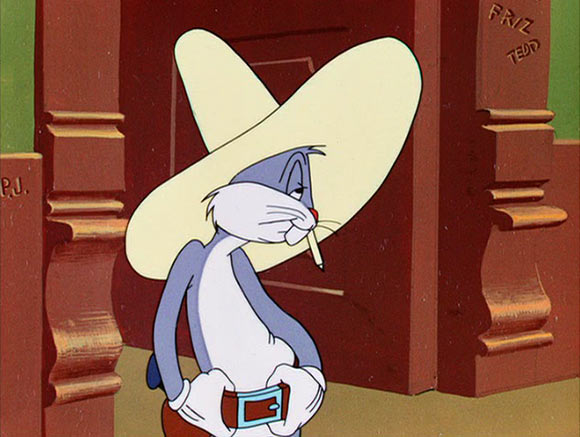
Bugs Bunny did not disappear, but his environment changed. The anarchic, meticulously timed shorts that once preceded feature films were no longer economically viable. As a result, Bugs transitioned from a living, evolving character to a curated legacy figure.
Television Reruns and Canonization
Ironically, television—the force that helped end theatrical shorts—also preserved Bugs Bunny’s legacy. Reruns of classic Looney Tunes shorts introduced Bugs to millions of children who never experienced cinema cartoons firsthand.
Through television:
- Bugs became timeless rather than contemporary
- His personality was standardized
- Certain traits—wit, confidence, verbal dominance—were emphasized over experimentation
This period effectively canonized Bugs Bunny, freezing his best moments into cultural memory while limiting the creation of new ones.
Merchandising and Brand Identity
From the 1960s onward, Bugs Bunny increasingly functioned as a brand ambassador rather than a narrative protagonist. He appeared in:
- Advertising campaigns
- Product endorsements
- Corporate branding
Unlike many cartoon characters diluted by commercialization, Bugs maintained coherence. His personality—cool, ironic, self-aware—translated naturally into branding. Bugs did not sell products by enthusiasm; he sold them by nonchalance.
Space Jam (1996): Revival Through Pop Culture Fusion
Space Jam marked the most significant revival of Bugs Bunny in decades. By pairing him with basketball icon Michael Jordan, the film bridged generational nostalgia with 1990s sports and music culture.
Critically, Space Jam was mixed. Artistically, it lacked the timing and subtlety of classic shorts. Culturally, however, it succeeded enormously:
- Reintroduced Bugs Bunny to a new generation
- Positioned Looney Tunes as pop-culture icons rather than relics
- Reinforced Bugs as the leader of the ensemble
Space Jam reaffirmed Bugs Bunny’s status not just as a character, but as a cultural heavyweight capable of sharing the screen with real-world legends.
9. Bugs Bunny as a Global Icon
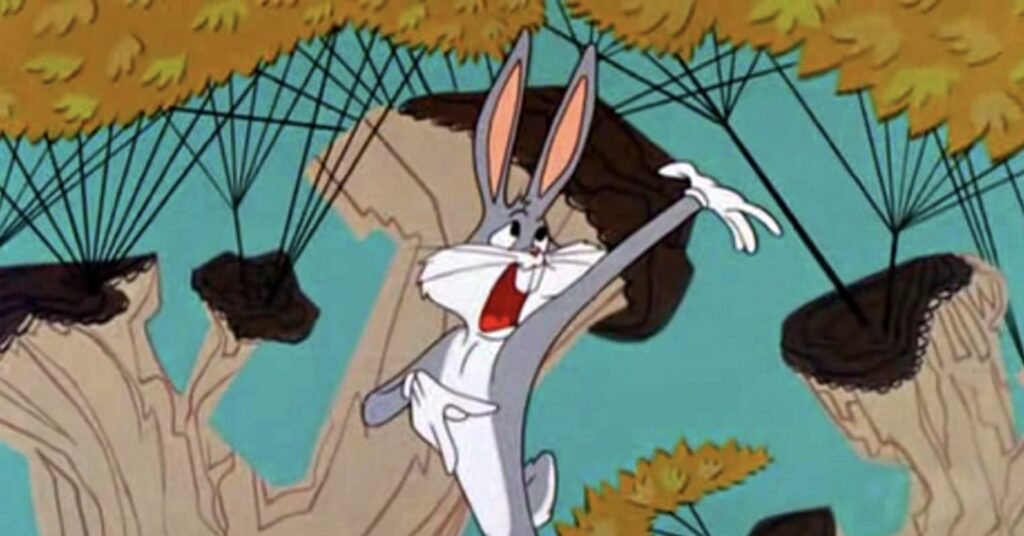
Few animated characters have achieved the global reach of Bugs Bunny. By the mid-20th century, he had transcended entertainment to become a symbol of animation itself.
Beyond Cartoons
Bugs Bunny appeared on:
- Postage stamps, recognized as a national cultural figure
- University mascots, symbolizing wit and competitiveness
- Military insignia, especially during World War II
- International broadcasts, dubbed and adapted worldwide
Unlike culturally specific characters, Bugs’ appeal relied on universal traits: confidence, intelligence, irony, and survival through humor.
An American Archetype with Global Resonance
Though deeply American in origin—shaped by vaudeville, jazz rhythm, and Depression-era resilience—Bugs Bunny resonated internationally because he challenged authority without violence.
In many cultures, Bugs became:
- A trickster figure
- A working-class hero
- A symbol of clever resistance
His carrot was never a weapon, yet it was more effective than any fist.
10. Criticism and Cultural Reevaluation
Problematic Content and Historical Context
Like many long-running characters, Bugs Bunny’s legacy includes material that reflects the prejudices of its time. Some early Looney Tunes shorts contain:
- Racial stereotypes
- Xenophobic caricatures
- Wartime propaganda imagery
Rather than erasing these works, Warner Bros. made a crucial decision: contextualization.
Introductions explaining historical context, warnings about outdated representations, and educational framing acknowledge that these cartoons were wrong—even if they were once normalized.
Why Transparency Matters
This approach strengthens Bugs Bunny’s legacy rather than diminishing it. It demonstrates that:
- Cultural icons can evolve ethically
- History can be confronted rather than sanitized
- Appreciation does not require denial
By refusing to pretend these issues never existed, Warner Bros. allows Bugs Bunny to remain part of an honest cultural conversation.
11. Bugs Bunny in the 21st Century

The Modern Paradox
Modern reinterpretations of Bugs Bunny face a unique challenge:
- Bugs must remain rebellious and dominant
- But cannot rely on cruelty, stereotyping, or punching down
The essence of Bugs Bunny—outsmarting opponents through confidence and wit—must be preserved without violating contemporary sensibilities.
Recent Revivals
Shows such as The Looney Tunes Show and Looney Tunes Cartoons (2020) attempt to solve this paradox by returning to core principles:
- Short-form storytelling
- Physical comedy
- Precise timing
- Character-driven humor
These modern versions strip away excess narrative complexity and refocus on Bugs as a situational philosopher, reacting calmly to escalating absurdity.
A Character Built for Adaptation
Bugs Bunny survives reinvention because he was never tied to a single era’s realism. His power lies in attitude, not context. As long as there are bullies, tyrants, or systems demanding submission, Bugs Bunny’s refusal to panic remains relevant.
12. Why Bugs Bunny Still Matters
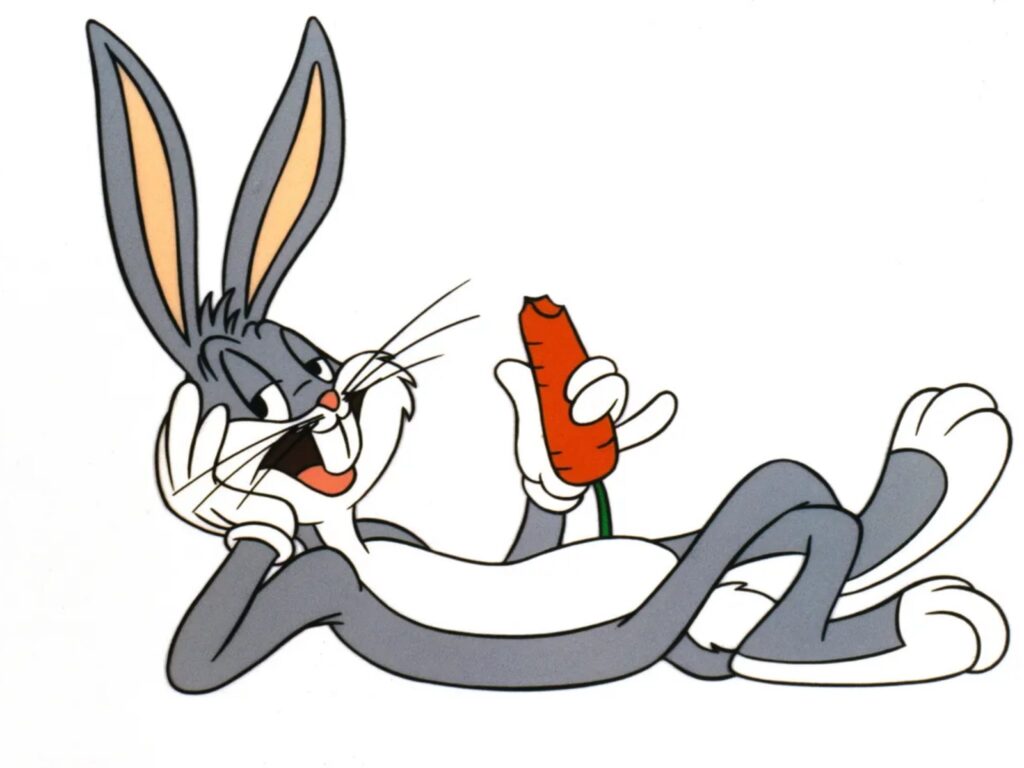
At his core, Bugs Bunny represents a rare moral framework in animation:
- Intelligence over violence
- Humor over fear
- Confidence without cruelty
He does not seek domination for its own sake. He reacts to intrusion. He defends autonomy. He wins without becoming monstrous.
In an era defined by anxiety, outrage cycles, and performative aggression, Bugs Bunny’s calm irreverence feels newly radical.
He reminds audiences that power does not need to shout—and that wit can be a form of resistance.
The Legacy of Bugs Bunny: “What’s Up, Doc?” as Cultural Philosophy
Bugs Bunny does not ask “What’s up, Doc?” because he is curious.
He asks because he already knows he’s in control.
The phrase is not a question—it is a declaration. A signal that chaos has already lost. Bugs Bunny meets danger with a smile, authority with irony, and aggression with impeccable timing.
That confidence—unshaken, playful, humane—is why Bugs Bunny has endured for nearly a century.
He is not just a cartoon character.
He is an attitude.
A philosophy.
A reminder that sometimes the smartest response to chaos is a carrot, a grin, and perfect comedic timing.
As long as humor exists as resistance—and wit remains more powerful than force—Bugs Bunny will never go out of style.
This post was created with our nice and easy submission form. Create your post!







3 Comments