

 Sondre Borg

How to Draw Expressive Cartoon Faces: Expressive cartoon faces are the heart and soul of character design. They communicate emotion, personality, and storytelling all at once—without a single word. Whether you’re dreaming of creating your own comic strip, animated series, or simply want to improve your drawing skills, learning how to create lively, dynamic faces is essential. In this guide, we’ll walk you through everything you need to know about drawing expressive cartoon faces, from understanding facial anatomy to mastering exaggerated expressions. With practical exercises, essential tips, and expert techniques, you’ll learn to breathe life into your characters and create faces that tell a story.
1. The Power of Expressive Faces
Cartoon faces are more than just fun drawings—they are powerful tools that convey mood, character, and emotion. A well-drawn face can instantly make your character relatable, humorous, or even endearing. Expressive cartoon faces allow you to experiment with exaggeration and simplified forms while still capturing the essence of human emotions.
In this guide, we’ll explore:
- The fundamentals of facial structure in cartoons
- How to exaggerate features to convey strong emotions
- Techniques for drawing eyes, eyebrows, mouths, and other facial elements
- Tips for incorporating personality into your characters
- Tools and resources to help you practice and improve your skills
By the end of this article, you’ll have a solid foundation in drawing expressive cartoon faces that are both unique and emotionally engaging.
2. The Importance of Expressive Cartoon Faces
2.1 Conveying Emotion Instantly
Expressive faces are the first thing your audience notices. They can convey happiness, sadness, anger, or surprise without a word. This immediate emotional connection is what makes cartoons so captivating. Your characters’ faces set the tone for the entire story.
2.2 Establishing Character Personality
Every character has a unique personality, and their facial expressions play a key role in showcasing who they are. From the mischievous grin of a trickster to the wide-eyed wonder of a curious child, the way you draw a face can turn a simple sketch into a memorable character.
2.3 Enhancing Storytelling
Expressive cartoon faces add depth to your storytelling. They can help clarify the mood of a scene, hint at underlying subtext, and even serve as a visual shorthand for complex emotions. This makes your art more engaging and accessible for your audience.
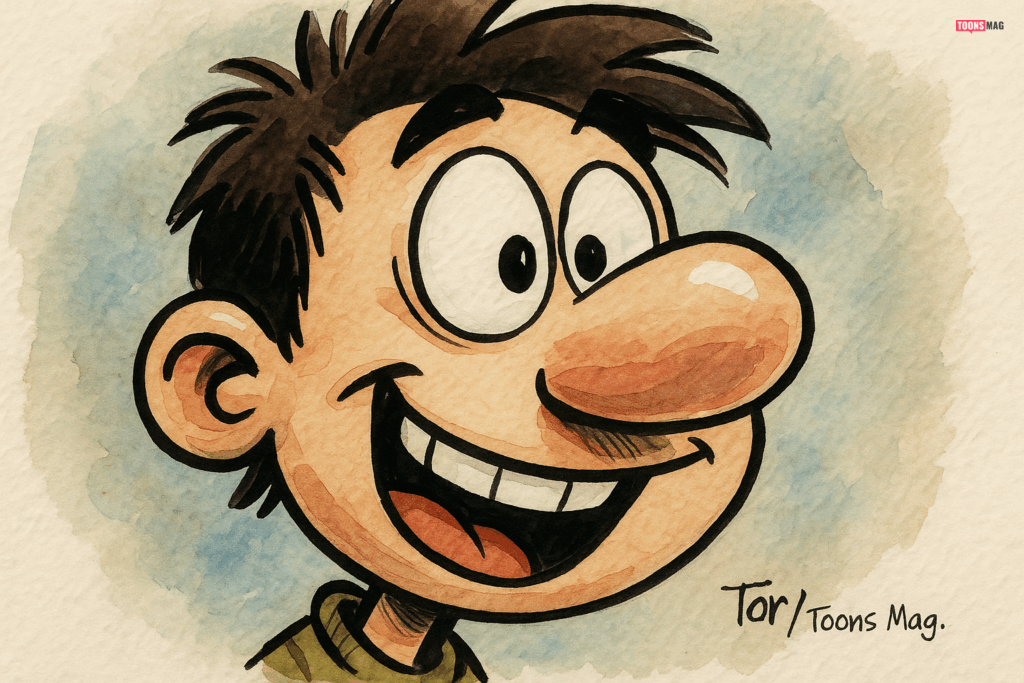
3. Essential Tools and Materials for Cartooning
Before diving into drawing, it’s important to have the right tools. Here are the essential materials every aspiring cartoonist should consider:
3.1 Traditional Drawing Supplies
- Sketchbook: Choose one with quality, acid-free paper that can handle both pencil and ink.
- Graphite Pencils: A variety of pencils (HB for outlines, 2B-4B for shading) is essential.
- Erasers: Use both kneaded erasers for subtle corrections and rubber erasers for clean lines.
- Inking Pens: Fine liners and brush pens help in outlining and adding dynamic strokes.
- Colored Pencils/Markers: For adding vibrant color and bringing your characters to life.
3.2 Digital Tools
- Drawing Tablet: Devices like a Wacom Intuos or iPad Pro with an Apple Pencil provide precision and flexibility.
- Digital Art Software: Programs like Clip Studio Paint, Adobe Photoshop, or Procreate offer robust tools for cartooning.
- Scanner/Camera: For digitizing traditional drawings to edit and share online.
Tip: Start with basic tools and upgrade as your skills improve. Experiment with both traditional and digital media to find your preferred workflow.
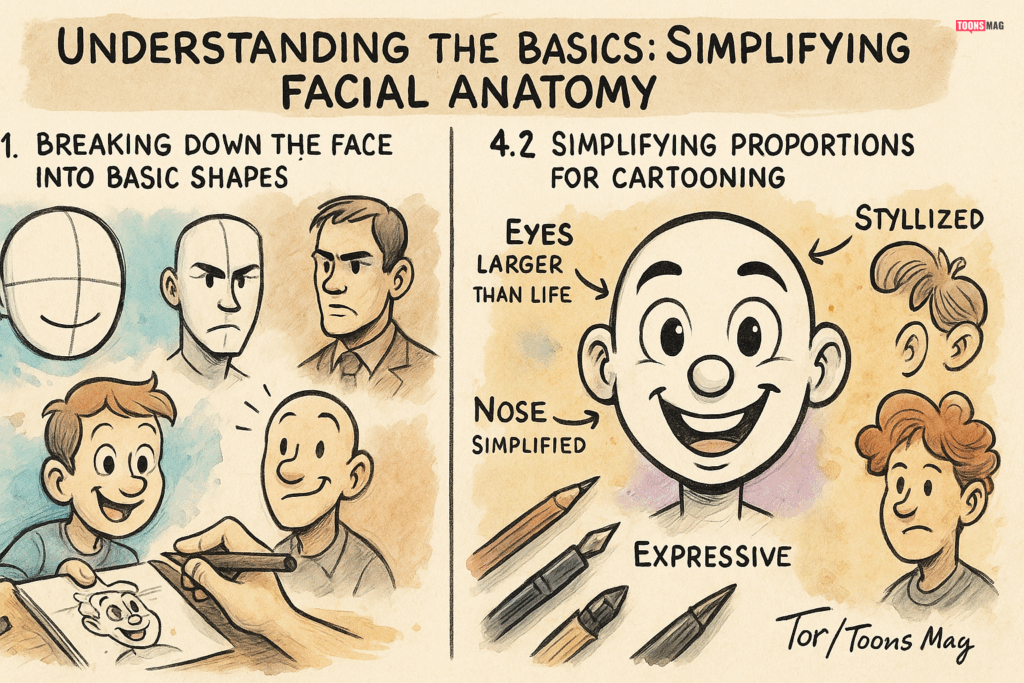
4. Understanding the Basics: Simplifying Facial Anatomy
4.1 Breaking Down the Face into Basic Shapes
Every cartoon face starts with simple shapes. These shapes form the framework of your drawing and help you maintain proper proportions.
- Head Shape: Begin with an oval or circle. Adjust the shape depending on the character’s personality (a round face for a friendly character, a more angular one for a serious character).
- Guidelines: Lightly draw a vertical line down the center and a horizontal line across the middle. These guidelines will help you place the eyes, nose, and mouth symmetrically.
4.2 Simplifying Proportions for Cartooning
Cartooning often involves exaggerating certain features while simplifying others. For example:
- Eyes: Larger than life to convey emotion.
- Nose: Often simplified to a small curve or dot.
- Mouth: Expressive curves that change with emotion.
- Ears and Hair: Stylized to enhance the character’s personality.
By reducing the complexity of realistic anatomy, you can focus on exaggeration and expression.
5. Mastering the Eyes: Windows to the Soul
5.1 Shape and Placement
The eyes are the most expressive part of a face. Start by drawing them on the horizontal guideline, ensuring they’re evenly spaced. Use shapes that suit your character:
- Large, Round Eyes: Ideal for characters that are curious or innocent.
- Almond-Shaped Eyes: Great for conveying a sense of mystery or mischief.
5.2 Drawing Expressions
Experiment with different eye shapes and positions to convey various emotions:
- Surprise: Wide-open eyes with raised eyebrows.
- Sadness: Drooping eyes with slightly lowered eyebrows.
- Anger: Narrowed eyes with furrowed brows.
- Happiness: Sparkling eyes with relaxed lids and gentle curves.
5.3 Adding Detail
- Iris and Pupil: The size and placement can alter the perceived emotion.
- Highlights: Small white spots can bring your eyes to life.
- Eyelids and Lashes: Enhance the shape and add character.
Tip: Practice drawing eyes in different positions and angles to develop a versatile approach to expression.
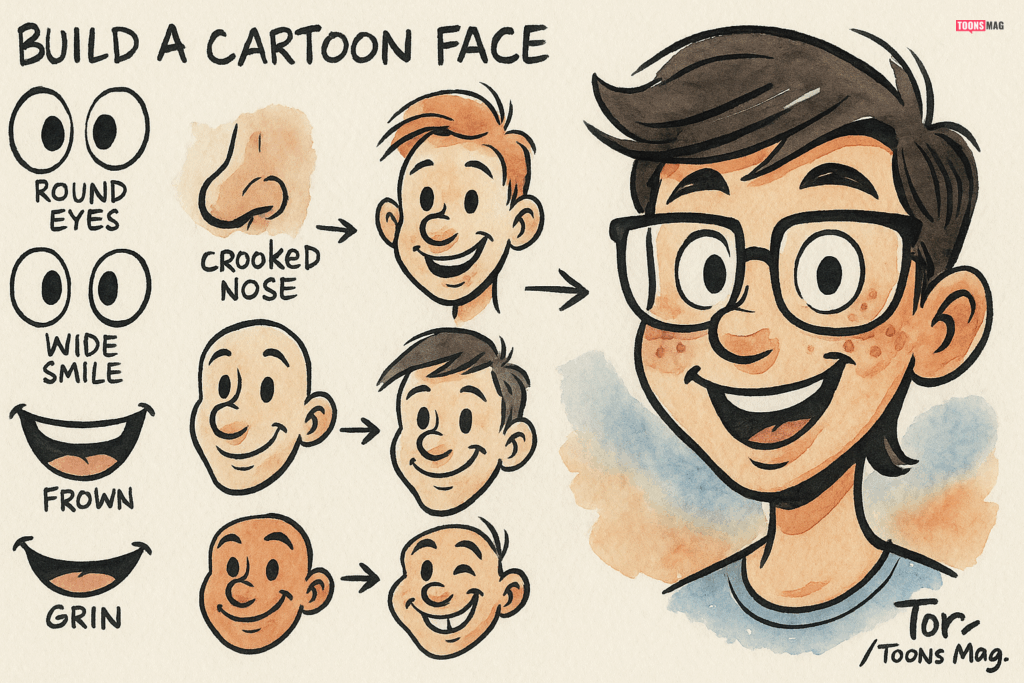
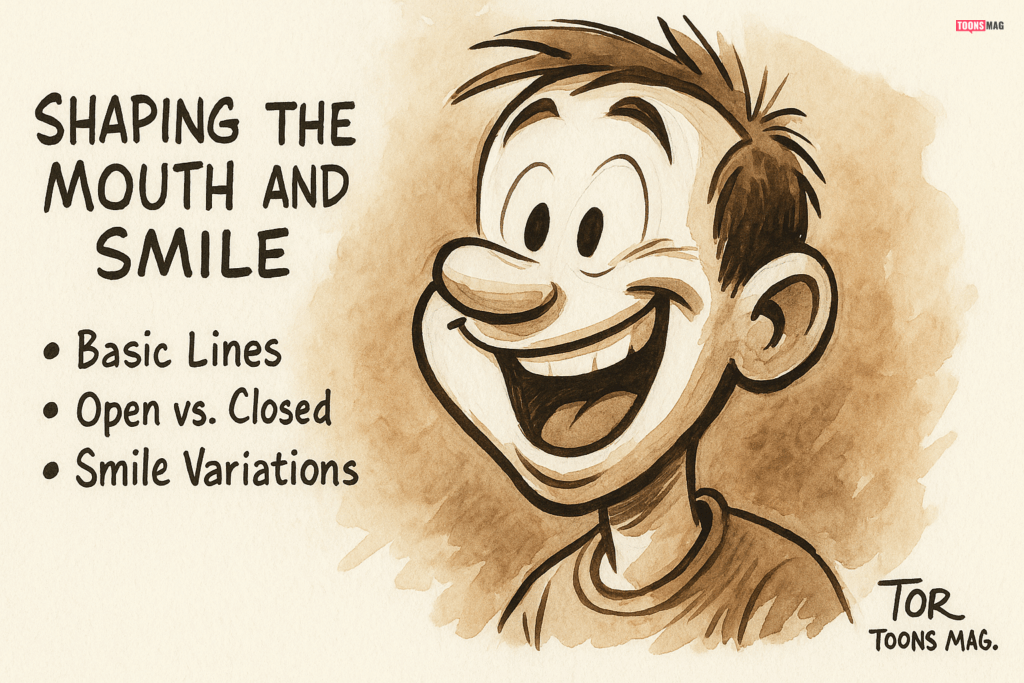
6. Shaping the Mouth and Smile
6.1 The Role of the Mouth in Expression
The mouth plays a crucial role in conveying emotion. It can show joy, sadness, anger, or surprise with simple curves or exaggerated shapes.
6.2 Techniques for Drawing a Dynamic Mouth
- Basic Lines: Start with a simple curve. Adjust its thickness and length depending on the emotion.
- Open vs. Closed: An open mouth can indicate excitement or shock, while a closed mouth might suggest calm or subtle humor.
- Smile Variations: Experiment with different types of smiles—a wide, open smile, a sly smirk, or a subtle grin. Small adjustments in curvature and angle can dramatically change the expression.
6.3 Incorporating Movement
- Tongue and Teeth: For added detail, include a tongue or teeth when the mouth is open.
- Line Weight: Use thicker lines for the outline and thinner lines for inner details to create depth.
Tip: Look at cartoons you love and try replicating the mouth expressions. Notice how slight changes can alter the emotion.
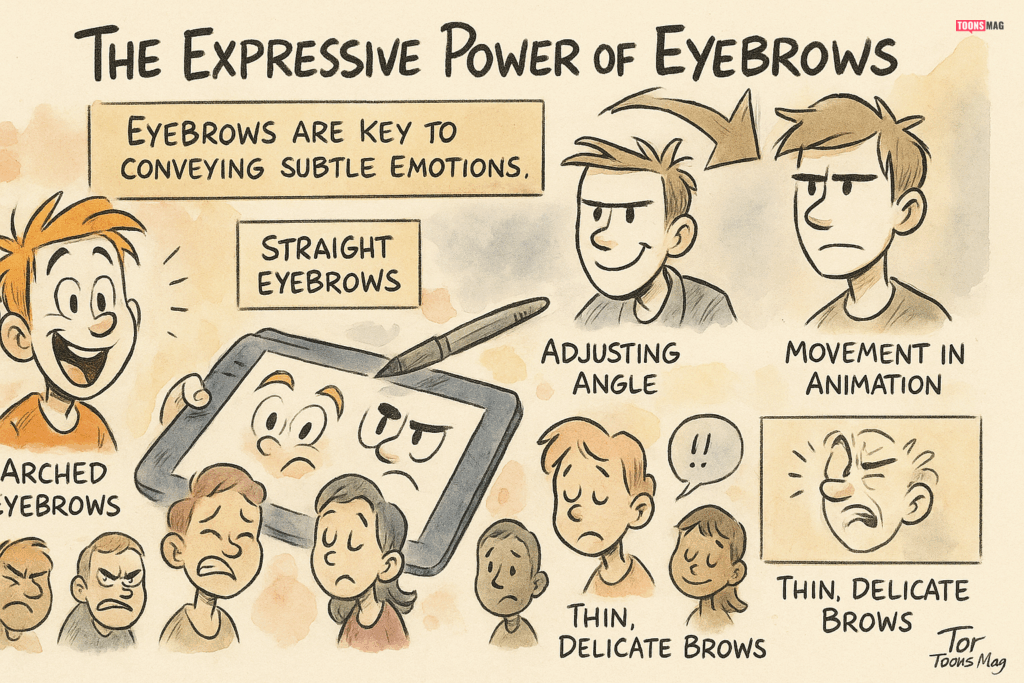
7. The Expressive Power of Eyebrows
7.1 Why Eyebrows Matter
Eyebrows are key to conveying subtle emotions. They can indicate surprise, anger, sadness, or confusion, often more than the eyes or mouth alone.
7.2 Drawing Different Eyebrow Shapes
- Arched Eyebrows: Suggest surprise or delight.
- Straight Eyebrows: Can create a neutral or determined look.
- Furrowed Brows: Indicate anger or deep concentration.
- Thin, Delicate Brows: Often used for more refined or gentle characters.
7.3 Placement and Movement
- Adjusting Angle: Even slight changes in the angle or thickness of an eyebrow can shift the expression.
- Movement in Animation: For animated cartoons, consider how eyebrows move with the character’s expressions to enhance realism.
Tip: Practice drawing a series of eyebrows over the same eye shape to see how different forms change the overall expression.
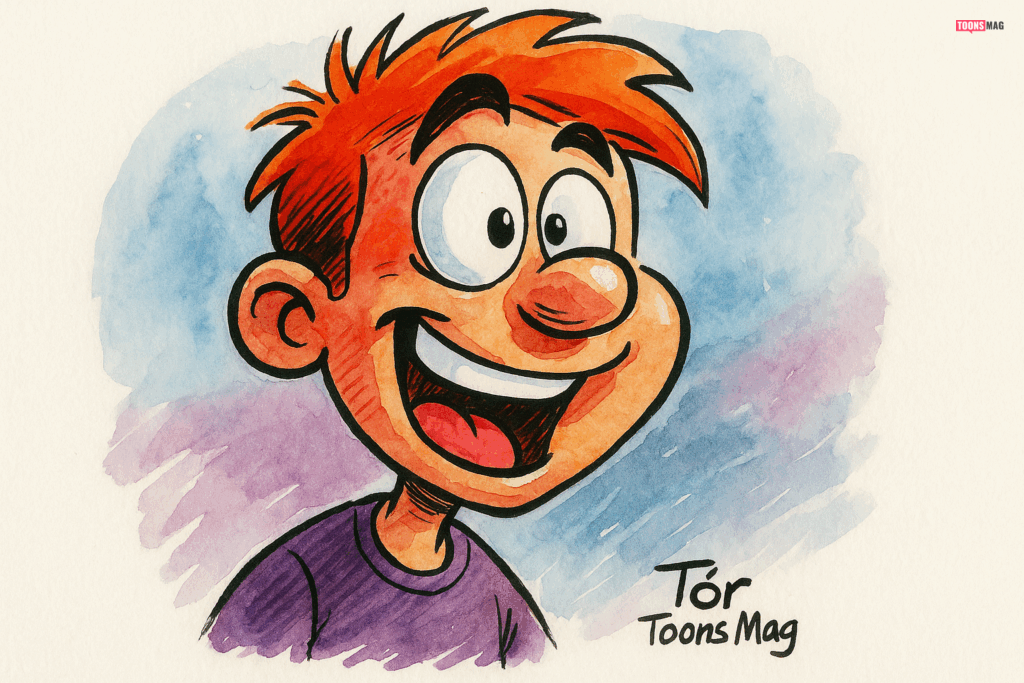
8. Creating a Unique Nose
8.1 Simplifying the Nose
Cartoon noses are often simplified to fit the style of the character:
- Minimalist Approach: A simple dot, a curved line, or a small “L” shape can suffice.
- Exaggerated Noses: For comedic or distinct characters, try larger, more detailed noses.
8.2 Integrating the Nose with the Face
- Proportions: Place the nose in relation to the eyes using your guidelines. Typically, the bottom of the nose aligns with the bottom of the eyes.
- Consistency: Keep the style of the nose consistent with the rest of your character’s features.
Tip: Study various cartoon styles to see how different artists handle the nose. Experiment until you find a style that fits your character.
9. Combining Features: Building a Cohesive Face
9.1 Balancing the Elements
Creating an expressive face is all about balance:
- Symmetry vs. Asymmetry: While symmetry is pleasing, slight asymmetries can add personality.
- Proportions: Ensure that eyes, nose, and mouth work together harmoniously.
9.2 Adding Unique Details
Small details can make your face stand out:
- Freckles, scars, or glasses: These features can tell a story.
- Hairstyles and accessories: They further define your character’s personality.
- Expression Lines: Lines around the eyes or mouth can emphasize emotion.
Tip: Experiment with combining features from different styles until your character feels unique and expressive.
10. Techniques for Exaggeration and Stylization
10.1 Pushing Beyond Realism
Cartooning thrives on exaggeration. Don’t be afraid to push features beyond realistic limits:
- Large Eyes: Amplify the eyes to make emotions more vivid.
- Exaggerated Expressions: Overemphasize smiles, frowns, and other expressions to convey clear emotions.
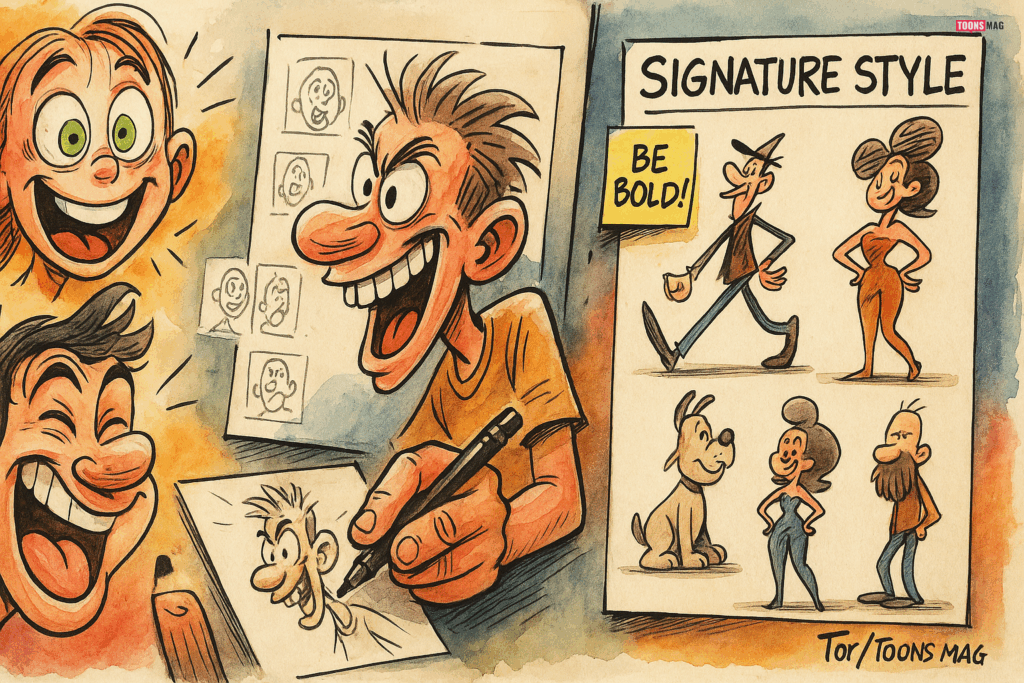
10.2 Developing a Signature Style
As you practice, you’ll naturally start to develop your own style. Let your personality show in your exaggerations:
- Experiment Boldly: Try different shapes, sizes, and angles until you find what resonates.
- Keep It Consistent: Once you settle on a style, maintain consistency across your characters.
Tip: Look at your favorite cartoon characters and analyze how they exaggerate features. Use these observations as inspiration, not imitation.
11. Practicing with Step-by-Step Exercises
11.1 Daily Sketch Challenges
Consistent practice is the key to improvement. Set aside time daily to:
- Draw a series of facial expressions.
- Sketch from real-life references.
- Create a character using only basic shapes and then refine it.
11.2 Copying Master Cartoons
Learning by imitation is a powerful method:
- Recreate expressive faces from classic cartoons like Peanuts, Calvin and Hobbes, or Looney Tunes.
- Analyze how these artists use lines and shapes to convey emotion.
11.3 Using Tutorials and Online Resources
There is an abundance of online tutorials dedicated to drawing expressive faces:
- YouTube Channels: Channels like “Draw with Jazza” provide free, step-by-step lessons.
- Art Forums: Engage with communities on Reddit (e.g., r/learnart) for feedback and new techniques.
Tip: Follow along with tutorials and pause frequently to practice each step before moving on.
12. Incorporating Color and Shading
12.1 The Role of Color in Expression
Color can enhance emotion in a cartoon face:
- Warm Colors: Reds, oranges, and yellows can convey warmth, excitement, or anger.
- Cool Colors: Blues and purples often evoke calm, sadness, or mystery.
- Contrast: Use contrasting colors to highlight features and make expressions pop.
12.2 Shading Techniques
Adding shading gives depth and dimension to your drawings:
- Hatching and Cross-Hatching: Create shadows and texture by layering lines.
- Blending: Use a blending stump or digital tools to smooth transitions between light and dark areas.
- Light Source: Consider where your light is coming from to keep shading consistent and realistic.
Tip: Experiment with different shading techniques on the same drawing to see how subtle changes affect the overall mood.
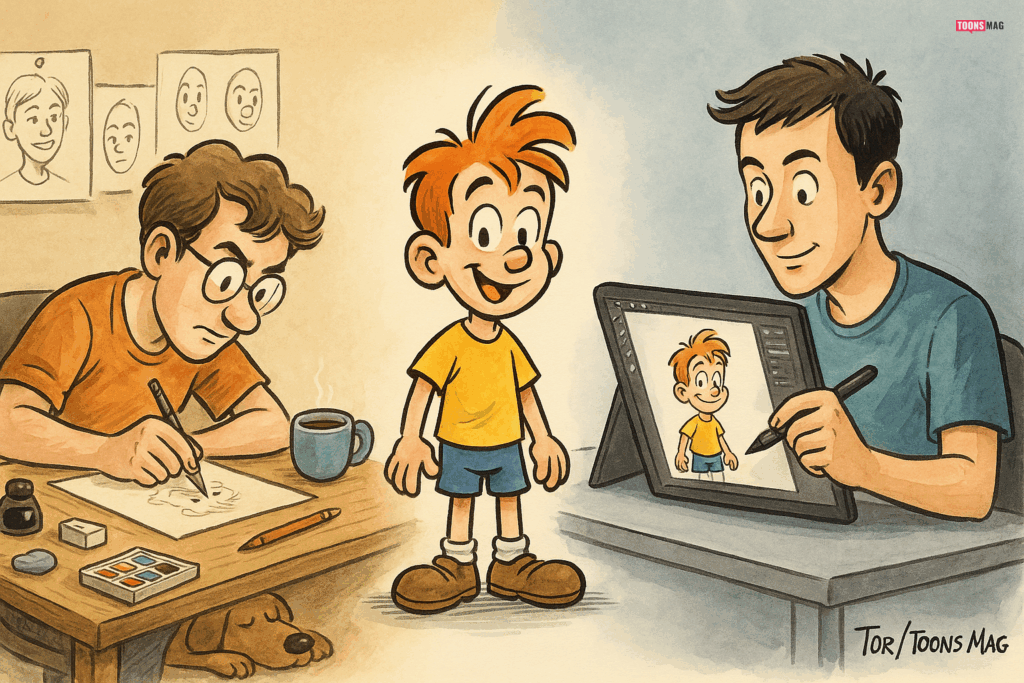
13. Digital vs. Traditional: Which Method Suits You?
13.1 Benefits of Traditional Drawing
Traditional drawing offers a tactile experience:
- Physical Feedback: The feel of pencil on paper can inspire creativity.
- Simple Setup: All you need is paper, pencils, and erasers.
- Immediate Results: Mistakes can be erased and redone, making it a forgiving medium for beginners.
13.2 Advantages of Digital Drawing
Digital tools offer flexibility and convenience:
- Layer Management: Easily adjust different parts of your drawing without starting over.
- Undo Function: Quickly correct mistakes without ruining your work.
- Custom Brushes and Effects: Digital art software allows you to experiment with styles and techniques.
Tip: Try both methods to discover which one you prefer. Many artists use a hybrid approach, sketching traditionally and then scanning their work for digital enhancements.
14. Overcoming Common Challenges
14.1 Handling Frustration and Mistakes
Every artist encounters setbacks. Here are some strategies:
- Embrace Mistakes: Each error is a learning opportunity.
- Practice Patience: Improvement takes time—celebrate small victories.
- Seek Feedback: Constructive criticism from peers can help you see your work from a new perspective.
14.2 Staying Motivated
Maintaining motivation is key to growth:
- Set Realistic Goals: Short-term and long-term targets keep you on track.
- Join Art Communities: Sharing your work online (e.g., on Reddit’s r/learnart) can provide encouragement.
- Keep a Progress Journal: Document your journey to see how far you’ve come.
Tip: Remember that every great artist started as a beginner. Consistency and perseverance will pay off over time.
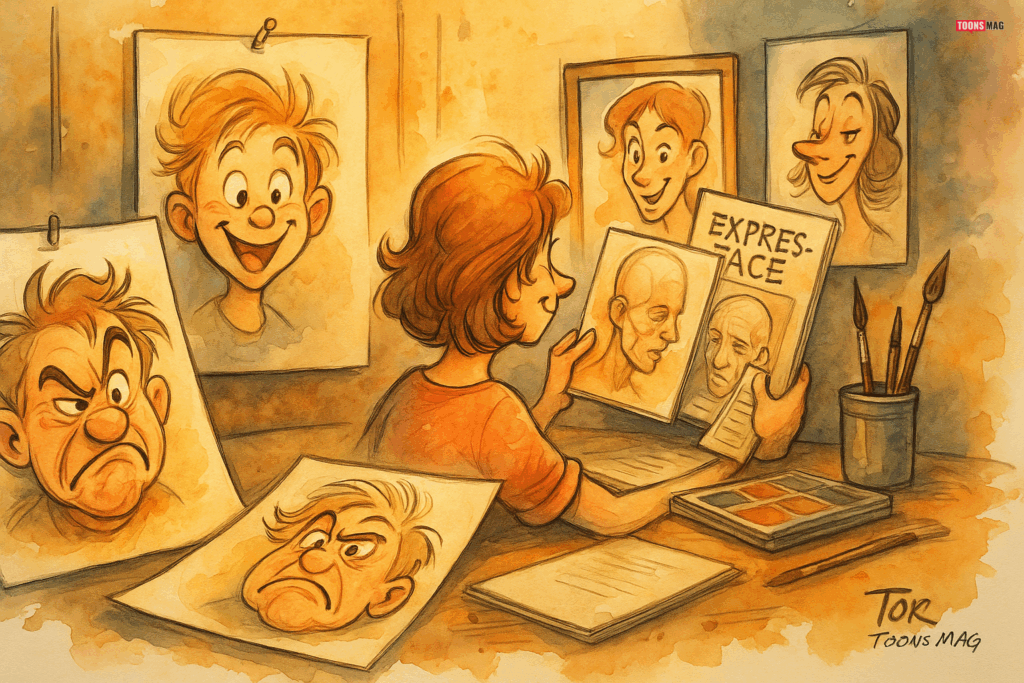
15. Final Tips and Inspiration for Expressive Cartoon Faces
15.1 Experiment and Have Fun
The most important part of drawing expressive cartoon faces is to enjoy the process. Experiment with different expressions, styles, and techniques without worrying too much about perfection. Allow your personality to shine through in your drawings.
15.2 Study the Masters
Look at classic and modern cartoons to see how established artists capture expression:
- Study Iconic Cartoons: Analyze characters from Calvin and Hobbes, Peanuts, and Looney Tunes.
- Learn from Tutorials: Follow along with online guides and video lessons to pick up new techniques.
15.3 Keep Practicing
Improvement comes with time and repetition:
- Dedicate regular practice sessions to drawing faces.
- Try different expressions, from extreme exaggeration to subtle shifts.
- Revisit your old sketches to track progress and adjust your approach.
Tip: Set aside a daily sketching routine—even 15 minutes of focused practice can yield significant improvements over weeks and months.
Bringing Your Cartoon Faces to Life
Drawing expressive cartoon faces is an exciting and rewarding endeavor. By understanding the basics of facial anatomy, practicing exaggeration and stylization, and experimenting with both traditional and digital tools, you can create characters that are not only visually appealing but also emotionally resonant. The journey involves gathering the right tools, learning from established artists, and committing to regular practice. As you develop your skills, you’ll find that your characters come to life with unique expressions and personality, inviting your audience to connect with your work on a deeper level.
Remember, every masterpiece starts with a single line, and every artist was once a beginner. Embrace the process, celebrate your progress, and keep drawing. Your expressive cartoon faces are waiting to tell their stories—so start sketching today, and let your creativity shine!
This post was created with our nice and easy submission form. Create your post!