

 Simon Alexander

The Benefits of Using Cartoons in Training Programs: In an age of ever-shortening attention spans and overflowing inboxes, training programs face a tough challenge: how do you keep learners engaged, motivated, and actually retaining information? Enter one of the most underrated tools in corporate and educational training: cartoons.
Far from being just child’s play, cartoons are a powerful communication tool for adult learners. They make abstract concepts tangible, lighten the mood, boost retention, and make even the driest topics memorable. When used effectively, cartoons can transform traditional training programs into dynamic, people-centered learning experiences.
In this in-depth article, we explore the benefits of using cartoons in training programs, drawing from psychology, instructional design, corporate communication, and visual storytelling. Whether you’re designing e-learning content, onboarding modules, compliance training, or health and safety programs, cartoons might just be your new best friend.
1. Cartoons Grab Attention—Fast
The Problem:
Learners are overwhelmed. Corporate training often competes with deadlines, Zoom fatigue, and digital noise.
The Cartoon Advantage:
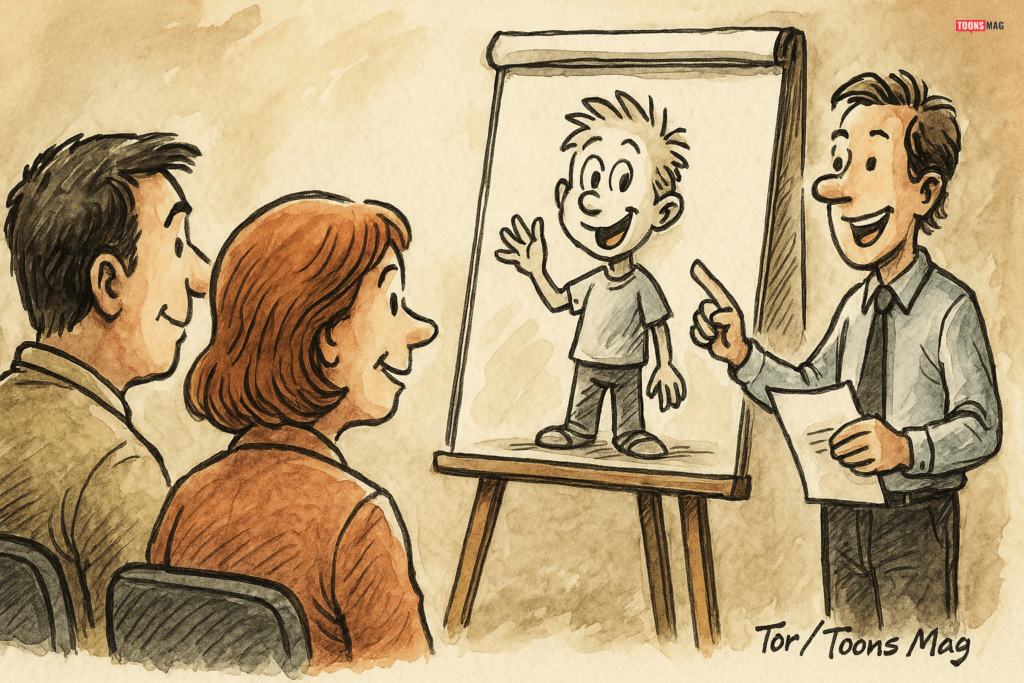
Cartoons offer instant visual appeal. A single-frame cartoon can convey a message faster than a paragraph of text.
- Bright colors, funny expressions, and exaggeration break the monotony.
- Humor creates a dopamine spike, boosting engagement.
- Cartoons act as visual anchors—drawing the eye and pulling learners into the content.
Example:
A cartoon of a worker wearing 12 different safety vests (with a speech bubble: “I just wanted to follow every protocol”) introduces PPE training with a smile—and piques curiosity.
2. Cartoons Simplify Complex Concepts
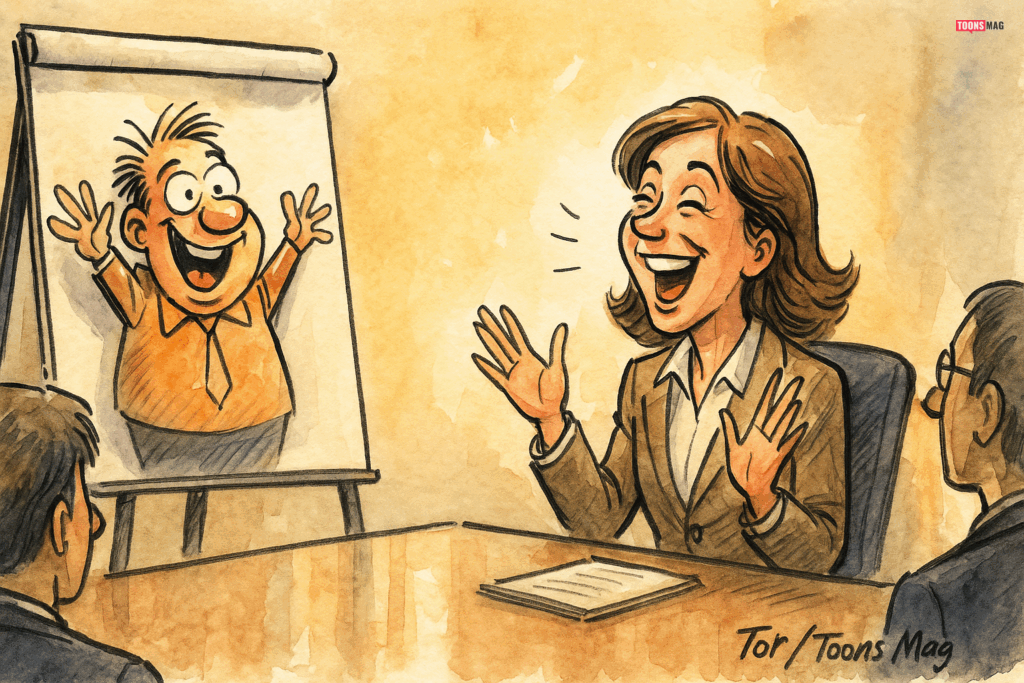
Cartoons excel at distilling complicated ideas into visual metaphors. They don’t just entertain—they clarify.
Why This Works:
- Our brains process visual information 60,000 times faster than text.
- Metaphors help create cognitive shortcuts for memory.
- Cartoons bypass jargon by showing, not telling.
Example:
Explaining cybersecurity to non-tech employees can be tough. But a cartoon of a hacker disguised as a pizza delivery guy—“I brought malware with extra cheese!”—makes the concept of phishing instantly clear.
3. Cartoons Make Training Relatable and Inclusive
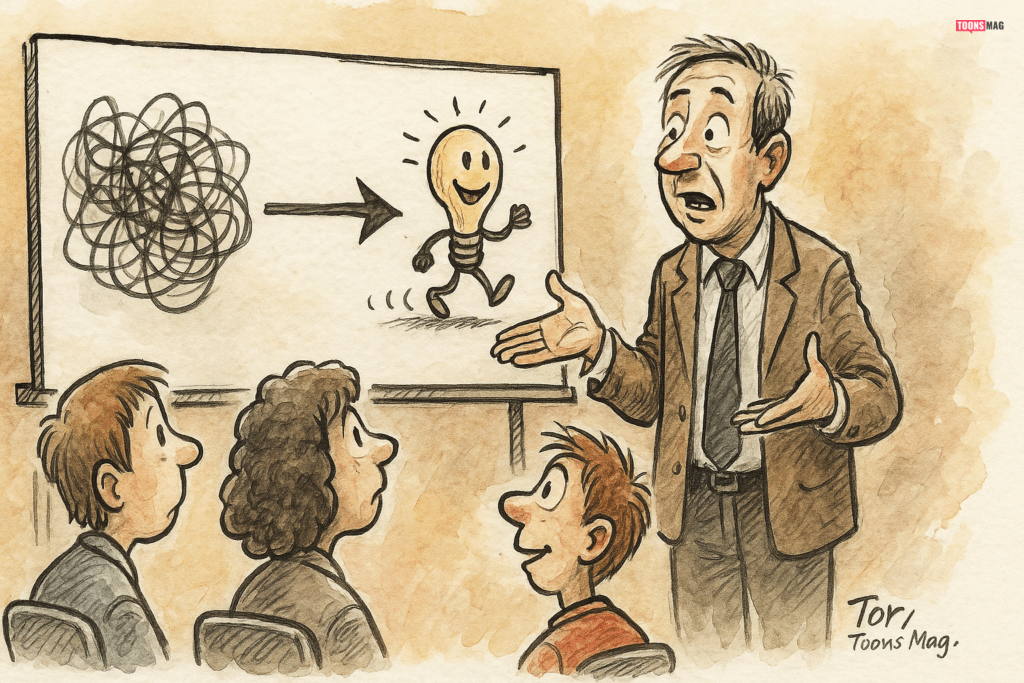
In diverse organizations, finding a common communication style is key. Cartoons, with their universal humor and visual storytelling, are remarkably inclusive.
- Cartoons transcend language barriers.
- Characters can be stylized to reflect diverse genders, cultures, abilities, and identities.
- Learners often project themselves onto cartoon figures, making the content feel more personal.
Pro Tip: Use character-based comics in scenarios where learners have to empathize, reflect, or solve problems.
4. Cartoons Promote Retention Through Emotion
The Science:
The Ebbinghaus forgetting curve shows that learners forget 50% of new information within an hour—and up to 90% within a week.
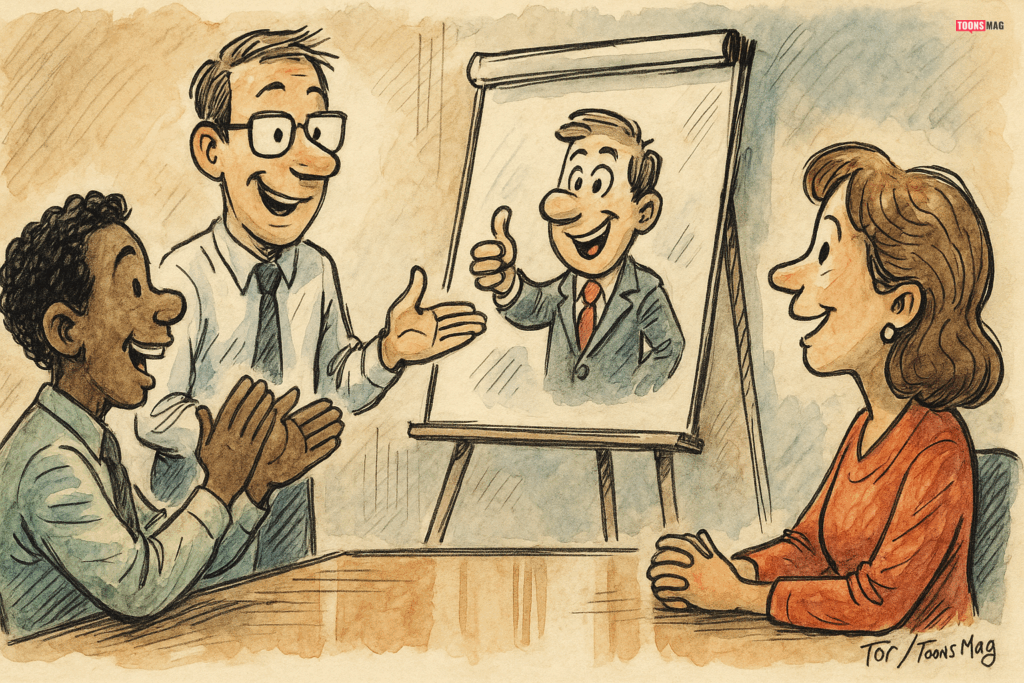
But when training content triggers emotion, memory retention improves.
Cartoons Spark Emotion:
- Humor lowers stress and increases openness to new ideas.
- Empathy helps learners care about the situation.
- Surprise or exaggeration makes content sticky.
Example:
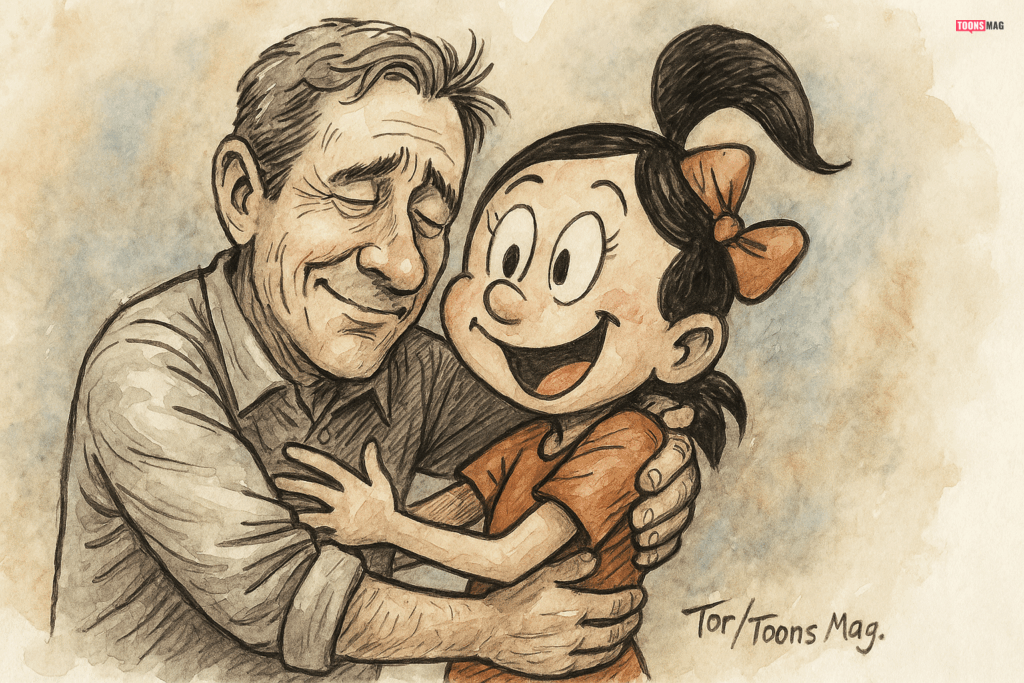
In diversity training, a cartoon showing a workplace where everyone is a clone (caption: “Great minds think alike. Too bad ours all think exactly alike.”) can provoke both a chuckle and deeper reflection.
5. Cartoons Foster Psychological Safety
Learning is vulnerable. Employees often fear making mistakes, being judged, or looking uninformed—especially in group settings.
Cartoons create a safe space to learn, by:
- Using fictional characters to explore real scenarios
- Softening sensitive subjects with humor
- Reducing defensiveness in compliance or corrective training
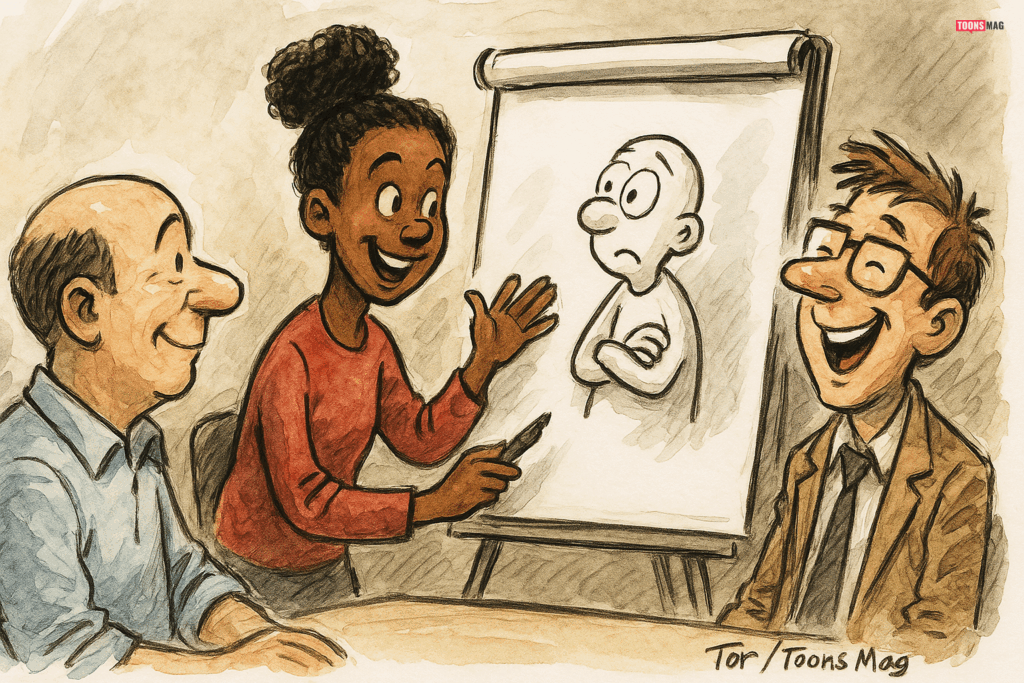
Tip: Start serious modules (like anti-harassment or ethics training) with a light-hearted cartoon to disarm resistance and signal a people-first approach.
6. Cartoons Bridge Generational Gaps
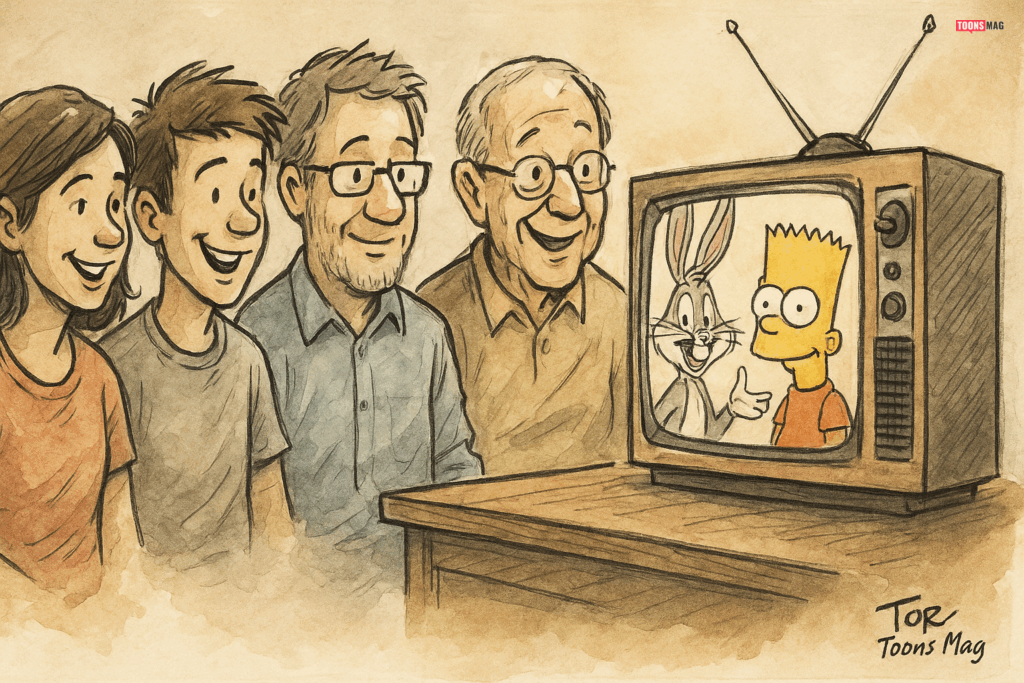
From Looney Tunes to The Simpsons, cartoons have been part of global culture for over a century. In today’s workplace, where Gen Z, Millennials, Gen X, and Boomers all coexist, cartoons provide a shared cultural language.
- For younger employees, cartoons align with memes, GIFs, and TikTok humor.
- For older employees, cartoons evoke nostalgia and familiarity.
- For everyone, they deliver learning in an accessible, low-stress format.
7. Cartoons Enhance E-Learning and Microlearning
E-learning programs often suffer from text overload. Cartoons can make digital learning interactive, dynamic, and digestible.
- Use cartoon characters as learning guides or avatars
- Create micro-comics to introduce or review topics
- Replace dense paragraphs with visual storytelling
Platforms like Toons Mag and Cartoonist Network enable trainers and designers to find or commission cartoon content tailored to training themes.

8. Cartoons Inspire Participation and Discussion
Training isn’t just about delivery—it’s about dialogue. Cartoons are excellent conversation starters.
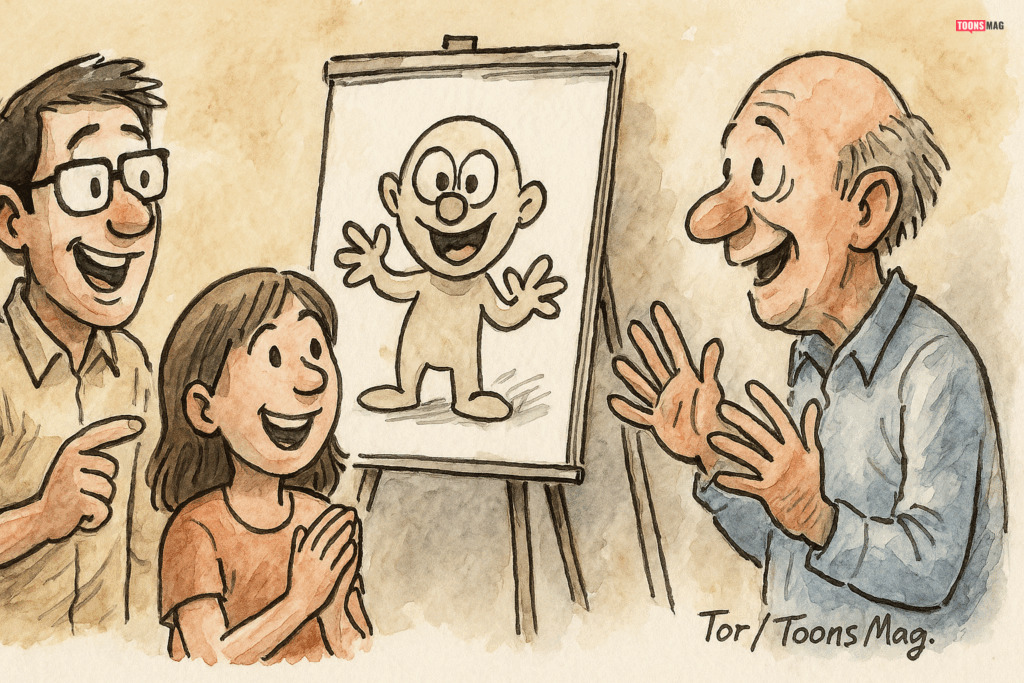
- Add cartoons to group exercises and ask: “What’s happening here?”
- Use them in workshops to prompt storytelling or scenario analysis.
- Let teams create their own comic strips to explore team dynamics or challenges.
This participatory approach helps turn passive learners into active contributors.
9. Cartoons Help You Tell Your Training Story
Every training program has a narrative arc—a beginning (why it matters), a middle (what to do), and an end (how to apply it). Cartoons provide a visually engaging structure for that story.
Cartoon storyboards can:
- Illustrate “a day in the life” of a new employee
- Simulate customer service scenarios
- Show consequences of unsafe behavior
- Map out ethical dilemmas or leadership decisions
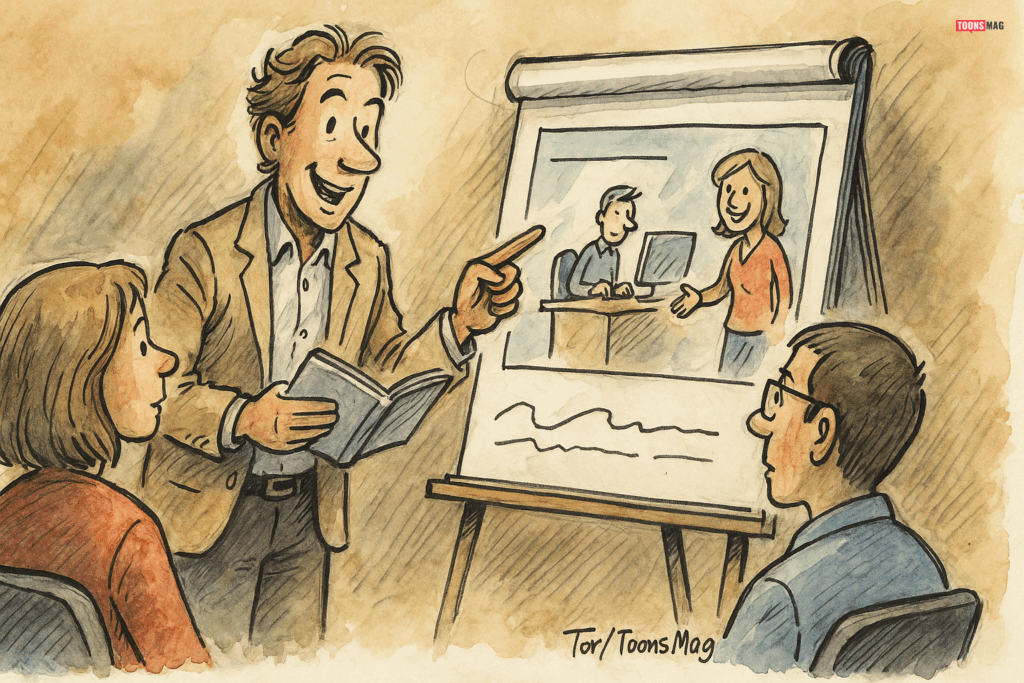
People remember stories more than statistics—and cartoons make stories memorable.
10. Cartoons Are Cost-Effective and Scalable
Creating custom video content or simulations can be expensive. Cartoons are a high-impact, low-cost solution.
- Easy to localize and translate
- Simple to update or adapt over time
- Printable, sharable, and reusable across departments
And with the rise of digital cartooning tools, educators and trainers can even create basic cartoons themselves—no drawing required.
Case Studies: Cartoons in Action
A. Safety Training in Manufacturing
A company used single-panel cartoons showing exaggerated accidents to introduce safety modules. Result: A 22% increase in quiz scores and a 40% jump in voluntary compliance.
B. Healthcare Compliance
Nurses received comic strips illustrating patient data privacy through exaggerated “oops” moments. Result: Higher engagement, lower repeat violations.
C. Corporate Onboarding
Cartoon avatars guided new hires through HR policies with humor. Result: Improved satisfaction ratings and faster policy retention.
The Benefits of Using Cartoons in Training Programs: Cartoons Are the Secret Weapon of Effective Training
Cartoons are more than comic relief—they are a training strategy rooted in psychology, pedagogy, and creativity. They speak to our inner child, our need for clarity, and our desire to learn without pressure.
So the next time you’re designing a training module, ask yourself:
- Can this concept be visualized?
- Could a little humor lower the barrier?
- Would a cartoon make it more memorable?
If the answer is yes, it’s time to bring cartoons into the classroom, the boardroom, or the browser window. Because when training is fun, learning sticks.
This post was created with our nice and easy submission form. Create your post!