

 Riley Spark

Captain Archibald Haddock (French: Capitaine Archibald Haddock) is one of the most iconic and endearing characters in The Adventures of Tintin, the groundbreaking comic series created by Belgian cartoonist Hergé (Georges Remi). Introduced in the 1941 volume The Crab with the Golden Claws, Captain Haddock starts as a disgraced, often inebriated sea captain and evolves into one of the series’ central figures. A retired Merchant Marine officer, Haddock is known for his fiery temper, bombastic speech, heartwarming loyalty, and deep bond with Tintin. His transformation from comic relief to courageous hero reflects not only personal redemption but also serves as a humanizing counterpoint to Tintin’s unfailing heroism.
Infobox: Captain Archibald Haddock
- First Appearance: The Crab with the Golden Claws (1941)
- Creator: Hergé (Georges Remi)
- Publisher: Casterman (Belgium)
- Full Name: Archibald Haddock
- Role: Tintin’s closest friend, adventuring companion, moral foil, and comic relief
- Occupation: Retired Sea Captain (Merchant Marine)
- Notable Traits: Explosive vocabulary, temperamental yet kind-hearted, fiercely loyal, fondness for whisky, expressive facial features
Origins and Development
Captain Haddock’s debut dramatically reshaped the narrative structure of The Adventures of Tintin. Prior to his introduction, Tintin operated primarily as a lone figure—adventurous, stoic, and consistently in control—with only his dog Snowy offering intermittent commentary and companionship. The introduction of Haddock marked a significant narrative shift, granting Hergé a deeply expressive, multidimensional character who allowed the stories to evolve in both tone and complexity. This addition added psychological depth and emotional resonance to what had previously been more linear adventure narratives.
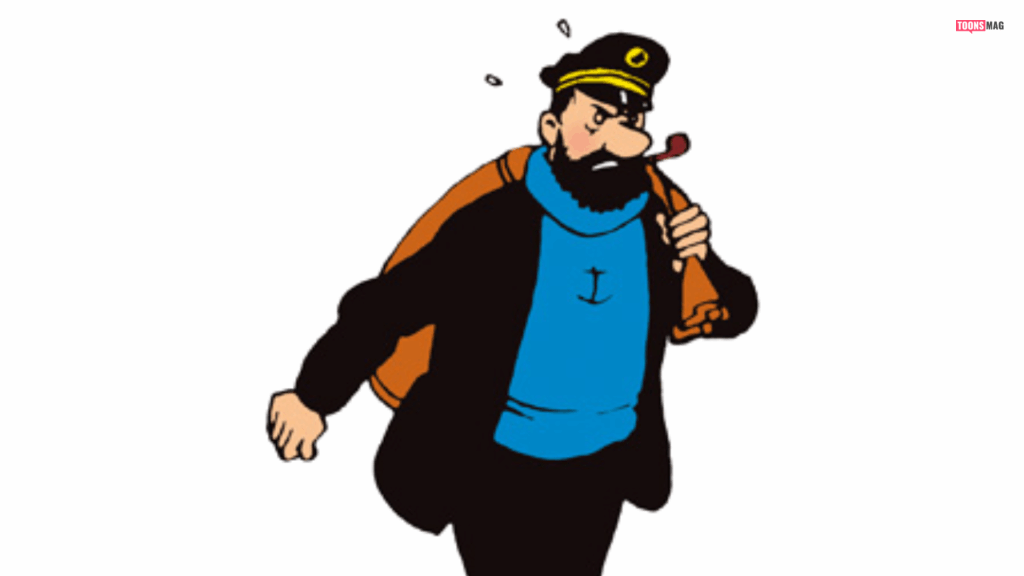
In his inaugural appearance in The Crab with the Golden Claws (1941), Captain Archibald Haddock is depicted as a disgraced mariner, enslaved by his dependence on alcohol and manipulated by nefarious smugglers. The character’s entrance is both chaotic and memorable—erratic behavior, slurred speech, and a disposition oscillating between melancholy and rage. Despite this, Haddock elicits sympathy from readers, as his addiction renders him more human and vulnerable than Tintin had ever been portrayed. When Tintin intervenes, liberating him from the smugglers’ control, their bond begins to form. It is this event that forges the beginning of their enduring friendship, one that becomes the emotional and moral backbone of the series.
This evolution was deliberate. Hergé saw in Haddock a vessel to explore a wider emotional spectrum. As biographer Michael Farr emphasizes, Haddock enabled Hergé to delve into themes of despair, redemption, and impulsive humanity—territory largely inaccessible through the ever-composed Tintin. Whereas Tintin often responds to danger with near-detached calm and moral certainty, Haddock exhibits raw emotion—raging, weeping, exclaiming in both fury and euphoria. Hergé even regarded Haddock as his alter ego, admitting that the captain’s tempestuous personality allowed him to express frustrations, cynicism, and humor that Tintin’s reserved nature would not permit.
Moreover, Haddock’s character allowed for an expanded range of dramatic tension and comic relief. His frequent missteps, stubbornness, and colorful language brought a level of unpredictability that elevated the storytelling. Through Haddock, Hergé not only humanized the adventure but layered it with moral ambiguity and rich emotional texture, making the tales more engaging and relatable for both younger and adult audiences.
Ancestry and Marlinspike Hall
Hergé expands Captain Haddock’s character in the subsequent two-part adventure comprising The Secret of the Unicorn and Red Rackham’s Treasure. These albums not only introduce an epic quest for sunken treasure but also delve into Haddock’s familial past, tracing his ancestry to Sir Francis Haddock, a courageous 17th-century naval officer and privateer who once battled the infamous pirate Red Rackham. This historical backstory enhances Haddock’s character by giving him a sense of legacy, responsibility, and personal pride. It also marks a pivotal shift in the series’ tone, blending swashbuckling adventure with genealogical discovery and emotional depth.
Through this revelation, readers see a new side of Captain Haddock—one that is introspective and increasingly mature. Learning about Sir Francis’s bravery and virtue inspires Haddock to live up to his ancestor’s reputation, signaling the beginning of his transformation from a bumbling, reluctant sidekick into a self-respecting, courageous figure with a sense of purpose.
Following the rediscovery of Sir Francis’s lineage, Haddock inherits the grand Marlinspike Hall (Château de Moulinsart in the French editions), a sprawling country estate filled with historical artifacts and maritime memorabilia. The hall quickly becomes a central and symbolic setting in the Tintin series. Not only does it serve as a domestic retreat and narrative base for future adventures, but it also signifies Haddock’s return to nobility—both literally and figuratively. The transformation from an alcoholic sea captain with no fixed home to the lord of a stately manor encapsulates his journey of redemption, self-discovery, and personal growth.
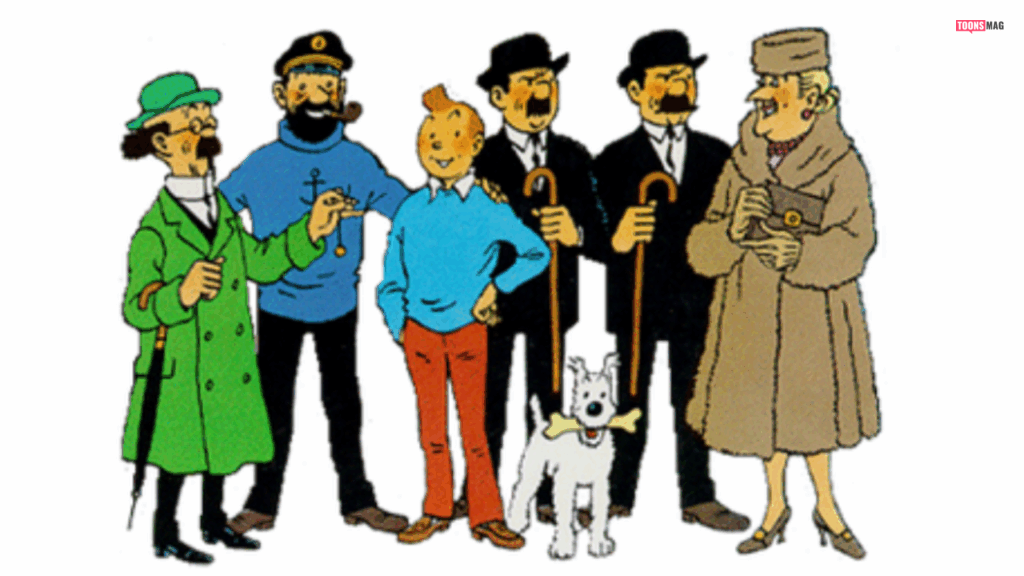
The hall itself becomes a character of sorts, appearing prominently in later stories such as The Calculus Affair, The Castafiore Emerald, and Tintin and the Picaros. Its grand halls, hidden cellars, and picturesque surroundings provide a backdrop for quiet moments, comedic episodes, and even intrigue. Marlinspike Hall also allows for the deeper development of supporting characters like Professor Calculus and Nestor the butler, further expanding the Tintin universe with a sense of community and continuity.
By introducing Haddock’s ancestry and Marlinspike Hall, Hergé enriches the series with historical context, emotional stakes, and architectural grandeur, marking an important milestone in the evolution of both the character and the narrative structure of The Adventures of Tintin.
Naming and Real-World Influences
The name “Haddock” was proposed by Hergé’s wife, Germaine Kieckens, during a casual seafood dinner. She noted with amusement that haddock sounded like a “sad English fish,” which struck a chord with Hergé, who saw in the name a reflection of the melancholic, irritable, yet endearing persona he was crafting. The name captured the contradiction at the heart of the character—a man of fierce temper and underlying tenderness. This humorous observation laid the foundation for one of Hergé’s most beloved creations. The first name “Archibald” wouldn’t appear until Tintin and the Picaros (1976), nearly four decades after Haddock’s debut, giving the captain a fuller identity as Hergé rounded off the series.
Haddock’s personality was constructed as a composite of real-life influences. His volcanic temper and flair for dramatics were inspired by Tintin’s colorist Edgar P. Jacobs, a close friend of Hergé known for his passionate temperament and theatrical presence. His gruff honesty and blunt approach to life reflected the temperament of Bob de Moor, Hergé’s trusted collaborator and studio assistant, whose directness and loyalty mirrored that of the captain himself. In Haddock, Hergé channeled elements of those closest to him, building a character who was emotionally authentic and richly textured.
Although Haddock was not intentionally based on any historical figure, the name “Haddock” carries historical resonance. Several members of the Haddock family served in the British Royal Navy, most notably Admiral Sir Richard Haddock, who fought valiantly in the Battle of Sole Bay in 1672 during the Third Anglo-Dutch War. Though this connection was coincidental, it added an air of historical plausibility to the fictional captain’s naval background. Scholars and Tintinologists have often noted that this unintentional overlap reinforces Haddock’s credibility as a former sea captain and infuses his character with an aura of maritime legacy and tradition. This layered naming process—personal, anecdotal, and historical—enriches the lore surrounding Captain Haddock and contributes to his lasting appeal.
Haddock’s Colorful Vocabulary
One of Captain Haddock’s most memorable features is his furious, often absurd outbursts of creative insults. Because the comics were serialized in the Catholic children’s magazine Le Petit Vingtième, Hergé was restricted from using actual profanity. To work around this, he developed a unique lexicon of imaginative, bombastic exclamations that simultaneously amused readers and gave Haddock a signature voice unlike any other character in comic history.
Haddock’s signature expressions include immortal lines like “Blistering barnacles!”, “Ten thousand thundering typhoons!”, and the endlessly entertaining “Billions of blue blistering barnacles!” These iconic phrases were often supplemented with pseudo-swears—obscure or scientific-sounding terms delivered with dramatic intensity. Words such as “anacoluthon!” (a grammatical term), “bashi-bazouk!” (a type of irregular soldier), “nitwitted duodecimal!”, and “pneumothorax!” (a medical condition) became part of his comedic arsenal. One of these exclamations, “pneumothorax,” even prompted a satirical letter from a fictitious father of a sick child, penned by Hergé’s mischievous friend Jacques Van Melkebeke, as a prank to tease the author.
Haddock’s tirades added layers of humor, absurdity, and surprise to the Tintin stories. His rants often erupted in the middle of tense or mundane situations, providing both relief and dramatic punctuation. Hergé himself reportedly kept a dedicated notebook filled with strange, exotic, and melodious words, carefully curated for use in the captain’s future outbursts. These lists served as a treasure trove of linguistic color that Hergé could draw upon to enhance Haddock’s unique personality.
The use of these fantastical curses not only made Haddock more expressive and unforgettable but also elevated the sophistication of the series’ humor. Children were entertained by the sheer energy of the rants, while adults appreciated the cleverness and etymological wit behind the invective. Over time, these phrases transcended the comic strip and entered popular culture, often quoted by fans and referenced in parodies and tributes. Haddock’s explosive vocabulary remains one of the most distinctive features of The Adventures of Tintin, showcasing Hergé’s inventiveness and love of language in full force.
Role in the Series
Haddock’s role goes far beyond comic relief. He embodies emotional honesty, self-doubt, impulsiveness, and redemption. His development from a belligerent and frequently intoxicated liability to a brave, self-sacrificing hero mirrors larger themes of human growth, inner struggle, and personal transformation. Through his unpredictable behavior, often flawed judgment, and deeply loyal spirit, Haddock introduces a complexity to the narrative that offsets Tintin’s near-perfection. While Tintin remains the incorruptible moral compass and fearless action hero, Haddock provides heart, passion, conflict, and most crucially—vulnerability.
In The Shooting Star, Haddock’s unexpected role as president of the Society of Sober Sailors introduces a layer of satire and irony, especially considering his continued fondness for the fictional Loch Lomond whisky. The contrast between his official title and his private indulgences illustrates the tension between his aspirational values and personal weaknesses—a theme that recurs throughout the series. His struggle with sobriety is not merely played for laughs but also serves as a symbol of his desire to improve and reclaim dignity, adding depth to his character arc.
In Explorers on the Moon, Haddock plays an essential role in adding humor and humanity to what is otherwise one of the series’ most scientifically oriented adventures. His comedic misadventures in zero gravity, often complicated by his sneaky sips of alcohol, bring levity and realism to the story. Despite his clumsiness and lack of technical knowledge, his courage and sense of loyalty never waver. He is the emotional anchor during moments of panic and uncertainty aboard the spacecraft, embodying the average person thrust into extraordinary circumstances.
His emotional and moral heroism is most poignantly illustrated in Tintin in Tibet. In this deeply spiritual and emotionally charged story, Haddock does not hesitate to follow Tintin into the treacherous Himalayas in search of their missing friend Chang. Despite extreme altitude sickness, danger, and personal discomfort, he insists on accompanying Tintin, showcasing his selfless bravery and the depth of his friendship. His willingness to endure personal suffering for someone else’s cause cements his role as more than a sidekick—he becomes a co-hero in his own right.
Haddock also often functions as the reader’s proxy—his reactions reflect the audience’s own disbelief, frustration, and amusement in the face of the series’ more surreal or implausible developments. Whether grumbling about cryptic clues, yelling at bumbling detectives like Thomson and Thompson, or sarcastically commenting on the bizarre situations they find themselves in, Haddock’s grounded reactions provide comic realism. These responses humanize the larger-than-life adventures and make the stories accessible and relatable, especially to adult readers who may identify more with Haddock’s skepticism than Tintin’s idealism.
Legacy and Cultural Impact
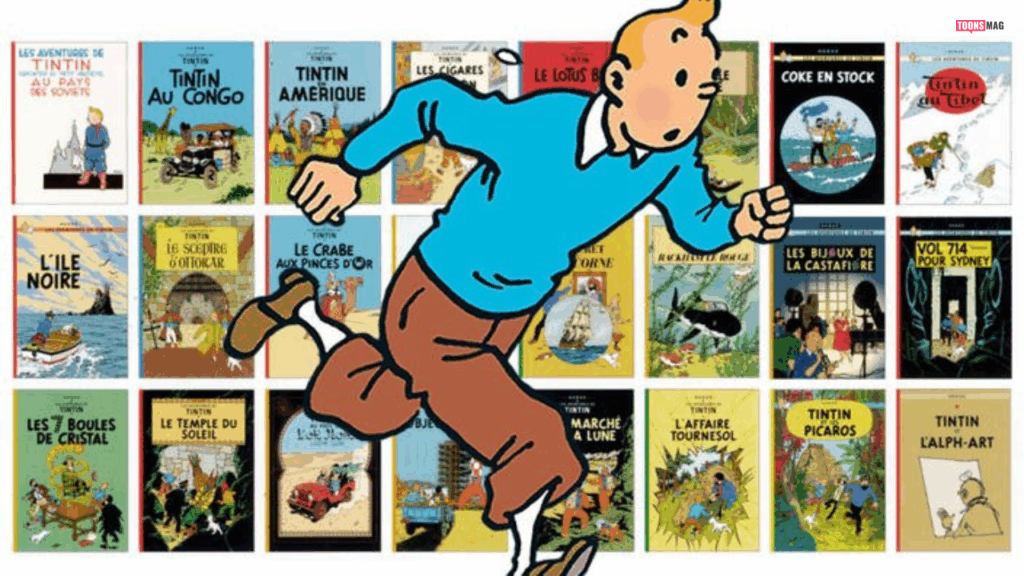
Captain Haddock is widely regarded as one of the most realistic and compelling characters in comic literature. His multifaceted personality—ranging from riotously humorous to strikingly heroic, riddled with flaws yet imbued with deep loyalty—has allowed him to resonate across generations of readers. In many ways, Haddock evolved into the emotional heartbeat of The Adventures of Tintin, embodying the type of moral ambiguity, personal growth, and catharsis that Tintin himself, as a near-perfect hero, rarely encountered. His imperfections made him relatable, while his acts of bravery and kindness elevated him to the level of a true literary icon.
The character’s presence has transcended the pages of the comic. Haddock has appeared in numerous stage adaptations and radio plays, and has been reimagined in several animated television series across Europe and North America. His most prominent cinematic portrayal came in the 2011 motion-capture blockbuster The Adventures of Tintin: The Secret of the Unicorn, directed by Steven Spielberg and produced by Peter Jackson, where he was brought to life with nuance and energy by Andy Serkis.
The film explored Haddock’s inner turmoil and past traumas, tracing his journey from a drunken wanderer to a man reclaiming his legacy. This version of Haddock added even greater psychological complexity to the character, emphasizing the emotional undercurrents that had always existed beneath the surface.
In addition to screen portrayals, Captain Haddock has become a beloved icon of European popular culture. Statues of Haddock can be found in cities like Brussels and Angoulême, where murals of scenes from The Adventures of Tintin pay homage to his memorable moments. Fan conventions regularly feature tributes to Haddock’s character, including voice impersonation contests, cosplay, and curated exhibits of original Hergé artwork featuring the Captain in action. His unforgettable expressions—particularly “Billions of blue blistering barnacles!” and “Ten thousand thundering typhoons!”—have been widely quoted, parodied, and referenced in media, advertising, and political cartoons, demonstrating his continued relevance in contemporary discourse.
Beyond his visual and cultural legacy, Haddock remains an inspiration for writers and artists exploring themes of redemption, loyalty, and emotional resilience. His character arc—from shame and addiction to loyalty, redemption, and self-discovery—offers a blueprint for character development that has influenced graphic novelists, screenwriters, and storytellers worldwide. Literary scholars often cite Haddock’s evolution as a rare example of genuine transformation within serialized storytelling.
With his thunderous voice, deeply expressive features, trademark sailor’s attire, and ever-present bottle of whisky, Captain Archibald Haddock endures as a towering example of character craftsmanship. Whether he is comically stumbling through an exotic locale or heroically risking his life to save a friend, he remains a timeless emblem of flawed yet redeemable humanity. His journey underscores the belief that true strength lies not in perfection, but in the courage to face one’s demons and stand unwaveringly by those we care about.