

 Sondre Borg

Working as a cartoonist for a newspaper or magazine can be a dream job for many creative professionals. It offers the opportunity to express your ideas through art, influence public opinion, and even entertain while providing social commentary. However, breaking into this field requires a blend of artistic talent, professional savvy, and persistence. In this comprehensive guide, we’ll cover everything you need to know—from building an impressive portfolio to networking and applying for the right positions—to help you land a cartoonist job in today’s competitive media landscape.
1. Develop a Strong Portfolio
1.1 Showcase Your Best Work
Your portfolio is your most important asset. It should demonstrate your versatility and unique style while showcasing a range of work that highlights your skills in storytelling, character design, and humor. Include:
- Editorial Cartoons: Samples that show your ability to comment on current events, politics, or cultural topics.
- Comic Strips and Panels: Works that display narrative flow, humor, and timing.
- Character Studies: Portraits or caricatures that reveal your distinct approach to exaggeration and expression.
- Freelance Projects or Personal Comics: Any work that shows your ability to produce content for publication.
1.2 Digital Portfolio and Website
In 2025, having an online portfolio is essential. Create a professional website using platforms like Squarespace, Wix, or WordPress. Your site should be:
- User-Friendly: Easy navigation with clear sections for different types of work.
- Mobile-Optimized: Ensure your portfolio looks great on all devices.
- Updated Regularly: Add new projects and remove outdated pieces to keep your portfolio fresh and relevant.
1.3 Printed Portfolio
Though digital portfolios are critical, a well-prepared printed portfolio can be useful when attending industry events, interviews, or local meetings with editors and publishers. Make sure your prints are high quality, and consider including a one-page resume with contact information and a short bio.
2. Network Within the Industry
2.1 Attend Industry Conferences and Events
Trade shows, comic conventions, and media events are excellent opportunities to meet editors, fellow cartoonists, and industry insiders. Look for events like:
- Comic-Con International
- National Cartoonists Society Annual Conference
- Local media or journalism events
Networking face-to-face can help you get your foot in the door and learn about unpublished opportunities.
2.2 Join Professional Organizations
Consider joining organizations such as:
- The National Cartoonists Society (NCS)
- The Association of American Editorial Cartoonists (AAEC)These organizations provide resources, job listings, and networking events that are tailored to cartoonists and illustrators.
2.3 Online Communities and Social Media
Social media is a powerful tool for networking in the modern era. Platforms like LinkedIn, Twitter, Instagram, and even specialized forums like Reddit’s r/comics or DeviantArt communities can connect you with peers and professionals. Engage by:
- Sharing Your Work: Post regularly and use relevant hashtags (#EditorialCartoon, #Cartoonist, #ComicArt).
- Commenting and Collaborating: Interact with fellow artists and editors.
- Joining Groups: Participate in industry-specific groups and discussions to stay updated on trends and opportunities.
3. Research Target Publications
3.1 Identify Suitable Newspapers and Magazines
Different publications have different styles and target audiences. Research which newspapers or magazines align with your cartooning style. Consider:
- Editorial Focus: Do they lean toward political commentary, humor, or lifestyle topics?
- Artistic Style: Does your style match their visual tone? Look at current cartoons published in outlets like The New Yorker, The Guardian, or local community papers.
3.2 Study Their Submission Guidelines
Once you’ve identified potential employers, review their submission guidelines carefully. Most publications have specific requirements for:
- Format and Size: Digital files, resolution, and dimensions.
- Style: Some may prefer black-and-white or a particular line quality.
- Deadlines: Understand their publishing schedule and submission timelines.
Following these guidelines exactly can set you apart as a professional who respects the publication’s process.

4. Gain Experience Through Freelance and Internships
4.1 Start with Freelance Gigs
Before landing a full-time role, consider freelancing for newspapers and magazines. Freelance opportunities help you build your byline and gain real-world experience. Use job boards, freelancer websites like Upwork or Fiverr, and direct pitches to local newspapers to get started.
4.2 Internships and Assistant Roles
Internships, even unpaid ones, provide invaluable experience. Look for internships at local newspapers, magazines, or online publications that focus on editorial cartoons. These roles help you:
- Understand the Workflow: Learn the editorial process and deadlines.
- Build Relationships: Establish connections with editors and fellow cartoonists.
- Improve Your Skills: Get feedback on your work in a professional setting.
4.3 Volunteer for Special Projects
Consider offering your services for special projects or charity publications. Volunteering can expand your network, add to your portfolio, and sometimes lead to paid opportunities as your work gains recognition.
5. Crafting the Perfect Application
5.1 Tailor Your Resume and Cover Letter
Your resume should highlight relevant experience, such as freelance projects, previous publication credits, and related skills (illustration, digital art, animation). In your cover letter:
- Showcase Your Passion: Explain why you love cartooning and how your style aligns with the publication.
- Include Links: Provide links to your online portfolio, social media profiles, and any published work.
- Be Concise and Professional: Editors receive many submissions, so keep your application focused and professional.
5.2 Create a Compelling Pitch
Sometimes, a brief, engaging pitch is all it takes to catch an editor’s attention. Describe your concept in a few sentences, highlight what makes your work unique, and suggest how your cartoons can add value to their publication. A strong pitch can set you apart from the competition.
5.3 Follow Up Professionally
After submitting your application, give it some time and then follow up with a polite email. Reiterate your interest in the position, ask if they need any additional materials, and thank them for their time. Persistence, when done respectfully, shows commitment and professionalism.

6. Building a Personal Brand
6.1 Define Your Unique Style
Your artistic style is your signature. Whether you excel at political satire, humorous commentary, or heartfelt narratives, be sure your brand reflects your strengths. A distinctive style helps editors and readers remember your work and recognize it as uniquely yours.
6.2 Create Consistent Online Content
Maintain a consistent online presence by posting regularly on social media, your personal website, or a blog. Share not only finished work but also behind-the-scenes content, sketches, and process videos. This transparency builds trust and engagement with your audience.
6.3 Engage With Your Audience
Encourage feedback and interaction from your followers. Use social media polls, Q&A sessions, or live drawing events to foster a community around your work. An engaged audience can provide a loyal fan base that attracts the attention of publications and potential employers.
7. Leveraging Digital Tools and Platforms
7.1 Utilize Social Media to Showcase Your Work
Social media platforms like Instagram, Twitter, and TikTok are excellent for reaching a broad audience. Use:
- Hashtags: Research and use relevant hashtags (#EditorialCartoon, #Cartoonist, #ComicArt) to increase visibility.
- Stories and Reels: Share short clips of your drawing process or quick sketches to showcase your style.
- Engagement: Respond to comments and collaborate with other artists to expand your reach.
7.2 Portfolio Websites and Online Communities
Platforms such as Behance, Dribbble, and DeviantArt allow you to create a professional online portfolio that is easily accessible to potential employers. These sites also host communities where you can receive feedback and network with other creative professionals.
7.3 Digital Submissions and Email Marketing
Learn how to optimize your digital submissions. Use high-resolution images and PDF portfolios when emailing editors. Additionally, consider building an email list to inform your followers about new projects, publications, or opportunities—keeping your name in the minds of both fans and industry professionals.
8. Continuous Improvement and Skill Development
8.1 Stay Updated on Industry Trends
The world of media is constantly evolving, so it’s crucial to stay updated on the latest trends in cartooning and publishing. Follow industry blogs, subscribe to newsletters, and attend webinars or workshops. Understanding what’s popular can help you tailor your work without compromising your unique voice.
8.2 Invest in Professional Development
Consider taking courses in illustration, digital art, or even journalism. Continued learning not only refines your skills but also expands your knowledge of the industry. Look for online classes on platforms like Skillshare, Udemy, or local art schools.
8.3 Solicit Constructive Criticism
Regularly ask for feedback from peers, mentors, and editors. Constructive criticism is invaluable for growth—it can highlight areas where you need improvement and validate what you’re doing well. Embrace criticism as an opportunity to evolve and adapt your style.

9. Real-World Success Stories
9.1 Case Study: The Journey of a Freelance Editorial Cartoonist
Many successful cartoonists began their careers freelancing for local newspapers and gradually built a portfolio that led to national recognition. They started by submitting cartoons on a regular basis, receiving constructive feedback, and gradually refining their style. Over time, their work caught the attention of larger publications, leading to full-time positions and syndicated cartoon strips.
9.2 Lessons from Established Cartoonists
Veteran cartoonists often stress the importance of persistence and networking. They advise young artists to take every opportunity—even small gigs—as a stepping stone to larger platforms. Building a strong professional reputation, delivering quality work consistently, and staying true to your creative voice are key factors in long-term success.
10. Balancing Artistry with Professionalism
10.1 Time Management and Deadlines
Newspapers and magazines operate on strict deadlines. As a cartoonist, you must learn to manage your time effectively. Develop a workflow that allows you to produce high-quality work quickly without sacrificing creativity. Tools like calendars, project management apps, and setting daily or weekly goals can help you stay on track.
10.2 Handling Rejections and Feedback
Rejection is a natural part of any creative career. Not every submission will be accepted, and that’s okay. Use rejections as learning experiences, and seek feedback when possible. Every “no” brings you closer to a “yes” and provides insight into how you can improve your work or approach.
10.3 Maintaining Your Unique Voice
While it’s important to adapt to industry standards, never lose sight of your unique artistic voice. Your individuality is what makes you stand out in a crowded field. Maintain a balance between following submission guidelines and showcasing the distinctive style that defines your work.
11. The Future of Cartooning in Media
11.1 Evolving Media Landscape
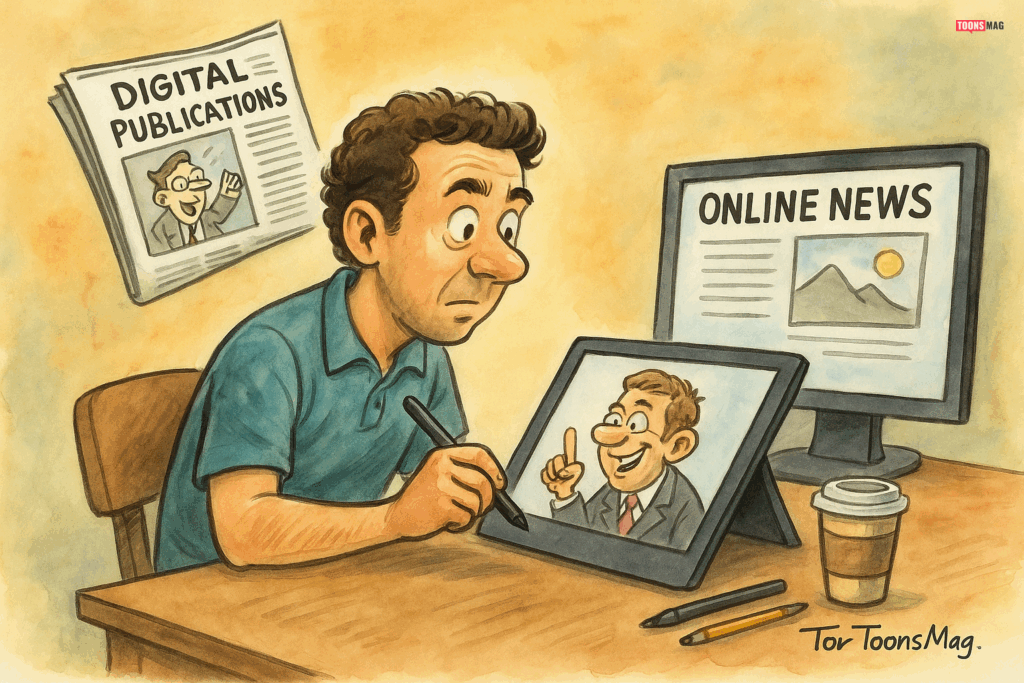
The media industry is rapidly changing, and cartoonists must adapt to new formats and technologies. With the rise of digital publications, online news, and multimedia storytelling, there are more opportunities than ever to reach diverse audiences. Being adaptable and open to new media will help you remain relevant in this evolving landscape.
11.2 Expanding Roles and Platforms
Today’s cartoonists are not confined to print media. Many are exploring roles in animation, digital illustration, and even interactive storytelling. Diversifying your skills can open up additional revenue streams and job opportunities. Whether you’re interested in editorial cartoons, webcomics, or animated shorts, expanding your repertoire can enhance your career prospects.
11.3 Global Opportunities
As the digital era erases geographical boundaries, opportunities for cartoonists are becoming global. International publications, digital news platforms, and online syndication services allow your work to reach a worldwide audience. Embrace these opportunities by networking across borders and showcasing your work on international platforms.
12. Final Thoughts: How to Get a Job as a Cartoonist
Breaking into the newspaper or magazine industry as a cartoonist in 2025 requires a mix of artistic excellence, persistence, and professional savvy. By building a strong portfolio, networking effectively, and leveraging modern digital tools, you can position yourself for success. Remember, every successful cartoonist started somewhere—whether through freelance gigs, internships, or small local publications, each experience contributes to your growth and recognition.
Stay adaptable, keep learning, and don’t be discouraged by setbacks. The world of media is vast, and there’s a place for your unique artistic voice. With dedication and smart strategies, you can turn your passion for cartooning into a rewarding career that not only earns you income but also leaves a lasting impact on audiences around the world.
Which strategy do you find most promising for launching your cartooning career? Share your thoughts or ask questions—your journey is just beginning!
This post was created with our nice and easy submission form. Create your post!