

 Anto Mario

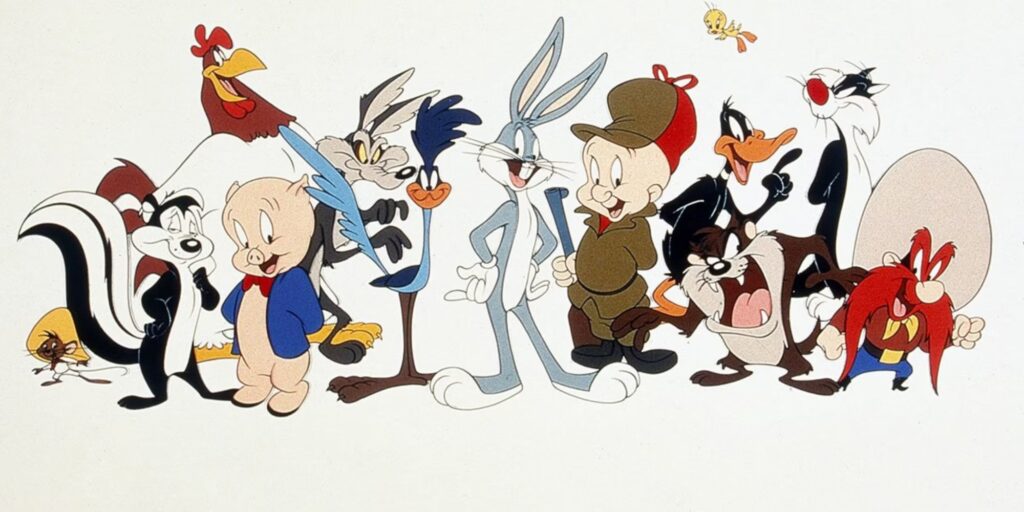
The Beloved Looney Tunes: In the vast history of animation, few franchises have achieved the cultural permanence, creative daring, and intergenerational affection of Looney Tunes. Long after many animated properties have faded into nostalgia, Looney Tunes continues to feel alive—quoted, remixed, studied, and reinvented. Its characters are not merely cartoons; they are archetypes of comedy, rebellion, and human absurdity, wrapped in fur, feathers, and slapstick violence.
From Bugs Bunny’s subversive cool to Daffy Duck’s neurotic ambition, from Tweety’s deceptive innocence to Porky Pig’s vulnerable decency, Looney Tunes created a comic universe that reflected—and mocked—the modern world. These cartoons entertained children, but they were never only for children. They were smart, anarchic, self-aware, and often shockingly adult in their satire.
This article explores Looney Tunes not simply as a cartoon series, but as a creative movement—one that redefined animation, comedy, and American popular culture over nearly a century.
1. The Birth of Looney Tunes (1929–1935): Warner Bros. Enters Animation
The Industry Context
By the late 1920s, animation was emerging as a viable entertainment industry. Walt Disney had found success with Steamboat Willie (1928), and studios across Hollywood sought to replicate that triumph. Warner Bros., then best known for live-action films and sound technology, entered animation largely as a musical experiment.
Bosko: The First Star
The earliest Looney Tunes star was Bosko, created by Hugh Harman and Rudolf Ising. Debuting in Bosko, the Talk-Ink Kid (1929), Bosko embodied early animation’s rubber-hose style and musical exuberance.
Bosko mattered because:
- He demonstrated synchronized sound animation
- He gave Warner Bros. a foothold in cartoons
- He established the studio’s emphasis on rhythm and chaos
However, Bosko was also a transitional figure. When Harman and Ising left Warner Bros. in 1933, Bosko went with them—forcing the studio to reinvent itself creatively.
2. Merrie Melodies and the Search for Identity
Music as a Differentiator
Warner Bros. launched Merrie Melodies to showcase songs from its music catalog. Unlike Disney’s sentimental tone, Warner cartoons leaned toward irreverence and parody, foreshadowing the studio’s later identity.
Early Experiments
Characters like Foxy, Piggy, and various one-off figures appeared during this era. Though mostly forgotten today, these cartoons served as laboratories of style, allowing animators to experiment with timing, character elasticity, and surreal humor.
3. The Revolution of the 1930s–40s: The Golden Age Begins
The true transformation of Looney Tunes occurred when a group of visionary directors redefined what animation could be.
Tex Avery: The Architect of Chaos
No figure shaped Looney Tunes more than Tex Avery. Rejecting Disney’s realism, Avery pushed animation toward:
- Extreme exaggeration
- Fourth-wall breaks
- Absurd logic
- Self-aware humor
Under Avery, cartoons no longer pretended to be “real.” They were proudly cartoons.
4. Bugs Bunny: The Anti-Hero America Needed
Creation and Debut
Bugs Bunny officially debuted in A Wild Hare (1940), directed by Tex Avery. Voiced by Mel Blanc, Bugs emerged fully formed: confident, sarcastic, and unflappable.
Why Bugs Was Revolutionary
Bugs Bunny inverted traditional cartoon dynamics:
- He was reactive, not aggressive
- He only fought when provoked
- He defeated authority figures through wit, not force
Bugs represented a distinctly American archetype:
- The clever underdog
- The immigrant trickster
- The calm individualist resisting bullies
During World War II, Bugs became a symbol of American confidence and resilience, even appearing in propaganda shorts and military insignia.
5. Daffy Duck: The Ego Unleashed
From Screwball to Tragic Clown
Daffy Duck debuted in Porky’s Duck Hunt (1937) as a pure agent of chaos. Over time, particularly under Chuck Jones, Daffy evolved into something more complex: a character driven by envy, insecurity, and ambition.
Bugs vs. Daffy: Comedy as Psychology
The pairing of Bugs and Daffy became one of animation’s greatest comic duos. Where Bugs is effortlessly cool, Daffy tries—and fails—to be great.
This dynamic introduced:
- Psychological comedy
- Satire of celebrity culture
- Commentary on jealousy and self-destruction
Daffy is funny because he is painfully human.
6. Porky Pig: The Emotional Anchor of Looney Tunes
The First True Star
Long before Bugs Bunny became the face of Warner Bros. animation, Porky Pig was the studio’s first genuine breakout star. Debuting in 1935 in I Haven’t Got a Hat, Porky emerged at a time when animated characters were often loud, aggressive, and relentlessly gag-driven. Porky was different.
He was shy.
He was awkward.
He was gentle.
In an industry still defining what animated personalities could be, Porky offered emotional accessibility. Audiences didn’t just laugh at him—they recognized him. His early shorts were not built around domination or chaos, but around human-scale embarrassment, effort, and perseverance.
Porky’s popularity throughout the mid-to-late 1930s effectively saved Warner Bros.’ cartoon unit, giving the studio a reliable star while its directors experimented with tone, timing, and character psychology.
Vulnerability as Strength
Porky Pig’s defining feature—his stutter—has often been discussed cautiously, and rightly so. Yet for its era, Porky’s speech impediment was treated with an unusual degree of empathy rather than cruelty. He was not mocked for it by the cartoon itself; instead, the stutter became part of his rhythm, his humanity.
Porky was:
- The audience surrogate — reacting to absurdity rather than generating it
- The moral center — often trying to do the “right thing” amid chaos
- The emotional ballast — grounding wild characters like Daffy Duck
As Daffy became more manic and Bugs more dominant, Porky increasingly played the role of the straight man with a soul. His calm presence made the insanity around him funnier—and more meaningful.
“That’s All, Folks!”: A Perfect Goodbye
Porky’s iconic sign-off, “That’s all, folks!”, is one of the most recognizable phrases in media history. More than a catchphrase, it functions as a gentle curtain call—an acknowledgment of performance, a warm farewell rather than a punchline.
In a universe defined by chaos, Porky provided closure.
7. Tweety and Sylvester: Predator, Prey, and Power Reversed
A Subversive Dynamic
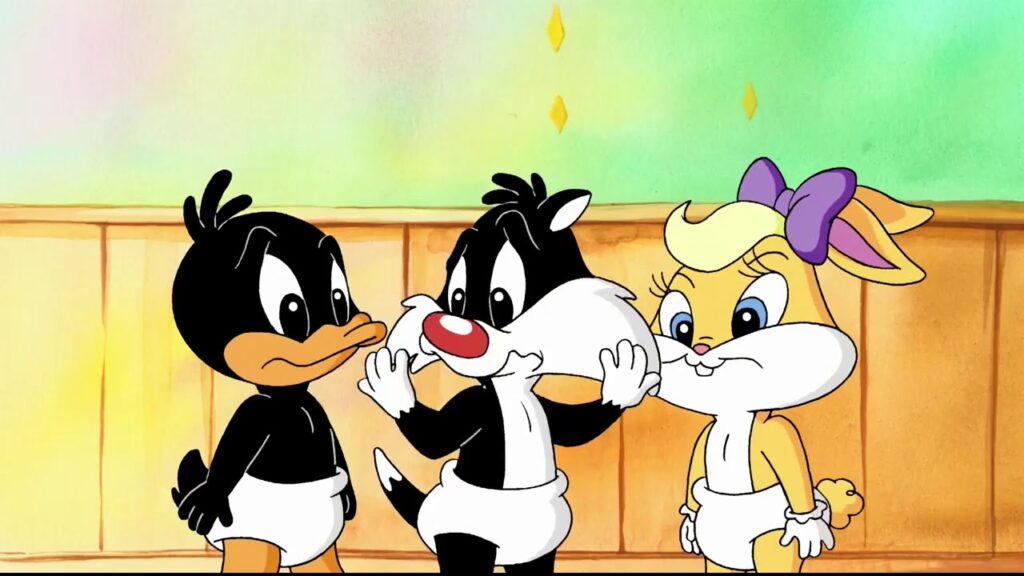
On the surface, Tweety and Sylvester appear to embody a classic cartoon trope: cat hunts bird, bird escapes. But this pairing is far more psychologically complex—and quietly subversive.
Introduced in the 1940s and refined under Chuck Jones, the duo reverses expectations:
- The predator is incompetent
- The prey is manipulative
- Innocence becomes a weapon
Tweety’s baby talk and apparent fragility mask sharp intelligence and ruthless situational awareness. Sylvester, despite physical strength and predatory instinct, is undone by ego, obsession, and impatience.
This inversion turns the chase into a power study, not a slapstick routine.
Chuck Jones at His Psychological Peak
Under Chuck Jones, Tweety and Sylvester cartoons evolved into near-meditations on obsession. Sylvester is not just chasing Tweety—he is defined by the chase. Every failure deepens his fixation, creating a tragicomic loop of effort and humiliation.
Jones emphasized:
- Facial acting over speed
- Timing over noise
- Repetition as character development
This approach earned multiple Academy Awards and elevated the pair beyond simple gag machines into enduring symbols of self-sabotage and persistence.

8. The Supporting Cast: Controlled Chaos as Philosophy
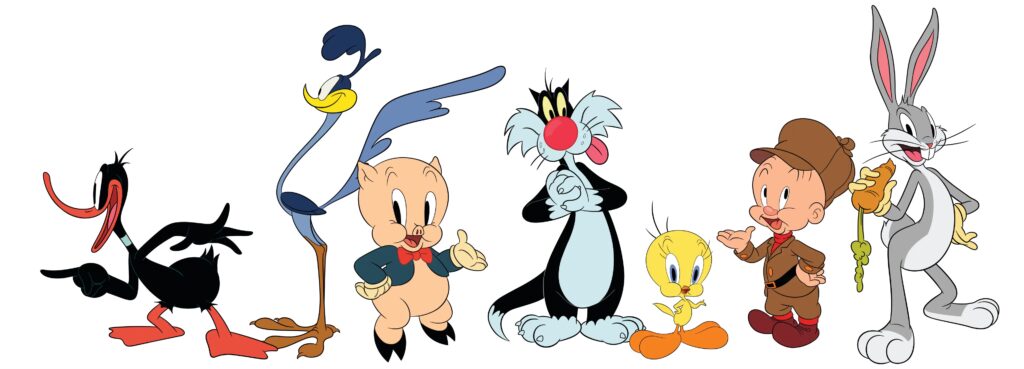
Looney Tunes did not rely on a single star system. Instead, it thrived on a diverse ensemble, each character representing a distinct comedic worldview.
Elmer Fudd: Authority Rendered Harmless
Elmer Fudd embodies the illusion of authority. He carries weapons, claims expertise, and insists on control—yet is perpetually outmatched. Elmer represents institutions that look powerful but lack adaptability.
Yosemite Sam: Rage Without Control
If Elmer is passive authority, Yosemite Sam is pure, unfiltered aggression. His rage is explosive, theatrical, and ultimately self-defeating. Sam parodies toxic masculinity long before the term existed—anger as identity, volume as power.
Road Runner & Wile E. Coyote: Existential Comedy
Perhaps the most philosophically rich pairing in animation history, Road Runner and Wile E. Coyote explore:
- Futility
- Obsession
- The cruelty of hope
With strict “rules” governing their universe, these cartoons resemble absurdist theater, where effort does not guarantee progress and intelligence does not ensure success.
Foghorn Leghorn: Bluster and Satire
Foghorn Leghorn satirizes loud confidence, regional stereotypes, and empty rhetoric. He talks endlessly, listens rarely, and mistakes verbosity for wisdom—a caricature of performative authority.
Each supporting character was not random chaos, but controlled chaos, refined over years by directors who understood comedy as philosophy.
9. The Animation Geniuses Behind the Madness
The Termite Terrace Collective
The creative engine behind Looney Tunes was Termite Terrace, a small, unassuming building that housed some of the greatest animation minds in history:
- Tex Avery – anarchic rule-breaker
- Chuck Jones – character psychologist
- Bob Clampett – elastic surrealist
- Friz Freleng – musical timing master
- Frank Tashlin – cinematic satirist
These artists were:
- Fiercely competitive
- Constantly experimenting
- Uninterested in sentimentality
They rejected Disney’s emotional softness, choosing speed, satire, and self-awareness.
Rivalry as Creative Fuel
Rather than collaboration, rivalry drove innovation. Directors tried to outdo one another in timing, exaggeration, and wit. This environment produced cartoons that felt alive—dangerous even.
Looney Tunes weren’t designed to comfort. They were designed to surprise.
10. Looney Tunes as Sharp Social Satire
Looney Tunes cartoons frequently engaged with real-world issues, often more directly than contemporary “serious” animation.
They tackled:
- Politics and propaganda
- War and nationalism
- Hollywood vanity
- Class hierarchies
During World War II, Looney Tunes produced some of the most aggressive anti-fascist satire in American media, openly mocking Nazis and dictators without euphemism.
They also parodied:
- Celebrities
- Studio executives
- Cultural fads
This made Looney Tunes one of the most media-literate animated series ever produced—aware not just of the world, but of its own role within it.
11. Decline, Revival, and Reinvention (1960s–1990s)
The End of the Golden Age
By the 1960s, the classic Looney Tunes era ended:
- Original directors departed
- Budgets shrank
- Television replaced theatrical shorts
The result was a noticeable decline in animation quality and narrative sharpness. However, the characters themselves endured, sustained by reruns and cultural memory.
Space Jam and Pop Culture Resurrection
Space Jam (1996) marked a significant revival. By combining Looney Tunes with basketball icon Michael Jordan, the film:
- Reintroduced characters to younger audiences
- Blended nostalgia with contemporary culture
- Positioned Looney Tunes as pop icons rather than relics
While critically mixed, Space Jam succeeded culturally.
12. Looney Tunes in the 21st Century
Recent revivals—including The Looney Tunes Show, New Looney Tunes, and Looney Tunes Cartoons (HBO Max)—have consciously returned to core principles:
- Short-form storytelling
- Visual exaggeration
- Character-driven comedy
Modern creators have resisted over-modernization, instead embracing the franchise’s timeless absurdity while refining pacing and design.
Looney Tunes remain adaptable because they were never tied to realism—only to truth through exaggeration.
13. Why Looney Tunes Endure
Looney Tunes have survived nearly a century because they strike a rare balance:
- Comedy without cruelty
- Satire without cynicism
- Chaos with intelligence
They trust the audience—including children—to understand irony, contradiction, and subtext.
Looney Tunes do not lecture.
They provoke.
They mock power.
They reward attention.
In an era of overstimulation and shallow humor, Looney Tunes endure because they remind us that great comedy is crafted, not loud—and that madness, when controlled, can reveal profound truths.
The Beloved Looney Tunes: Animated Anarchy That Never Ages
Looney Tunes are not relics. They are living artifacts of comic freedom, reminding us that animation can be anarchic, political, intelligent, and joyful all at once.
As long as there are rules to break, bullies to mock, and laughter to chase, Bugs Bunny will still be asking, “What’s up, Doc?”—and the answer will always be: everything.
This post was created with our nice and easy submission form. Create your post!







6 Comments