

 Della Holman

Will Elder (born Wolf William Eisenberg; September 22, 1921 – May 15, 2008) was an American illustrator, comic book artist, and satirist whose energetic, gag-filled cartoon style helped define the early success of Mad magazine in 1952. Known for his unmatched ability to mimic artistic styles and pack every panel with visual humor, Elder left an indelible mark on comics, satire, and pop culture.
Playboy founder Hugh Hefner described him as “a zany, and a lovable one,” while longtime Mad contributor Al Jaffee called him “absolutely brilliant… the star from the beginning.” In 2003, Elder was inducted into the Comic Book Hall of Fame, and in 2019, he was posthumously honored in the Harvey Awards Hall of Fame.
Infobox: Will Elder
| Born | Wolf William Eisenberg September 22, 1921 Bronx, New York, U.S. |
| Died | May 15, 2008 (aged 86) Rockleigh, New Jersey, U.S. |
| Nationality | American |
| Occupation | Illustrator, Comic Book Artist, Satirist |
| Known for | Mad magazine, “Chicken fat” humor, Little Annie Fanny |
| Notable works | Mad, Panic, Goodman Beaver, Little Annie Fanny |
| Awards | Inkpot Award (2000), Comic Book Hall of Fame (2003), Harvey Awards Hall of Fame (2019) |
| Military service | U.S. Army, 668th Engineer Company (Topographical), WWII |
| Collaborators | Harvey Kurtzman, John Severin, Al Jaffee, Jack Davis, Russ Heath, Marie Severin |
| Genres | Satire, parody, comics, magazine illustration |
Early Life and Education
Will Elder was born Wolf William Eisenberg in the Bronx, New York, on September 22, 1921, and was affectionately nicknamed “Wolfie” during his youth. Growing up in a poor neighborhood, Elder later joked, “The people who had garbage were rich; they had something to throw out.”
He attended the High School of Music and Art in New York City, where he met future Mad luminaries Harvey Kurtzman, John Severin, Al Jaffee, and Al Feldstein. Afterward, he continued formal art training at the Academy of Design in New York, grounding his exuberant cartooning in solid draftsmanship and life drawing.
During World War II, Elder served in the 668th Engineer Company (Topographical) of the U.S. First Army, helping to create maps ahead of the D-Day invasion. Accounts note his presence during the Normandy landings and later campaigns, including the liberation of Cologne. After returning from service, he changed his name to Will Elder.
Early Career in Comics
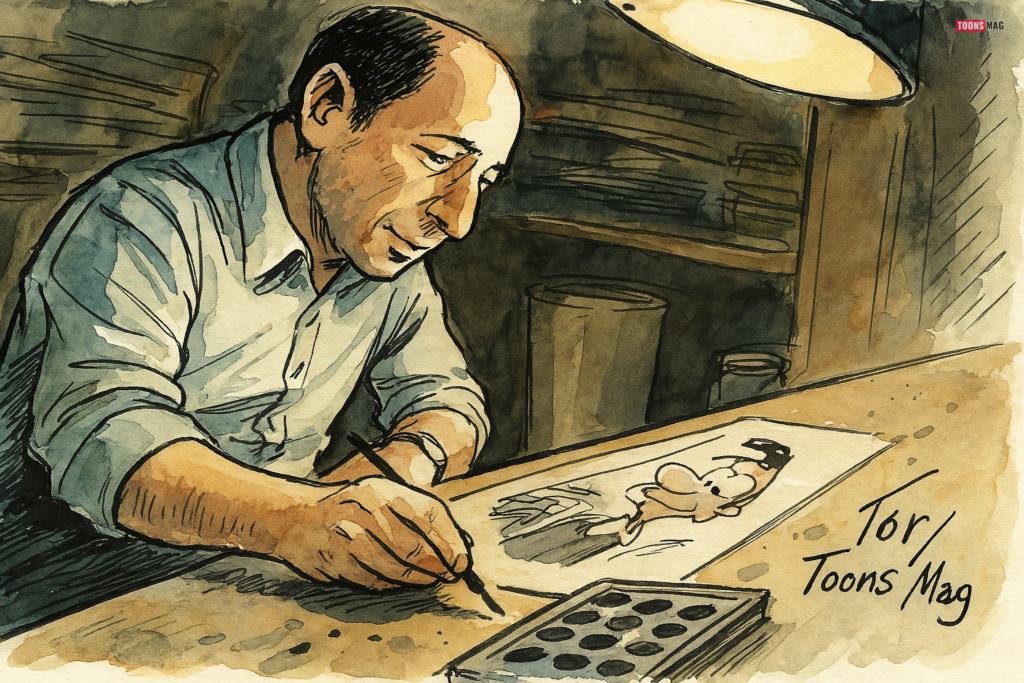
In the late 1940s, Elder teamed with his former classmates Harvey Kurtzman and Charles Stern to form the Charles William Harvey Studio, an outfit that combined illustration, lettering, and full comic book production under one roof. They produced work for Prize Comics, including humor features, romance stories, and war tales, as well as assignments for other publishers.
At EC Comics, Elder often inked John Severin’s pencils for titles like Weird Fantasy, Two-Fisted Tales, and Frontline Combat, bringing a crisp line and added visual wit to even the most straightforward adventure or science fiction scripts. His collaboration with Severin was praised for balancing Severin’s disciplined draftsmanship with Elder’s knack for subtle background embellishments, hinting at the “chicken fat” style that would later define his Mad work.
Mad Magazine and the Birth of “Chicken Fat” Humor
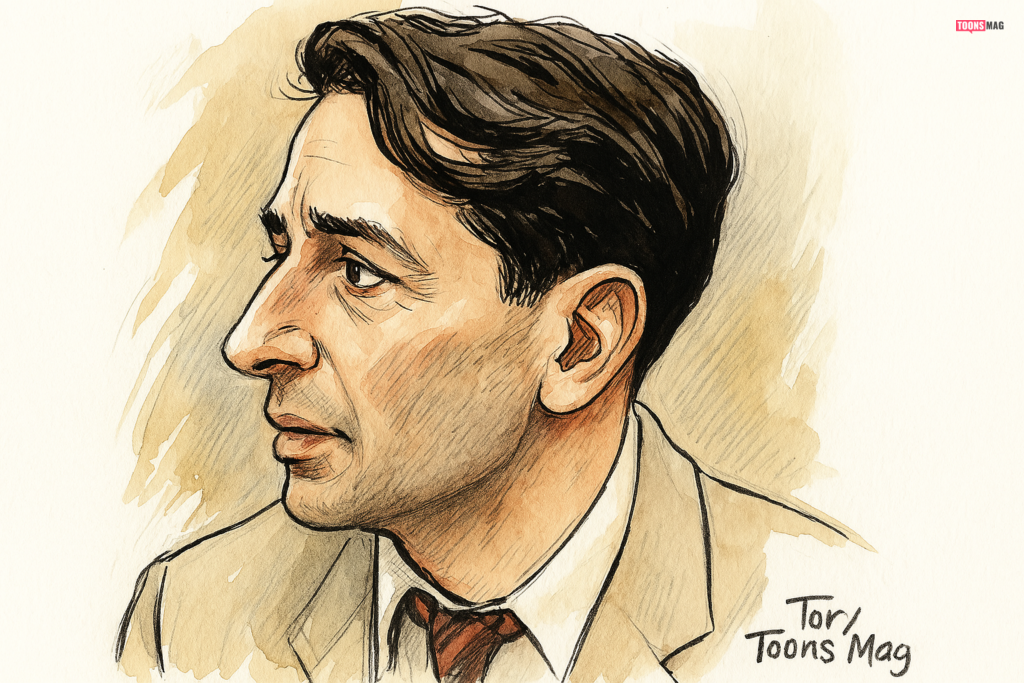
When Harvey Kurtzman launched Mad in 1952, Elder’s first contribution, “Ganefs!”, appeared in the debut issue, but it was the second issue’s “Mole!”—a parody of a Dick Tracy villain—that made him a standout. Elder’s style quickly became synonymous with the magazine: hyper-detailed backgrounds filled with unrelated sight gags, known as “chicken fat”—humor that didn’t advance the plot but added irresistible flavor.
His parodies, such as “Mickey Rodent” (Mickey Mouse), “Starchie” (Archie Comics), “Bringing Back Father!” (Bringing Up Father), and “Gasoline Valley!” (Gasoline Alley), were masterclasses in artistic mimicry. Elder explained:
“If I could fool people into thinking it was the real thing, and then reveal it wasn’t, that surprise was funny in itself.”
Notable MAD pieces often cited for Elder’s approach include the restaurant-skewering “Restaurant!” (backgrounds overflowing with brand parodies and visual puns) and holiday send-ups in Panic, where the irreverence of his imagery drew both laughs and controversy.
Sense of Humor and Pranks
Elder was known for his lifelong pranking. From projecting fake silhouettes of a knife-wielding attacker onto windows as a child to seasonally repainting a cheap deer painting for laughs, he delighted in mischief. Friends recalled his morbid humor, such as sending his wife a slaughterhouse heart for Valentine’s Day.
Hallmarks of Elder’s humor
- Deadpan incongruity: elegant draftsmanship undercut by absurd, low-brow gags.
- Layered sight jokes that reward rereading (signage, tiny characters, wordplay, and brand parodies).
- Fourth-wall nudges: marginal figures waving at the reader or “commenting” on the action.
- Anachronisms tossed into period scenes to heighten satirical bite.
Beyond Mad: Goodman Beaver and Little Annie Fanny
After leaving Mad in 1957, Elder reunited with Kurtzman on short-lived humor magazines like Trump, Humbug, and Help!. Together they created Goodman Beaver, a naïve character whose misadventures included a controversial parody of Archie Comics—prompting a lawsuit.
Hugh Hefner, however, was impressed. He commissioned Elder and Kurtzman to create Little Annie Fanny for Playboy (1962–1988). The lavishly illustrated strip ran for 107 episodes, blending satire, eroticism, and Elder’s trademark visual density.
How Elder & Kurtzman built a strip
- Kurtzman drafted tight storyboards with pacing beats and gag placements.
- Elder expanded layouts, adding sprawling background comedy and character business.
- Final art was rendered with polished, fully painted finishes to match Playboy’s upscale look.
Recurring themes and targets
- Media, advertising, and consumerism’s empty promises.
- Hypocrisy in politics and polite society.
- Sexual mores and the culture wars of the 1960s–80s.
Regular collaborators on Little Annie Fanny
- Jack Davis — character acting, action/comedic staging.
- Russ Heath — figure drawing, technical polish.
- Al Jaffee — gags and problem‑solving ingenuity.

Later Work and Legacy
Elder’s career also spanned advertising art, caricatures, and illustration. His work was celebrated in the retrospective Will Elder: The Mad Playboy of Art (Fantagraphics, 2003) and Chicken Fat (Fantagraphics, 2006). In 2009, a complete boxed set of Humbug reintroduced the short-lived but influential magazine to new readers.
He passed away on May 15, 2008, in Rockleigh, New Jersey, from complications of Parkinson’s disease.
Legacy in brief
- Cemented the vocabulary of modern comics parody through high-fidelity stylistic mimicry.
- Popularized gag-dense backgrounds that later cartoonists and animators adopted.
- Modeled a collaborative workflow in which a writer–director (Kurtzman) partners with a virtuoso visual improviser (Elder).
Awards and Recognition
- Inkpot Award – 2000
- Comic Book Hall of Fame – 2003
- Harvey Awards Hall of Fame – 2019 (posthumous)
Additional honors & retrospectives
- Numerous museum and gallery showings of Mad-era pages and Little Annie Fanny art.
- Anthology features and career profiles in major comics-history publications.
Reception & Critical Appraisal
- Hugh Hefner: “a zany, and a lovable one.”
- Al Jaffee: “absolutely brilliant… the star from the beginning.”
- Tom Spurgeon: called Elder “an amazing artist, a sneaky spot‑holder on the top 20 of the 20th century,” underscoring his canonical status among comics historians.
- Scholars often place Elder alongside Jack Davis and Wally Wood as core architects of EC‑era satire, with Elder distinguished by precision mimicry and background density.
Influence on Comics and Pop Culture
Will Elder’s humor, visual chaos, and artistic mimicry influenced generations of cartoonists, animators, and filmmakers. Terry Gilliam of Monty Python praised his unmatched attention to detail, while Mad cartoonist Evan Dorkin summed up his artistry:
“If God is in the details, Will Elder channeled God.”
His gag-dense page design and ribboning background action echo through later satirical comics and contemporary animated comedy, where layered reread value and blink‑and‑you‑miss‑it jokes have become a house style. Critics have also noted cinematic parallels: the way background business can overtake the main action in Louis Malle’s Zazie dans le Métro (1960) recalls Elder’s MAD-era set pieces. Within Mad itself, Elder’s approach both complements and prefigures the later marginal-gag tradition associated with Sergio Aragonés, showing how “edge-of-panel” humor became a defining feature of the magazine’s voice.
Collaborators & Creative Network
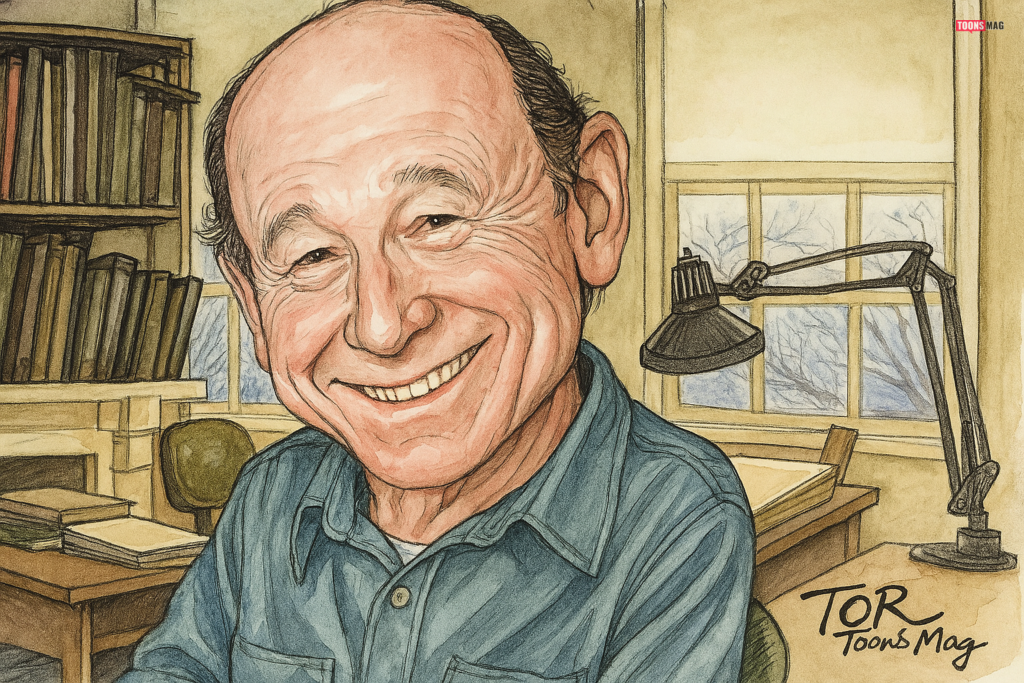
- Harvey Kurtzman — writer–editor and lifelong creative partner.
- John Severin — penciler, frequent EC collaborator.
- Al Jaffee, Jack Davis, Russ Heath — key allies on Little Annie Fanny and beyond.
- Marie Severin — renowned EC colorist whose sensibility shaped the final look of many stories.
- Jim Warren — publisher of Help! who backed the Goodman Beaver run.
- Hugh Hefner — patron who greenlit Little Annie Fanny at Playboy.
Personal Life & Working Habits
- Lived and worked in the New York City area for most of his life; later years in Rockleigh, New Jersey.
- Maintained meticulous reference scrapbooks and clip files (advertising, signage, product labels) to seed background jokes.
- Workflow often progressed from tight thumbnails by Kurtzman to Elder’s expanded layouts, then finished inks/paints with added micro‑gags.
- Known for a studio culture of playful pranks and for long friendships with Mad alumni that lasted decades.
Artistic Style & Techniques: The Anatomy of “Chicken Fat”
- Hyper-density: Panels packed with micro-gags, signage, brand puns, and visual echoes.
- Chameleonic line: Seamless pastiche of other artists’ styles for sharper satire.
- Elastic anatomy: Exaggerated poses and rubbery expressions that heighten punchlines.
- Background narratives: Secondary action threads that play counterpoint to the main gag.
- Typography as comedy: Lettered asides, labels, and mock ads functioning as jokes.
- Painted finishes: On Little Annie Fanny, Elder’s teams often used opaque watercolor (gouache) and other illustration media for a lush, magazine-ready sheen.
“That’s what chicken fat does… it advances the flavor of the soup—and too much chicken fat will kill you!” — Elder, on packing panels with extra jokes
Case Study: “Restaurant!” — How the Background Becomes the Joke
A quintessential Elder set piece, this MAD feature layers competing background gags that build a second, parallel comedy track: a Bufferin parody on the wall, hieroglyphics tucked into the décor, a mop twirled like spaghetti, the RCA Victor dog peering from a corner, a toddler chewing plates, and a coat rack bristling with oddities (from a Viking helmet to deer antlers). The center action reads cleanly, but the eye keeps drifting to the margins—Elder’s trademark rhythm of discovery.
Working Methods & Materials (MAD vs. Playboy)
- Board & line: Bristol board; dip pens and sable brushes with india ink; liberal use of opaque white for corrections and highlights.
- Gag deployment: Marginal notes and overlays to place “chicken fat” without clouding the main read.
- Color & finish: For Little Annie Fanny, painted finishes in gouache (and occasional airbrush) delivered a glossy magazine look consistent with Playboy’s aesthetic.
Key Parodies & Notable Pieces (Selection)
- “Mole!” — the obsessive tunneler whose catch-cry “Dig! Dig!” became a touchstone.
- “Mickey Rodent!” — a Disney send-up that spotlights Elder’s mimicry chops.
- “Starchie!” — a sharp-edged take on teen-angel Americana.
- “Bringing Back Father!” — riffs on classic newspaper strip stylings.
- “Gasoline Valley!” — affectionate but pointed homage to Gasoline Alley.
- “Restaurant!” — a tour-de-force of background business and brand jokes.
- “’Twas the Night Before Christmas” (in Panic) — irreverence that sparked censorship.
Controversies & Censorship
- Panic bans: Elder’s holiday parody contributed to Panic being barred from sale in Massachusetts; distributor staffers Lyle Stuart and Shirley Norris were famously arrested during the uproar.
- Archie Comics lawsuit: The Goodman Beaver riff on Riverdale archetypes triggered legal pushback; a settlement transferred the story’s copyright to Archie Comics. Years later, after the copyright lapsed, the original “Goodman Beaver Goes Playboy!” was reprinted for scholarly access, underscoring its historic importance.
Timeline
- 1921: Born in the Bronx, New York.
- 1940s: Wartime service in topographic engineering; postwar return to New York art.
- 1948–1951: Co-founds Charles William Harvey Studio; early comics work for multiple publishers.
- 1952: Debuts in Mad; establishes the “chicken fat” approach.
- 1957: Leaves Mad; launches Trump, Humbug, and Help! with Kurtzman.
- 1962–1988: Little Annie Fanny runs in Playboy (107 episodes).
- 2000: Receives the Inkpot Award.
- 2003: Inducted into the Comic Book Hall of Fame.
- 2008: Dies in Rockleigh, New Jersey.
- 2019: Posthumous induction into the Harvey Awards Hall of Fame.
Publications & Where to Start
- Will Elder: The Mad Playboy of Art — career-spanning retrospective.
- Chicken Fat — sketches, doodles, and unpublished nuggets of Elder-iana.
- Playboy’s Little Annie Fanny (Vols. 1–2) — the definitive collection of the Playboy strips.
- Humbug (boxed collection) — a vital window into Elder & Kurtzman’s post-Mad satire.
- The Comics Journal #262 — includes the historically significant “Goodman Beaver Goes Playboy!” after lapse of copyright.
Archives, Exhibitions & Collections
- Original pages and painted pieces appear in private collections and institutional archives; Elder’s work is a mainstay of museum shows devoted to EC, Mad, and American satire.
- Retrospectives and group exhibitions have showcased Elder’s MAD-era parodies, Goodman Beaver pages, and Little Annie Fanny paintings, providing rare opportunities to study process layers and painted surfaces up close.
Frequently Asked Questions
Why is Will Elder considered so influential?
Because he married technical mastery to maximalist comedy, setting the gold standard for parody and background gags in comics.
What does “chicken fat” mean in comics?
Elder’s term for extra jokes that don’t advance the plot but supercharge flavor and reread value.
Where should a newcomer read Elder?
Start with Mad parodies like “Mole!” and “Mickey Rodent,” then explore Little Annie Fanny and the Fantagraphics retrospectives.
How did he work with Harvey Kurtzman?
Kurtzman mapped pacing and satire; Elder exploded those maps with dense, meticulously finished art.



3 Comments