

 Simon Alexander

The Winnie the Pooh Story: Winnie the Pooh is more than a cuddly bear in a red shirt—he’s an enduring icon of childhood innocence, friendship, and storytelling. From his literary origins in the 1920s to the global media empire he represents today, Winnie the Pooh has captured the hearts of generations. But how much do we really know about this honey-loving bear and his whimsical companions in the Hundred Acre Wood?
This in-depth article explores the origins, evolution, and legacy of Winnie the Pooh through five essential things every fan—or curious reader—should know.
1. Winnie the Pooh Was Inspired by a Real Bear and a Real Boy
The story of Winnie the Pooh began not in the pages of fiction, but in the very real world of post–World War I England.
The Real Winnie
In 1914, a Canadian soldier and veterinarian, Lt. Harry Colebourn, bought a bear cub at a train station in Ontario. He named her Winnie, short for Winnipeg, his hometown. He took Winnie to England as a mascot for his regiment. Eventually, Winnie was donated to the London Zoo, where she became a favorite among visitors—especially one little boy: Christopher Robin Milne.
The Real Christopher Robin
Christopher Robin, the son of author A.A. Milne, often visited the London Zoo and developed a fondness for the bear. Inspired by his son’s affection for Winnie, A.A. Milne began crafting whimsical tales set in the imaginative world of his child’s stuffed animals—Pooh Bear being the most beloved among them.
Pooh’s full name, “Winnie-the-Pooh,” came from a combination of the zoo bear and a swan the family had named “Pooh.”
Takeaway: Winnie the Pooh’s origin is rooted in real relationships—between a bear, a boy, and a father who turned play into literary magic.
2. A.A. Milne Didn’t Originally Intend to Become a Children’s Author
Before becoming known as the creator of Winnie the Pooh, Alan Alexander Milne was a respected playwright, essayist, and humorist writing for adult audiences. He contributed to Punch magazine and was admired for his wit.
The idea to write children’s literature came after World War I, as Milne sought peace and stability. Observing the imaginative world his son Christopher Robin created with his toys in their Ashdown Forest home, Milne decided to document these gentle adventures.
The Milne-Pooh Timeline:
- 1924: When We Were Very Young (a poetry collection featuring an early appearance of Pooh)
- 1926: Winnie-the-Pooh (the first full story collection)
- 1928: The House at Pooh Corner (introduction of Tigger)
- 1927: Now We Are Six (more poems, more Pooh)
What started as a simple project to capture childhood innocence became a literary legacy. Milne didn’t just write for children—he wrote for the child in all of us.
3. E.H. Shepard’s Illustrations Brought the Characters to Life
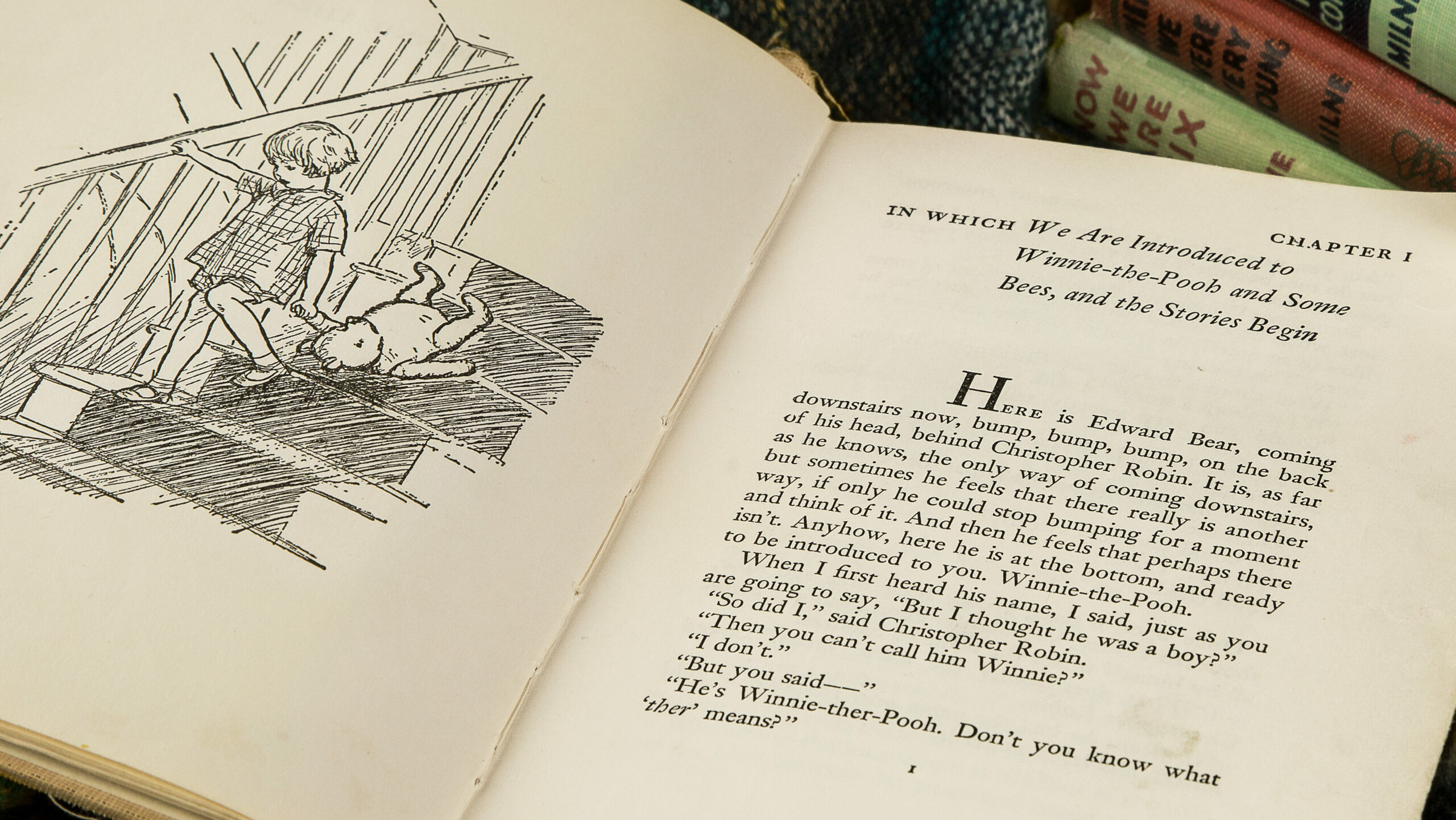
Much of Winnie the Pooh’s charm lies not just in the words, but in the warm, nostalgic illustrations by E.H. Shepard, a talented artist known for his work with Punch magazine and The Wind in the Willows.
Why Shepard’s Art Mattered:
- He based the visuals of Pooh and friends not on Disney-style anthropomorphized animals, but on Christopher Robin’s actual toys.
- His pen-and-ink sketches gave the books a timeless, hand-drawn intimacy.
- The illustrations emphasized the natural beauty of Ashdown Forest, which became the Hundred Acre Wood.
Shepard reportedly walked the same trails that Christopher and his toys did, ensuring visual authenticity and emotional depth.
While later Disney adaptations have made the bear more plush and polished, many fans return to Shepard’s original drawings for their quiet, honest simplicity.
4. The Disney Version Transformed Pooh into a Global Icon
In 1961, the Walt Disney Company acquired the rights to the Winnie the Pooh characters and stories. This marked the beginning of a transformation that would turn the literary bear into a pop-culture superstar.
Major Disney Milestones:
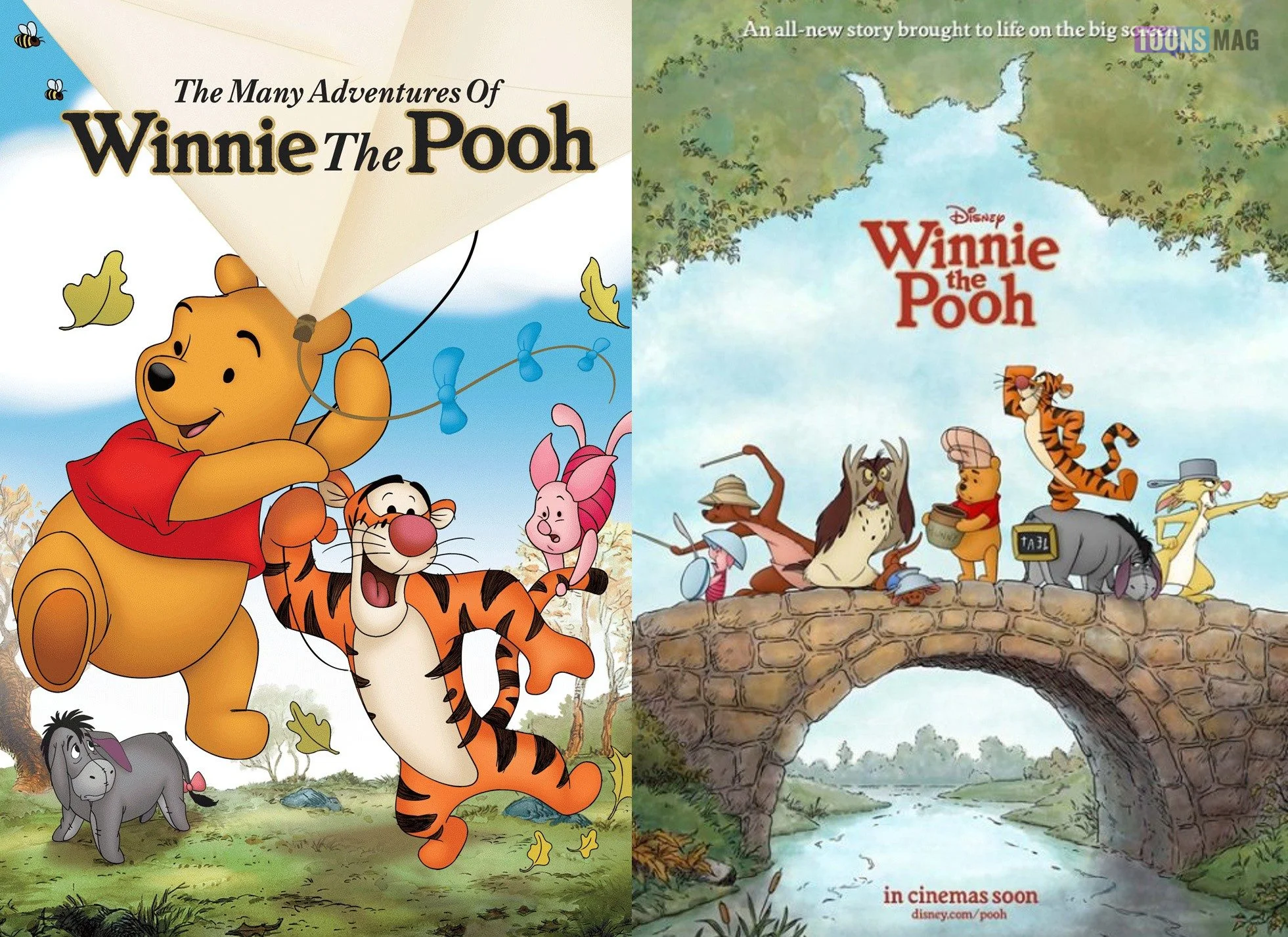
- 1966: Winnie the Pooh and the Honey Tree (first animated featurette)
- 1977: The Many Adventures of Winnie the Pooh (a compilation film)
- 2000s: New TV shows, merchandise, and global licensing
- 2011: Return to traditional animation with Winnie the Pooh
Disney redesigned Pooh, gave him his iconic red shirt (absent from Milne’s books), and added musical numbers. The characters were softened for a wider audience, and new ones like Gopher were introduced.
Controversy:
Some literary purists and the Milne estate criticized Disney’s commercialization, arguing it overshadowed the original tone and depth of the books. However, Disney’s adaptations also introduced Pooh to millions who might never have discovered him otherwise.
Today, Pooh is one of the most lucrative fictional characters of all time, right behind Mickey Mouse.
5. Pooh Bear Is a Philosophical and Emotional Symbol
Though often perceived as a simple children’s character, Winnie the Pooh has been embraced by adults, scholars, and psychologists for his gentle wisdom and emotional depth.
Philosophical Readings:
- Taoism: In The Tao of Pooh by Benjamin Hoff, Pooh is seen as a “Taoist master”—content, present, and instinctual.
- Emotional Intelligence: Each character in the Hundred Acre Wood can be viewed as representing different emotional or psychological states:
- Pooh – Mindful simplicity
- Piglet – Anxiety and loyalty
- Eeyore – Depression and resilience
- Tigger – Hyperactivity and impulsiveness
- Rabbit – Control and perfectionism
- Owl – Intellectualism
- Christopher Robin – The bridge between childhood and adult understanding
Pooh’s stories teach us to accept ourselves and each other. They encourage us to find beauty in slowness, to cherish friendship, and to navigate life’s uncertainties with kindness.
Bonus Insight: The Rights, Lawsuits, and Public Domain
In 2022, the original Winnie-the-Pooh entered the public domain in the United States. However, this only applies to Milne’s original 1926 version—not Disney’s interpretation, red shirt and all. This has sparked creative reinterpretations, including horror film parodies and indie comic spinoffs.
While some see this as exploitation, others welcome it as a chance to reimagine Pooh in fresh, meaningful ways—perhaps returning to Milne’s spirit of quiet, profound storytelling.
The Winnie the Pooh Story: Pooh’s Story Is Our Story
Winnie the Pooh endures not just because he’s cute or marketable, but because he reflects something deep and universal: our need for connection, simplicity, and wonder.
He reminds us that you don’t need to be brave to face the woods. You just need friends. That you don’t have to know the answer. You just have to be present. That the best days are the ones where “nothing” happens—except the kind of nothing that means everything.
So the next time you read a Pooh story, pause. Smile. Listen. And remember: that silly old bear has something wise to say to every one of us.
This post was created with our nice and easy submission form. Create your post!





3 Comments