

 Simon Alexander

Funny Cartoons: In a world filled with deadlines, news cycles, and unpredictable challenges, humor is not just a luxury—it’s a lifeline. Among the many forms that humor takes, few are as universally beloved and timeless as funny cartoons. Whether it’s a quick single-panel gag in a newspaper, a comic strip pinned to your refrigerator, or a meme shared on social media, cartoons deliver bite-sized doses of laughter that cut through complexity and connect us to joy.
Funny cartoons are more than simple jokes. They are reflections of our society, catharsis for our stress, and often, a surprisingly sharp commentary on life’s ironies. From editorial satire to comic strips, from slapstick animation to digital humor, cartoons offer a unique blend of wit, art, and heart.
In this article, we’ll explore the role of funny cartoons in everyday life—how they’ve evolved, why they resonate, and what makes them one of humanity’s most enduring sources of happiness.
1. What Are Funny Cartoons?
Cartoons are typically visual jokes—illustrated humor that conveys a situation, punchline, or social observation in a condensed and often exaggerated form.
There are many kinds of funny cartoons:
- Single-panel cartoons (e.g., The Far Side by Gary Larson)
- Comic strips (e.g., Peanuts, Calvin and Hobbes)
- Editorial cartoons (with political or social commentary)
- Webcomics and memes (modern, digital descendants of traditional cartooning)
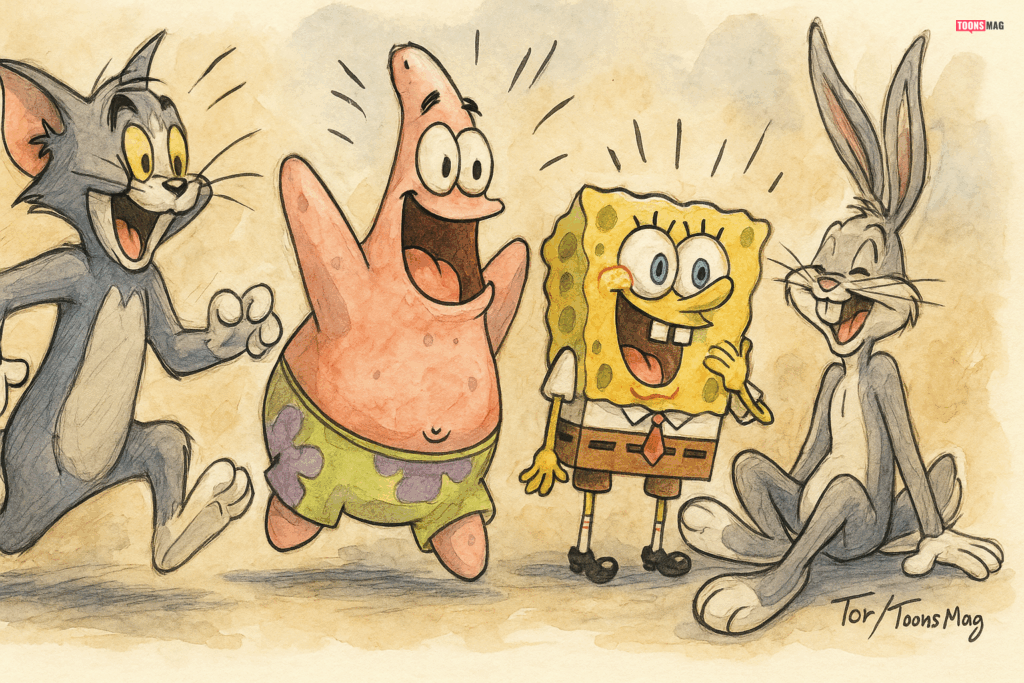
- Animated cartoons (e.g., Tom and Jerry, Looney Tunes, SpongeBob SquarePants)
Each format varies in style and tone, but all aim to evoke one universal reaction: laughter.
2. The Science of Laughter: Why Cartoons Work
Laughter is the body’s natural stress-relief system. It lowers cortisol, boosts endorphins, and strengthens social bonds. But what makes cartoons so effective at triggering this response?
A. Visual Simplicity
Cartoons strip life down to symbols. This simplification makes jokes more accessible and universally relatable.
B. Exaggeration
Cartoonists are masters of exaggeration—oversized heads, wild gestures, explosive reactions. These amplify emotional impact and punchlines.
C. Timing and Surprise
Like stand-up comedy, cartoons rely on timing and twist. A well-drawn pause, an unexpected reversal, or a visual gag can land like a punchline in your brain.
D. Safe Distance
Cartoons allow us to laugh at difficult topics—politics, death, frustration—by creating a buffer between the joke and reality. It’s easier to laugh at a stick figure losing its keys than to rage at ourselves doing the same.

3. Funny Cartoons Throughout Life’s Stages
Humor evolves with us, and so do the cartoons we connect with. Here’s how cartoons bring humor to different life stages:
A. Childhood: Whimsy and Giggles
Cartoons like Tom and Jerry, SpongeBob, and Looney Tunes rely on slapstick, repetition, and absurdity, which appeal directly to children’s imaginations and sense of wonder.
Why it matters:
Funny cartoons help children understand concepts like cause and effect, empathy, and problem-solving—all while laughing.
B. Adolescence: Relatable Rebellion
Teen-focused cartoons and comics (like Diary of a Wimpy Kid, Daria, or The Amazing World of Gumball) use sarcasm, identity crises, and satire to echo adolescent experiences.
Why it matters:
Teens see themselves in the awkwardness and irreverence. Humor becomes a way to cope with growing pains.
C. Adulthood: Satire, Stress, and Sarcasm
Cartoons like Dilbert, The New Yorker cartoons, and Zits often tackle office life, relationships, politics, and parenting. Funny cartoons become mirrors of our daily absurdities.
Why it matters:
Adult life is complicated. Funny cartoons help us laugh at the grind, offering momentary escape and perspective.
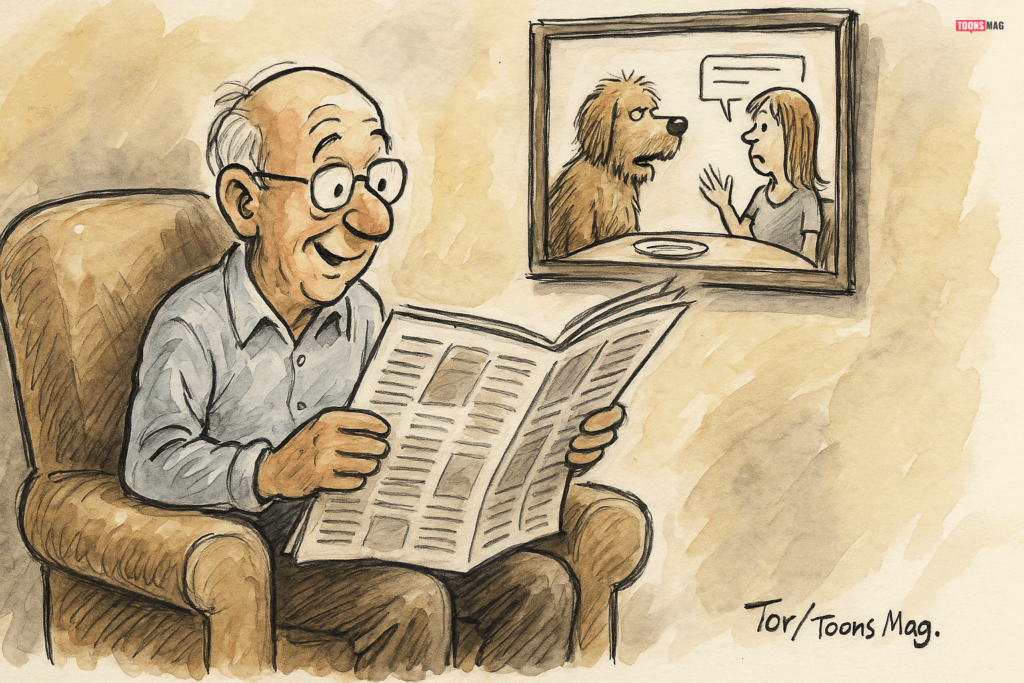
D. Senior Years: Reflection and Nostalgia
Older readers gravitate toward classic strips (Peanuts, Hägar the Horrible) or cartoons about aging and memory (Pickles). These often blend humor with wisdom and warmth.
Why it matters:
In older age, cartoons can provide comic relief from mortality, companionship, and even cognitive stimulation.
4. The Power of Funny Cartoons in Society
A. Social Commentary
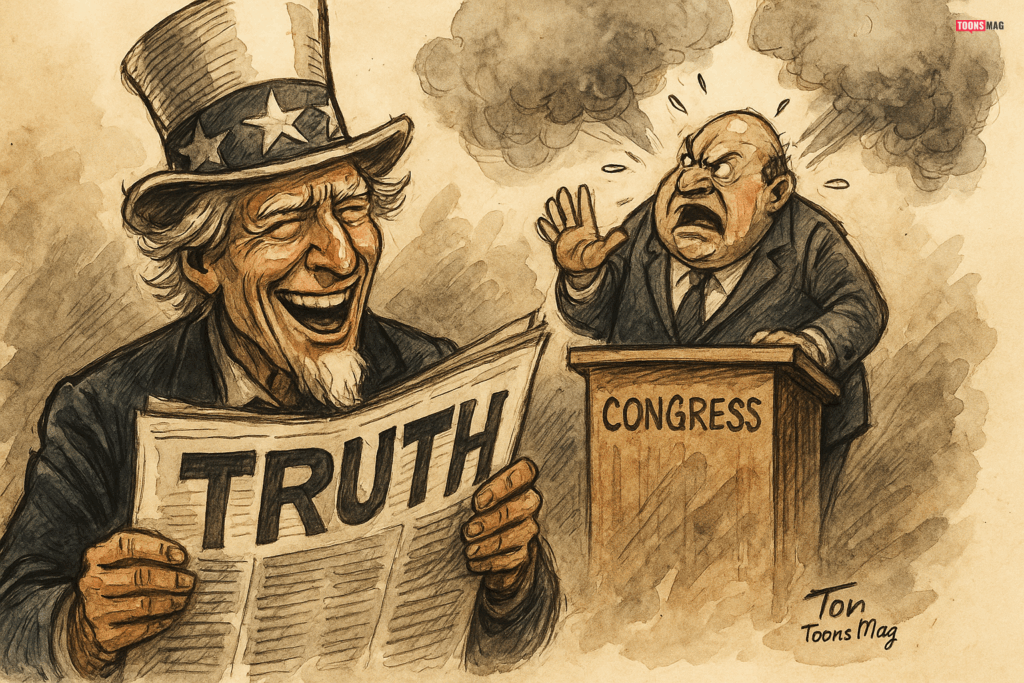
Editorial cartoonists use humor to expose hypocrisy, injustice, and absurdity. A single cartoon can convey a message more powerfully than a thousand words.
From Doonesbury to MAD Magazine to the editorial galleries on Toons Mag, cartoonists help hold power accountable through humor.
B. Universal Language
Humor crosses borders. Visual humor especially doesn’t require translation. Funny cartoons are consumed and loved in nearly every culture, with localized characters and gags.
C. Therapy and Mental Health
Laughter is healing. Psychologists often recommend humor as a coping mechanism. Cartoons about anxiety, depression, or trauma (e.g., Hyperbole and a Half) help readers feel seen and understood, while also laughing.
5. The Anatomy of a Funny Cartoon
What makes a cartoon funny? Here’s the formula:
| Component | Description |
|---|---|
| Setup | The scene or context—ordinary or absurd |
| Characters | Relatable, exaggerated, or symbolic figures |
| Tension | A problem, conflict, or expectation |
| Punchline | The surprise, twist, or release of tension |
| Visual Gag | Added layers of humor in the illustration itself |
Example:
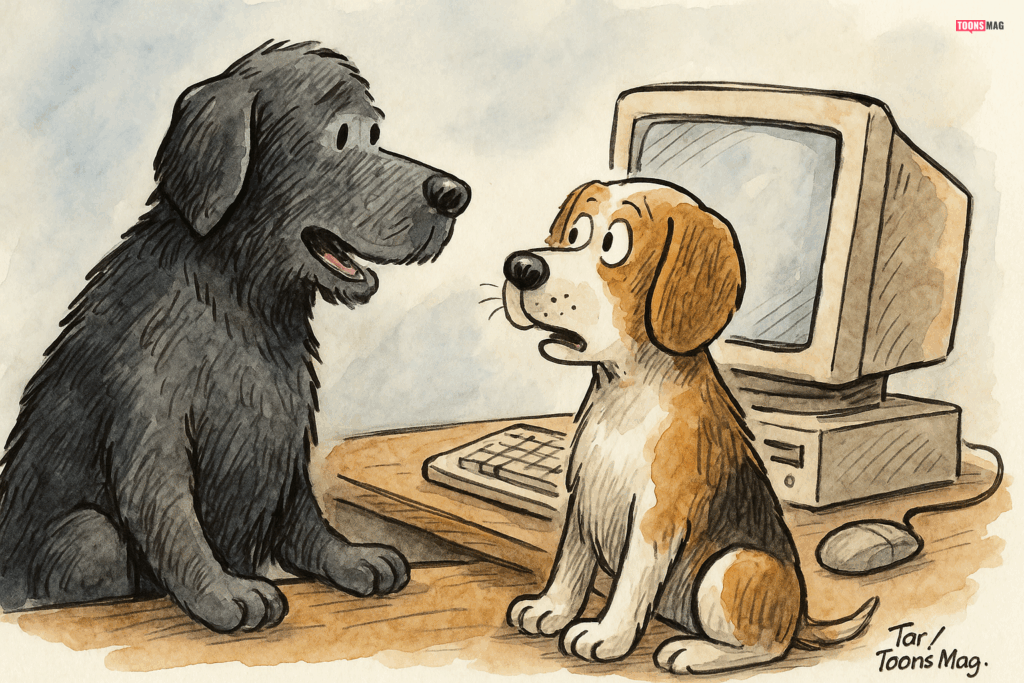
A cartoon shows two dogs at a computer. One says, “On the Internet, nobody knows you’re a dog.”
—This classic cartoon works because it blends modern technology, anonymity, and absurdity—all in a single panel.
6. Digital Evolution: Funny Cartoons in the Age of Memes
In the digital era, cartoons have morphed into:
- Webcomics (e.g., xkcd, Sarah’s Scribbles, Cyanide & Happiness)
- Social media memes
- GIF loops
- Instagram strips and reels
This shift has:
- Shortened attention spans (jokes must land faster)
- Globalized cartoon humor
- Empowered independent artists to go viral without mainstream publishers
Toons Mag and Cartoonist Network embrace this evolution, allowing creators from all over the world to share visual humor with global audiences.
7. Funny Cartoons as Life Philosophy
Sometimes, a cartoon is more than a joke—it’s a life lesson. The humor teaches us:
- Not to take ourselves too seriously
- That mistakes are part of being human
- That perspective changes everything
- That laughter is a form of resilience
Funny cartoons remind us that:
- Failure can be funny.
- Frustration is universal.
- And sometimes, the only thing to do is laugh.
As Calvin and Hobbes creator Bill Watterson once said:
“Things are never quite as scary when you’ve got a best friend.”
Even if that best friend is a cartoon tiger.
Funny Cartoons: Humor Is the Heartbeat of Humanity
Funny cartoons aren’t just for laughs—they are daily affirmations that life is weird, wonderful, and worth smiling about. They shrink our problems, reveal our shared absurdities, and give us reason to chuckle even in the darkest hours.
Whether it’s a sketch in a notebook, a viral Instagram post, or a decades-old comic strip, funny cartoons are humor for life—literally and metaphorically.
So go ahead—draw a funny face. Clip a cartoon and stick it to your fridge. Share a joke in the group chat. Laugh out loud at something silly.
Because in a world that can often feel heavy, funny cartoons make life a little lighter—one giggle at a time.
This post was created with our nice and easy submission form. Create your post!






One Comment