
 Sharmin haque prima

Geoffrey Raynor Hook OAM, widely known by his pen name Jeff Hook, (27 December 1928 – 20 July 2018) was one of Australia’s most beloved editorial cartoonists and illustrators. Best remembered for his sharp political satire and the iconic “fishhook” he cleverly hid in his cartoons, Hook carved out a singular space in Australian journalism. Over more than 50 years, he left an indelible mark on political commentary and popular culture, becoming a household name whose works were studied, sought, and celebrated.
Infobox: Jeff Hook
| Name | Geoffrey Raynor Hook |
|---|---|
| Pen Name | Jeff Hook |
| Born | 27 December 1928, Hobart, Tasmania, Australia |
| Died | 20 July 2018 (aged 89), Frankston, Victoria |
| Nationality | Australian |
| Occupation | Editorial Cartoonist, Illustrator, Fine Artist |
| Years Active | 1948–2000 |
| Notable Works | Cartoons for The Sun News-Pictorial, Sunday Herald Sun, hidden fishhook motif |
| Spouse | Pauline Hook (m. 1961) |
| Children | 5 |
| Awards | OAM, Stanley Award, Melbourne Press Club Lifetime Achievement, ACA Hall of Fame |
Early Life and Training
Born in Hobart, Tasmania, Geoff Hook demonstrated a precocious passion for visual storytelling, often filling the margins of his schoolbooks with intricate sketches of warships, fighter planes, and imagined battle scenes during World War II. His fascination with military and maritime imagery, sparked by the bustling Derwent River near his childhood home, would later influence both his cartooning and fine art.
He attended St Virgil’s College, where his artistic talents were recognized and encouraged. He was known among his peers for capturing humorous caricatures of teachers and classmates, an early sign of the satire he would later master. Hook continued his education at Hobart Technical College, where he enrolled in a rigorous graphic arts course. There, he received formal training under a cadre of renowned Tasmanian artists including Jack Carington Smith, Margaret Chandler, Harry Buckey, and Edith Holmes. His education balanced classical technique with modern applications, preparing him for both fine art and commercial media.
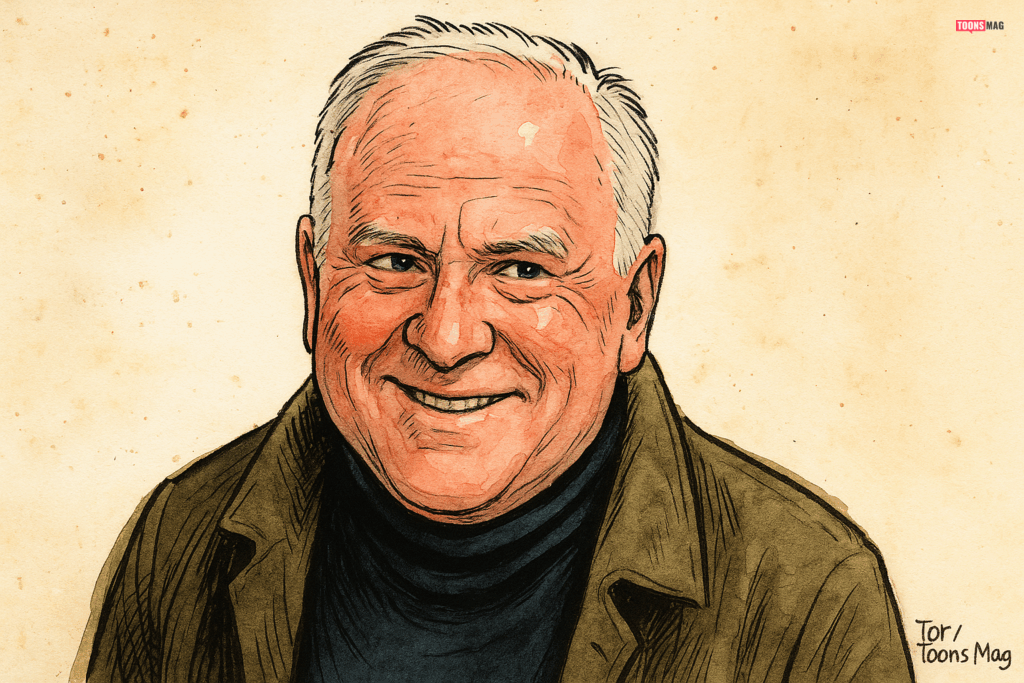
An avid watercolorist, Hook exhibited several early landscape and seascape paintings at local art shows, gaining modest acclaim. Although he harbored dreams of becoming a full-time painter, financial pressures and a burgeoning interest in media illustration led him toward newspaper work. His turning point came through a friendship with future novelist Christopher Koch—best known for The Year of Living Dangerously—who alerted him to an opening at The Mercury. Koch, then departing from the paper’s press art department, recommended Hook for the position. After a successful interview, Hook was hired in 1948, marking the beginning of his illustrious media career.
Career at The Mercury
At The Mercury, Hook began by airbrushing and touching up press photos, meticulously adding outlines and correcting imperfections in the days before digital editing. He developed an eye for detail and learned to work swiftly to meet the demands of a fast-paced newsroom. Occasionally, he was asked to produce spot illustrations or cartoons for feature articles, which he signed as “Jeff.” His work began to attract attention for its wit and clean, expressive linework.
When cartoonist Norman Southey went on leave, Hook stepped in as a temporary replacement. His talent was quickly recognized by the editorial team, and he was eventually offered the role full-time. During his 13-year stint at the paper, he drew three cartoons a week, covering both local and national issues. He also illustrated maps, courtroom scenes, and social events. These experiences not only honed his caricature skills but also expanded his versatility as a visual journalist. It was at The Mercury that Hook began developing his distinct, character-driven style, blending humor, accuracy, and artistic flair.
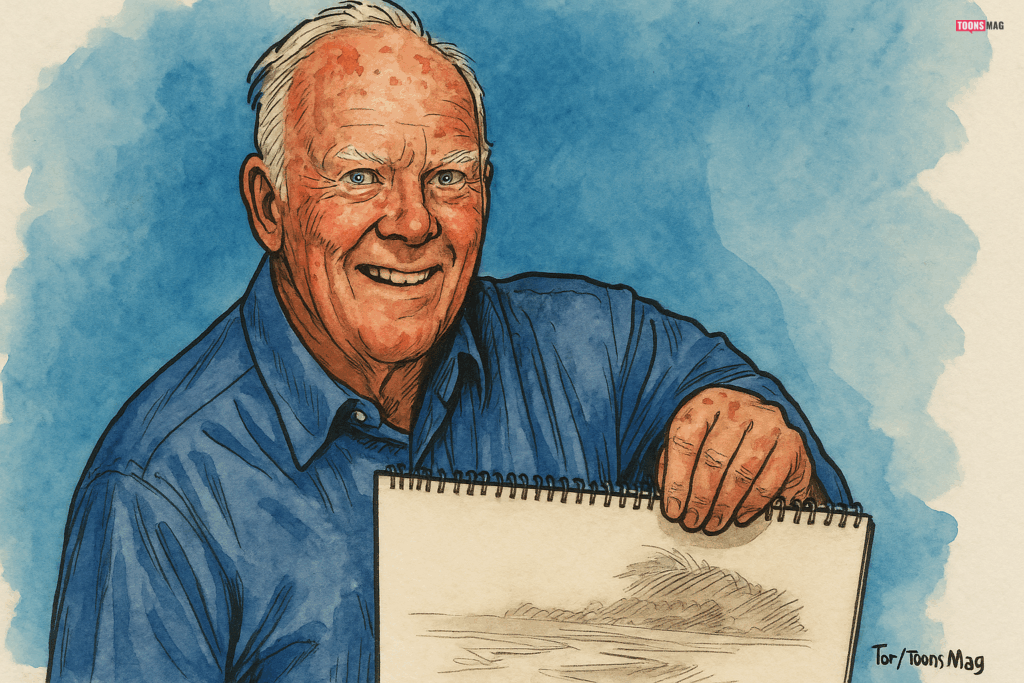
However, feeling artistically stifled and longing for broader opportunities in a more competitive media landscape, Hook made the pivotal decision to move to Melbourne in 1964. Armed with a carefully curated portfolio of his work, he personally approached The Sun News-Pictorial. His timing proved fortuitous; a few months later, he was hired as a creative artist. Initially brought on to assist with editorial illustrations and page layout concepts, his cartooning abilities soon stood out. Within two years, his cartoons were running daily, earning him a prominent position among Australia’s top editorial cartoonists.
Rise to National Fame
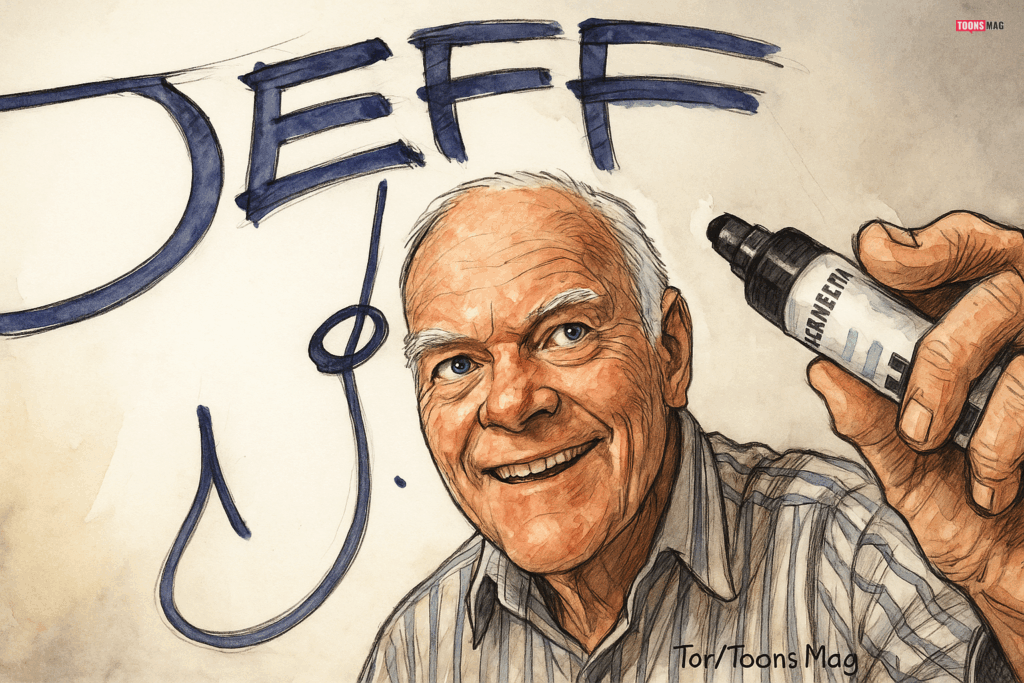
Hook’s breakthrough at The Sun News-Pictorial came in 1966. It was during this period that he introduced the now-famous hidden fishhook in his cartoons. The idea, reportedly suggested by fellow cartoonist William Green (WEG), became a signature quirk. Readers of all ages would scour his work for the tiny hook, and on rare occasions when it was omitted, the paper’s phone lines were flooded with calls from concerned fans.
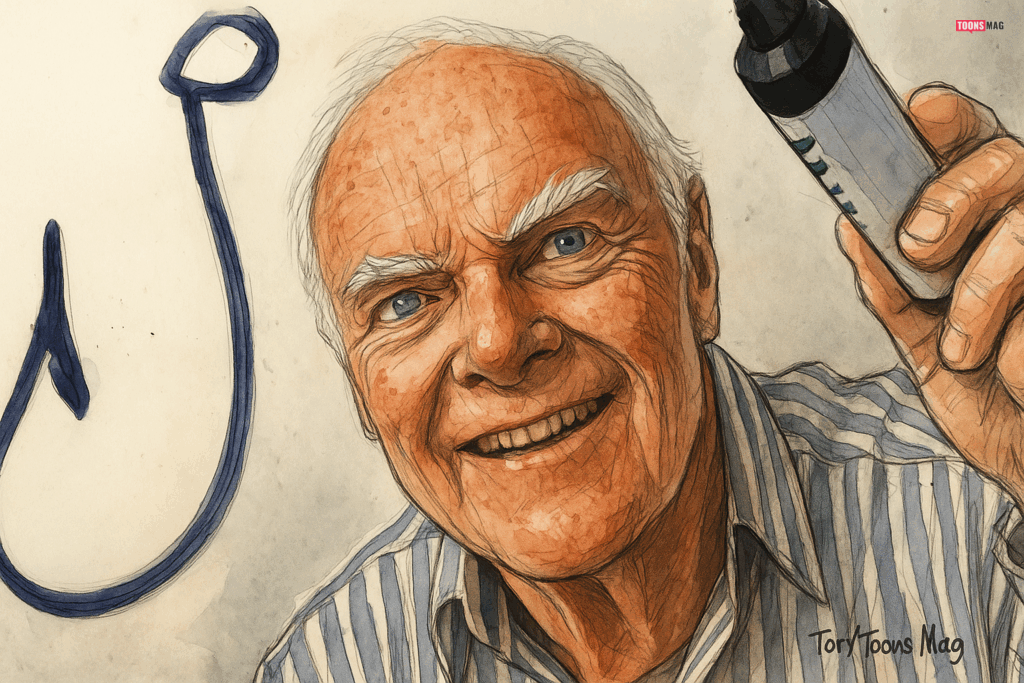
His cartoons tackled political scandals, strikes, social issues, and global conflicts with a fair and often humorous lens. He drew both government and opposition figures with equal satire. Hook maintained an unbiased perspective, famously saying he always considered himself part of the opposition, regardless of who was in power. His sharp wit was balanced by a charming, illustrative style that won readers across generations.
One of his most notable cartoons, The Three Wiser Men, published at the conclusion of the 1967 Six-Day War, depicted Middle Eastern leaders with pointed caricature. The cartoon was republished globally, including in The Times of London, cementing Hook’s international reputation.
Legacy of the Hook
The hidden fishhook became an iconic part of Hook’s identity. Even Prime Ministers and Premiers commented on it. On one occasion, after omitting the hook during a cartoonist strike, Hook received a deluge of complaints from tradesmen, children, and teachers whose students refused to concentrate without finding the hook. Some educators even reported that searching for the fishhook became a ritual in classrooms, with competitions held to see who could find it first. The tradition extended into homes, where families passed newspapers across the breakfast table in a daily game of discovery. The hook evolved from a playful detail into a cultural phenomenon that bonded generations of readers through shared routine and amusement.
Hook’s sketches of Bob Hawke, Gough Whitlam, and Joan Kirner were especially notable. Whitlam’s expressive eyebrows, Hawke’s iconic features, and Kirner’s polka dot dresses were exaggerated with affectionate satire. Kirner, however, once voiced her displeasure at being drawn in the same attire repeatedly. Hook responded with characteristic wit, remarking that the polka dots had become her “comic costume,” as iconic as any superhero’s cape. He had an ability to capture a politician’s essence in just a few lines, often using visual metaphor to underscore policy debates or public sentiment. He was praised for managing to remain lighthearted even when addressing controversial issues, and his subjects, though occasionally bruised by his interpretations, largely respected his talent and fairness.
A left-handed drawer who wrote with his right hand, Hook’s duality became a metaphor for his balanced viewpoint. His artistic sensibilities were deeply rooted in observation and empathy, and his humor was never mean-spirited. Colleagues frequently noted his meticulous approach to caricature, spending hours reviewing speeches and photographs to ensure that every feature he exaggerated had a basis in character, not cruelty. His balanced satire was often described as “cheeky but kind,” making him a trusted commentator in a politically divided landscape.
Awards and Recognition
Jeff Hook’s excellence was recognized by numerous awards and honors:
- 1987: Stanley Award for Humorous Illustration, recognizing his clever use of satire and visual wit
- 1987 & 1991: Winner at International Cartoon Festival, Knokke-Heist (Belgium), where his work was praised for its international relevance and timeless humor
- 1998: Silver Stanley Award for lifetime achievement from the Australian Cartoonists’ Association, marking decades of contribution to political and social commentary through art
- 2009: Melbourne Press Club Lifetime Achievement Award, underscoring his long-standing influence in the journalistic landscape
- 2012: Awarded the Medal of the Order of Australia (OAM) for services to print media and cartooning, a rare honor among Australian cartoonists
- 2016: Inducted into the Australian Cartoonists’ Association Hall of Fame, cementing his legacy alongside the greats of Australian cartooning
He was also a life member of several prestigious organizations, reflecting his broad contribution beyond cartooning:
- The Australian Cartoonists’ Association (ACA), where he mentored emerging talents and helped shape the direction of editorial cartooning
- The Melbourne Press Club, which celebrated his integrity, wit, and commitment to journalistic excellence
- Media, Entertainment and Arts Alliance (MEAA), recognizing his advocacy for creative professionals
- Patron of the Amputees Association of Victoria, highlighting his compassion and commitment to social causes
- Life Governor of the Royal Victorian Institute for the Blind, a role that reflected his long-term support for vision-impaired Australians
- Member of the Australian Guild of Realist Artists and Peninsula Arts Society, where he regularly exhibited his fine art and contributed to regional art culture
Later Life and Painting Career
After retiring from daily cartooning in 1993, Hook continued to contribute weekly to the Sunday Herald Sun until 2000. At that point, he shifted focus to his passion for landscape painting, especially seascapes and views around Somers, Victoria, where he and his wife Pauline had a home. The coastal environment of Somers, with its sweeping shorelines, moody skies, and tranquil charm, became a recurring theme in his artistic oeuvre. Hook often cited the sea breezes, changing tides, and local flora as his muses, capturing them in vivid detail through both watercolors and oils.
He held multiple solo and group exhibitions at the Australian Guild of Realist Artists (AGRA), the Peninsula Arts Society, and various regional galleries. Hook’s paintings were not only featured in traditional gallery settings but also became part of local cultural festivals and charity auctions. His works were collected by art lovers across Victoria and featured in local government collections and art society prize shows.
His watercolors gained popularity in the local art scene, and his art was displayed in community venues, cafes, libraries, and public buildings. His approachable demeanor and willingness to engage with admirers at openings helped foster a loyal following. His work not only delighted long-time fans of his cartoons but also introduced him to a new audience as a respected and accomplished fine artist.
Contributions to Literature
Hook illustrated more than 46 books during his career. He also authored and illustrated children’s books, including:
- Jamie the Jumbo Jet (originally published in the 1970s, reprinted in 1998)
- Harry the Honkerzoid (written by son Brendan Hook)
- Planet of the Honkerzoids
These stories combined whimsy with relatable themes and featured Hook’s distinctive artwork, introducing young readers to his imaginative world.
Personal Life and Death
Jeff Hook married Pauline in 1961, and they shared 57 years of a close, enduring partnership marked by mutual support and shared artistic appreciation. Together, they raised five children and were blessed with nine grandchildren, with family being a central pillar of Hook’s life. The family often spent time at their holiday house in Somers, a picturesque coastal community on the Mornington Peninsula that deeply inspired Hook’s later landscape and seascape paintings. His watercolors of the area became beloved by locals and tourists alike, often displayed in community exhibitions and local businesses.
Hook passed away peacefully in hospital on 20 July 2018 at the age of 89. The news prompted an outpouring of heartfelt tributes from across the media, arts, and political spectrum. Fellow cartoonists, journalists, politicians, and longtime readers shared stories of how his cartoons impacted their lives, reflected the spirit of the times, and inspired new generations of artists.
His successor at The Herald Sun, Mark Knight, summed up Hook’s enduring influence and popularity: “Years after his retirement, schoolchildren visiting the newsroom would ask, ‘Where’s the hook?’ That says it all.” This simple tradition of hiding the fishhook in his cartoons had transcended the medium to become a cultural touchstone, emblematic of the joy and curiosity Hook brought to Australian cartooning.
Enduring Legacy
Jeff Hook’s cartoons were more than political commentary—they were cultural rituals that permeated Australian life across generations. They prompted laughter, sparked debate, and invited readers to look deeper into both the imagery and the underlying message. His use of the hidden fishhook was a masterstroke in audience engagement—a playful signature that transformed cartoon reading into an interactive game for families across the country. It encouraged critical thinking in young minds and drew in even the most reluctant readers, cementing his place not only in journalism but also in cultural memory.
Beyond the newspapers, Hook’s artistic legacy extended into education, public speaking, and community outreach. He gave lectures at art schools, mentored budding cartoonists, and was an advocate for the preservation of Australian cartooning history. His work has been archived in major Australian libraries, including the National Library of Australia, and featured in retrospectives, traveling exhibitions, and international cartoon festivals. His illustrations are also held in private collections across the world.
Jeff Hook is remembered not only as a brilliant cartoonist but also as a man of warmth, integrity, generosity, and boundless creativity. His influence extended beyond the ink lines on newsprint—he shaped how Australians viewed their leaders, their society, and even themselves. A true giant in Australia’s journalistic and artistic landscape, his legacy continues to inspire cartoonists, artists, and storytellers alike.
FAQ about Geoffrey Raynor Hook, aka Jeff Hook
1. Who was Geoffrey Raynor Hook?
Geoffrey Raynor Hook, often known as Geoff Hook, was a renowned Australian artist and editorial cartoonist. He was born on December 27, 1928, and died on July 20, 2018.
2. What was Geoff Hook’s early career like?
Geoff Hook began his career as a cadet press artist at the Hobart Mercury. He later pursued a course in graphic arts at the Hobart Technical College, where he received tuition in fine arts from notable instructors such as Jack Carrington Smith, Margaret Chandler, Harry Buckey, and Edith Holmes.
3. What were some highlights of Geoff Hook’s career as a cartoonist?
Geoff Hook started his cartooning career under the pseudonym “Jeff” at The Mercury, and later moved to The Sun News-Pictorial in Melbourne in 1964. He became known for incorporating a hidden fish hook into his cartoons, which became his distinctive “trademark.” Readers of The Sun News-Pictorial enjoyed searching for the hidden fish hook in his cartoons.
4. What was one of Geoff Hook’s most famous cartoons?
One of Geoff Hook’s most famous cartoons was “The Three Wiser Men,” created in 1967. This cartoon depicted the end of the Six-Day War and included caricatures of figures like Gamal Abdel Nasser, Faisal, and Hussein. It gained international recognition when it was republished in The London Times.
5. Did Geoff Hook receive any awards for his work?
Yes, Geoff Hook received several awards during his career. In 1987, he won the award for Humorous Illustration in the Australian Black and White Artists Club’s Bulletin Awards. He also won the Best Political Cartoon award at The International Cartoon Festival at Knokke-Heist, Belgium, in 1987 and 1991.
6. When did Geoff Hook retire from cartooning, and what did he do afterward?
Geoff Hook retired from full-time cartooning in early 1993 but continued to freelance, contributing a regular editorial cartoon for the Sunday Herald Sun. He devoted more time to painting, holding exhibitions, and pursuing his love for art.
7. What affiliations and honors did Geoff Hook have?
Geoff Hook was a Life Member of the Australian Black and White Artists Club (now the Australian Cartoonists’ Association) and The Melbourne Press Club. He was also a Life Member of The Media, Entertainment, and Arts Alliance and a life governor of the Royal Victorian Institute for the Blind. Additionally, he was a patron of the Amputees Association of Victoria and a member of the Australian Guild of Realist Artists and the Peninsula Arts Society.
8. Did Geoff Hook receive any significant awards for his contributions?
Geoff Hook was awarded the Australian Black and White Artists Club’s Silver Stanley Award for lifetime achievement in 1998. He was also honored with an Order of Australia Medal in January 2012 for his services to the print media as a political and social commentator and cartoonist.
This post was created with our nice and easy submission form. Create your post!