

 Joann McPike

The Adventures of Tintin (French: Les Aventures de Tintin) is a globally celebrated series of 24 comic albums created by Belgian cartoonist Georges Remi, better known by his pen name Hergé. First published in 1929, the series follows the globe-trotting escapades of Tintin, a brave, principled young Belgian reporter, and his loyal, witty dog Snowy (Milou in French), as they unravel mysteries, expose corruption, confront villains, and explore exotic locales around the world—and even beyond.
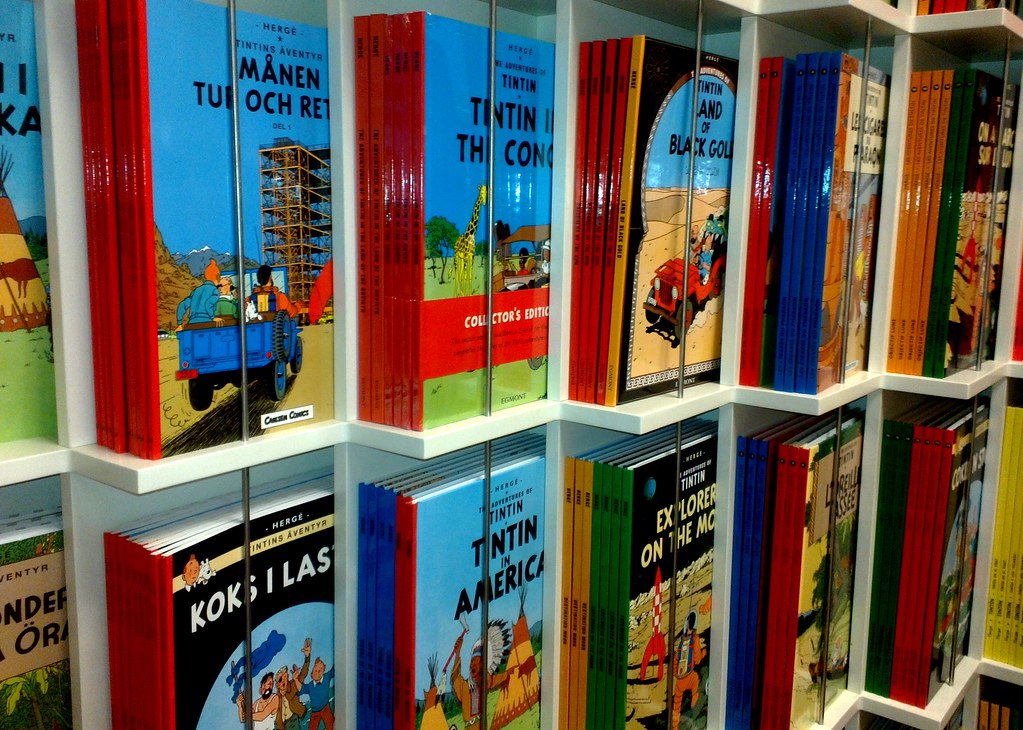
One of the most influential European comics of the 20th century, Tintin became a cornerstone of the Franco-Belgian comic tradition and set the standard for adventure storytelling in graphic form. Renowned for its meticulous artwork—particularly Hergé’s signature ligne claire (clear line) style—immersive plots, and deep cultural detail, the series has been translated into over 70 languages and has sold more than 200 million copies worldwide. It has transcended generations, captivating readers of all ages across the globe.
Alongside recurring characters like the gruff but lovable Captain Haddock, the absent-minded genius Professor Calculus, the perpetually confused detectives Thomson and Thompson, and a wide range of vibrant supporting figures, Tintin’s adventures blend thrilling action, geopolitical intrigue, cultural exploration, sly humor, and ethical dilemmas. The stories often reflect and critique the major political, social, and scientific issues of their times.
Beyond the printed page, Tintin has been adapted into numerous forms of media, including radio dramas, animated television series, stage plays, and even a critically acclaimed feature film directed by Steven Spielberg and produced by Peter Jackson. The iconic character of Tintin has become a symbol of journalistic integrity, curiosity, and fearless pursuit of truth, while Snowy provides comic relief and heroic assistance in equal measure. Today, The Adventures of Tintin continues to influence modern comics, animation, cinema, and pop culture, remaining as relevant and beloved as ever.
Infobox: The Adventures of Tintin
Title: The Adventures of Tintin
Original French Title: Les Aventures de Tintin
Creator: Georges Remi (Hergé)
First Published: January 10, 1929
Last Completed Album: Tintin and the Picaros (1976)
Unfinished Album: Tintin and Alph-Art (published posthumously in 1986)
Total Albums: 24 (+1 incomplete)
Main Characters: Tintin, Snowy, Captain Haddock, Professor Calculus, Thomson & Thompson
Genre: Adventure, Mystery, Political Satire
Art Style: Ligne claire
Language of Origin: French
Translations: 70+ languages
Estimated Copies Sold: Over 200 million worldwide
Film Adaptation: The Adventures of Tintin (2011), directed by Steven Spielberg
Museum: Musée Hergé, Louvain-la-Neuve, Belgium
Origins and Creation
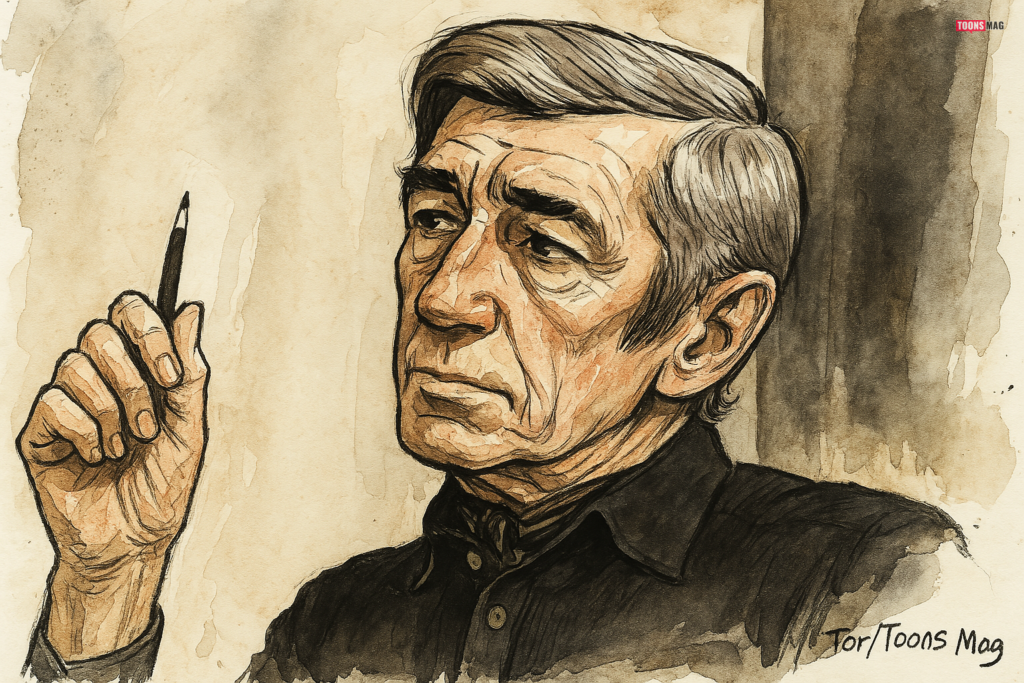
Hergé, born Georges Prosper Remi in Brussels in 1907, began his career as a cartoonist while working at the conservative Catholic newspaper Le Petit Vingtième, a youth supplement of Le Vingtième Siècle. It was here, in 1929, that Tintin made his first appearance in the serialized adventure Tintin in the Land of the Soviets. Hergé originally conceived the series as a satirical exploration of Communism in the Soviet Union, in line with the paper’s political stance.
Yet, even in these early installments, the series hinted at the potential for more complex storytelling, drawing from Hergé’s deep interest in literature, geopolitics, and international cultures. The comic strip’s popularity soared, capturing the imaginations of young readers and establishing Tintin as a cultural icon from the very start.
As the series progressed, Hergé refined his craft with remarkable rigor. He undertook meticulous research for each story, drawing upon books, journals, encyclopedias, and firsthand accounts to build convincing, detail-rich narratives. Whether reconstructing ancient Incan temples or sketching rocket launches, Hergé insisted on accuracy. His visual commitment culminated in his use of the ligne claire technique—a revolutionary drawing style defined by bold, uniform lines, minimal shading, and vibrant flat colors. This clear, elegant aesthetic became a hallmark of European comics and influenced countless artists around the world.
In 1950, to support the increasing demands of the series, Hergé established Studios Hergé, bringing together a team of skilled assistants including Edgar P. Jacobs and Bob de Moor. The studio allowed for greater artistic experimentation and consistency across albums, but Hergé remained creatively involved, overseeing every plotline, sketch, and dialogue exchange. His relentless perfectionism and curiosity led the series into new thematic and artistic territory, transforming Tintin from a simple adventure strip into a sophisticated, internationally respected body of work.
Main Characters
- Tintin – A youthful, intrepid journalist with a sharp intellect, an indomitable sense of justice, and a compassionate heart. He is skilled in self-defense, speaks multiple languages, and is adept at navigating different cultures and political environments. Tintin serves as the moral center of the stories, often placing himself in danger to help others. Despite his seemingly ageless appearance, he exhibits maturity and wisdom beyond his years. His sense of justice and refusal to compromise in the face of corruption make him an enduring symbol of idealistic heroism.
- Snowy (Milou) – Tintin’s loyal wire fox terrier, whose inner monologues add wit, skepticism, and irony. Snowy is brave, resourceful, and often functions as Tintin’s silent confidant. He has a fondness for whiskey (especially when around Captain Haddock) and often rescues Tintin from perilous situations. His sharp instincts and emotional intelligence make him more than just a sidekick—he is a fully developed character in his own right.
- Captain Haddock – Introduced in The Crab with the Golden Claws, Captain Archibald Haddock is a gruff, hard-drinking sea captain who evolves from comic relief to one of the series’ most nuanced characters. With his explosive temper and colorful insults like “blistering barnacles!” and “thundering typhoons!”, he adds humor and humanity to the stories. Beneath his gruff exterior lies a deeply loyal and emotionally vulnerable man who becomes Tintin’s closest companion. His character arc—from despair and addiction to dignity and bravery—is one of the most compelling in the series.
- Professor Calculus (Professeur Tournesol) – A partially deaf, eccentric inventor and physicist, Calculus is a source of both comic misunderstanding and scientific innovation. His inventions—such as the shark-shaped submarine and the Moon rocket—often propel the story forward. Despite his obliviousness to his surroundings, Calculus shows immense courage and determination, particularly when his friends are threatened. He also has a surprising romantic side, particularly in The Castafiore Emerald.
- Thomson and Thompson (Dupond et Dupont) – Nearly identical, bowler-hat-wearing detectives whose literal-mindedness and clumsy antics create frequent comedic moments. Their investigative methods are flawed but endearing, and their speech patterns—such as confusing similar-sounding phrases—are a running gag. Despite their incompetence, they are fiercely loyal to Tintin and frequently risk their lives to assist in his missions. Their presence offers a humorous contrast to the more serious and cerebral tone of Tintin’s adventures.
Themes and Style
Hergé’s Tintin albums encompass a broad and evolving range of themes, reflecting both the spirit of their times and the maturation of their creator. Central themes include anti-totalitarianism, friendship, technological advancement, human rights, colonialism, and environmental preservation. In the earlier albums, particularly Tintin in the Land of the Soviets and Tintin in the Congo, these themes were presented in ways shaped by the political and cultural biases of 1930s Europe. However, as Hergé’s worldview expanded through travel, relationships, and research, so too did the moral and philosophical complexity of his work.
The series transforms from early ideological propaganda into thoughtful, humanistic narratives that explore universal values and ethical dilemmas. For example, The Blue Lotus marked a dramatic shift in tone and purpose. Through his collaboration with Chinese student Zhang Chongren, Hergé learned firsthand about the importance of cultural authenticity. The result was a sensitive, anti-imperialist story that portrayed Chinese people with nuance and dignity during the Japanese occupation. This album not only elevated the storytelling in Tintin but also demonstrated comics’ potential for cultural empathy and political critique.
Other albums continued to grapple with timely topics. The Broken Ear addressed political coups and exploitation in South America, while The Calculus Affair explored Cold War espionage and scientific ethics. Tintin in Tibet delved into themes of loyalty, spiritual redemption, and the power of friendship, drawing from Hergé’s own emotional struggles and dreams. Environmental themes emerged in The Red Sea Sharks and Flight 714, which spotlighted arms trafficking, human slavery, and ecological harm.
The visual style of Tintin is equally thematic in its execution. Marked by clarity, composition, and visual balance, Hergé’s ligne claire technique created clean, precise imagery that emphasized storytelling and legibility. Each panel is carefully structured, with detailed backgrounds, accurate architecture, authentic cultural costumes, and identifiable modes of transportation—whether a 1930s biplane or a futuristic lunar rocket. Hergé’s obsessive dedication to research and realism led to rich, immersive environments, whether portraying the misty Himalayas, bustling Shanghai streets, the jungles of Peru, or lunar landscapes.
The harmony between form and content in Tintin—its thematic ambition coupled with visual discipline—set a new standard in graphic storytelling and cemented its reputation as a pioneering work in the history of comics.
Notable Albums
Some of the most iconic and influential albums in the series include:
- The Blue Lotus (1936) – Set in 1930s China, this album marked a turning point in Hergé’s storytelling. It was created in collaboration with Chinese artist Zhang Chongren, which led to a richly detailed and respectful portrayal of Chinese culture. The narrative condemns colonialism and Japanese aggression in China, offering a bold political stance for its time.
- The Crab with the Golden Claws (1941) – This action-packed tale introduces Captain Haddock, one of Tintin’s most enduring companions. Set against a backdrop of drug smuggling in North Africa, the story blends humor, character development, and a deepening of the Tintin universe with a new dynamic between Tintin and Haddock.
- The Secret of the Unicorn (1943) & Red Rackham’s Treasure (1944) – This two-part saga explores family lineage, hidden treasure, and maritime history. Featuring the introduction of Professor Calculus and the iconic ship model, these albums exemplify Hergé’s ability to weave historical fiction, puzzle-solving, and high-seas adventure into a compelling narrative arc.
- The Calculus Affair (1956) – A sophisticated Cold War thriller set in a fictional European context, this album features international espionage, scientific ethics, and the kidnapping of Professor Calculus. It highlights Hergé’s move toward more realistic, politically nuanced plots and features some of the most atmospheric illustrations in the series.
- Explorers on the Moon (1954) – Alongside its prequel Destination Moon, this story demonstrates Hergé’s scientific foresight and ambition. Based on intensive research, the narrative predates actual lunar landings and accurately depicts many elements of space travel. It remains one of the most acclaimed Tintin adventures for its realism and scope.
- Tintin in Tibet (1960) – Widely regarded as Hergé’s most personal work, this story explores themes of friendship, loyalty, and redemption. Set in the Himalayas, it eschews villains and political intrigue in favor of a heartfelt quest to rescue a friend. The story is a meditation on inner peace and spiritual struggle, inspired by Hergé’s own emotional crises at the time of writing.
Global Influence and Legacy
Tintin has left an indelible mark on popular culture worldwide. It has inspired creators such as Milo Manara, Katsuhiro Otomo, and Art Spiegelman, each of whom has acknowledged Hergé’s influence in shaping their own artistic journeys. The clean visual narrative of ligne claire has found echoes in graphic novels across Europe, Asia, and North America. References to Tintin’s globe-trotting adventures and distinct visual language appear in animated shows like The Simpsons, Family Guy, and South Park, as well as in films such as Indiana Jones, whose lead character draws heavily from Tintin’s adventurous archetype.
Spielberg’s 2011 animated film, The Adventures of Tintin: The Secret of the Unicorn, introduced the character to a new generation, combining cutting-edge motion-capture technology with classic storytelling. The film received both critical and commercial success, sparking renewed global interest in the comic series and plans for sequels. Beyond cinema, Tintin has also inspired stage adaptations, museum exhibits, fan conventions, and academic conferences.
Ongoing exhibitions, such as those at the Musée Hergé in Louvain-la-Neuve and international traveling retrospectives, showcase original artwork, manuscripts, and personal artifacts of Hergé, highlighting the enduring fascination with both the creator and his creation. These cultural institutions continue to attract scholars, artists, and fans from around the world.
The series has influenced not only art and storytelling but also journalism, with Tintin often cited in educational curricula as an example of integrity, courage, and ethical inquiry. Journalists have compared his investigative instincts to those of real-life war correspondents and truth-seekers. The character’s impact extends to branding, tourism, and marketing, as Tintin’s image has appeared on stamps, coins, public murals, and travel promotions.
Tintin-themed merchandise ranges from figurines and replica artifacts to luxury collector editions and designer collaborations. Numerous academic studies and books have examined Tintin through lenses of semiotics, colonialism, ethics, and visual narrative theory. These analyses affirm the series’ place not only in the canon of children’s literature but also in the global history of communication and visual storytelling.
Controversies and Criticism
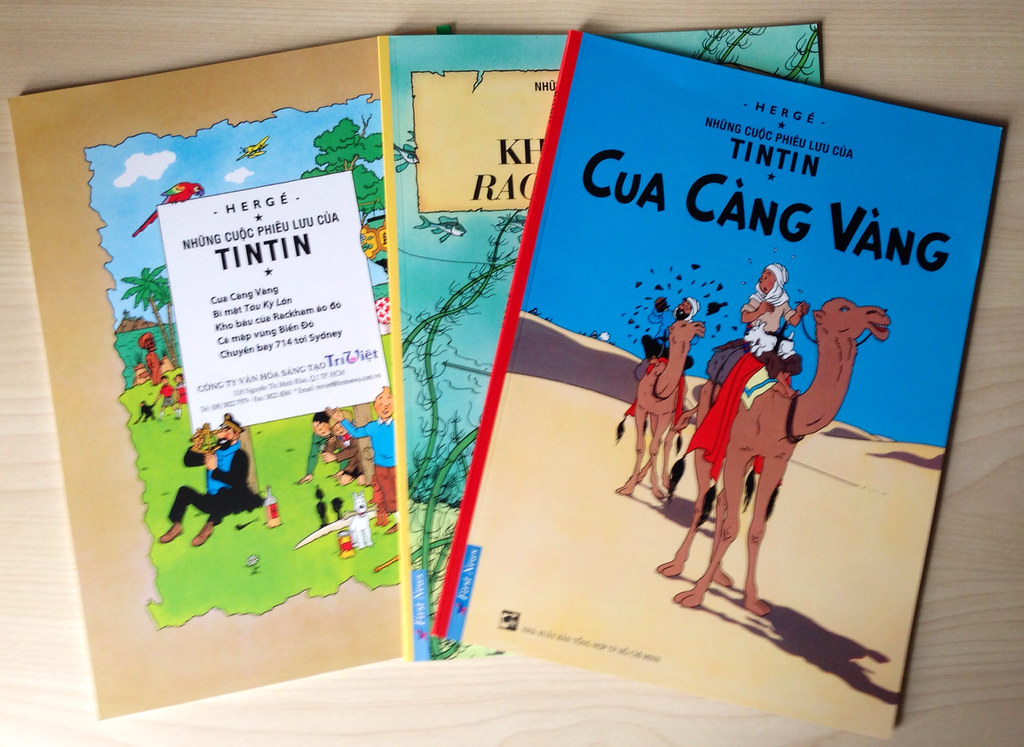
Despite its acclaim, Tintin has been scrutinized for outdated racial and colonial depictions, particularly in Tintin in the Congo and Tintin in America. These early works have been criticized for perpetuating harmful stereotypes and displaying a Eurocentric worldview reflective of the colonial attitudes prevalent in early 20th-century Europe. Tintin in the Congo in particular has sparked significant controversy for its portrayal of African people, often characterized as infantilized or subservient. In response, several countries have added disclaimers, removed the book from children’s sections, or even debated legal action regarding its sale.
Modern reprints often include contextual forewords that acknowledge these historical shortcomings and explain the cultural circumstances under which they were created. Hergé himself later distanced from these portrayals, publicly expressing regret and stating that his views evolved significantly as he became more informed about different cultures. His collaboration with Chinese artist Zhang Chongren during the creation of The Blue Lotus marked a clear shift toward greater cultural sensitivity and awareness in his work.
Scholars and critics have extensively debated the ideological undertones of the series, which span a broad spectrum—from Cold War allegories and anti-communist messages to nuanced critiques of fascism, totalitarianism, and capitalism. Some have noted the lack of female characters in the series, suggesting an underrepresentation of women in roles of authority or complexity. Nevertheless, Hergé’s development over time reflects a genuine effort toward inclusivity and empathy, with later albums demonstrating a more thoughtful and globally conscious approach. These shifts contribute to ongoing academic discussions surrounding authorial growth, cultural reflection, and the evolution of ethical storytelling in graphic literature.
Unfinished Work and Final Years
Hergé passed away on March 3, 1983, after battling leukemia, leaving behind an incomplete manuscript for Tintin and Alph-Art, a story set in the world of avant-garde art and modernist counterfeiting. The narrative, which featured the villainous art dealer Endaddine Akass and explored themes of deception, artistic identity, and cultural manipulation, marked a bold departure from previous Tintin stories in both content and structure. Although only about forty pages of rough sketches, dialogue drafts, and storyboard outlines were completed, these materials offer a fascinating glimpse into Hergé’s evolving creative direction during his final years.
The unfinished nature of Alph-Art has sparked considerable scholarly interest and fan speculation. The minimalist style, coupled with the story’s metafictional tone and introspective subtext, suggests that Hergé was experimenting with narrative techniques and pushing the boundaries of what a Tintin story could be. Some researchers have interpreted the work as a veiled commentary on the commodification of art and Hergé’s own fears about legacy and creative ownership.
Following Hergé’s death, his widow Fanny Rodwell and the rights-holding company Moulinsart (now TintinImaginatio) made the decision to honor his explicit wish that no new Tintin stories be produced without his involvement. As a result, Tintin and Alph-Art remains the final chapter in the Tintin saga. In 1986, the unfinished manuscript was posthumously published in its raw form, accompanied by editorial notes and reproductions of Hergé’s sketches. This publication was widely appreciated by fans and scholars alike, both as a window into Hergé’s creative process and as a respectful conclusion to one of the most beloved comic series of the 20th century.
Enduring Legacy
The Adventures of Tintin remains a monumental achievement in the history of comics and storytelling, widely regarded as one of the most influential and beloved graphic series ever created. Its innovative blend of visual clarity, journalistic ethics, intellectual wit, and global adventure continues to captivate and inspire readers across generations and cultures. The series not only introduced groundbreaking artistic techniques like the ligne claire style but also elevated the comic medium to a respected form of literary and artistic expression.
Beyond the technical brilliance, the narrative strength of Tintin lies in its deep moral compass, embodied by Tintin’s unwavering sense of justice, compassion, and curiosity. Snowy’s loyalty and cleverness offer moments of both humor and heroism, while the broader cast of characters adds emotional richness and cultural texture to each tale. The stories—whether unfolding in ancient temples, snowy mountaintops, lunar landscapes, or bustling cities—combine historical research, social commentary, and timeless human themes.
Hergé’s enduring influence can be seen in the countless artists, writers, filmmakers, and academics who continue to reference, study, and reinterpret his work. With translations in over 70 languages, ongoing reprints, exhibitions, adaptations, and a dedicated fan base, Tintin’s legacy remains vibrantly alive. As a cultural icon, he stands not just as a character in fiction but as a symbol of integrity, exploration, and the unquenchable human thirst for truth and discovery. Tintin’s adventures—full of peril, wonder, laughter, and insight—will undoubtedly endure as a defining contribution to the world of storytelling.
This post was created with our nice and easy submission form. Create your post!