

 Simon Alexander

Cartoons Watched by Children of All Ages: Cartoons are more than just moving drawings. They are timeless companions, playful storytellers, and cultural barometers. Whether it’s a toddler giggling at Peppa Pig or a nostalgic adult revisiting SpongeBob SquarePants, cartoons are cherished across ages, cultures, and continents. Their appeal transcends generations—adapting to changing tastes, technologies, and social values while remaining fundamentally rooted in creativity, humor, and emotional resonance.
In this in-depth article, we explore cartoons watched by children of all ages, from the slapstick of the golden age to the narrative-rich stories of today. We examine why certain shows endure, how cartoons evolve with audiences, and what makes them so powerful in shaping young minds—and rekindling youthful joy in adults.
1. Cartoons Are Not Just for “Kids”
Cartoons have long been dismissed as “childish” by critics unfamiliar with the medium’s versatility. But in reality, animation has always had a universal appeal. Shows like Looney Tunes, Tom and Jerry, and The Flintstones were created with family audiences in mind. Their layered humor—physical gags for kids, subtle satire for adults—laid the foundation for cartoons as multigenerational entertainment.
Today, cartoons exist on a wide spectrum:
- Preschool shows teach basic learning and empathy (Bluey, Dora the Explorer).
- Classic cartoons deliver slapstick and visual comedy (Road Runner, Popeye).
- Tween and teen animations offer layered narratives (Avatar: The Last Airbender, Gravity Falls).
- All-ages animated series blend humor, adventure, and social commentary (The Simpsons, Adventure Time, The Amazing World of Gumball).
The truth? Everyone watches cartoons—they just might not admit it.

2. The Golden Age of Cartoons: Laughter That Echoes Through Time
The “Golden Age” of animation (roughly the 1930s–1960s) introduced the world to iconic characters that remain relevant today.
Key Shows:
- Mickey Mouse and Friends (Disney) – The cheerful mouse and his ensemble remain cultural icons.
- Looney Tunes (Warner Bros.) – Bugs Bunny, Daffy Duck, Porky Pig, and others used wit, anarchy, and slapstick that appealed to all.
- Tom and Jerry (MGM) – Wordless but expressive, this cat-and-mouse duo pioneered physical comedy.
- Popeye the Sailor – With messages about strength, love, and justice, Popeye bridged humor with subtle moral tales.
These cartoons were often played in movie theaters before feature films and were originally aimed at general audiences, not just children. Their enduring appeal lies in timeless humor, exaggerated expression, and universal themes.
3. The Rise of Educational Cartoons (1970s–1990s)
As TV became more accessible, parents and educators saw the potential of cartoons to teach while entertaining.
Educational Icons:
- Sesame Street (1969–present) – Though not fully animated, it featured beloved cartoon segments like “The Pinball Number Count.”
- Schoolhouse Rock! (1973–1984) – Short animated musicals about grammar, math, and civics.
- Mister Rogers’ Neighborhood (with animated segments like the Land of Make-Believe) – Bridged reality and animated imagination.
Later came:
- Dora the Explorer – Encouraged problem-solving and bilingual skills.
- Arthur – Explored empathy, social dynamics, and everyday struggles through relatable anthropomorphic characters.
- The Magic School Bus – Science education disguised as adventure, led by the legendary Ms. Frizzle.
These shows proved that cartoons could educate, not just entertain, and that learning could be playful and inclusive.

4. The 1990s Cartoon Boom: A Generation Raised on Animation
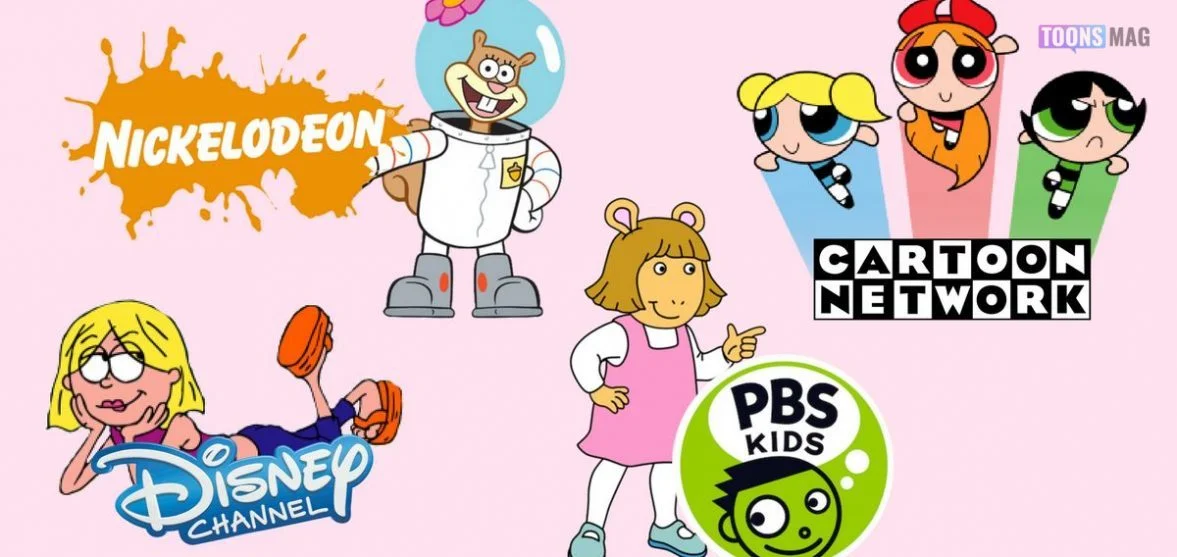
The 1990s brought a renaissance of animated programming across channels like Nickelodeon, Cartoon Network, and Disney Channel.
Beloved 90s & Early 2000s Cartoons:
- Rugrats – Explored the world through a baby’s imagination.
- Doug – Navigated adolescence with honesty and humor.
- Hey Arnold! – Addressed urban childhood, loneliness, and compassion.
- Animaniacs – Zany comedy mixed with cultural satire and music.
- Dexter’s Laboratory – Showcased sibling rivalry and invention.
- Powerpuff Girls – Action, feminism, and humor rolled into one.
- Recess – Captured schoolyard politics and social hierarchies.
These shows spoke to children, teens, and even adults with their layered writing and irreverent tone. They weren’t afraid to be weird, sentimental, or even existential.
5. Cartoons Today: Diversity, Depth, and Digital Evolution
Modern cartoons have embraced inclusivity, mental health awareness, and serialized storytelling.
Groundbreaking Modern Shows:
- Steven Universe – Explores gender identity, trauma, love, and healing.
- Bluey – A preschool show praised by adults for its honest portrayal of parenting and emotional growth.
- Gravity Falls – Mystery, family bonds, and cryptic narratives.
- The Owl House – Features LGBTQ+ representation and magical world-building.
- Encanto (Film) – Animated films today, like those from Pixar and Disney, are as much for adults as for children.
Cartoons today aren’t just fun—they’re profound, politically conscious, and artistically daring. They reflect a world where emotional intelligence, inclusivity, and storytelling are central to growth.

6. Why Cartoons Work for All Ages
They Combine Visual, Verbal, and Emotional Language
Cartoons simplify reality, allowing complex ideas to be explored with clarity and imagination. They make abstract concepts (like friendship, fear, or justice) accessible—even joyful.
They Build Empathy
Cartoons teach children to recognize emotions, resolve conflicts, and relate to different perspectives—from humans, animals, aliens, or magical beings.
They Foster Creativity
From SpongeBob’s surrealism to Adventure Time’s fantasy, cartoons invite viewers to imagine and question. For young artists, cartooning becomes a gateway to expression.
They Offer Comfort
For many, cartoons are safe spaces—rituals of relaxation, imagination, and identity formation. They are often the first stories we love—and the ones we return to when we need joy.
7. Cartoons Around the World
Global animation continues to shape generations with culturally distinct styles and values.
- Japan: Pokémon, My Neighbor Totoro, Doraemon, One Piece – anime blends philosophy, spirituality, and adventure.
- Europe: Moomins (Finland), Barbapapa (France), Shaun the Sheep (UK) – often slower-paced, visually poetic, and family-centric.
- Latin America: El Chavo Animado, Zoboomafoo – mix humor with local context.
- India: Chhota Bheem, Motu Patlu – based on mythology and slapstick.
These international cartoons resonate with children of all ages while reflecting local traditions, language, and values.

8. The Role of Cartoonist Communities in Shaping Youth Animation
Platforms like Toons Mag and the Cartoonist Network play a crucial role in encouraging cartoon creation and sharing across generations.
By promoting:
- International cartoon contests
- Accessible drawing tutorials
- Digital publication of comic strips and animations
These platforms enable young and aspiring cartoonists to share their voice, connect with global audiences, and impact future generations with new stories and art styles.
Cartoons Watched by Children of All Ages: Why Cartoons Will Always Matter
Cartoons are not defined by age—they are defined by emotion, imagination, and connection. Whether you’re 6 or 60, cartoons can still make you laugh, cry, think, or dream. They offer a shared space where generations meet—on the couch, in classrooms, online.
From timeless classics like Tom and Jerry to modern marvels like Bluey, cartoons watched by children of all ages form a living archive of humor, values, and human experience. They remind us that no matter how much the world changes, we all need to play, imagine, and wonder.
So go ahead—watch your favorite cartoon again. You’re never too old to laugh at Bugs Bunny or learn from Steven Universe.
This post was created with our nice and easy submission form. Create your post!






3 Comments